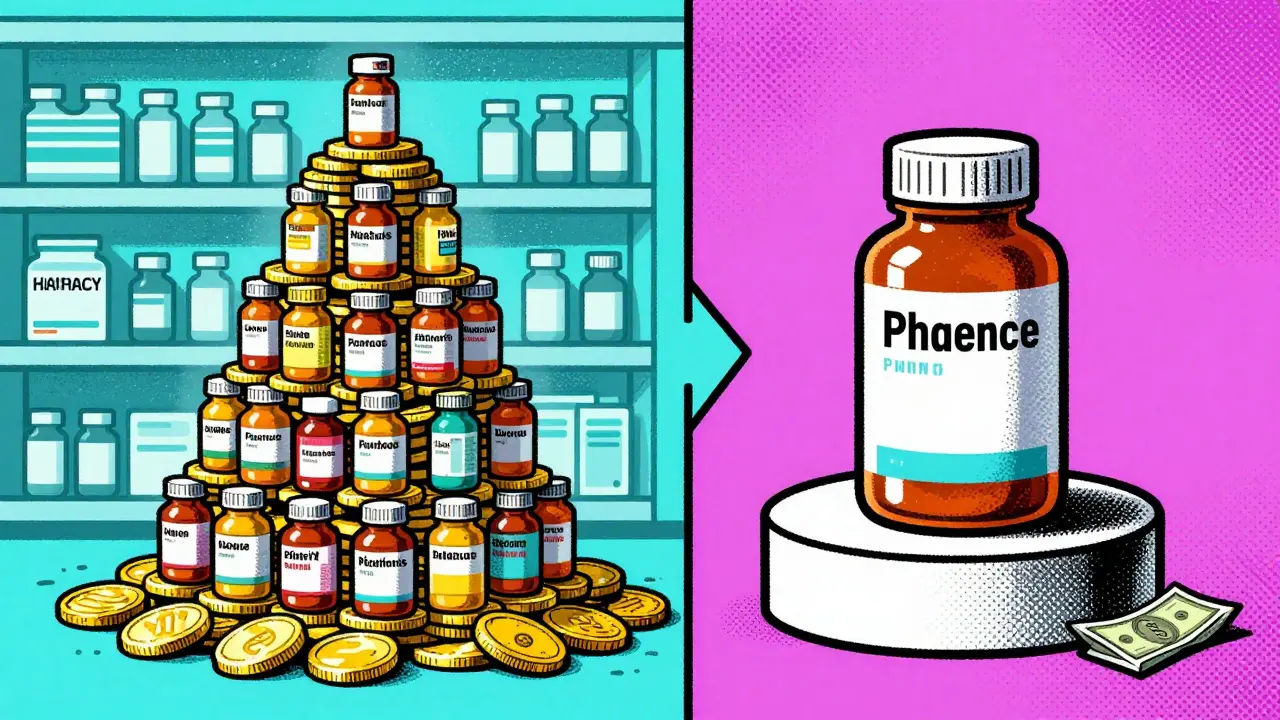
Walk into any local pharmacy in the United States, and you will see a counterintuitive economic reality. The cheap generic pill sitting on the shelf is actually the primary engine of profit for that business, while the expensive brand-name medication often contributes almost nothing to the bottom line. This paradox lies at the heart of pharmacy margin economics, which describes how pharmacies generate revenue from dispensing medications within a complex supply chain. For years, this system allowed pharmacies to survive on high-volume, low-cost generics. However, recent shifts in the pharmaceutical distribution landscape have squeezed these margins, creating a financial crisis for many independent operators.
To understand why your local pharmacy might be struggling despite high prescription volumes, we need to look past the sticker price of drugs. We must examine the hidden fees, the role of middlemen, and the stark difference between gross markup and net profit. The data reveals a system where transparency is scarce, and profitability depends heavily on navigating opaque reimbursement structures.
The Generic Profit Paradox
It seems logical that selling an expensive brand-name drug would yield higher profits than selling a cheap generic. In most retail sectors, this holds true. But in pharmacy economics, the opposite is often the case. According to analysis by the Commonwealth Fund published in August 2021, gross generic margins for pharmacies average around 42.7 percent. In contrast, gross margins for brand-name drugs hover at a mere 3.5 percent.
Why does this disparity exist? It comes down to volume and markup structure. Generic drugs represent approximately 90% of all prescriptions dispensed in the U.S., yet they account for only about 25% of total prescription drug spending. Brand-name drugs make up just 10% of prescriptions but consume roughly 75% of spending. Because brand prices are so high, even a small percentage markup results in a tiny absolute dollar amount relative to the cost. Conversely, generics have lower base costs, allowing pharmacies to apply higher percentage markups that translate into significant absolute profit per unit when multiplied by massive volume.
| Drug Type | Average Gross Margin | Share of Prescriptions | Share of Total Spending |
|---|---|---|---|
| Generic Drugs | 42.7% | ~90% | ~25% |
| Brand-Name Drugs | 3.5% | ~10% | ~75% |
This structure means that for every $100 spent on generics, a pharmacy might capture about $32 in gross margin. For brand-name drugs, that figure drops to roughly $3 per prescription. Consequently, pharmacies derive the vast majority of their operational profit from low-cost generic medications, not the high-priced brands that dominate insurance claims.
The Hidden Cost: Gross vs. Net Margins
If gross margins on generics look healthy at over 40%, why do so many pharmacies report struggling to stay open? The answer lies in the difference between gross margin and net profit. Gross margin is the money left after paying the wholesale cost of the drug. Net profit is what remains after paying rent, staff salaries, utilities, technology fees, and administrative overhead.
Data from the National Association of Chain Drug Stores (NACDS) indicates that while about 20% of the average retail prescription price represents the pharmacy's gross margin, the remaining net pharmacy profit after all expenses is only about 2% of the average retail prescription price. This razor-thin net margin leaves little room for error. A slight increase in labor costs or a decrease in prescription volume can push a pharmacy into negative territory.
For independent pharmacies, the situation is even more precarious. The National Community Pharmacists Association (NCPA) reported in their 2022 economic survey that average gross margins on generics fell from 24.6% in 2015 to 19.8% in 2022. During the same period, overhead costs for many owners increased by as much as 35%. One independent pharmacy owner in Ohio noted that their net profit on generics dropped from 8-10% five years ago to barely 2% today. This compression forces many smaller pharmacies to close, contributing to the trend of industry consolidation.
The Role of Pharmacy Benefit Managers (PBMs)
You cannot discuss pharmacy margins without addressing Pharmacy Benefit Managers (PBMs), which act as intermediaries between drug manufacturers, insurers, and pharmacies. PBMs negotiate rebates with manufacturers and set reimbursement rates for pharmacies. The three dominant PBMs-CVS Caremark, Express Scripts, and OptumRx-control approximately 80% of prescription transactions in the U.S.
PBMs employ practices like "spread pricing" and "clawbacks" that significantly impact pharmacy profitability. Spread pricing occurs when a PBM charges a health plan more for a drug than it reimburses the pharmacy, keeping the difference as profit. Clawbacks involve retroactive adjustments where pharmacies must refund money to PBMs if they were initially overpaid. These mechanisms reduce the effective margin pharmacies earn on each script.
Transparency varies widely among PBMs. A 2023 NCPA member survey rated Express Scripts highest for transparency at 4.2 out of 5, while OptumRx scored lowest at 2.1 out of 5. Independent pharmacists spend an estimated 15-20 hours per week managing reimbursement issues, appealing denied claims, and navigating complex PBM contracts. Resources like the NCPA’s Rebuttal Academy have trained thousands of staff members to challenge unfair reimbursement decisions, highlighting the adversarial nature of these relationships.
Channel Disparities: Mail-Order vs. Retail
The method by which patients receive their medication also drastically affects margin distribution. Traditional retail pharmacies face stiff competition from mail-order services and specialty pharmacies. Analysis by 3Axis Advisors in June 2024 revealed striking differences in markups across channels.
For generic drugs, average markups in the mail-order channel are more than four times the estimated margins yielded by grocery store pharmacies. For brand-name drugs, mail-order markups exceed those of small chain and independent pharmacies by more than 35 times. In extreme cases involving drugs with limited pricing visibility, mail-order pharmacies have been found to make roughly 1,000 times more margin relative to the underlying drug cost for generics compared to retail counterparts.
This disparity creates a competitive imbalance. Large integrated systems that own both the PBM and the mail-order pharmacy can internalize these profits, whereas independent retailers bear the brunt of compressed reimbursement rates. As a result, mail-order and specialty pharmacy channels have grown at an annual rate of 7.2% between 2019 and 2023, compared to just 1.8% for traditional retail pharmacies.
Market Consolidation and Single-Source Risks
The generic drug market has undergone significant consolidation. Between 2014 and 2016, nearly 100 mergers occurred in generic manufacturing, valued at close to $80 billion. By 2023, the top five generic manufacturers controlled 45% of the market, up from 32% in 2015. This concentration reduces competition, potentially undermining the price benefits traditionally associated with generics.
When multiple manufacturers produce a generic, prices tend to drop. The FDA notes that prices decline by about 20% in markets with three competitors after three years of generic competition. However, as markets consolidate, some generics become "single-source," meaning only one manufacturer produces them. In these cases, the manufacturer gains pricing power, sometimes raising generic prices above those of brand-name equivalents. SureCost’s 2024 white paper documented instances where single-source generic prices exceeded brand prices due to supply constraints and lack of competition.
This dynamic threatens the very foundation of pharmacy margin economics. If generic prices rise due to reduced competition, the high-margin advantage that pharmacies rely on diminishes. Furthermore, regulatory scrutiny has increased, with the Federal Trade Commission filing antitrust lawsuits against generic manufacturers in 2022 and 2023 regarding alleged price-fixing.
Strategies for Survival and Future Outlook
Facing these pressures, pharmacies are adapting their business models. Successful strategies include diversifying revenue streams beyond simple dispensing. Medication therapy management (MTM) services, clinical consultations, and specialty pharmacy designations offer more stable and profitable income sources. Some pharmacies are bypassing traditional PBM relationships entirely by adopting direct-pay models or cash-based pricing for select medications.
Innovative disruptors like Mark Cuban’s Cost Plus Drug Company have challenged the status quo by offering transparent pricing: $20 plus a fixed dispensing fee for generics. Amazon Pharmacy has also entered the space with clear cost breakdowns. These models appeal to consumers frustrated by opaque insurance reimbursements and may force traditional players to rethink their value propositions.
Regulatory changes could also reshape the landscape. The Inflation Reduction Act’s Medicare drug price negotiation provisions, effective in 2026, may indirectly affect generic margins by reducing overall drug spending pressure. Additionally, states like California, Texas, and Illinois have passed laws requiring greater PBM transparency in reimbursement calculations. While the long-term outlook remains challenging-with Goldman Sachs predicting 20-25% more independent pharmacy closures by 2027 without reform-pharmacies that successfully integrate clinical services and leverage technology may achieve sustainable net margins of 4-6%.
Why do pharmacies make more money on generic drugs than brand-name drugs?
Pharmacies typically apply a higher percentage markup to generic drugs because their base cost is lower. While brand-name drugs have high list prices, the absolute dollar profit per prescription is often minimal due to low percentage markups and high rebates paid back to manufacturers. Generics, dispensed in high volume, provide larger absolute profits that help cover operational costs.
What is spread pricing in pharmacy economics?
Spread pricing is a practice used by Pharmacy Benefit Managers (PBMs) where they charge health insurance plans more for a medication than they reimburse the pharmacy. The PBM keeps the difference as profit. This reduces the actual margin the pharmacy earns, making it harder to maintain profitability.
How do PBMs affect independent pharmacy profits?
PBMs control reimbursement rates and often use opaque formulas to determine what pharmacies get paid. Practices like clawbacks and spread pricing squeeze margins. Independent pharmacies lack the negotiating power of large chains, leading to lower reimbursement rates and higher administrative burdens in disputing payments.
Is the generic drug market becoming less competitive?
Yes, significant consolidation has occurred in generic manufacturing. The top five manufacturers now control 45% of the market. This reduction in competition can lead to single-source generics, where only one company produces a drug, allowing them to raise prices, sometimes even above brand-name levels, which threatens pharmacy margins.
What are some strategies pharmacies use to improve margins?
Pharmacies are diversifying by offering clinical services like medication therapy management, expanding into specialty pharmacy, and adopting direct-pay or cash models to bypass PBM restrictions. Some are also forming coalitions to advocate for transparent pricing and better reimbursement terms.