Every year, millions of people in the U.S. get the wrong medication, wrong dose, or wrong instructions - not because of bad luck, but because of system flaws. These aren’t rare accidents. They’re predictable failures in how drugs are handled, and they happen differently in hospitals than in your local pharmacy. The real danger isn’t just that errors occur - it’s that we treat them the same in both places, when they’re not even close to being the same problem.
How Often Do Errors Happen?
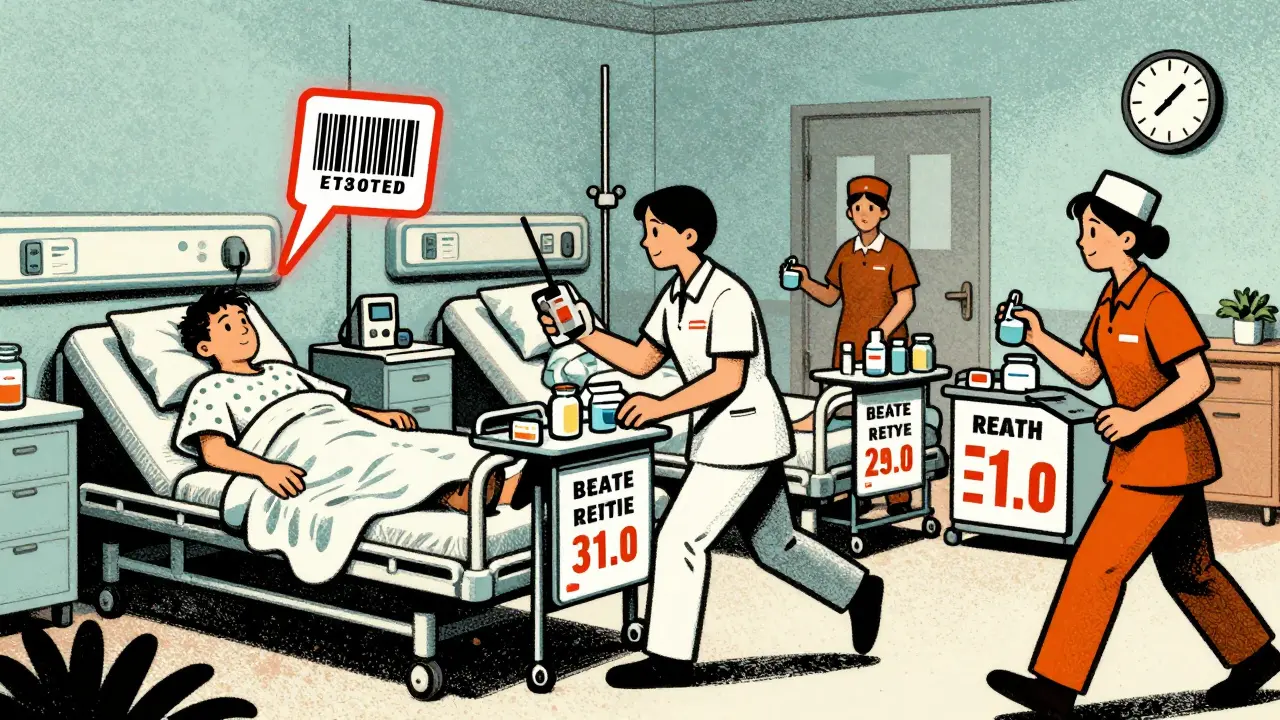
In hospitals, medication errors are everywhere. One study found that nearly 1 in 5 doses given to patients contained some kind of mistake - wrong drug, wrong time, wrong amount. That’s not a typo. That’s the norm in many facilities. Nurses give out 200 to 300 doses a day, often under pressure, with multiple patients to manage. It’s no surprise mistakes pile up. But here’s the twist: hospitals catch a lot of these before they hurt anyone. A nurse double-checks the label. A pharmacist reviews the order. A barcode scanner beeps if something’s off. So even though errors happen frequently, many are stopped before they reach the patient. In retail pharmacies, the numbers look better - only about 1.5% of prescriptions have dispensing errors. That sounds low, until you realize it means 45 million mistakes a year across the U.S. because pharmacies fill over 3 billion prescriptions annually. And here’s the big difference: in a retail pharmacy, there’s no nurse, no doctor, no second set of eyes after the pharmacist hands you the bottle. You’re the last line of defense.What Kind of Mistakes Happen?
In hospitals, the most common errors are timing issues - giving a drug two hours late, or skipping a dose because the nurse was busy. Wrong doses and wrong medications are also frequent, especially with high-risk drugs like insulin or blood thinners. These mistakes often happen during the administration phase, when the drug is being given to the patient. In retail pharmacies, the errors are different. The top three? Wrong medication, wrong dose, and wrong directions. One real case from the AHRQ involved a patient given estradiol - a hormone pill - with instructions to take one tablet twice a day instead of twice a week. The patient ended up with dangerous hormone levels and had to go back to the doctor. That’s not a rare case. It’s typical. Transcription errors are the biggest culprit in community pharmacies. A doctor writes “1 tablet twice weekly,” but the pharmacy’s computer misreads it as “twice daily.” Or the pharmacist mishears “10 mg” as “100 mg.” These aren’t glitches in the system - they’re human mistakes made worse by rushed workloads and poor interface design.Why Do These Errors Happen?
In hospitals, the problem is complexity. Patients are sicker. There are more drugs. More providers. More handoffs. A doctor prescribes. A pharmacist fills. A nurse administers. Each step is a chance for miscommunication. Staff are overworked. Shifts are long. Electronic systems don’t always talk to each other. A 2021 study showed that 40% of hospital errors stemmed from unclear handwriting or mismatched digital records. In retail pharmacies, the problem is isolation. Pharmacists often work alone. One person handles everything: scanning the prescription, checking the drug, counting pills, printing the label, counseling the patient. One mistake, one distraction - and it’s done. A 2023 AHRQ report found that 80% of community pharmacy errors came from cognitive overload - the pharmacist was tired, distracted, or rushed. Automated systems help, but they can also create false confidence. If the machine says it’s right, the pharmacist doesn’t double-check. And here’s the quiet killer: no one’s watching. In hospitals, errors are logged, reviewed, and studied. In many retail pharmacies, there’s no formal reporting system. Even when there is, pharmacists fear punishment. They don’t report near-misses. So we never know how close we came to disaster.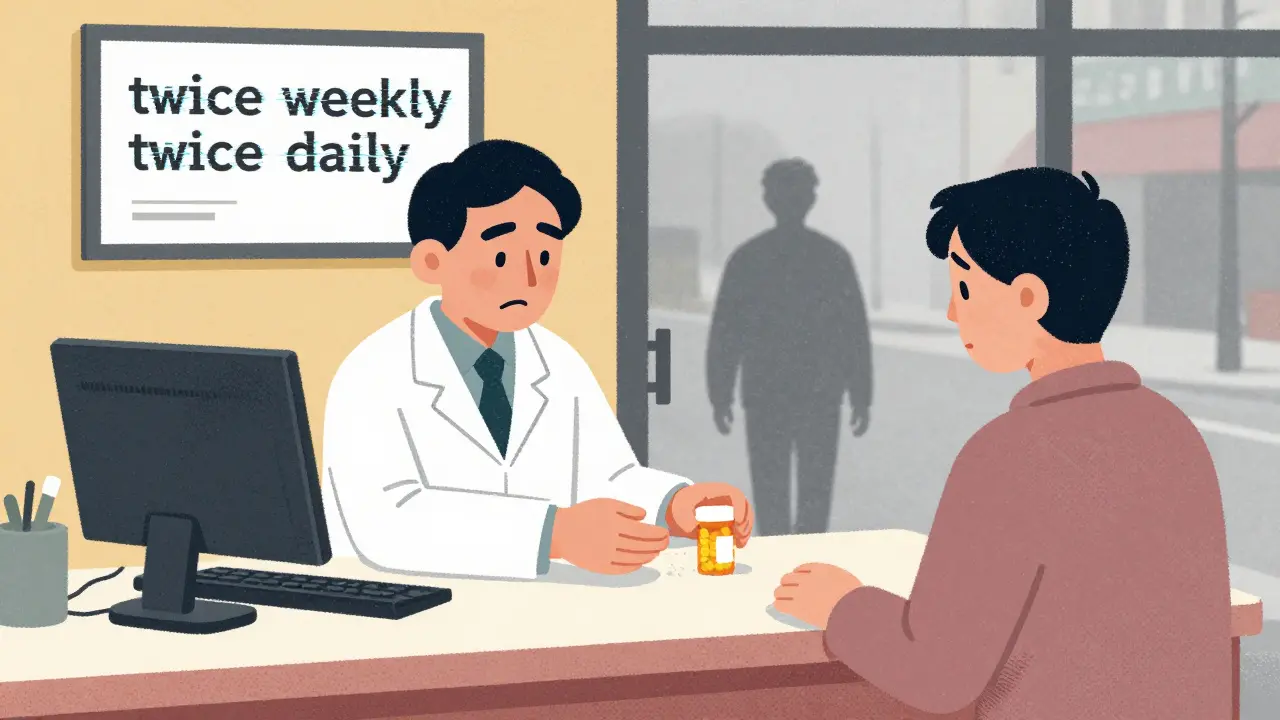
What Happens When Errors Reach Patients?
In hospitals, even when errors slip through, patients are monitored closely. If someone gets too much blood thinner, their INR is checked within hours. If they get the wrong antibiotic, their fever spikes, and staff respond. The system is designed to catch harm quickly. In retail pharmacies? You go home. You take the pill. You feel dizzy. You get nauseous. You think it’s the flu. Three days later, you end up in the ER - and the doctor finds out you were given the wrong dose of warfarin. That’s not hypothetical. The NIH found that for every 10,000 prescriptions filled in community pharmacies, three led to hospitalization. And that’s just the ones we know about. The cost? Hospitals spend at least $3.5 billion a year treating drug-related injuries. But retail pharmacy errors add billions more - emergency visits, missed work, long-term damage from untreated side effects. The total economic burden of all medication errors in the U.S. is over $177 billion a year.How Are We Fixing This?
Hospitals have made real progress. Barcode scanning systems cut administration errors by up to 86%. Electronic prescribing stopped 30% of handwriting-related mistakes. Integrated systems between EHRs and pharmacy databases cut errors by more than half at places like Mayo Clinic. Retail pharmacies are catching up - slowly. CVS Health rolled out AI-powered verification in 2022 and saw a 37% drop in dispensing errors. The University of California San Francisco piloted AI that flagged transcription mistakes before they were printed - reducing them by 63%. But these are exceptions. Most pharmacies still rely on a single pharmacist, a screen, and a prayer. The biggest fix isn’t technology - it’s culture. Hospitals have learned to report errors without fear. Retail pharmacies are still scared. If you report a mistake, you might get written up. You might lose your job. So you stay quiet. That’s why near-misses - the close calls - go unreported. And without knowing how close we came to disaster, we can’t fix what’s broken.
What Can You Do?
You’re not powerless. Whether you’re picking up a prescription or visiting a hospital, you have a role to play.- Always ask: “What is this for?” and “How should I take it?”
- Compare the pill in the bottle to the description on the label - color, shape, imprint.
- If the dose seems too high or too low, say something. “I’ve never taken 100 mg of this before.”
- Keep a list of all your meds - including over-the-counter and supplements - and bring it to every appointment.
- If you’re given a new prescription, ask if it’s safe with your other drugs.
What’s Next?
The FDA is pushing for nationwide standardization of error reporting - something hospitals have had for years. The 2024 Digital Health Center of Excellence initiative is testing AI tools that flag dangerous prescriptions in real time, both in hospitals and pharmacies. But progress depends on two things: better tech and better culture. We can’t just blame pharmacists or nurses. We need systems that don’t rely on human perfection. We need tools that catch mistakes before they leave the pharmacy. We need reporting systems that protect those who speak up. Until then, the numbers won’t change. And people will keep getting hurt - not because they’re careless, but because the system isn’t.Are medication errors more common in hospitals or retail pharmacies?
Hospitals have higher error rates - about 20% of doses contain some kind of mistake. But retail pharmacies have more errors that reach patients undetected. While only 1.5% of prescriptions in retail pharmacies have dispensing errors, that still adds up to 45 million mistakes a year. The difference is that hospitals have multiple safety checks; retail pharmacies usually have none after the pharmacist hands you the bottle.
What are the most common types of pharmacy errors?
In retail pharmacies, the top three errors are: giving the wrong medication, the wrong dose, or the wrong instructions. Transcription errors - like misreading “twice a week” as “twice a day” - are especially dangerous. In hospitals, timing errors (giving a drug late or skipping it) and wrong doses during administration are most common.
Can medication errors be prevented?
Yes - but it takes more than good intentions. Hospitals have reduced errors by using barcode scanning, electronic prescribing, and integrated systems. Retail pharmacies are starting to use AI tools that flag risky prescriptions before they’re filled. But the biggest barrier isn’t technology - it’s fear. Pharmacists often don’t report mistakes because they’re afraid of punishment. Creating a culture where reporting is safe is just as important as better software.
Why are retail pharmacy errors more dangerous?
Because there’s no safety net. In a hospital, if you get the wrong drug, nurses monitor you. Doctors check labs. In a retail pharmacy, you take the pill at home. You might feel fine - or you might get sick days later. By then, it’s hard to connect the dots. That’s why even a small error in a pharmacy can lead to hospitalization or worse.
What should I do if I think I got the wrong medication?
Don’t wait. Call your pharmacist and ask to speak with them directly. Compare the pill to the description on the label - color, shape, imprint. Check the dosage. If something doesn’t match, don’t take it. Contact your doctor. If you’ve already taken it and feel unwell, go to an urgent care center or call 911. It’s better to be safe than sorry.
10 Comments
Lauren WallJanuary 22, 2026 AT 23:13
People keep acting like pharmacists are angels with perfect memory. Nah. They’re overworked, underpaid, and expected to be robots. Stop blaming individuals and fix the system.
Kenji GaerlanJanuary 23, 2026 AT 02:38
lol so u mean like… my pharmacist gave me metformin instead of metoprolol? yeah that happened. i thought i was gonna die. turned out i just felt weird bc i was on the wrong med. dumb.
Akriti JainJanuary 24, 2026 AT 20:07
They’re watching you. 🕵️♀️ The FDA, Big Pharma, the AI that scans your pills - it’s all a trap. They want you dependent. That’s why they don’t fix the errors. More errors = more prescriptions = more profit. 🧪💸
Mike PJanuary 26, 2026 AT 09:40
Look, if you’re dumb enough to not check your own meds, you deserve what you get. I’ve been on 12 different prescriptions since 2018 and I catch every damn typo. You think your pharmacist cares? Nah. They’re counting their shift hours. Take responsibility. It’s not rocket science. 🇺🇸
Jasmine BryantJanuary 27, 2026 AT 19:02
Wait, so if a hospital has 20% error rate but catches most before they hit patients, and retail has 1.5% but none catch them… then technically retail is more dangerous per error? That’s wild. I didn’t realize the safety net was so uneven. Also, I once took a pill that looked like a Skittle. I didn’t realize it wasn’t supposed to be rainbow-colored. 🤦♀️
Sarvesh CKJanuary 27, 2026 AT 21:11
The fundamental issue lies in the ontological separation of care systems: institutionalized medicine operates within a networked, accountable architecture, whereas community pharmacy functions as a solitary node in an atomized market. The absence of feedback loops in retail environments transforms human fallibility into systemic vulnerability. We must not conflate statistical frequency with actual harm - the latter is far more insidious where accountability is absent. A culture of silence, born of fear, perpetuates structural harm. Reform must address epistemic injustice, not merely technological gaps.
Hilary MillerJanuary 28, 2026 AT 23:12
Just got back from India - their pharmacies have like, 3 people double-checking everything. No AI, no scanners. Just people talking. Maybe we don’t need more tech. Maybe we need more humans.
Margaret KhaembaJanuary 29, 2026 AT 15:03
My grandma always asks what her pills are for. I thought she was being annoying. Now I get it. She’s the only one who’ll notice if the color’s wrong. We should all be like her.
Malik RonquilloJanuary 30, 2026 AT 23:14
Y’all act like this is new. My uncle died from a pharmacy mix-up in ’09. Nobody got fired. Nobody got sued. They just gave him a free bottle of aspirin as an apology. That’s the system. 😔
Ryan RiestererJanuary 31, 2026 AT 17:00
The 1.5% error rate in retail pharmacies is misleading without context. The base volume - 3B prescriptions - means the absolute number of errors is statistically significant. The absence of real-time monitoring and post-dispensing surveillance in community settings creates a latent risk profile that is disproportionately high relative to institutional environments. Automation mitigates but does not eliminate cognitive load. The cultural aversion to error reporting remains the primary barrier to systemic improvement.