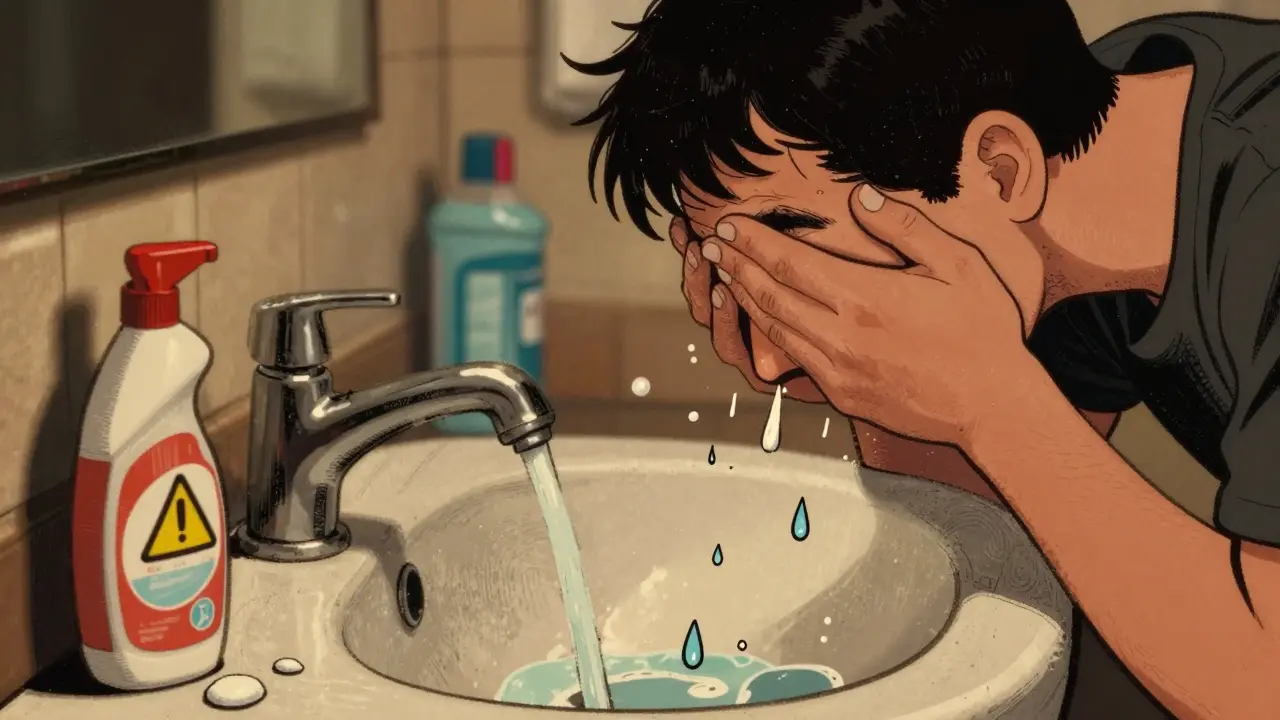
When a chemical splash hits your eye, every second counts. It’s not like a cut or a bruise-you can’t wait to see if it gets better. Corrosive substances can burn through the surface of your eye in under 10 seconds. Alkali chemicals like drain cleaner, ammonia, or cement dust are especially dangerous because they don’t just burn-they keep spreading deep into the tissue. Acid burns are serious too, but they tend to stop at the surface. The difference? One can blind you for life. And the only thing that stops it? Immediate, continuous irrigation.
Why Speed Is Everything
A 2017 meta-analysis in the British Journal of Ophthalmology found that starting water irrigation within 10 seconds of exposure reduces the risk of permanent vision loss by 76%. That’s not a guess. That’s data from hundreds of real cases. Delay just one minute, and the damage multiplies. Two minutes? You’re looking at a much higher chance of corneal scarring, perforation, or even loss of the eye. In workplaces where chemicals are used, the average delay before someone starts flushing their eye is over two minutes. Why? Panic. Confusion. Believing they’ll be fine if they just rub it out. But rubbing makes it worse. It grinds the chemical deeper into the eye. And most people don’t know how long to flush for. They think 30 seconds is enough. It’s not.The Right Way to Flush: Step by Step
Here’s what actually works, based on the latest guidelines from the American Red Cross, CDC, and ophthalmology experts:- Don’t panic. Don’t rub. Rubbing is the #1 mistake people make. It pushes the chemical into the eye and scrapes the surface. Keep your hands away.
- Start flushing right away. Don’t look for saline. Don’t wait for someone to help. Use whatever clean water is closest-tap water, a sink, a hose, even bottled water. It doesn’t have to be sterile. Water is the best first aid you can give.
- Hold your eye open. Use your fingers to gently pull your upper and lower eyelids apart. If you can’t do it yourself, ask someone to help. The goal is to get water flowing over the entire surface of the eye, not just the corner.
- Flush for at least 20 minutes. This is non-negotiable. Healthdirect Australia, the Better Health Channel, and multiple ophthalmology clinics agree: 20 minutes is the minimum. Some cases need longer, especially with strong alkalis. Don’t stop just because it feels better. The chemical may still be active beneath the surface.
- Keep your head tilted. Tilt your head back and turn it so the injured eye is down. This stops the chemical from running into your other eye. Most guides leave this out. It’s critical.
- Remove contact lenses if you can. If your eye isn’t severely swollen or damaged, try to gently remove the lens. It can trap chemicals underneath. If you can’t remove it without causing more pain, leave it and keep flushing. The water will wash around it.
- Keep going until help arrives. The American Red Cross says to flush until EMS gets there. That’s the safest rule. If you’re at home, keep flushing while someone calls 999. If you’re at work, get to the eyewash station and stay under it for the full time.
What Not to Do
There are a lot of myths out there. Don’t fall for them:- Don’t use eye drops or ointments. They won’t neutralize the chemical. They might even trap it.
- Don’t bandage the eye. Covering it can trap heat and chemicals. Let the water flow.
- Don’t wait to see a doctor. Even if it feels fine after flushing, you need professional evaluation. Damage can develop hours later.
- Don’t rely on pH strips. While some guidelines mention checking pH, you won’t have litmus paper handy in an emergency. Just flush. Keep going.
Tap Water vs. Saline: Does It Matter?
You’ve probably heard that saline is better. It’s not. A 2020 study in JAMA Ophthalmology found no difference in outcomes between tap water and sterile saline for initial irrigation. Tap water is readily available, cheap, and effective. Saline solutions are useful in hospitals, but in the first minutes after injury, water wins. The key isn’t the type of fluid-it’s the volume and the speed.Workplace vs. Home: What’s Different?
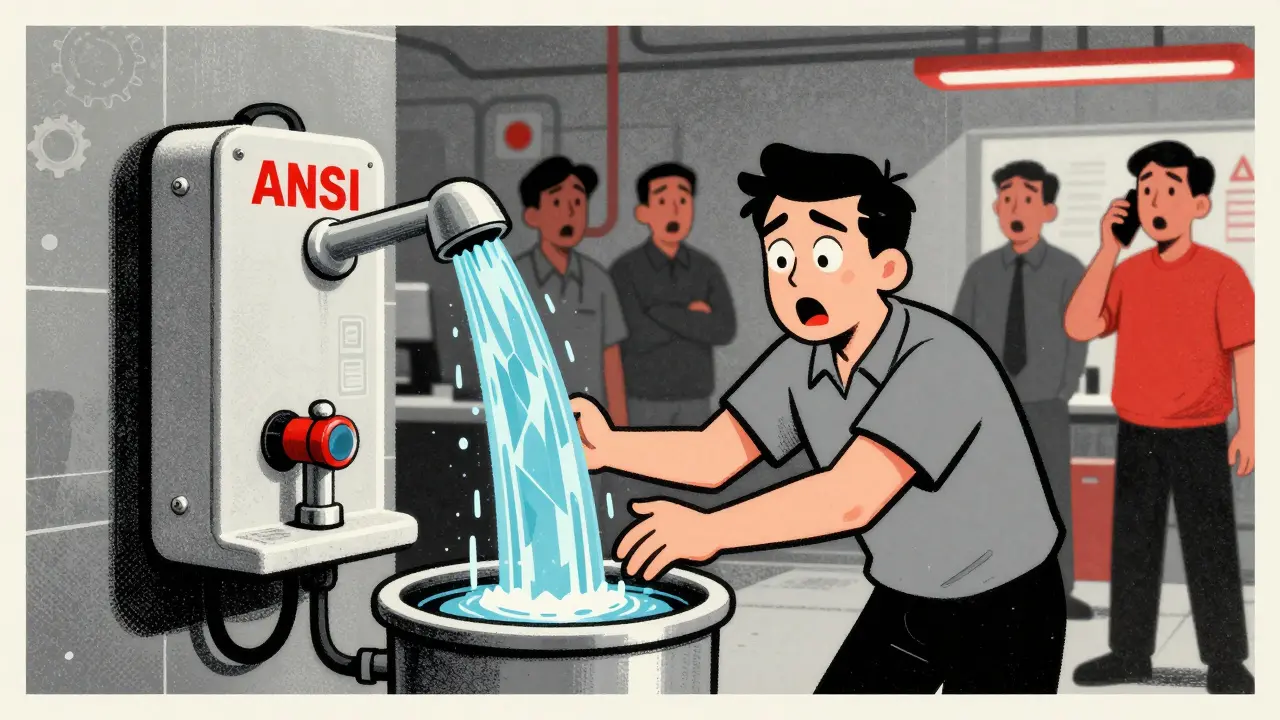
If you work with chemicals, your workplace should have an ANSI Z358.1-compliant eyewash station. That means:- Water flows at 0.4 gallons per minute (about 1.5 liters)
- Water is tepid-between 60°F and 100°F (16°C-38°C)
- It activates in under one second
- It’s located within a 10-second walk from the hazard
What Happens After Flushing?
Even after 20 minutes of flushing, you still need medical care. A doctor will check for:- Corneal damage using a special dye
- Pressure inside the eye (intraocular pressure)
- Signs of infection or delayed tissue death
Why Most People Get It Wrong
A 2022 study of over 1,200 workplace eye injuries found:- 68% rubbed their eyes
- 83% used too little water
- 57% stopped flushing too soon
What’s New in 2026?
There’s one new tool gaining traction: Diphoterine, a special ocular decontamination solution approved by the FDA in 2022. It doesn’t just wash away chemicals-it binds to them and neutralizes them on contact. Studies show it cuts irrigation time by 40%. But it’s expensive and not widely available outside hospitals and industrial sites. Another development? Smart safety goggles with built-in pH sensors. 3M is testing them now. They flash a warning if they detect a chemical splash and even count down the recommended flush time. They’re not on the market yet, but they’re coming. For now, though, the best tool is still the same: water, patience, and speed.Final Reminder: This Is Preventable
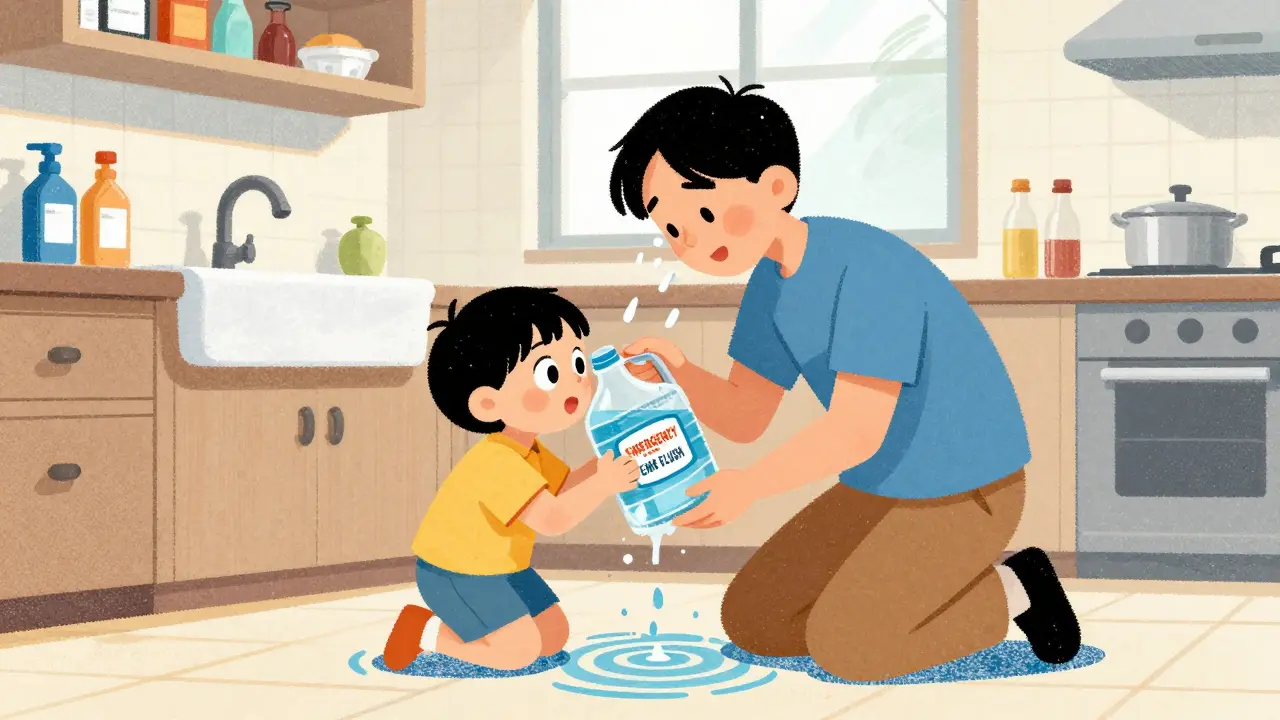
Chemical eye injuries aren’t accidents waiting to happen. They’re failures of preparation. Every household with bleach. Every workshop with solvents. Every salon with hair relaxer. All of them need a plan. - Know where your water source is. - Practice flushing your own eye with water. - Keep a jug of water near cleaning supplies. - Teach your kids what to do if something gets in their eye. - Check your workplace eyewash station. Vision is fragile. One mistake, one second of delay, and it can be gone forever. Don’t wait until it’s too late to learn.How long should I flush my eye after a chemical splash?
Flush for at least 20 minutes. Some experts say 15 minutes is the minimum, but 20 is the safest target. For strong alkalis like lye or ammonia, you may need longer. Don’t stop just because it feels better. The chemical can still be active under the surface. Keep flushing until help arrives.
Should I use saline or tap water?
Use tap water. It’s just as effective as sterile saline for initial first aid. Saline is better in a hospital setting, but in an emergency, water is fast, free, and available. Don’t waste time looking for saline-start flushing right away with whatever water you have.
Can I remove my contact lenses after a chemical splash?
If your eye isn’t swollen or severely damaged, try to remove the contact lens gently. It can trap chemicals underneath. But if it’s too painful or the eye is too irritated, don’t force it. Keep flushing water over the eye-the water will wash around the lens. Removing it isn’t worth risking more damage.
Do I still need to see a doctor after flushing?
Yes. Always. Even if your eye feels fine after 20 minutes of flushing, chemical damage can develop hours later. A doctor will check for hidden corneal burns, pressure changes, or signs of infection. Delaying care can lead to permanent vision loss or the need for a corneal transplant.
What’s the most common mistake people make?
Rubbing the eye. People instinctively rub when something gets in their eye, but that grinds the chemical deeper into the tissue. Other big mistakes: stopping irrigation too soon, using too little water, and waiting to get help instead of starting right away. Speed and volume matter more than anything else.
Are eyewash stations required at work?
Yes. In the U.S. and many other countries, OSHA and ANSI require eyewash stations in any workplace where hazardous chemicals are used. They must deliver tepid water (60-100°F) at 0.4 gallons per minute for at least 15 minutes, and be reachable within 10 seconds. If your workplace doesn’t have one-or it’s broken-report it. Your vision is worth it.
Can chemical eye injuries be prevented?
Absolutely. Wear safety goggles when using cleaning products, pool chemicals, or industrial solvents. Store chemicals out of reach of children. Label containers clearly. Practice what to do if something splashes in your eye. Training reduces injuries by over 70%. Prevention isn’t optional-it’s essential.
14 Comments
Travis CrawJanuary 16, 2026 AT 21:10
I used to think rubbing your eye was the move until I saw my buddy get bleach in his eye at work. He panicked, rubbed, and ended up with a scar. Never again. Just flush. No excuses.Bobbi-Marie NovaJanuary 17, 2026 AT 21:04
I keep a big jug of water next to my bleach bottles now. Just in case. My 8-year-old knows to grab it before screaming. #BetterSafeThanBlindChristina BilottiJanuary 19, 2026 AT 11:10
Wow. Someone actually wrote a 2000-word essay on flushing your eye with water. And I thought the CDC was just for flu shots.Next up: 'How to Breathe: A Comprehensive Guide to Not Suffocating in Air.'
Bianca LeonhardtJanuary 19, 2026 AT 18:30
I don’t care how many studies you cite. If you don’t have a $2000 Diphoterine solution handy, you’re just playing Russian roulette with your vision. This post is cute. It’s not enough.Henry IpJanuary 20, 2026 AT 20:33
I work in a lab. We had a drill last month. 20 minutes of water. No stopping. No talking. Just flush.Most people lasted 4 minutes. I made it. My eye still works. Do the drill. It’s not a suggestion.
Jody FahrenkrugJanuary 22, 2026 AT 02:22
My mom used to say 'water fixes everything.' Didn't think she meant eyeballs. But she was right. I keep a bottle by my sink now. Just in case.Kasey SummererJanuary 22, 2026 AT 16:04
So basically the answer to 'my eye is on fire' is... water? 🤯Who knew. I thought it was vodka or something. My bad. 🙃
kanchan tiwariJanuary 24, 2026 AT 00:59
THEY KNOW. THEY ALL KNOW. WHY AREN’T THEY TELLING US ABOUT DIPHOTERINE? WHY IS THE GOVERNMENT LETTING US USE TAP WATER? THIS IS A COVER-UP. I’VE SEEN THE DOCUMENTS. THEY’RE HIDING THE TRUTH BEHIND 'ECONOMY' AND 'CONVENIENCE'. MY EYE ISN’T SAFE. NO ONE’S SAFE.evelyn welldingJanuary 25, 2026 AT 12:39
You’re not alone. I used to think this was overkill. Now I have a sign on my bathroom mirror: FLUSH 20 MINUTES. NO EXCEPTIONS. 💪❤️Corey SawchukJanuary 25, 2026 AT 22:51
I had a chemical splash in my eye once. Took me 3 minutes to start flushing because I was looking for saline. Took me another 5 to find a sink. My eye’s fine now but I’ll never forget the panic. Water is enough. Just use it.Rob DenekeJanuary 27, 2026 AT 17:40
If you're at home and you don't have water nearby, you're already behind. Buy a gallon jug. Keep it by the bleach. It's cheaper than a corneal transplant.Chelsea HartonJanuary 28, 2026 AT 02:13
The real tragedy is people don’t practice. Knowledge without muscle memory is just noise.Corey ChrisingerJanuary 28, 2026 AT 04:07
We treat eyes like they’re disposable. But they’re the only part of us that can’t be replaced without losing a piece of who we are.Flushing isn’t first aid. It’s a prayer.
Nick ColeJanuary 29, 2026 AT 06:41
I’m a nurse. I’ve seen the aftermath. People who waited. People who rubbed. People who thought 'it’ll be fine.'The ones who flushed right away? They’re the ones who still see their kids’ faces. Don’t be the other one.