When you’re managing multiple medications, a simple mistake - like taking the wrong dose or missing a warning - can lead to serious harm. That’s why documenting safety alerts on your medication list isn’t just a good idea. It’s a lifesaving habit. Whether you’re a patient, a caregiver, or a healthcare provider, knowing exactly how to track these alerts can cut your risk of a dangerous error in half.
Why Safety Alerts Matter
Not all medications are created equal. Some are safe even if you take them a little wrong. Others? One small mistake can send you to the ER - or worse. These are called high-alert medications. The Institute for Safe Medication Practices (ISMP) keeps a list of these drugs, updated every two years. As of 2024-2025, the list includes 19 categories: insulin, opioids, anticoagulants like warfarin, neuromuscular blockers, and chemotherapy drugs.Why do these drugs need special attention? Because they’re powerful. A wrong dose of insulin can drop your blood sugar to life-threatening levels. A misread label on an anticoagulant can cause internal bleeding. Studies from the World Health Organization show that when safety alerts are properly documented and followed, medication errors drop by up to 50% in hospitals. That’s not a guess. That’s data.
But here’s the catch: alerts only work if they’re documented clearly - and if someone actually checks them. Electronic systems alone won’t save you. If a pharmacist sees 15 alerts for every prescription, they start ignoring them. That’s called alert fatigue. The key isn’t more alerts. It’s better documentation.
What to Document
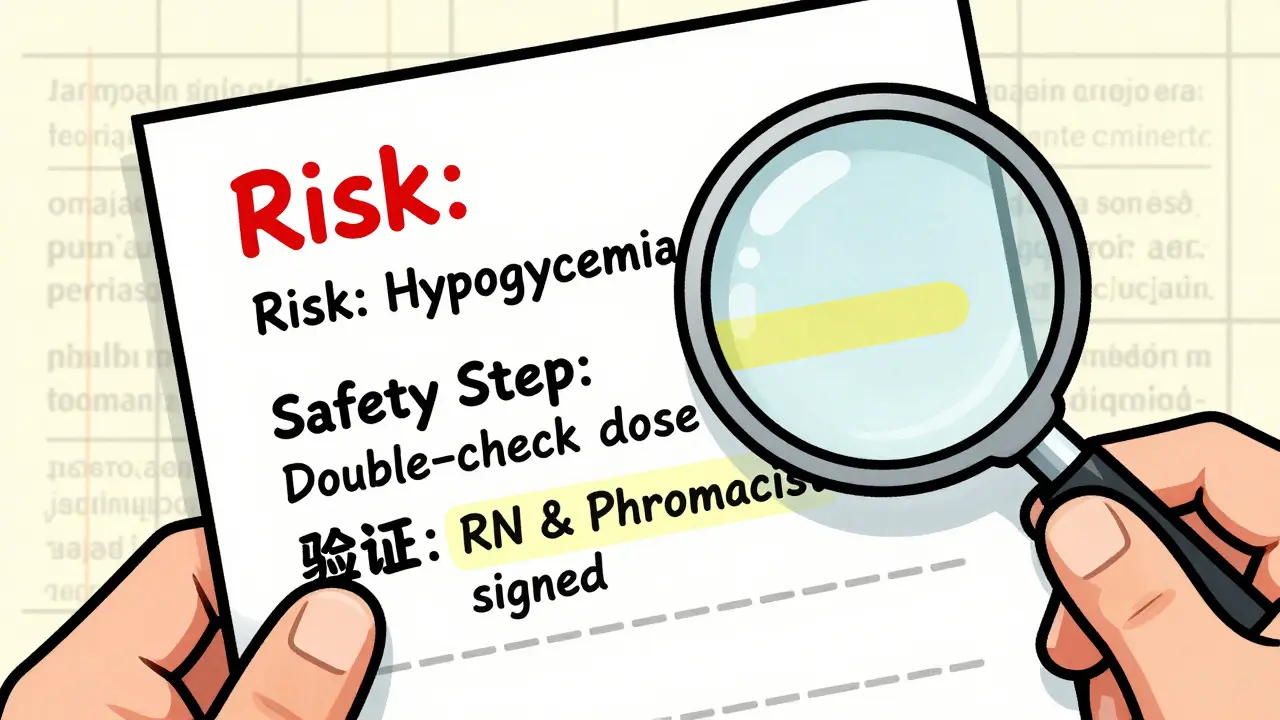
You don’t need to write a novel. You need to record three things for each high-alert medication:- The specific risk - What can go wrong? For insulin, it’s hypoglycemia. For methotrexate, it’s bone marrow suppression.
- The safety step - What must happen to prevent the error? For example: "Must use separate syringe for insulin; double-check dose with second provider."
- The verification - How do you know the step was done? "Barcode scanned at point of administration. Signed off by RN and Pharmacist."
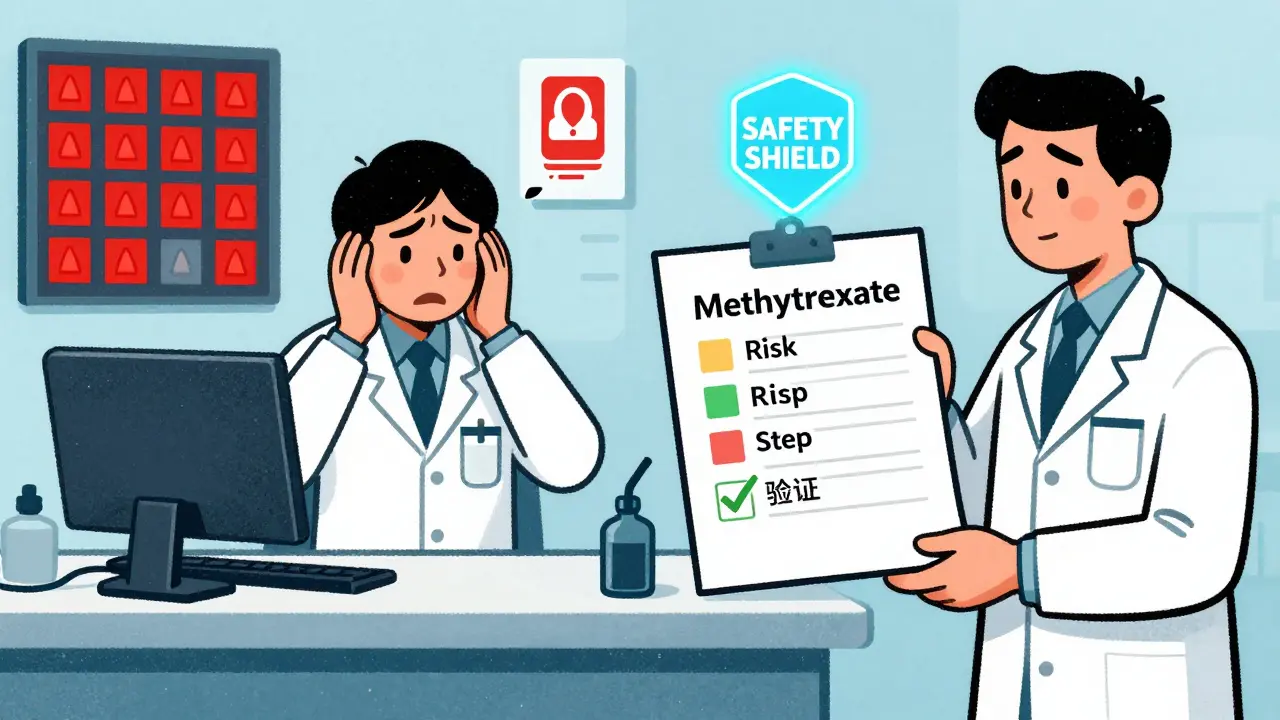
Take oral methotrexate. A common error? Prescribing it daily instead of weekly. The ISMP says every prescription for this drug must include a hard-stop in the electronic system that forces the prescriber to select "weekly dosing" and document the reason - like "rheumatoid arthritis" or "psoriasis." No documentation? The order won’t go through.
For neuromuscular blockers - drugs that stop breathing - the warning label must say exactly: "WARNING: CAUSES RESPIRATORY ARREST - PATIENT MUST BE VENTILATED." No variations. No abbreviations. This isn’t bureaucracy. It’s a failsafe.
How to Set Up Your System
If you’re managing this for yourself or someone else, start with a simple paper or digital list. Here’s how:- List all high-alert meds - Cross-check your list with the current ISMP 2024-2025 list. Don’t guess. If you’re unsure, ask your pharmacist.
- For each one, write the safety rule - Use plain language. "Take on empty stomach. Do not crush. Check blood count monthly."
- Attach verification - "Verified by nurse on 1/15/2026" or "Patient confirmed understanding on 2/10/2026."
- Update monthly - New meds? New warnings? Update the list. The FDA issues about 120 safety alerts a year. You can’t keep up unless you check regularly.
- Share it - Give a copy to your doctor, pharmacist, and caregiver. Keep one in your wallet. Use a photo of it on your phone.
For healthcare teams, the process is deeper. Facilities must assign a medication safety officer - someone whose job is to track this stuff. Monthly safety meetings are non-negotiable. Studies show teams that meet regularly have 33% fewer alert bypasses. And they use electronic audit trails - not handwritten logs - to track every time an alert is ignored or overridden.
What Not to Do
There are three big mistakes people make:- Using vague language - "Watch for side effects" is useless. Say exactly what to watch for: "Check for bruising, dark urine, or dizziness - signs of bleeding."
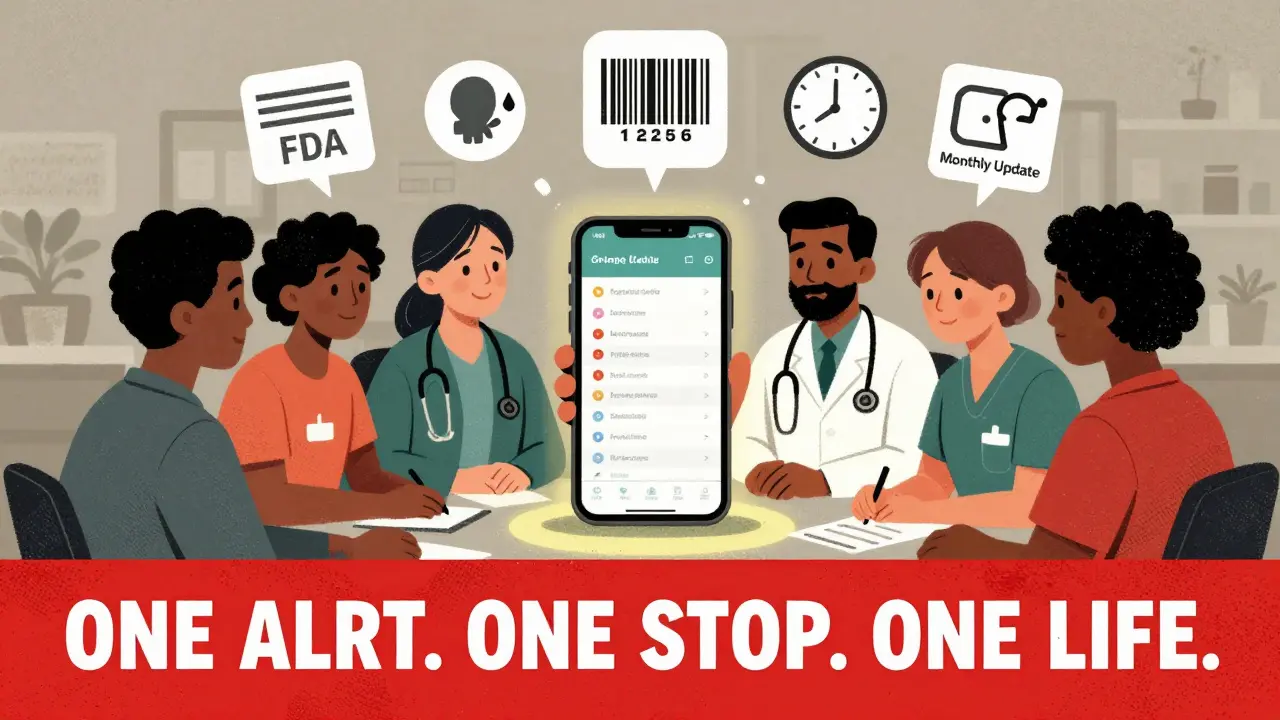
- Ignoring external alerts - The FDA, WHO, and ISMP all send out safety notices. If your facility doesn’t have a system to pull these in automatically, you’re missing critical updates. The FDA’s new Sentinel Initiative now feeds alerts directly into EHRs - if you’re using one, make sure it’s turned on.
- Overloading the list - If every drug has five alerts, people tune out. Focus only on high-alert meds. Don’t document routine side effects. Save space for real dangers.
One nurse in a rural hospital told a Reddit thread: "We’re supposed to document every bypassed alert, but with three pharmacists covering 24/7, we don’t have time. It just feels like paperwork." That’s the trap. Documentation isn’t about filling out forms. It’s about closing loops. Every alert must lead to a verified action - or it’s noise.
What Works in Real Life
At the University of Michigan Health System, pharmacist Jennifer Martinez implemented the full ISMP documentation system. Within 18 months, high-alert medication errors dropped by 63%. How? They didn’t just add more alerts. They redesigned the process:- Insulin: Standardized concentrations, barcode scanning, dual verification.
- Methotrexate: Hard-stop in EHR with mandatory indication field.
- Anticoagulants: Weekly INR checks documented in the chart - not just noted verbally.
They also assigned a full-time safety coordinator. It cost about $50,000 a year in staff time. But they prevented 17 serious adverse events in the first year. That’s worth it.
On the flip side, smaller clinics struggle. The AHRQ found that 37% of rural hospitals can’t fully implement these systems because of staffing. But even small steps help. Start with one high-alert med. Document one safety step. Track one verification. Build from there.
The Future Is Automated
The good news? Technology is catching up. The FDA’s Sentinel Initiative now sends automated safety alerts directly into hospital systems - cutting manual entry by 80%. Epic Systems is launching an AI tool in Q2 2025 that learns from your facility’s error patterns and prioritizes alerts. Early tests show it reduces false alarms by 40%.But AI isn’t magic. Dr. David Bates warned in JAMA Internal Medicine that early AI systems missed 18% of critical alerts. Human oversight still matters. The goal isn’t to replace people. It’s to give them better tools.
By 2027, the ECRI Institute predicts 75% of U.S. hospitals will have fully automated documentation systems. That means fewer paper logs, fewer missed alerts, and fewer preventable deaths.
Start Today
You don’t need a hospital budget. You don’t need a tech team. You just need to act.Take out your medication list right now. Find one high-alert drug. Ask: What’s the risk? What’s the safety step? How do I know it was done? Write it down. Share it. Update it next month.
That’s all it takes to turn a piece of paper into a shield.
What exactly counts as a high-alert medication?
High-alert medications are drugs that carry a higher risk of causing serious harm if used incorrectly. The ISMP’s 2024-2025 list includes 19 categories: insulin, opioids, anticoagulants (like warfarin and heparin), neuromuscular blockers, chemotherapy agents, IV potassium and other electrolytes, epidural medications, concentrated sodium chloride, and more. These aren’t just "strong" drugs - they’re drugs where even a small error (wrong dose, wrong route, wrong patient) can lead to death or permanent injury.
Do I need to document alerts for all my medications?
No. Only document alerts for high-alert medications. For routine drugs like blood pressure pills or antibiotics, standard dosing and side effect info is enough. Focusing only on high-risk drugs keeps your list clear and actionable. If you try to document every possible side effect, you’ll overwhelm yourself - and miss the real dangers.
Can I use my phone to track safety alerts?
Yes - and it’s one of the best ways. Use a note-taking app, a spreadsheet, or a dedicated medication app that lets you add custom fields. Make sure you can view it offline, and take a screenshot or photo to store in your phone’s gallery. Share access with your pharmacist or caregiver. Many apps now integrate with pharmacy systems and can flag FDA alerts automatically.
How often should I update my safety documentation?
Update it every month. New warnings come out all the time - the FDA releases about 120 drug safety alerts each year. Also, if you start or stop a medication, change doses, or see a new provider, update the list immediately. Don’t wait for a "big review." Safety isn’t seasonal.
What if my doctor or pharmacist ignores my documentation?
Politely insist. Say: "I’ve documented this because it’s a high-alert medication, and I want to make sure we follow the safety steps." If they dismiss it, ask for a second opinion or contact your pharmacy’s medication safety team. You have the right to safe care. Your documentation isn’t optional - it’s your protection.
15 Comments
Bhaskar AnandFebruary 26, 2026 AT 00:03
This is pure nonsense. In India, we don't have the luxury of barcode scanners or pharmacists double-checking every dose. We use what we have. A handwritten note on a pill bottle is more reliable than some fancy EHR that crashes during monsoon season. Stop overcomplicating life.William JamesFebruary 27, 2026 AT 11:30
I love how this post breaks it down so clearly. Seriously, if you're managing meds for someone you care about, this isn't just advice-it's a lifeline. I've seen families drown in confusion, and all it takes is one clear line: 'What's the risk? What's the step? How do we know it happened?' That's the whole game. Keep it simple. Keep it human.David McKieFebruary 28, 2026 AT 15:56
You people are treating medication like a sacred text. It's not. It's chemistry. And chemistry doesn't care about your 'safety steps' or 'verification logs.' You think a nurse in a rural ER is going to stop and document a barcode scan? No. They're juggling 12 patients and a power outage. This system is designed for hospitals with WiFi and coffee machines. Real life doesn't have checklists.Southern Indiana Paleontology InstituteMarch 2, 2026 AT 05:50
I've been in this game for 20 years. You don't need all this fluff. Just write 'don't mix with alcohol' on the bottle. That's it. People don't read novels. They read one line. One. And if it's not in bold, they'll forget it. Also, 'neuromuscular blockers cause respiratory arrest'? DUH. That's why they're given in ORs. Not in living rooms.Anil bhardwajMarch 3, 2026 AT 18:26
I read this while waiting for my mom’s refill. Honestly? It made me feel less alone. My grandma’s list is scribbled on a napkin. But now I’m gonna write it properly. Not for the system. For her. Just one step at a time.lela izzaniMarch 5, 2026 AT 15:44
One thing this post misses: the emotional weight of this work. When you’re the one who has to remember, who has to double-check, who has to fight for clarity-it’s exhausting. But it matters. I’ve seen people live longer because someone took the time to write down the right words. Don’t underestimate that.Dinesh DawnMarch 6, 2026 AT 13:13
I just started helping my brother with his insulin. I didn’t even know what a high-alert med was until today. Thanks for making it feel doable. I wrote it on my phone notes. Took me 5 minutes. That’s all it took.Vanessa DrummondMarch 7, 2026 AT 08:32
I work in a clinic where the EHR is so glitchy we print everything. And guess what? We still have errors. Why? Because no one reads the damn paper. I’ve seen a patient sign a form that says 'take with food' and then take it on an empty stomach. The form didn’t save them. The conversation did. Talk to people. Not systems.Nick HambyMarch 7, 2026 AT 13:23
There is a profound philosophical truth embedded here: safety is not a feature. It is a practice. A daily, deliberate, disciplined act of attention. We have outsourced vigilance to algorithms, to barcodes, to checklists-and in doing so, we have eroded the human capacity to care. The real innovation isn’t in the software. It’s in the willingness to pause, to verify, to speak up-even when it’s inconvenient. That is the moral core of this entire framework.kirti junejaMarch 7, 2026 AT 23:21
OMG I just started using Notion for my mom’s meds and it’s a GAME CHANGER. I made a template: Risk 🚨 | Step ✅ | Verified 📅 - now I can color code and even add little memes like 'Insulin = no cap' 😂. My aunt said she cried because it finally made sense. You don’t need a hospital. You need a heart and a phone.Haley GummMarch 9, 2026 AT 21:19
Funny how everyone acts like this is revolutionary. We’ve had this system in place since 2012. The real issue? Staff turnover. You train someone. They leave. New person? No clue. Documentation doesn’t fix culture. Leadership does.Gabrielle ConroyMarch 10, 2026 AT 07:01
I’m a pharmacist and I LOVE this!! 🙌 Seriously, the hard-stop for methotrexate? YES. We implemented it last year and had zero dosing errors since. Also, sharing the list with caregivers? That’s the magic. I had a mom send me a pic of her daughter’s list on her fridge. I cried. This works. It’s not magic. It’s love.Spenser BickettMarch 11, 2026 AT 01:07
So we’re supposed to write down 'what can go wrong' like we're writing a bedtime story? 'Once upon a time, insulin tried to make your blood sugar go too low... and the brave nurse said NOPE.' This is what happens when people who’ve never held a syringe write policy.Christopher WiedenhauptMarch 11, 2026 AT 16:14
The data is clear. Documentation reduces errors. The challenge is implementation. We must acknowledge systemic constraints-funding, training, staffing-before we idealize individual action. This is not a failure of will. It is a failure of infrastructure.John SmithMarch 12, 2026 AT 23:54
You think a paper list saves lives? Try telling that to the guy who died because his wife didn’t know the difference between 10 units and 100. This whole thing is theater. A distraction. Real safety? That’s not written down. It’s learned. By doing. By failing. By surviving.