Alpha-Glucosidase Inhibitor Dose Calculator
Personalized Dose Calculator
How to Start
Start with 25mg once daily with your largest meal. After one week, add a second dose. After another week, add the third dose. Never jump to full dosage.
Recommended Starting Dose
25 mg once daily with your largest meal
Take 25 mg once daily with your largest meal
Take 25 mg twice daily (with two meals)
Take 25 mg three times daily (with all main meals)
By following this schedule, you can reduce side effects by up to 50% as shown in clinical studies.
Symptom Management
Symptom Timeline
Initial side effects are most common in the first 4-8 weeks. By week 8, gas and bloating typically decrease by about 50%. After 6 months, most users report only mild, occasional symptoms.
Dietary Recommendations
- Aim for 30-45g carbs per meal
- Choose whole grains over refined carbs
- Swap white rice for brown rice or barley
- Include legumes (beans, lentils)
- Avoid high-fat foods with diarrhea
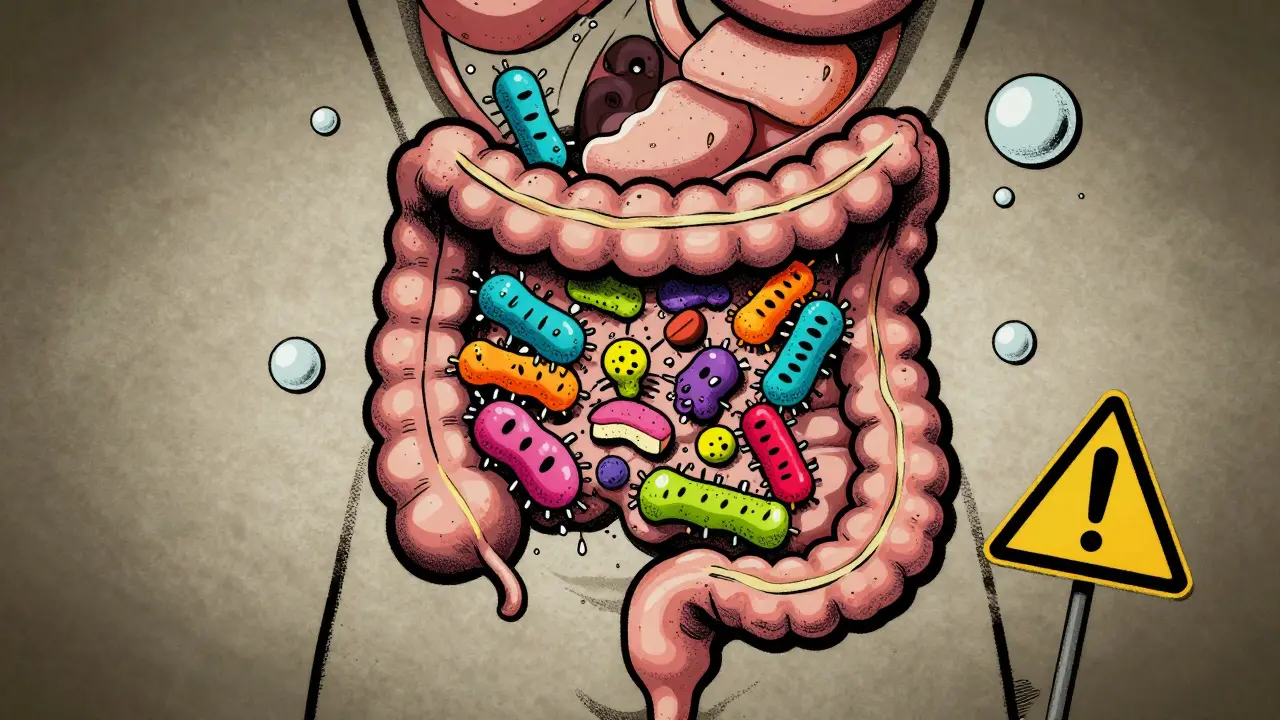
When you’re managing Type 2 diabetes, the goal isn’t just to lower blood sugar - it’s to do it without making your daily life unbearable. That’s where alpha-glucosidase inhibitors come in. These drugs, like acarbose and miglitol, are designed to stop your body from breaking down carbs too fast after meals. That means fewer spikes in blood sugar. But there’s a catch: they turn your gut into a fermentation factory.
How Alpha-Glucosidase Inhibitors Work - and Why They Cause Gut Trouble
Alpha-glucosidase inhibitors work right in your small intestine. They block enzymes that break down complex carbs like bread, rice, and potatoes into simple sugars your body can absorb. Instead of being digested, those carbs travel all the way to your colon. There, gut bacteria feast on them - and produce gas, fluid, and pressure as waste. That’s why you get bloated, gassy, and sometimes have diarrhea.
Unlike metformin, which often causes nausea or stomach upset, or GLP-1 drugs that make you feel sick to your stomach, these side effects hit lower down. It’s not heartburn - it’s a constant feeling of fullness, loud noises from your belly, and sudden urges to use the bathroom. Studies show up to 73% of people on acarbose experience gas in the first month. That’s not rare. That’s normal.
The Real Numbers: How Common Are These Side Effects?
Let’s get specific. In clinical trials:
- 30-50% of users report flatulence
- 14-30% have abdominal discomfort or cramping
- 10-20% develop diarrhea
And here’s what the real-world data shows: in a 2021 study of over 12,000 patients, 1 in 5 stopped taking these drugs within three months because the side effects were too much. On Drugs.com, acarbose has a 4.8 out of 10 rating - with nearly 60% of reviews calling it intolerable. That’s not because people are exaggerating. It’s because the science backs it up.
But here’s the twist: symptoms often get better. After six months, gas drops from 73% to about 25%. Your gut microbiome adapts. It’s not magic - it’s biology. But waiting six months without help isn’t easy.
Why These Drugs Still Exist - and Who Benefits Most
So if they’re so hard to tolerate, why do doctors still prescribe them?
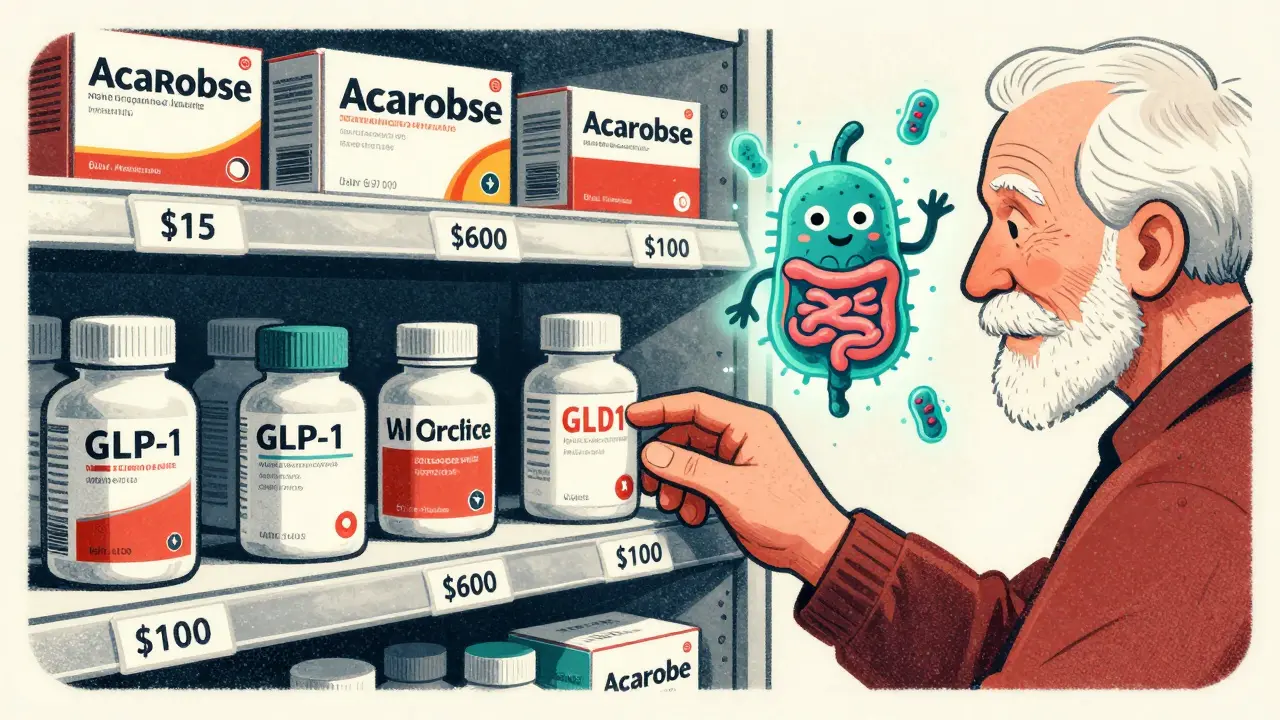
Because they don’t cause low blood sugar. They don’t make you gain weight. And they’re cheap - generic acarbose costs $15-$25 a month. That matters for older adults, people with kidney problems, or those who can’t afford newer drugs like semaglutide that run over $500 a month.
They’re also one of the few options that target post-meal spikes - the kind that happen after eating rice, pasta, or even fruit. For someone who eats a lot of carbs - common in Asian diets - this can be a game-changer. In China and India, alpha-glucosidase inhibitors make up over 8% of diabetes prescriptions. In the U.S., they’re down to 3.2%, but still used in 7.8% of Medicare prescriptions.
Dr. Robert Rizza from Mayo Clinic puts it simply: “If you can’t take metformin or GLP-1 drugs, and you need something that won’t cause hypoglycemia, this is still a tool.”
How to Make Them Tolerable - Step by Step
If your doctor prescribes acarbose or miglitol, don’t panic. There are ways to survive - and even thrive - on these drugs.
Start Low, Go Slow
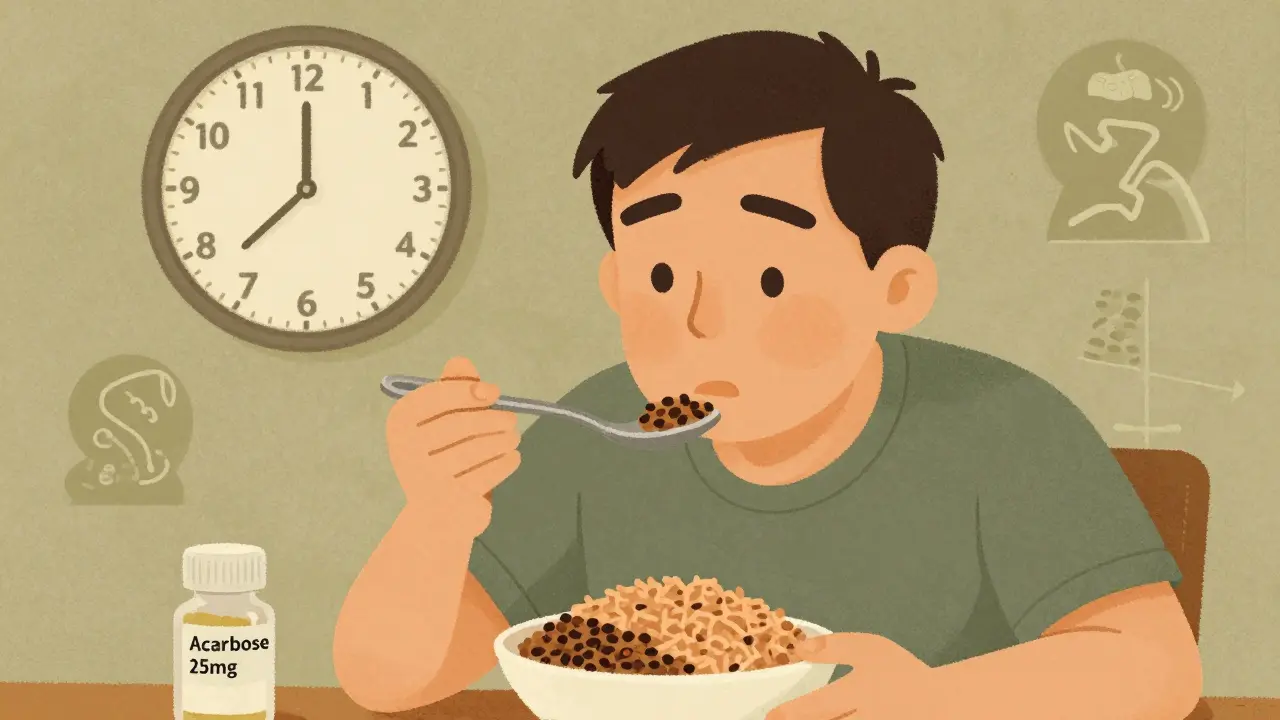
Don’t start at 50 mg three times a day. That’s asking for trouble. The standard recommendation is to begin with 25 mg once a day - with your biggest meal. Stay there for a full week. Then add a second dose the next week. After another week, add the third. This slow ramp-up cuts side effects in half.
Diet Is Everything
These drugs work by leaving carbs undigested. So if you eat a lot of white bread, potatoes, or sugary snacks, you’re feeding the bacteria that cause gas. Instead:
- Choose whole grains over refined carbs
- Swap white rice for brown rice or barley
- Include legumes - beans, lentils - they’re high in fiber and digest slowly
- Aim for 30-45 grams of carbs per meal, not 70+
A 2022 survey from the London Diabetes Centre found that patients who got personalized diet advice were twice as likely to stick with the drug long-term.
What to Avoid
Some over-the-counter remedies make things worse. Beano contains alpha-galactosidase - an enzyme that breaks down carbs. But if you take Beano with acarbose, you’re undoing the whole point of the drug. It won’t help - it’ll confuse your body.
Simethicone (like Gas-X) might help with bloating. It doesn’t stop gas, but it breaks up bubbles, so you feel less pressure. Try 125 mg before meals.
For Diarrhea
If you’re having frequent loose stools, loperamide (Imodium A-D) at 2 mg as needed can help. But don’t use it daily. And avoid high-fat foods - they make diarrhea worse when your digestion is already off.
When to Quit - And When to Stick With It
Not everyone can handle these drugs. If you’re having daily diarrhea, severe cramping, or bloating that makes you avoid social situations, talk to your doctor. There are better options now - SGLT2 inhibitors, GLP-1 agonists, even insulin.
But if your symptoms are mild to moderate, and you’re willing to adjust your diet and take it slow, many people find relief after 8-12 weeks. One user on Drugs.com wrote: “First month was hell. Month 3? My sugars dropped from 220 to 160. I can live with a little gas.”
What’s Next for These Drugs?
There’s no new version of acarbose coming. No fancy new delivery system. But research is looking at ways to reduce side effects. A 2023 trial found that combining acarbose with specific probiotics - Lactobacillus acidophilus and Bifidobacterium lactis - cut gas severity by 35%. That’s promising.
For now, these drugs are a niche tool. They’re not first-line. They’re not glamorous. But for someone who can’t take other medications, who needs to avoid low blood sugar, who can’t afford $600-a-month pills - they’re still a lifeline.
Bottom Line: Is It Worth It?
Alpha-glucosidase inhibitors aren’t for everyone. They’re not easy. But they’re effective - and uniquely safe for certain groups. If you’re prescribed one, don’t assume it’s a bad drug. It’s a drug with a steep learning curve.
Start low. Eat smart. Give it time. And if it doesn’t get better after three months? There are other options. But if you stick with it, you might find your blood sugar under control - without the risk of crashing, without the weight gain, and for less than the price of a coffee a day.
Do alpha-glucosidase inhibitors cause low blood sugar?
No, not when taken alone. Unlike sulfonylureas or insulin, alpha-glucosidase inhibitors don’t stimulate insulin release. They just slow down carb digestion. That means your blood sugar doesn’t spike - and it doesn’t crash. Hypoglycemia only happens if you take them with other diabetes drugs or skip meals after taking the pill.
Can I take Beano with acarbose?
No. Beano contains an enzyme that breaks down complex carbs - the same thing acarbose blocks. Taking both together cancels out the drug’s effect. You’ll get the gas without the blood sugar control. Stick to simethicone (Gas-X) if you need gas relief.
How long do side effects last?
Most people see the worst symptoms in the first 4-8 weeks. After that, as your gut bacteria adapt, gas and bloating drop by about half. Diarrhea usually improves faster. By six months, most users report only mild, occasional symptoms - if any.
Are these drugs still used in the U.S.?
Yes, but rarely as a first choice. They’re mostly used in older adults, people with kidney issues, or those who can’t afford newer drugs. In 2022, they made up just 3.2% of diabetes prescriptions in the U.S., down from over 5% in 2018. But they’re still prescribed - especially when safety and cost matter more than convenience.
What’s the best way to start acarbose?
Start with 25 mg once daily, taken with your largest meal. Stay at that dose for at least a week. Then add a second dose the next week, and the third dose after another week. Never jump to the full dose. Slow titration cuts side effects by up to 50%.
Can I eat carbs while taking these drugs?
Yes - but choose the right ones. Avoid white bread, potatoes, candy, and sugary drinks. Focus on whole grains, legumes, vegetables, and fruits with fiber. These digest slowly and cause fewer side effects. Aim for 30-45 grams of carbs per meal.
Why do these drugs work better in Asia?
Because diets there are higher in complex carbohydrates like rice and noodles - the exact foods these drugs are designed to slow down. In countries like China and India, where carbs make up 60-70% of daily calories, alpha-glucosidase inhibitors are more effective and better tolerated than in Western countries with higher fat and protein intake.
9 Comments
Amanda EichstaedtJanuary 12, 2026 AT 23:41
These drugs are the quiet heroes of diabetes care that nobody talks about. I’ve been on acarbose for two years now. First month? Pure chaos. But after adjusting my meals - swapping white rice for barley, cutting back on snacks - it became manageable. My A1C dropped from 8.1 to 6.4. No weight gain. No hypoglycemia. Just a little noise in the gut. Worth it.
jordan shiyangeniJanuary 13, 2026 AT 11:18
Let’s be clear - this isn’t ‘tolerable side effects,’ this is medical malpractice disguised as a solution. You’re telling people to endure chronic gastrointestinal torment for a drug that’s been around since the 90s? Meanwhile, GLP-1 agonists give you weight loss and glycemic control without turning your colon into a methane factory. The fact that this is still prescribed to elderly patients on Medicare is a testament to how broken our healthcare system is. No one should have to choose between their dignity and their blood sugar.
Abner San DiegoJanuary 14, 2026 AT 09:03
Ugh. I hate when people act like this is some genius hack. It’s just a cheap drug that makes you a walking gas station. I’m all for saving money but come on. If you’re gonna make me fart in meetings and run to the bathroom every 20 minutes, at least give me a pill that doesn’t make me feel like I’m being punished for eating rice. This is why people stop taking their meds. It’s not laziness - it’s survival.
Eileen ReillyJanuary 14, 2026 AT 19:30
ok but like… why is everyone acting surprised? of course your gut turns into a fermentation lab when you block carbs from digesting. its science. also beano is a trap. i tried it. wasted $12 and ended up with more gas. simethicone is the real MVP. and yeah, the diarrhea stops after like 6 weeks. just dont eat nachos.
Cecelia AltaJanuary 14, 2026 AT 21:55
I had a friend on this stuff. She cried in the grocery store because she was scared to buy bread. She thought everyone could smell her. She stopped taking it after three weeks. Her doctor didn’t even warn her. That’s not patient care. That’s negligence wrapped in a clinical trial. And now she’s on semaglutide and says she feels like a new person. So don’t tell me this is ‘worth it.’ It’s not. It’s a last resort for people who don’t have access to real medicine.
Faith WrightJanuary 16, 2026 AT 08:27
Look, I get why this drug exists. I really do. But let’s stop pretending it’s not brutal. If you’re going to prescribe this, you owe the patient a full 20-minute counseling session - not just a pamphlet. And if they’re from a culture where rice is a staple? You don’t just say ‘eat less carbs.’ You help them find rice varieties that are lower glycemic. You pair it with probiotics. You check in at week 4. Otherwise, you’re not a doctor. You’re a vending machine for pills.
TiM VinceJanuary 17, 2026 AT 05:35
My dad’s on this. He’s 72. Kidney issues. Can’t afford the new stuff. He started at 25mg once a day. Took him 3 months to get to full dose. Now he eats brown rice, lentils, and a little sweet potato. Doesn’t complain anymore. Says he’d rather have gas than a hospital visit. I think that’s worth respecting.
Sumit SharmaJanuary 18, 2026 AT 18:11
In India, we have been using acarbose for over two decades. The key is not the drug - it’s the diet. Traditional Indian meals already contain complex carbohydrates: lentils, millet, unpolished rice. These are naturally low-glycemic. The side effects are minimal because the carb load is slow-release. Western patients fail because they try to eat pizza and pasta with acarbose. That’s not the drug’s fault. It’s behavioral. Also, L. acidophilus + B. lactis probiotics reduce flatulence by 40% in our trials. This is not rocket science.
Jay PowersJanuary 19, 2026 AT 12:31
Just want to say thanks for writing this. I was ready to quit after the first week but your advice on starting slow saved me. I’m on month 5 now. Still get some bloating after pasta night but 90% better. My sugar’s steady. I don’t feel like a zombie. And I’m paying $18 a month. That’s not nothing. You’re right - it’s not glamorous. But sometimes the best tools are the quiet ones.