Medication-Fiber Timing Calculator
How to Use This Tool
Enter your medications and when you take them. This tool will calculate safe intervals for taking fiber supplements to avoid interactions with your drugs.
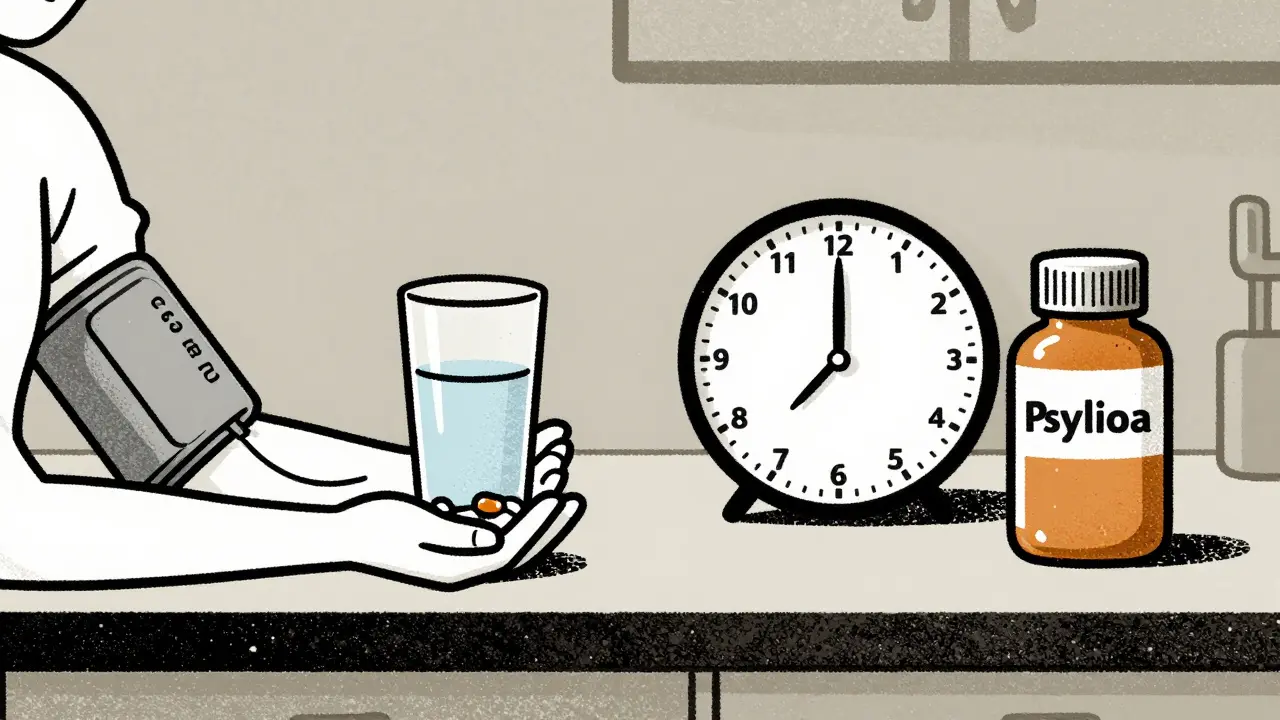
Fiber supplements like psyllium (Metamucil) can reduce absorption of medications if taken too close together. Always take fiber at least 2 hours before or after your medications.
Constipation doesn’t just feel uncomfortable-it can throw off your whole day. And if you’re already taking medications, adding a fiber supplement like psyllium might seem like a simple fix. But here’s the catch: fiber supplements can interfere with how your meds work. If you take them at the wrong time, your blood pressure pill, diabetes drug, or antidepressant might not do what it’s supposed to. This isn’t speculation. It’s backed by clinical studies, manufacturer guidelines, and real patient reports.
Why Fiber Supplements Can Mess With Your Medications
Fiber supplements, especially those made from psyllium husk (like Metamucil), turn into a thick gel when they hit your stomach and intestines. That gel is great for softening stool and keeping things moving. But it’s also great at trapping things-like the pills you just swallowed. The American Gastroenterological Association confirms this: fiber can slow down how fast your stomach empties and change how quickly drugs move through your gut. That means less of the medicine gets absorbed into your bloodstream. For some drugs, even a 15-20% drop in absorption can mean the difference between control and a flare-up. Take metformin, for example. It’s one of the most common diabetes drugs. A 2023 Reddit thread with 142 users found that 43% reported higher blood sugar readings after taking fiber at the same time as their metformin. Same goes for lithium-used for bipolar disorder-and carbamazepine, an anti-seizure med. Both are absorbed in the upper gut, where psyllium gel forms fastest. If you take fiber and these meds together, you’re essentially giving your body a sugar-coated barrier between the drug and its target.When Should You Take Fiber Supplements?
The answer isn’t one-size-fits-all. It depends on your meds, your schedule, and your body. But there are clear patterns from experts and users alike. Metamucil’s official recommendation is simple: take fiber at least 2 hours before or after any medication. That’s the gold standard. If you take your blood pressure pill at 7 a.m., wait until 9 a.m. or later to take your fiber. If you take your thyroid med at night, take fiber in the morning. But here’s where it gets messy. Other sources give conflicting advice:- Nature Made says take fiber before bed if you take meds in the morning.
- SAMPA Docs suggests afternoon or evening fiber if meds are morning doses.
- FreeRx warns against bedtime fiber because bloating and gas can wreck your sleep.
What If You’re on Multiple Medications?
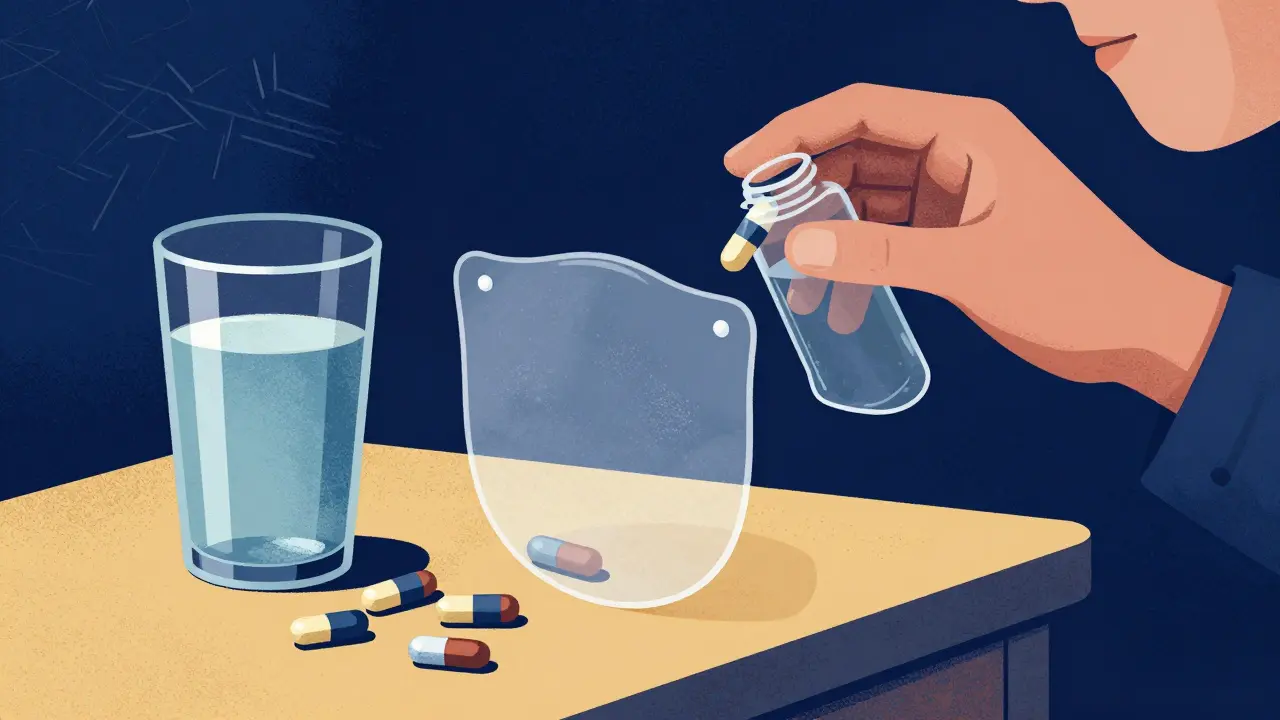
If you’re on five or six pills a day, timing becomes a puzzle. But you don’t need to guess. Start by listing your meds and when you take them. Group them into morning, afternoon, and evening doses. Then, pick one time block-morning or evening-for fiber. Don’t split it up. If you take fiber twice a day, space them out evenly, but still keep each dose 2+ hours away from any pill. For example:- 7 a.m.: Thyroid med, blood pressure
- 12 p.m.: Antibiotic, pain reliever
- 7 p.m.: Diabetes med, antidepressant
How Much Fiber Should You Actually Take?
Not all fiber is created equal. Psyllium husk is the most studied and effective for constipation. It’s also the one most likely to interact with meds. Metamucil’s capsules each contain 5 grams of fiber (3 insoluble, 2 soluble). The FDA requires at least 7 grams of soluble fiber daily to claim heart health benefits-so you’d need 5 capsules a day for that. But for constipation? Just 10 grams total per day, split into two doses, is enough. That’s two teaspoons of powder or four capsules. Start low. One serving a day. Wait a week. See how your body reacts. Constipation doesn’t fix overnight. It takes 2-4 weeks for fiber to show full effect. And yes, you might get bloated at first. That’s normal. Drink water. Move around. Your gut will adjust.What About Water? (Yes, It Matters)
You can’t skip this. Fiber absorbs water. If you take a fiber supplement without enough liquid, it can swell and block your esophagus or intestines. That’s not hypothetical. The FDA has issued warnings about this exact risk. Always take fiber with at least 8 fluid ounces (237 mL) of water. That’s a full glass. Not a sip. Not a few sips. A full glass. This is especially critical for older adults or anyone with swallowing issues. If you’re taking fiber and have trouble swallowing pills, talk to your doctor. There are liquid forms and gels that might work better.When to Stop Taking Fiber Supplements
Fiber isn’t a cure-all. Sometimes, constipation is a symptom-not the problem. UCSF Health says: stop fiber and call your doctor if you have:- Constipation lasting more than 7 days
- Rectal bleeding
- Severe abdominal pain
- Nausea or vomiting
- Sudden changes in bowel habits lasting over two weeks
What’s New in 2025?
The field is evolving. The American Gastroenterological Association’s 2024 draft guidelines now specifically recommend psyllium as the first-line fiber for constipation-and they’ve added clearer timing rules for common meds. The FDA is cracking down on supplement makers who claim their products won’t interfere with drugs. In November 2023, they sent warning letters to three companies for making false safety claims. And the most exciting development? Time-release psyllium formulations are in clinical trials (NCT05678901). These are designed to release fiber slowly, so it doesn’t interfere with meds taken hours later. Early results look promising. If approved, they could change how we take fiber forever.Real-World Strategy: A Simple Routine
Here’s a no-nonsense plan that works for most people:- Take all your medications at your usual times.
- Choose one time of day for fiber-either morning or evening. Stick with it.
- Take fiber at least 2 hours after your last pill and 2 hours before your next one.
- Always drink a full glass of water with it.
- Wait 2-4 weeks to see results.
- If you feel worse, stop and talk to your doctor.
Final Thought: Fiber Is Medicine Too
Fiber supplements aren’t just “natural” or “safe.” They’re powerful. They change how your body works. They interact with drugs. They can help-or hurt. If you’re taking them for constipation, you’re already managing a health issue. Don’t let a simple timing mistake undo your progress. Be intentional. Be consistent. And when in doubt? Ask your pharmacist. They see this every day.Can I take fiber supplements at night if I take my medications in the morning?
Yes, taking fiber at night is generally safe if your medications are taken in the morning, as long as there’s at least a 2-hour gap between your last pill and your fiber dose. Many people find this timing works well because it avoids daytime bloating and allows the fiber to work overnight. However, some users report nighttime gas or discomfort, so if sleep is disrupted, switch to morning fiber instead.
Does fiber interfere with blood pressure medication?
Yes, fiber can reduce the absorption of some blood pressure medications, especially if taken together. Psyllium forms a gel that can bind to drugs in the gut, slowing how much enters your bloodstream. To avoid this, take fiber at least 2 hours before or after your blood pressure pill. This applies to ACE inhibitors, beta-blockers, and calcium channel blockers alike.
Is Metamucil better than other fiber supplements for constipation?
Yes, psyllium-based supplements like Metamucil are clinically proven to be more effective for constipation than other types like methylcellulose or calcium polycarbophil. A 2022 meta-analysis found psyllium increased bowel movements by about 3 per week-better than many laxatives. It also helps lower cholesterol, which is why it’s the most popular fiber supplement in the U.S.
How long does it take for fiber to relieve constipation?
It usually takes 2-4 weeks to see full results from fiber supplements. Some people notice improvement in 3-5 days, but consistency matters. Taking fiber daily at the same time, with enough water, is key. Don’t expect overnight relief-fiber works by gradually improving gut function, not by acting like a stimulant laxative.
Can I take fiber with vitamins and supplements?
Yes, but with caution. Fiber can reduce absorption of fat-soluble vitamins (A, D, E, K) and minerals like zinc and iron if taken together. To be safe, take your multivitamin at least 2 hours before or after your fiber supplement. If you’re on iron for anemia, this timing is especially important.
What if I forget to time my fiber and meds correctly?
If you accidentally take fiber and a medication close together, don’t panic. One mistake won’t ruin your treatment. But don’t make it a habit. If it happens often, adjust your schedule. Set phone reminders or use a pill organizer with labeled time slots. Consistency over time matters more than perfection on a single day.
10 Comments
Teresa Marzo LostaléDecember 29, 2025 AT 07:02
So basically fiber is like that one friend who shows up to your party with a blanket and sits right in front of the TV? 🤦♀️
It’s not evil, it’s just… really bad at reading the room. I take mine at 9 p.m. after my last pill and it’s been smooth sailing. No bloating, no drama. Just quiet, happy bowel movements. 🌿
Ellen-Cathryn NashDecember 29, 2025 AT 13:11
People treat fiber like it’s a harmless herbal tea. It’s not. It’s a biological gatekeeper. If you’re popping pills like candy and then chugging psyllium like it’s a protein shake, you’re not being ‘natural’-you’re being reckless. I’ve seen people end up in ERs because they thought ‘supplement’ meant ‘safe.’ Wake up.
And yes, I’m talking to you, the one who takes metformin and fiber together because ‘it’s just one time.’
Samantha HobbsDecember 29, 2025 AT 20:34
OMG I just realized I’ve been taking my fiber at 7 a.m. right after my blood pressure med 😳
Wait… is that why I’ve been so dizzy??
Okay, new plan: fiber at 10 p.m. and I’m never looking back. Thank you for the wake-up call!! 💕
Nicole BeasleyDecember 30, 2025 AT 20:29
Just tried the 2-hour rule last week and my constipation went from ‘mild hell’ to ‘mild relief’ 🙌
Also, drinking a full glass of water? Game changer. I used to just sip. Now I chug. Like I’m at a water fountain after a marathon. 💦
And yes, I still forget sometimes. But now I have a sticky note on my pill organizer. 🤓
sonam guptaDecember 31, 2025 AT 18:33
Fiber is western nonsense we dont need. Indian diet has no supplements and no constipation. Eat roti dal sabzi drink water sleep early. Done.Julius HaderJanuary 1, 2026 AT 07:58
That comment about fiber being medicine? Spot on. I used to think it was just ‘good for you’ like walking your dog or saying please. Turns out it’s more like a prescription with side effects.
My pharmacist actually gave me a printed schedule with color-coded times. I laminated it. I’m not ashamed. 🏥
James HiltonJanuary 2, 2026 AT 17:03
So let me get this straight: you’re telling me the thing that’s supposed to ‘clean me out’ is also trapping my meds like a drug mule in my intestines? 😂
Thanks for making me feel like my gut is a spy thriller. I’ll take my fiber at night now. And maybe a nap. After I drink 8 oz of water. Like a responsible adult. 🙃
Mimi BosJanuary 3, 2026 AT 23:17
ok so i took my fiber with my vitamn this morning and now im kinda bloated and also kinda mad at myself 🤦♀️
but like… the post helped? so thank you? maybe i’ll try the 10pm thing now? i dunno. im tired.
also i think i spelled vitamin wrong. again.
Kelsey YoumansJanuary 4, 2026 AT 20:24
It is imperative to underscore the clinical significance of temporal separation between pharmacological agents and dietary fiber supplements. The physicochemical properties of psyllium mucilage induce a viscous barrier within the gastrointestinal lumen, thereby impeding the bioavailability of orally administered pharmaceuticals. Adherence to a two-hour interval, as recommended by the American Gastroenterological Association, constitutes the current standard of care. Deviation from this protocol may result in subtherapeutic serum concentrations, potentially compromising disease management. I commend the author for elucidating this critical interaction with such precision.
Sydney LeeJanuary 5, 2026 AT 17:08
How is it even possible that people still don’t know this? I mean, the FDA issued warnings in 2023. The AGA guidelines were updated in 2024. And yet, here we are-people treating fiber like a vitamin they can just toss in with their coffee and multivitamin. It’s not a snack. It’s a pharmacokinetic disruptor. And if you’re still taking it with your meds, you’re not ‘natural’-you’re just dangerously uninformed.
Also, the time-release psyllium trials? Finally. Took long enough. The rest of us have been doing this right for years. The rest of you? You’re just catching up.