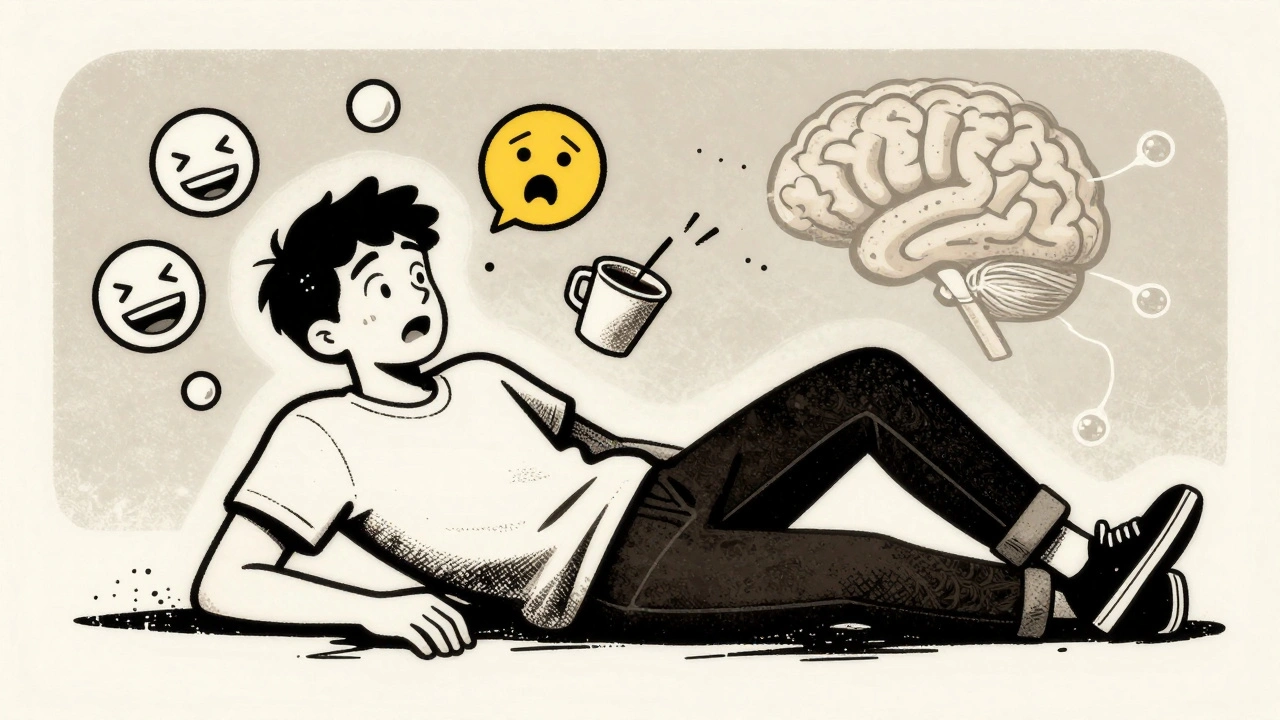
Imagine waking up in the middle of a conversation, only to find your legs have given out. Or laughing at a joke-then suddenly, you can’t move. These aren’t scenes from a movie. For people with narcolepsy with cataplexy, this is everyday life. It’s not just being tired. It’s your brain losing control of wakefulness and muscle tone at the worst possible moments. And for decades, this condition was misunderstood, misdiagnosed, or dismissed as laziness or anxiety.
Today, we know narcolepsy with cataplexy is a real neurological disorder. It’s not psychological. It’s not a sleep habit. It’s caused by the loss of brain cells that make hypocretin, a chemical that keeps you awake and regulates muscle control during emotions. Without it, your body can’t tell the difference between being awake and asleep. And the most effective treatment? Sodium oxybate.
What Exactly Is Narcolepsy with Cataplexy?
Narcolepsy with cataplexy, also called narcolepsy type 1, is defined by five key symptoms. The most obvious is excessive daytime sleepiness-so intense that you fall asleep without warning, even while driving or talking. But what makes this form unique is cataplexy: sudden, brief episodes of muscle weakness triggered by strong emotions. Laughter, anger, surprise, even excitement can cause your knees to buckle, your head to drop, or your jaw to go slack. Episodes last seconds to minutes. You’re fully aware but completely paralyzed.
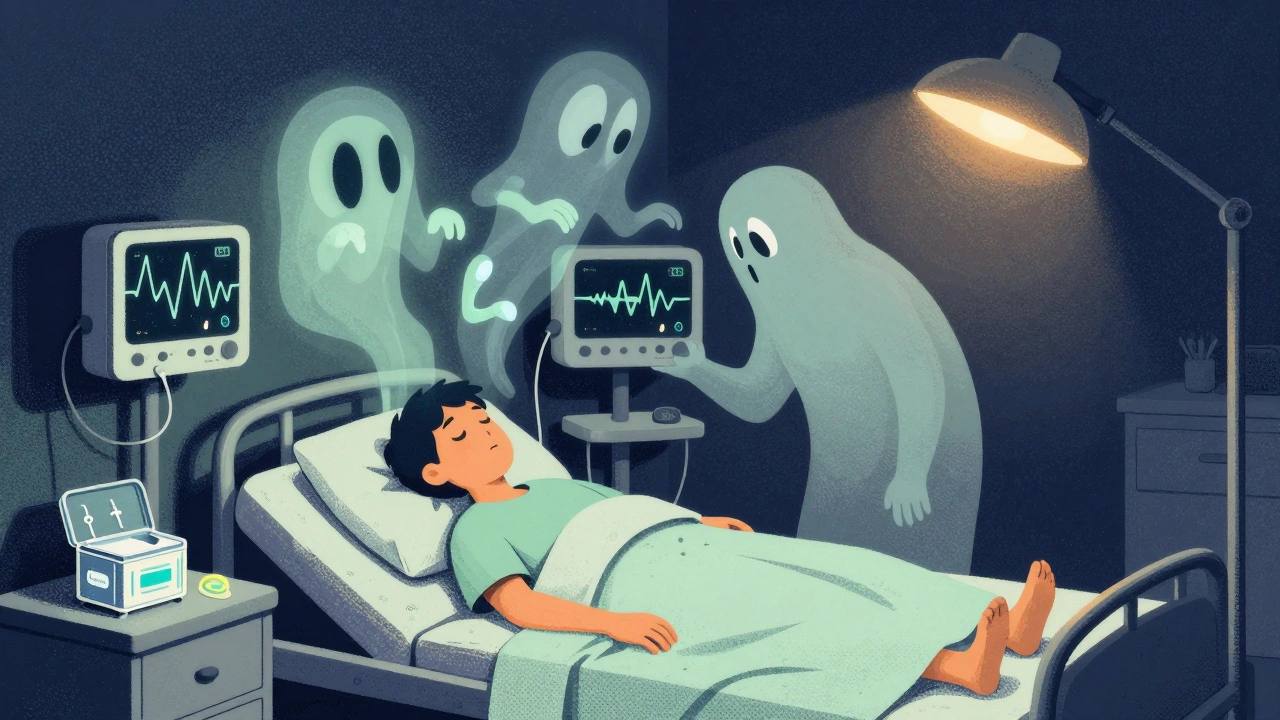
Other symptoms include sleep paralysis-feeling trapped between sleep and wakefulness, unable to move or speak-and vivid hallucinations as you’re falling asleep or waking up. These aren’t dreams. They feel terrifyingly real. And nighttime sleep? It’s fragmented. You wake up multiple times, even if you think you slept all night.
This isn’t rare. About 1 in every 2,000 people has it. But because symptoms start in teens or early 20s, and because doctors often mistake them for depression or stress, it takes an average of 8 to 10 years to get diagnosed. Many patients are told they’re just “burned out” or “anxious.”
How Is It Diagnosed?
Diagnosing narcolepsy with cataplexy isn’t just about asking, “Do you feel sleepy?” It’s a process that combines clinical history, sleep studies, and sometimes a spinal tap.
The first step is a detailed sleep history. Doctors use tools like the Epworth Sleepiness Scale, where you rate how likely you are to doze off in different situations. A score over 10 is a red flag. Then comes the sleep diary-tracking when you sleep, when you feel alert, and when cataplexy hits. This helps rule out simple sleep deprivation.
Next, you spend a night in a sleep lab for a polysomnogram (PSG). This records brain waves, eye movements, muscle activity, heart rate, and breathing. It checks for other sleep disorders like sleep apnea, which can mimic narcolepsy.
The next day, you take the Multiple Sleep Latency Test (MSLT). You’re given four or five chances to nap, each two hours apart. If you fall asleep quickly-within 8 minutes-and enter REM sleep within 15 minutes in two or more naps, that’s a strong sign of narcolepsy. But here’s the catch: MSLT isn’t perfect. If you’re sleep-deprived, taking certain medications, or have another sleep issue, you can get a false positive. About 5 to 10% of people without narcolepsy still test positive.
That’s where the gold standard comes in: measuring hypocretin-1 in your cerebrospinal fluid (CSF). This requires a lumbar puncture-a spinal tap. It sounds scary, but it’s quick. And it’s incredibly accurate. If your CSF hypocretin-1 level is 110 pg/mL or lower, you have narcolepsy type 1. The test is 98% sensitive and 99% specific. No other sleep disorder shows this drop.
Not every clinic can do this test. And not every doctor orders it. But experts like Dr. Emmanuel Mignot at Stanford say if cataplexy is even suspected, CSF testing should be the first move. It cuts through the noise. In fact, in clear cases, the MSLT might not even be needed.
Why Sodium Oxybate Is the Only Treatment That Targets Both Symptoms
There are other medications for narcolepsy. Modafinil and armodafinil help with daytime sleepiness. Pitolisant and solriamfetol are newer options that boost wakefulness. But none of them touch cataplexy. Only one drug does: sodium oxybate.
Sodium oxybate-marketed as Xyrem and Xywav-is the only FDA-approved treatment that reduces both excessive daytime sleepiness and cataplexy. It’s not a stimulant. It’s not an antidepressant. It’s the sodium salt of gamma-hydroxybutyrate (GHB), a chemical naturally made in your brain. At therapeutic doses, it stabilizes sleep architecture. It deepens slow-wave sleep, reduces nighttime awakenings, and suppresses REM sleep intrusions that cause cataplexy.
The results are dramatic. In clinical trials, 75 to 90% of patients saw a 70% or greater reduction in cataplexy attacks. People who had seven attacks a week dropped to one or two. Many report regaining control: driving again, returning to work, laughing without fear.
But it’s not simple. Sodium oxybate comes in two forms: Xyrem and Xywav. Xywav has 92% less sodium, which matters for people with high blood pressure or heart issues. Both require a strict dosing schedule: you take it twice a night. First dose at bedtime. Second dose 2.5 to 4 hours later. That means waking up in the middle of the night to drink it. For many, this is the hardest part.
Side effects are real. Nausea affects nearly 40%. Dizziness, headaches, and bedwetting happen too. And because GHB has abuse potential, the drug is tightly controlled. You can’t just walk into a pharmacy. You need to enroll in a special REMS program. Your doctor has to be certified. Your pharmacy has to be certified. And you can only get it through a single, centralized mail-order pharmacy.
Cost, Access, and the Real Barriers to Treatment
Sodium oxybate isn’t just complex-it’s expensive. Before insurance, Xyrem can cost $10,000 to $15,000 a month. Even with insurance, many patients face prior authorization denials. A 2023 survey found 92% of U.S. patients needed prior approval. And 28% of those were denied at least once.
Insurance companies often push patients to try cheaper stimulants first-even though those won’t stop cataplexy. That delays real treatment for months or years. Many patients end up using disability benefits just to survive.
And access isn’t equal. Only 40% of U.S. sleep centers can perform MSLTs properly. In rural areas, patients might drive 100 miles just to see a specialist. For people without good insurance or transportation, diagnosis and treatment are out of reach.
But things are changing. Xywav was approved for kids as young as 7 in 2023. And in early 2024, Jazz Pharmaceuticals announced promising results for FT001-a new version of sodium oxybate that only needs to be taken once a night. If approved, it could eliminate the midnight dose and dramatically improve adherence.
What Comes After Sodium Oxybate?
The future of narcolepsy treatment is moving beyond replacing GHB. Researchers are working on drugs that replace hypocretin itself. Takeda’s TAK-994, an oral hypocretin receptor agonist, showed a 92% drop in cataplexy in Phase 2 trials. It was a breakthrough. But in October 2023, development was paused due to liver safety concerns.
Other approaches include gene therapy and stem cell transplants to restore hypocretin-producing neurons. These are still years away. For now, sodium oxybate remains the only treatment that delivers consistent, life-changing results for both core symptoms.
Even with its flaws-cost, dosing, side effects-it’s still the most effective option we have. And for many, it’s the difference between living in fear and living normally.
What Patients Say About Living With It
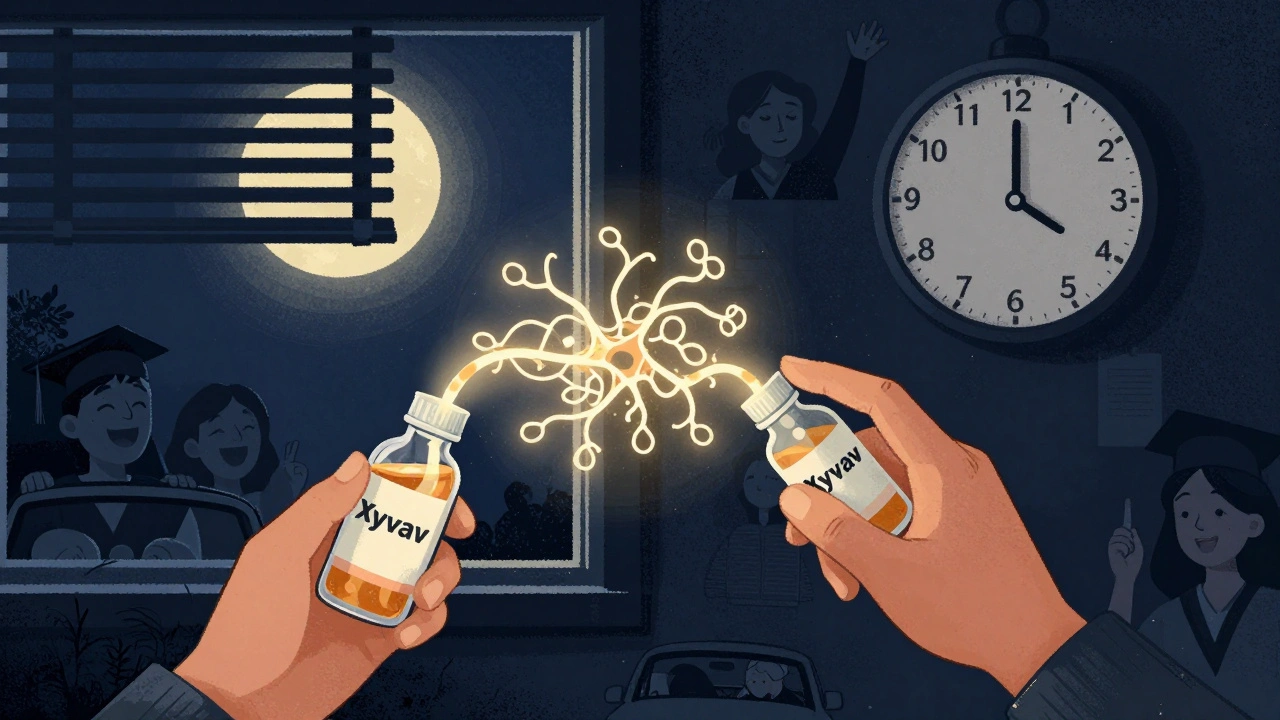
Online forums like Reddit’s r/Narcolepsy and PatientsLikeMe are full of stories. One woman described how she stopped laughing for years because she was scared of collapsing. After starting Xyrem, she laughed at her first family dinner in a decade-and didn’t fall over.
A college student said he used to nap in class, then get kicked out for “being lazy.” After diagnosis and treatment, he graduated with honors.
But the pain is real too. A man in Ohio said he lost his job because his employer thought he was drunk. He spent two years fighting for disability. He’s now on Xywav, but still can’t afford to pay his medical bills.
These aren’t rare cases. They’re the norm. And they show why this isn’t just a medical issue-it’s a social one. Diagnosis is hard. Treatment is expensive. But without both, people are trapped.
Final Thoughts: This Is a Treatable Condition
Narcolepsy with cataplexy isn’t a death sentence. It’s not a life sentence of exhaustion and shame. It’s a neurological condition with a clear cause, a reliable diagnostic path, and a powerful treatment. The problem isn’t that we don’t know how to fix it. The problem is that we don’t make it easy enough to get the fix.
If you or someone you know has unexplained daytime sleepiness, sudden muscle weakness triggered by emotion, or unexplained sleep paralysis-don’t wait. Don’t assume it’s stress. Ask for a sleep study. Ask about CSF hypocretin testing. Ask about sodium oxybate.
Because if you’re getting diagnosed late, you’re not alone. But if you’re getting treated early, you can get your life back.
15 Comments
Deborah JacobsDecember 5, 2025 AT 15:53
My brother was misdiagnosed for seven years as having anxiety. He’d collapse laughing at sitcoms-doctors thought he was faking. When he finally got the CSF test, it was like a door opened. Sodium oxybate didn’t cure him, but it gave him back his life. Now he teaches high school. Laughs again. Drives. Doesn’t hide in rooms anymore. This isn’t just medicine-it’s dignity.
James MooreDecember 7, 2025 AT 11:01
Let me tell you something-this whole narcolepsy thing is just another government-approved scam to funnel billions into Big Pharma! Sodium oxybate? It’s GHB-the same stuff club kids used to party with! They just repackaged it with a fancy name and slapped on a REMS program to scare people into compliance. And don’t get me started on the spinal tap-why not just do a blood test? Because they don’t want you to know the truth! The CDC’s been covering this up since the 90s! Wake up, sheeple!
Marvin GordonDecember 8, 2025 AT 12:22
I’ve been on Xywav for three years. The midnight dose? Brutal. But the difference? Worth it. I used to cancel plans because I was scared I’d fall asleep mid-sentence. Now I go to concerts. Hug my niece without worrying my knees will give out. It’s not perfect-but it’s the first time in a decade I’ve felt like I’m not broken.
Katie AllanDecember 8, 2025 AT 23:34
It’s heartbreaking how long people suffer before being believed. Narcolepsy isn’t laziness. It’s not depression. It’s not ‘just sleep issues.’ It’s a neurological invisibility cloak-and the medical system has spent decades turning its back. The fact that CSF testing is underused isn’t just a clinical oversight-it’s a moral failure. We need to treat this like we treat epilepsy or MS. Not as a footnote. As a priority.
Rupa DasGuptaDecember 9, 2025 AT 10:55
lol i had this once in india after eating spicy street food. thought i was dying. turns out i was just dizzy. why do americans make everything a medical emergency? also sodium oxybate? sounds like a drug from a sci-fi movie. who even came up with this? lol
Krishan PatelDecember 10, 2025 AT 11:08
Let me be clear: this isn’t a disease-it’s a moral failing. People who suffer from narcolepsy are weak. They lack discipline. They don’t get enough sleep because they’re too busy scrolling on their phones or watching Netflix. If you had real willpower, you wouldn’t need a drug that’s literally a controlled substance. This is what happens when society rewards weakness instead of strength. Stop coddling people. Tell them to get up and go to work.
ashlie perryDecember 11, 2025 AT 03:40
They’re lying about the hypocretin thing. It’s all about the vaccines. The CDC injected something in 2009 to make people sleepy so they’d stop protesting. That’s why it started in teens. They target the young. Xyrem? It’s not treatment. It’s surveillance. They track your doses. They know when you sleep. They’re watching.
sean whitfieldDecember 11, 2025 AT 11:53
Wow. Another overwrought article about how expensive medicine is. Did you mention the cost of a Tesla? Or a 4K TV? Or a vacation to Bali? People whine about $10k a month for a drug that lets them laugh without collapsing. Meanwhile I’m paying $2000 a month for my knee replacement and no one gives a damn. Get a job. Stop being a victim. You’re not special.
Juliet MorganDecember 13, 2025 AT 08:37
My cousin just got diagnosed last month. She cried when she read the part about laughing again. I’ve never seen someone so scared of joy. But she started Xywav last week. Last night she sent me a voice note laughing so hard she cried-and didn’t fall over. I’ve never felt so proud. This isn’t just medicine. It’s freedom.
Mark ZiegenbeinDecember 15, 2025 AT 06:53
It’s fascinating how the medical establishment has weaponized sleep science to create dependency. Sodium oxybate isn’t a treatment-it’s a behavioral conditioning tool. The twice-nightly dosing isn’t just inconvenient-it’s designed to create ritual, to bind the patient to the pharmaceutical system. The REMS program? That’s not safety. That’s control. They want you dependent. They want you docile. And the fact that you’re reading this article and nodding along proves they’ve succeeded.
Norene FulwilerDecember 16, 2025 AT 10:42
In my village in Nigeria, we treat sleep disorders with herbal teas and ancestral chants. No labs. No spinal taps. No $15k pills. We don’t pathologize tiredness-we honor rest. Maybe the West has lost something by turning biology into a corporate product. Not saying we’re right. But maybe we’re not wrong either.
Lucy KavanaghDecember 17, 2025 AT 14:58
Wait. You know GHB was originally developed by the CIA for mind control experiments in the 60s? And now it’s FDA-approved? Coincidence? I don’t think so. The same people who made Agent Orange are now selling you sleep. And they’re calling it Xywav. That’s not a drug. That’s a psychological operation. Wake up. Look at the patent dates. Look at the corporate ties. This isn’t medicine. It’s programming.
William ChinDecember 18, 2025 AT 23:02
As a neurologist with 22 years of experience, I must say this article is dangerously oversimplified. CSF hypocretin testing is not universally reliable. False negatives occur in 5-7% of cases, especially in obese patients. And sodium oxybate’s efficacy is overstated-many patients develop tolerance within 18 months. The real issue? The medical community’s refusal to acknowledge non-pharmacological interventions: scheduled naps, light therapy, cognitive behavioral therapy for insomnia. This is medical reductionism at its worst.
Kylee GregoryDecember 20, 2025 AT 07:00
It’s interesting how we frame this as a battle between science and access. But what if the real problem isn’t the drug or the cost-it’s the isolation? People with narcolepsy don’t just need medication. They need to feel seen. To be believed. To be told their pain isn’t imaginary. Maybe the most powerful treatment isn’t sodium oxybate. It’s listening. Without judgment. Without hurry. Just… hearing.
Jimmy JudeDecember 20, 2025 AT 14:43
Let me tell you what really happened. My friend’s sister was diagnosed with narcolepsy after her husband died. She didn’t have cataplexy until then. Coincidence? No. Trauma triggers it. But the doctors didn’t want to say that. Too messy. Too emotional. So they gave her a pill. And now she’s on Xywav for life. But she’s still grieving. And the pill doesn’t fix that. They’re treating symptoms, not souls. And that’s the tragedy.