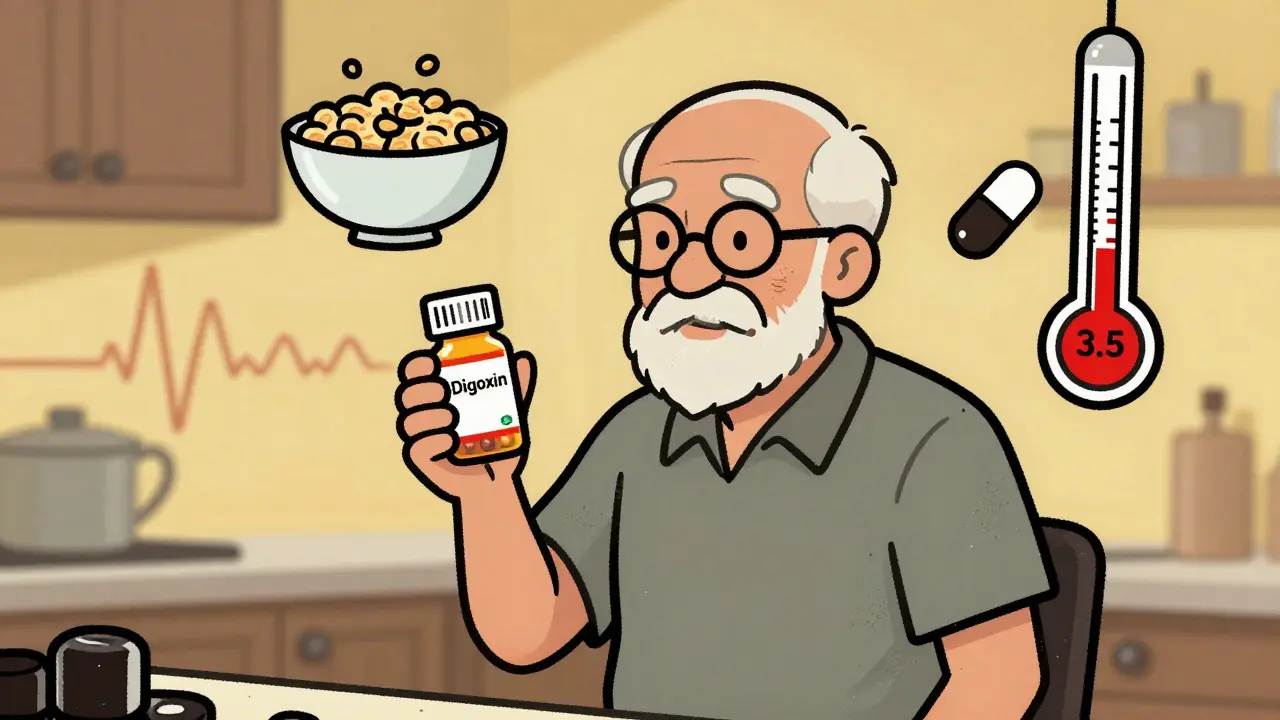
When you're managing heart failure or atrial fibrillation, every pill matters. Digoxin has been around for decades, but it's not just another heart medication. It's a narrow window between helping your heart and harming it. One wrong interaction - whether it's a common antibiotic, your morning oatmeal, or a supplement you picked up online - can push your digoxin levels into the danger zone. And the consequences? Nausea, blurry vision, dangerous heart rhythms, even cardiac arrest. This isn't theoretical. Real patients in emergency rooms across the U.S. and Europe are showing up with digoxin toxicity because they didn’t know what to watch for.
How Digoxin Works - And Why It’s So Sensitive
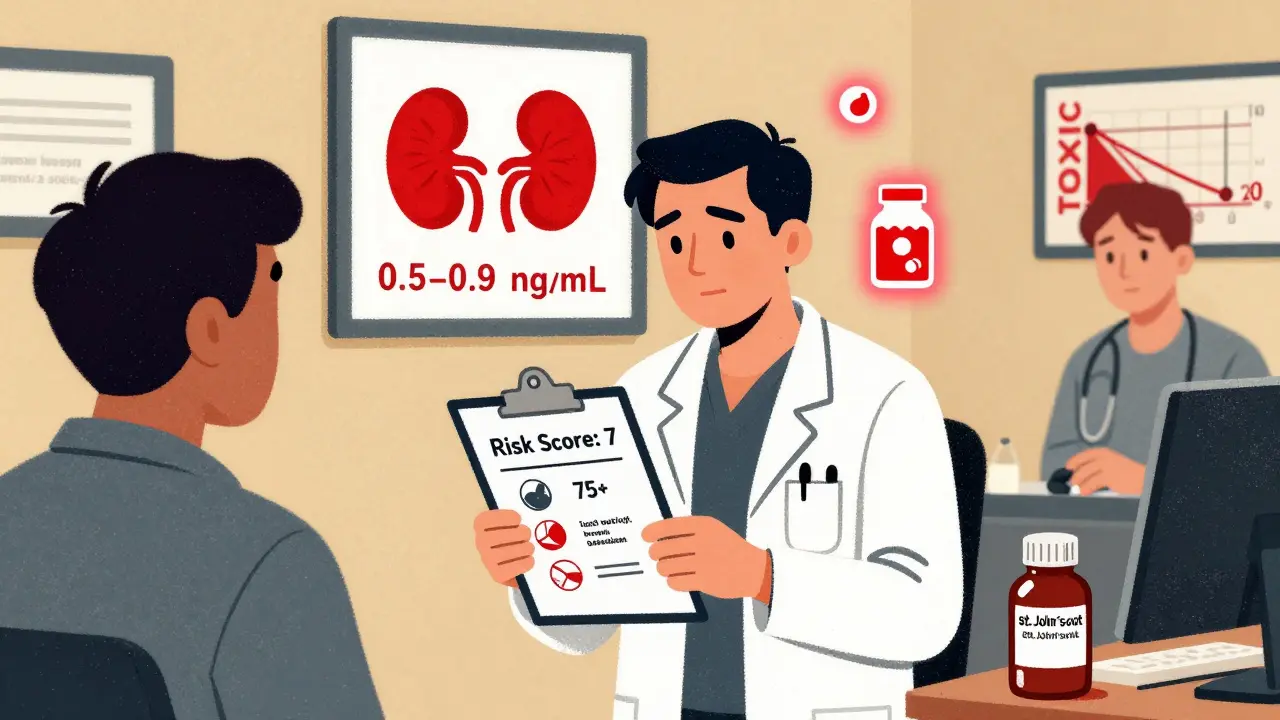
Digoxin comes from the foxglove plant. It’s old, but it still works. It helps your heart pump more strongly by changing how sodium and calcium move in and out of heart cells. That’s why it’s still used for heart failure with reduced ejection fraction and fast atrial fibrillation. But here’s the catch: the difference between the right dose and too much is tiny. Doctors aim for a blood level between 0.5 and 0.9 ng/mL. Anything above 2.0 ng/mL is toxic. And you don’t need to take too much to get there. A single interaction can push you over the edge.
Even people with "normal" digoxin levels can get sick. Why? Because other things in your body change how digoxin behaves. Kidney function, potassium levels, other drugs - they all play a role. And if you’re over 65, weigh less than 60 kg, or have kidney trouble, you’re already at higher risk.
The Top 8 Drug Interactions You Must Know
Not all drugs are created equal when you’re on digoxin. Some don’t just interfere - they dramatically increase your risk of poisoning.
- Erythromycin and tetracycline: These antibiotics change the bacteria in your gut that normally break down digoxin. Result? Your digoxin levels can spike by up to 40%. If you’re on digoxin and get a respiratory infection, ask your doctor if there’s a safer antibiotic.
- Dronedarone: This antiarrhythmic drug is especially dangerous. It can increase digoxin levels by over 50%. The PALLAS trial showed patients on both drugs had a 2.5-fold higher risk of sudden death. If you’re starting dronedarone, your digoxin dose should be cut in half - immediately.
- Diltiazem and verapamil: These calcium channel blockers slow down how fast your kidneys clear digoxin. Levels rise by 30-50%. Combine that with digoxin’s effect on heart rate, and you can get dangerously slow pulses - under 40 beats per minute. Some patients need a pacemaker because of this combo.
- Amiodarone: This one’s sneaky. It builds up in your body over weeks. A patient might feel fine for a month, then suddenly feel sick. One user on the American Heart Association forum saw their digoxin level jump from 0.8 to 1.9 ng/mL after starting amiodarone. They had vision changes and vomiting. Their dose had to be cut by half.
- Quinidine: This older antiarrhythmic can double digoxin levels by blocking its kidney clearance. It’s rarely used now, but if you’re on it, you’re in high-risk territory.
- Carvedilol: Even this common beta-blocker can raise digoxin levels by 16%. It’s not as dangerous as the others, but it’s still enough to matter - especially if you’re already close to the toxic line.
- Rifampin: This antibiotic, used for TB or infections, does the opposite. It makes your body clear digoxin 35-45% faster. That means your levels drop below therapeutic range. Your heart failure symptoms might come back - not because your condition worsened, but because the drug stopped working.
- Thyroid meds: If you’re on levothyroxine, your body may break down digoxin faster. Levels can fall by 20-25%. If your heart failure gets worse after starting thyroid treatment, check your digoxin level.
Diuretics, Potassium, and the Silent Killer
Most heart patients take diuretics - furosemide, hydrochlorothiazide - to get rid of fluid. But here’s the hidden danger: they lower potassium. And low potassium? It makes digoxin far more toxic.
Even a slight drop in potassium - below 3.5 mmol/L - can trigger toxicity at normal digoxin levels. That’s why doctors check potassium every month. If your level dips, you might need a potassium supplement. But don’t take potassium pills without asking. Too much can be dangerous too.
Here’s what many patients don’t realize: corticosteroids (like prednisone) can also drain potassium. If you’re on a short course for asthma or inflammation, your digoxin risk goes up. Tell your doctor you’re on digoxin before taking any steroid.
Over-the-Counter Medicines and Supplements You Should Avoid
You don’t need a prescription to mess up digoxin. Common OTCs and supplements are behind nearly a quarter of digoxin-related ER visits.
- Antacids: Products with aluminum or magnesium - like Maalox or Mylanta - can reduce digoxin absorption by up to 30%. If you take them within two hours of digoxin, you might not be getting enough of the drug. Take digoxin at least 2 hours before or after antacids.
- St. John’s Wort: This herbal mood booster induces a liver enzyme that pushes digoxin out of your system. Studies show it can lower digoxin levels by 25%. If you start taking it, your heart failure might flare up.
- Psyllium fiber: Metamucil and similar products can cut digoxin absorption by 30-40% if taken too close together. Take digoxin at least 2 hours before or after any fiber supplement.
- Hawthorn: Used for mild heart symptoms, hawthorn can prolong your heart’s electrical cycle. When combined with digoxin, it raises the risk of dangerous arrhythmias.
- Black licorice: This one surprises people. Glycyrrhizin in black licorice mimics aldosterone, causing potassium loss. Just one bag a week can trigger toxicity. Avoid it completely.
- High-fiber foods: Oatmeal, bran, whole wheat bread - they bind to digoxin in your gut. A 2018 study showed they reduce absorption by 20-25%. If you eat oatmeal for breakfast, take digoxin at night instead.
Who’s at Highest Risk - And What to Do About It
Not everyone on digoxin needs the same level of monitoring. The American College of Cardiology now uses a simple risk score:
- Age over 75: 2 points
- Potassium under 4.0: 2 points
- Creatinine over 1.5 (kidney trouble): 2 points
- Digoxin dose over 0.25 mg/day: 1 point
- On amiodarone, verapamil, or diltiazem: 1 point each
- Weight under 60 kg: 1 point
If you score 5 or higher, you’re high-risk. You need blood tests every week when starting a new drug or changing dose. You can’t wait three months for a checkup.
Older adults are especially vulnerable. One survey found patients over 75 were 2.8 times more likely to have digoxin toxicity than younger patients. Kidney function drops with age - and digoxin is cleared mostly by the kidneys. If your creatinine is climbing, your digoxin dose should come down.
What to Do - Practical Steps for Patients
You don’t need to be a doctor to stay safe. Here’s your action plan:
- Take digoxin at the same time every day. Consistency matters more than you think.
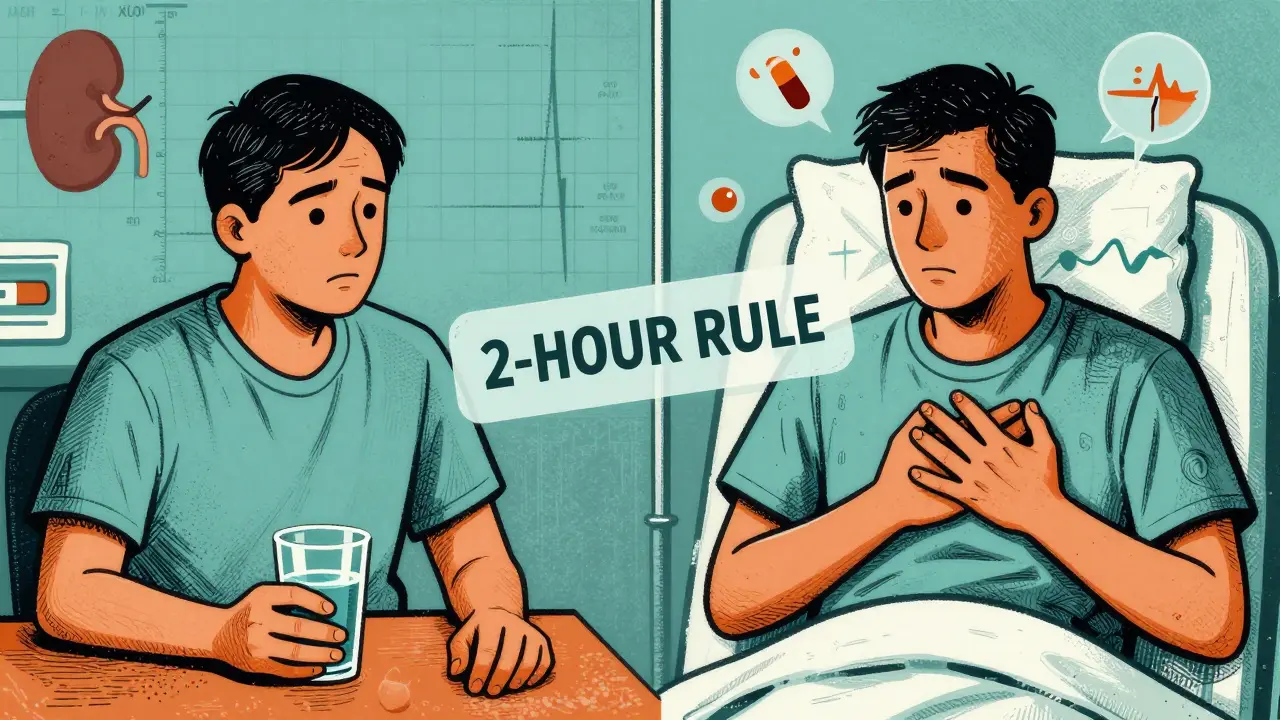
- Avoid food and supplements 2 hours before and after taking digoxin. That includes oatmeal, fiber pills, antacids, and calcium supplements.
- Never take black licorice. Not candy, not tea, not supplements.
- Keep a list of every medication and supplement you take - including OTCs and herbs. Show it to every doctor, even your dentist.
- Get your potassium checked monthly. If it’s below 3.5, ask why.
- Know the warning signs: Nausea, vomiting, blurry yellow vision, confusion, or a pulse under 50. Call your doctor immediately.
- If you start a new drug - even an antibiotic - assume it interacts with digoxin until proven otherwise. Ask your pharmacist or cardiologist.
The Bigger Picture - Why Digoxin Still Matters
Digoxin prescriptions have dropped by 38% since 2010. Newer drugs like SGLT2 inhibitors and ARNIs are replacing it. But here’s the truth: digoxin still helps people who haven’t responded to everything else. It’s cheap - often under $5 a month. For many, it’s the only thing that keeps them out of the hospital.
The key isn’t to avoid it. The key is to use it wisely. With careful monitoring, the right dose, and awareness of interactions, digoxin can still be a lifeline. But if you ignore the risks, it can turn into a silent threat.
Can I still eat oatmeal if I take digoxin?
Yes - but not right after taking digoxin. Oatmeal and other high-fiber foods can reduce digoxin absorption by 20-25%. Take digoxin at least 2 hours before eating oatmeal, or take it at night instead of in the morning. This small change can make your levels stable and predictable.
Is digoxin safe if I have kidney problems?
It can be, but only with strict monitoring. Digoxin is cleared by the kidneys. If your creatinine clearance is below 50 mL/min, your dose needs to be lowered. If it’s below 15 mL/min, the European Medicines Agency advises against using it. Always have your kidney function checked before starting and every 3-6 months after.
What should I do if I miss a dose of digoxin?
If you miss a dose and remember within 12 hours, take it right away. If it’s been more than 12 hours, skip the missed dose and take your next dose at the regular time. Never double up. Digoxin builds up in your body, and taking too much at once can be dangerous.
Can I take digoxin with my blood pressure pills?
It depends. Diltiazem and verapamil can dangerously raise digoxin levels. Beta-blockers like carvedilol can also increase levels slightly. Always tell your doctor what blood pressure meds you’re on. They may need to adjust your digoxin dose or monitor your levels more closely.
How often should my digoxin level be checked?
For stable patients, every 3-6 months is enough. But if you start a new drug, change your dose, or have kidney issues, check it weekly for the first 2 weeks. If you’re over 75 or have a high-risk score, monthly checks are safer. Don’t wait for symptoms - by then, it might be too late.
Are there any new digoxin formulations that are safer?
Yes - a new extended-release version is in late-stage trials (DIG-FAST trial, NCT04567891). Early results show it has 30% fewer peaks and valleys in blood levels, which means fewer side effects and less risk from interactions. It’s not available yet, but it could change how digoxin is used in the next few years.
10 Comments
Eimear GilroyFebruary 28, 2026 AT 08:46
Digoxin is one of those meds that feels like a relic from the 1950s, but somehow still works when everything else fails. I’ve been on it for 4 years with AFib, and honestly, I didn’t realize how many things could mess with it until my potassium dropped after a nasty bout of food poisoning. My doctor had to cut my dose in half. Scary stuff. I now take my pill at 9 PM sharp and avoid oatmeal until lunch. Small habits, big differences.
Also, black licorice? I used to love the candy. Now I just think of it as a slow poison. Weird trade-off, but worth it.
Ajay KrishnaMarch 1, 2026 AT 18:57
This is such a vital post. As someone who’s been managing heart failure for over a decade, I wish every patient had access to this level of detail. So many of us are left in the dark until something goes wrong.
One thing I’d add: if you’re on digoxin and you’re traveling, pack extra meds and a copy of your med list. I got sick in Thailand last year, and the local pharmacy tried to give me an antibiotic that interacts with digoxin. I had to show them the list my cardiologist gave me. They were shocked. Turns out, even doctors overseas don’t always know the risks.
Knowledge is power. Keep sharing this stuff.
Sneha MahapatraMarch 1, 2026 AT 20:11
I’ve been reading this with tears in my eyes. My mom passed last year from digoxin toxicity. She was 78, had kidney issues, took her pill with oatmeal every morning, and started a new antibiotic for a sinus infection. No one warned her. No one asked if she was on digoxin. She just got sicker… then confused… then silent.
I wish this post existed five years ago. I wish every pharmacist had a checklist. I wish the system cared more about the quiet, elderly patients who don’t ask questions.
Thank you for writing this. I’m sharing it with every family I know.
Full Scale WebmasterMarch 3, 2026 AT 14:13
OH MY GOD THIS IS A SCAM. Seriously. Digoxin? From a PLANT? That’s not medicine, that’s witchcraft. And now they’re telling us oatmeal is dangerous? Who’s behind this? Big Pharma? The oat industry? The FDA? Someone’s got to be profiting from this fear.
I did a deep dive on Reddit last week and found a guy who said digoxin was invented by the Illuminati to control the elderly population. He linked to a .onion site with a video of a foxglove plant chanting in Latin. I don’t know if it’s real, but I DO know my cardiologist won’t talk to me about it. Why? Because he’s paid off.
Also, my cousin’s neighbor’s dog got sick after eating a leaf from a foxglove bush. Coincidence? I think not.
WHO IS DR. WHO? WHY ISN’T THE MEDIA COVERING THIS? I’M NOT AFRAID TO ASK THE HARD QUESTIONS.
Noah ClineMarch 5, 2026 AT 12:58
Let’s be precise here. The therapeutic index of digoxin is 0.5–0.9 ng/mL, with toxicity thresholds typically above 2.0 ng/mL. However, individual variability in P-glycoprotein efflux and CYP3A4 metabolism can alter bioavailability significantly. Patients on concomitant verapamil exhibit a 40–50% increase in digoxin AUC due to renal tubular secretion inhibition, not just "slowed clearance."
Also, the claim that St. John’s Wort reduces levels by 25% is misleading - studies show a 30–40% reduction in Cmax and 22% reduction in AUC. Precision matters. If you’re going to educate, don’t dilute the science.
And yes, psyllium does bind digoxin - but only if taken within 2 hours. The 2018 study cited had a small sample size (n=32). Replication needed.
Lisa FremderMarch 7, 2026 AT 05:08
This is why America is falling apart. People can’t even take one pill without needing a PhD. You want to live? Then learn. Stop blaming the system. Stop blaming doctors. Stop blaming oatmeal. Take responsibility. Your heart doesn’t care about your feelings. It just wants the right dose. If you’re too lazy to read, then don’t be surprised when you end up in the ER. I’ve seen it. Too many times. This isn’t a conspiracy. It’s just biology. And you? You’re either in control… or you’re dead weight.Jimmy QuiltyMarch 7, 2026 AT 18:39
Okay so I’ve been digging into this (pun intended) and I think there’s a hidden agenda here. Did you know that the foxglove plant was used in medieval times to test for witchcraft? If you took it and didn’t die, you were innocent. If you did? Well… you were guilty.
And now we’re told to avoid oatmeal? Who owns the oat farms? Who profits from fiber supplements? Who controls the labs that do digoxin testing? I looked up the manufacturer of digoxin - it’s owned by a company that also owns a chain of kidney dialysis centers. Coincidence? I think not.
Also, the FDA hasn’t updated digoxin guidelines since 1997. That’s 27 years. Why? Because they’re waiting for the next big drug to come out. Meanwhile, we’re guinea pigs. And don’t even get me started on the potassium industry. They’re pushing supplements like candy.
Wake up, people. This isn’t medicine. It’s a control system.
Miranda AndersonMarch 7, 2026 AT 18:49
I’m not a doctor, but I’ve been caring for my dad since he started digoxin after his second heart attack. He’s 82, weighs 58 kg, has borderline kidney function, and takes three other meds. We’ve been doing everything right - no oatmeal at breakfast, no supplements, no licorice, and he takes his pill at 8 PM like clockwork.
What surprised me was how much his mood improved once his levels stabilized. He wasn’t just physically better - he was more present. More himself. It made me realize how much we overlook the emotional toll of these meds. It’s not just about survival. It’s about quality.
Thanks for the list. We’ve printed it and taped it to the fridge. Simple. Clear. Life-saving.
Gigi ValdezMarch 9, 2026 AT 02:53
Thank you for compiling this with such clinical precision. As a nurse practitioner who works in cardiology, I see patients daily who are unaware of these interactions. The most common mistake? Taking digoxin with calcium supplements. Many assume it’s harmless. It’s not.
I always advise patients to create a medication timeline: when they take each pill, what they eat, and what they take with it. A simple notebook works wonders. One patient brought me hers last week - it had been updated daily for six months. Her digoxin level had stabilized at 0.7 ng/mL. No symptoms. No ER visits.
Consistency. Awareness. Communication. These are not optional. They are the foundation of safe care.
Byron DuvallMarch 11, 2026 AT 01:49
Lol this is too much. I’ve been on digoxin for 6 years. I take it with coffee, eat oatmeal, and take ibuprofen for my knees. I’m fine. My doctor says I’m fine. My levels are fine. Why are people making this into a horror movie? You’re gonna scare people into not taking a life-saving drug because of some weird food rules. It’s not 1999. We have blood tests. We have labs. We have smartphones. If you’re worried, get your levels checked. Don’t become a conspiracy cult member over a plant extract. Chill out.