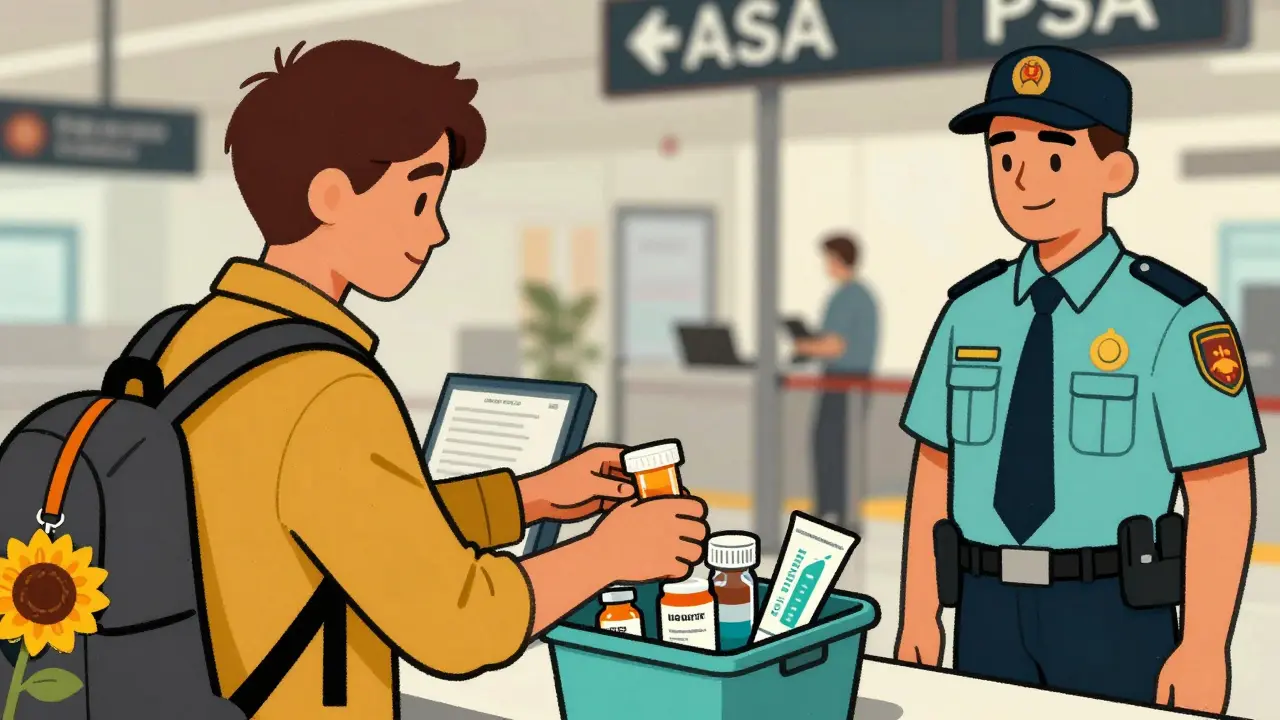
When you’re flying with prescription medications, the last thing you want is to get held up at security because you didn’t know the rules. It’s not just about getting through the checkpoint-it’s about making sure your medicine is safe, legal, and ready when you need it. Whether you’re taking insulin, anxiety meds, pain relievers, or even a simple prescription cream, the TSA has clear guidelines. But here’s the catch: many travelers still get confused, and some even lose their meds because they didn’t follow the basics.
You Can Bring Any Amount of Prescription Medication
TSA doesn’t limit how much prescription medicine you can bring on a plane. Not in pills, not in liquids, not in creams. You can pack your 30-day supply, your 90-day supply, or even a year’s worth if you’re moving abroad. The 3-1-1 liquid rule? It doesn’t apply to your meds. That means your 4-ounce bottle of insulin, your 8-ounce bottle of liquid painkiller, or your 6-ounce tube of hydrocortisone cream can all go straight through security-no need to fit them in a quart-sized bag.
But here’s what you do need to do: declare them. When you get to the security checkpoint, tell the TSA officer you have medication. Remove liquids and creams from your carry-on bag and place them in a bin by themselves. You don’t have to take pills out-they can stay in your bag. Just make sure you’re ready to explain what they are if asked.
Original Packaging? Not Required, But Highly Recommended
TSA doesn’t legally require your meds to be in their original bottles. You can transfer them to a pill organizer, a travel case, or even a Ziploc bag. But here’s the reality: if you do, you’re making things harder for yourself.
Over 78% of medication delays at U.S. airports in 2023 happened because the name on the bottle didn’t match the name on the passenger’s ID. That’s right-even a missing middle initial or a typo in the pharmacy label caused officers to stop the line. One traveler in Atlanta had her entire carry-on searched because her Xanax bottle said “J. Smith” and her ID said “Jennifer Smith.” She was fine, but she missed her flight.
Best practice? Keep your meds in original containers with your name and the pharmacy label clearly visible. If you must repack, keep the original bottle in your bag and bring a copy of the prescription. A doctor’s note isn’t required, but it’s a lifesaver if there’s any question.
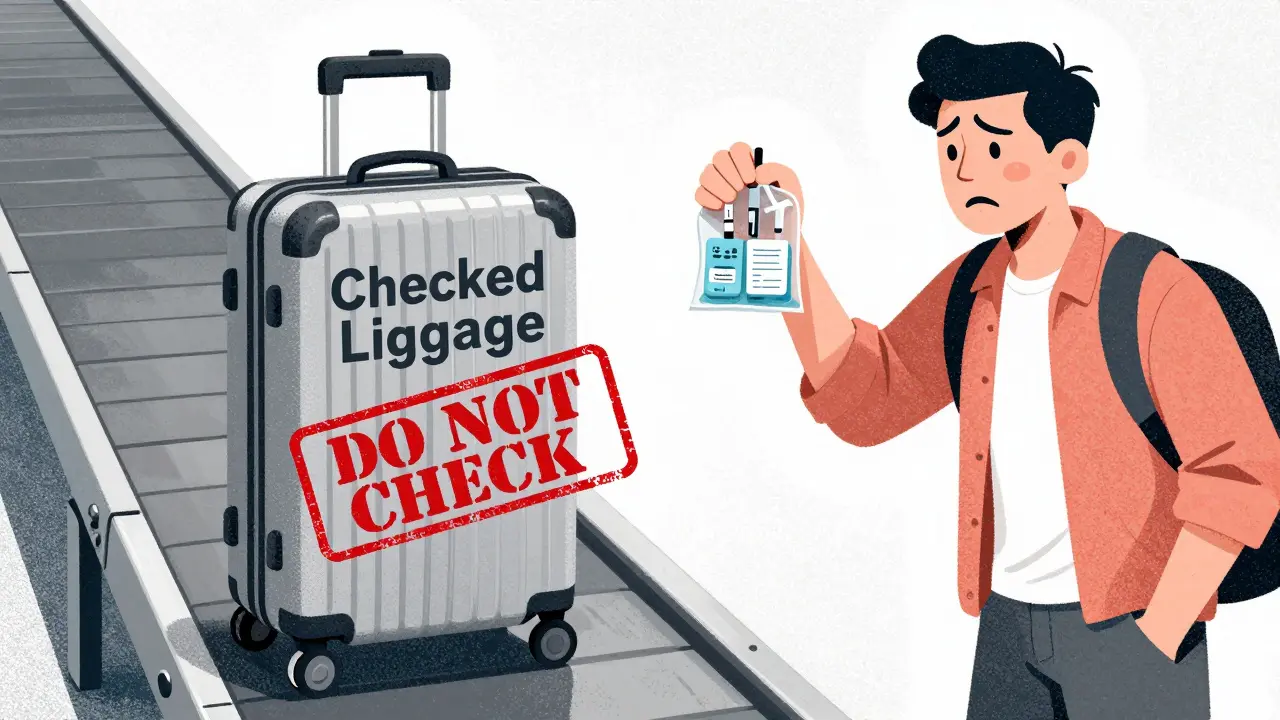
Never Pack Medication in Checked Luggage
United Airlines, Delta, American, and every other major U.S. carrier now have the same rule: keep your medication in your carry-on. Why? Because checked bags get lost, delayed, or even thrown away. In 2022, a passenger in Chicago lost her life-sustaining insulin when her checked bag was misrouted. She ended up in the ER.
Even if you’re not using your meds during the flight, keep them with you. If you’re traveling internationally, the risk is even higher. Some countries have strict rules about importing meds, and if your bag gets held at customs, you could be left without your medicine for days.
CBD and THC Products: The Biggest Trap
This is where most people get tripped up. You might think, “My CBD oil has less than 0.3% THC-it’s legal in my state.” But federal law still applies at U.S. airports. The TSA enforces federal rules, not state laws.
Any product with more than 0.3% THC is banned, even if it’s prescribed. That includes some CBD oils, edibles, tinctures, and vape pens. Even if the label says “hemp-derived” or “federally compliant,” TSA officers have no way of testing it on the spot. And they’re not required to take your word for it.
In 2023, over 14,000 CBD products were confiscated by TSA-many of them later proven to be legal. But by then, the traveler had already missed their flight. The safest move? Leave CBD oil at home unless it’s FDA-approved (like Epidiolex). If you’re unsure, don’t risk it.
International Travel? Check the Destination Country First
What’s legal in the U.S. isn’t legal everywhere. Adderall, Xanax, and even some strong painkillers like tramadol are classified as controlled substances in countries like Japan, South Korea, the UAE, and Singapore. In some places, carrying them-even with a prescription-can lead to arrest.
The CDC’s 2024 Yellow Book warns that over 67% of countries have medication import rules that differ from U.S. standards. Before you fly, check the U.S. Embassy website for your destination or use the IAMAT database (now integrated into the TSA app). Some countries require a special permit. Others require a letter from your doctor in both English and the local language.
Pro tip: If you’re traveling with a controlled substance, carry a signed letter from your doctor that includes your diagnosis, the medication name, dosage, and why it’s medically necessary. Translation helps. Don’t assume your U.S. prescription will be enough.
Medical Devices: Insulin Pumps, CGMs, and More
If you use an insulin pump, continuous glucose monitor (CGM), or other medical device, you don’t have to go through the X-ray machine. TSA allows visual inspections for these devices. Just tell the officer before you walk through the scanner.
Bring a card or printed info from the manufacturer explaining what the device is. Some travelers keep a small printed note in their wallet: “This is an insulin pump. Do not X-ray.” It saves time.
Need help? TSA’s Cares program (1-855-787-2227) lets you request a specialist to assist you. You need to call 72 hours in advance. This is especially helpful if you’re traveling with multiple devices or need extra time.
Temperature-Sensitive Medications
Insulin, some biologics, and other meds need to stay cool. You can bring frozen gel packs through security-as long as they’re completely frozen solid. If they’re slushy, TSA might confiscate them.
Use a small insulated bag. Don’t pack dry ice unless you’re prepared for extra paperwork-it’s regulated and requires special labeling. Most travelers find that frozen gel packs are easier and just as effective for a 12-hour flight.
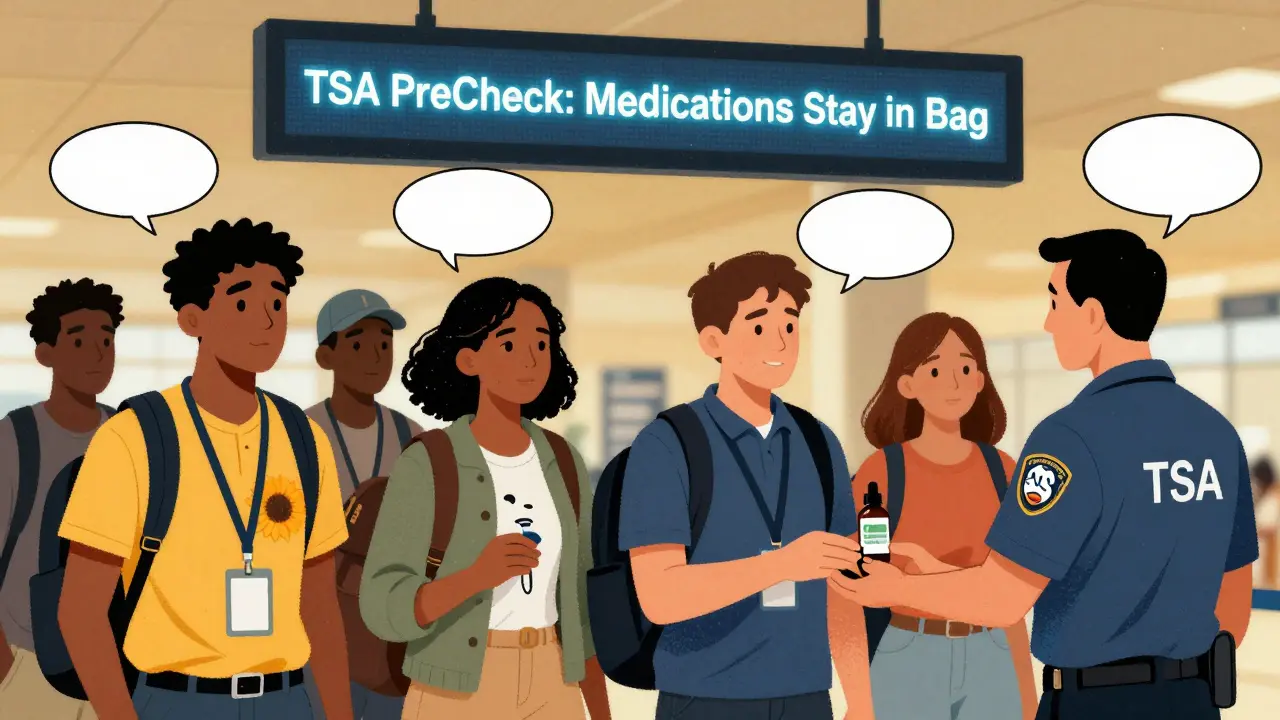
TSA PreCheck and the Sunflower Lanyard
If you’re a TSA PreCheck member, you’re in luck. Since October 2024, PreCheck travelers can leave their medications in their bags during screening. No need to pull them out. This cuts down wait times and reduces the chance of misidentification.
Also, if you have a hidden disability-like diabetes, epilepsy, or chronic pain-you can wear the Sunflower Lanyard. It’s a discreet way to signal to TSA officers that you may need extra time or assistance. The program is now available at 45 major U.S. airports. You don’t need to register ahead-just ask for one at the checkpoint.
What to Pack in Your Travel Kit
- Original prescription bottles with your name and pharmacy label
- A printed copy of your prescription (or a digital copy on your phone)
- A doctor’s letter for controlled substances or injectables
- Insulated bag with frozen gel packs (if needed)
- Small pill organizer (only if you keep originals in your bag)
- Travel-sized hygiene wipes to clean any spills
Don’t forget to keep your ID and boarding pass handy. Name mismatches are the #1 cause of delays.
What Not to Do
- Don’t transfer meds to unlabeled containers unless you keep the originals with you.
- Don’t put meds in checked luggage-even if you think you won’t need them.
- Don’t assume your state’s CBD laws apply at the airport.
- Don’t wait until you’re at security to figure out what to do.
One traveler in Denver told me she waited until the last minute to ask about her Adderall. The officer had to call a supervisor. She missed her flight. She could’ve avoided it all by checking the UAE’s rules before booking her ticket.
What’s Coming Next
TSA is testing biometric verification for medication declarations at eight airports. Soon, you might be able to scan your ID and have your meds automatically flagged in their system. IATA and the WHO are also working on a global standard for medical travel documentation-expected by mid-2025.
But for now, the rules are clear: know your meds, know the rules, and plan ahead. The system works if you do your part.
Can I bring my prescription pills in a pill organizer?
Yes, you can. TSA doesn’t require pills to be in original bottles. But it’s strongly recommended to keep the original bottles in your carry-on. If you repack, make sure you have a copy of your prescription or a doctor’s note handy in case TSA asks. Many travelers use a pill organizer for convenience but keep the original bottle in their bag just in case.
Is CBD oil allowed on planes?
Only if it contains 0.3% THC or less and is FDA-approved (like Epidiolex). Most over-the-counter CBD oils-even those labeled as “legal” or “hemp-derived”-are confiscated because TSA officers can’t verify their THC content on the spot. The safest choice is to leave CBD oil at home. If you must bring it, be prepared for possible confiscation, even if your product is technically compliant.
Do I need a doctor’s note for my prescription meds?
No, TSA doesn’t require a doctor’s note for most medications. But if you’re carrying a controlled substance like Xanax, Adderall, or opioids, or if you’re traveling internationally, a note from your doctor can save you hours of delays. The note should include your name, the medication name, dosage, reason for use, and your doctor’s contact info. Translation into the local language helps if you’re flying abroad.
Can I bring liquid insulin on a plane?
Yes. Liquid insulin is exempt from the 3-1-1 liquid rule. You can bring any amount-full vials, pens, or pumps. Just declare it at the checkpoint and remove it from your bag for screening. You don’t need to put it in a plastic bag. Keep it in your carry-on. Never check it.
What if I’m flying internationally with my meds?
Check the rules of your destination country. Many countries ban U.S.-prescribed medications like Adderall, Xanax, or codeine-even with a prescription. Use the TSA app’s IAMAT database or check the U.S. Embassy website for your destination. Some countries require a special permit. Bring a doctor’s letter and keep your meds in original packaging. Don’t assume your U.S. prescription is enough.
Can I bring frozen gel packs for my insulin?
Yes, as long as they’re completely frozen solid. TSA allows frozen gel packs for medical items like insulin. If they’re slushy or melting, they may be confiscated. Use a small insulated bag to keep them cold. Dry ice is allowed but requires special labeling and is harder to handle. Frozen packs are simpler and just as effective.
Should I use TSA PreCheck for medication travel?
Yes. Since October 2024, TSA PreCheck members can leave their medications in their carry-on bags during screening. You won’t have to pull them out, which reduces delays and mistakes. If you fly often or carry multiple medications, PreCheck saves time and stress. It’s worth the $78 fee if you travel more than twice a year.
If you follow these steps, you’ll breeze through security and arrive at your destination with your meds safe and ready. The system works-when you do your part.
15 Comments
Jillian AngusDecember 23, 2025 AT 18:49
Just threw my insulin in my carry-on without thinking and forgot to declare it. Got pulled aside. TSA lady was nice though. Lesson learned.
John Pearce CPDecember 23, 2025 AT 20:49
It is imperative that travelers adhere strictly to federal regulations regarding pharmaceuticals in transit. The proliferation of state-level cannabis legislation has created a dangerous illusion of compliance. TSA enforces United States Code Title 21, not local ordinances. Failure to comply constitutes a violation of federal law and endangers public safety.
EMMANUEL EMEKAOGBORDecember 24, 2025 AT 04:17
This is very helpful, thank you for the clear breakdown. In Nigeria, we often hear horror stories of people losing medications during transit. I will make sure to keep all my prescriptions in original bottles and carry a copy of the doctor’s note. Safety first, always.
Joe JeterDecember 25, 2025 AT 20:29
Of course TSA says you can bring any amount. That’s because they don’t care. They’ll still make you take out every pill, every bottle, every gel pack like you’re smuggling contraband. The system is broken. They don’t trust anyone, and they punish everyone for the few who cheat.
CHETAN MANDLECHADecember 26, 2025 AT 13:19
Original packaging? Sure. But I’ve flown 17 times with my pills in a pill organizer and never had an issue. TSA officers don’t even look at them unless you’re visibly nervous. Just stay calm, say "prescription meds" and move on.
Lu JelonekDecember 27, 2025 AT 20:47
For international travelers: if you’re carrying anything that sounds like a controlled substance, check the destination country’s ministry of health website. Japan bans Adderall. Singapore fines you for tramadol. UAE arrests you for Xanax. A doctor’s letter isn’t just helpful-it’s your legal shield. And yes, translate it. Even if you think the officer speaks English, they might not be the one reviewing your documents.
siddharth tiwariDecember 29, 2025 AT 09:54
they say cbd is banned but i bet theyre just scared of hemp because big pharma owns them. i brought my cbd oil on 3 flights last year and they never even looked. theyre just scared of people getting healthy without their drugs. the system is rigged.
Rachel CericolaDecember 29, 2025 AT 23:20
If you're traveling with insulin or a CGM, call TSA Cares. Seriously. I did it last month for my son’s pump and had a specialist meet us at the gate. They helped us bypass the whole line, explained everything to the officers, and even gave us a printed guide for future trips. It’s not just a service-it’s a lifeline for people with chronic conditions. Don’t wait until you’re stressed at the checkpoint. Plan ahead. It’s not extra work-it’s self-advocacy.
claire daviesDecember 30, 2025 AT 08:33
I love how the Sunflower Lanyard is quietly revolutionizing airport experiences. I wore mine last time I flew with my chronic pain and the officer didn’t just nod-they asked if I needed a private screening, brought me water, and even apologized for the wait. It’s not just about accessibility-it’s about dignity. And honestly? The fact that you can just ask for one at the checkpoint, no forms, no paperwork, is a small miracle in a world that loves bureaucracy. Kudos to TSA for getting this right.
Diana AlimeJanuary 1, 2026 AT 03:46
so i packed my adderall in my checked bag bc i thought i wouldn't need it on the flight... and guess what? my bag got lost. i had to call my doctor at 3am to get a new script in another state. i cried in the airport. don't be me.
niharika hardikarJanuary 2, 2026 AT 16:07
According to the International Pharmaceutical Federation (FIP) guidelines on cross-border pharmaceutical transport, non-compliance with origin-country labeling protocols constitutes a breach of the WHO Model List of Essential Medicines framework. Furthermore, the absence of a physician attestation in the local language may trigger customs detention under the 1961 Single Convention on Narcotic Drugs. Therefore, repackaging without original labeling is not merely inadvisable-it is a procedural violation with potential legal ramifications.
Blow JobJanuary 4, 2026 AT 08:37
Man, I used to hate flying with meds. Now I just keep everything in the original bottles, put them in a little ziplock, and say "I have prescriptions" when I get to the front. No drama. No stress. Just breathe and be cool. It’s not that hard.
Sidra KhanJanuary 5, 2026 AT 07:17
Why do we even have to jump through these hoops? I mean, I’m not smuggling drugs. I’m just trying to get to my mom’s funeral with my anxiety meds. Why does the government treat me like a criminal? 😔
Christine DétrazJanuary 6, 2026 AT 15:37
I used to repack everything until I saw a woman get her entire bag searched because her name was "L. Smith" on the bottle and "Lisa Marie Smith" on her ID. Took 45 minutes. She had a heart condition and was shaking. I started keeping originals after that. Small things matter.
Bartholomew Henry AllenJanuary 8, 2026 AT 11:48
Original containers only. No exceptions. Federal law. No questions. Don’t test it. Just do it.