PRO Impact Calculator
Your Symptom Report
How This Symptom Is Reported
Why this matters: In the article, the FDA found patients reported fatigue 4.2x more often than clinicians. Your daily reports through PRO tools can catch these critical safety signals weeks before they're noticed clinically.
When you take a new medication, you’re not just a passive recipient of treatment-you’re a critical data source. Every time you note that your fatigue is worse on Tuesdays, or that your hands feel numb after dinner, you’re contributing to something bigger than your own care. These details, called patient-reported outcomes (PROs), are now a cornerstone of how drugs are monitored for safety after they reach the market.
Before the 2010s, drug safety mostly relied on doctors reporting side effects during clinic visits. But many symptoms-like brain fog, tingling, or emotional low points-don’t show up in blood tests or physical exams. They only exist in the patient’s daily experience. That’s why the U.S. Food and Drug Administration (FDA) now defines PROs as direct reports from patients, without interpretation by clinicians. In 2022, the FDA made it clear: if you’re developing a cancer drug, you must collect PRO data on symptoms like fatigue, pain, and physical function using validated tools like PRO-CTCAE. These aren’t optional extras anymore. They’re required.
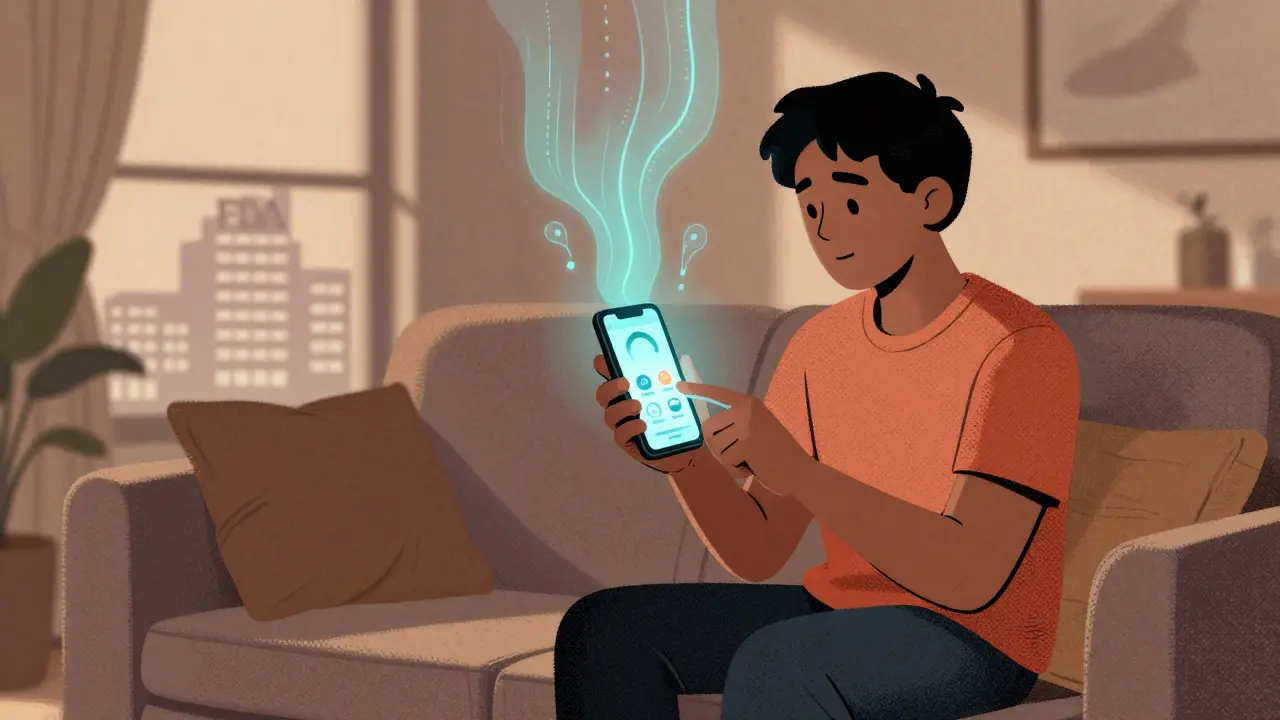
Here’s what that looks like in practice. Imagine you’re enrolled in a trial for a new arthritis drug. Instead of waiting for your quarterly appointment to mention your morning stiffness, you open a secure app on your phone every evening. You rate your pain on a scale of 1 to 10, check off which joints feel swollen, and answer whether you’ve had trouble sleeping. The system sends you a gentle reminder if you forget. Over time, this data builds a real-time picture of how the drug affects real people-not just those who show up for checkups.
Studies show this approach catches problems doctors miss. A 2019 FDA analysis found patients reported 30-40% more side effects than clinicians did. Fatigue was reported 4.2 times more often by patients. Neuropathy? 3.8 times more. Cognitive issues? A staggering 5.1 times more. Why? Because patients notice these things every day. Doctors see them once a month, if at all. When a patient reports sudden confusion or unexplained weight loss through a PRO tool, it can trigger an early safety alert-sometimes weeks before a doctor even suspects something’s wrong.
This isn’t just about catching side effects. It’s about understanding their impact. One breast cancer patient on a MedHelp forum wrote that using a PRO app helped her oncologist reduce her chemo dose before she ended up in the ER. That’s not hypothetical. That’s happening right now. The Patient-Reported Outcomes Safety Event Reporting (PROSPER) Consortium, formed in 2012, brought together pharma companies, regulators, and patient groups to make this kind of reporting standard. Their goal? To turn passive monitoring into active partnership.
But collecting this data isn’t simple. It requires tools that are reliable, easy to use, and validated. These aren’t just random surveys. They’re scientifically tested questionnaires called Patient-Reported Outcome Measures (PROMs). To be accepted by regulators, each one must prove it’s consistent (reliable), measures what it claims to (valid), and picks up real changes over time (responsive). The PRO-CTCAE tool, for example, has 78 symptom items rated on frequency and severity. Developing one of these can take 18 to 24 months and cost between $500,000 and $750,000. That’s why most trials now use electronic PROs (ePROs)-apps, web portals, or even voice systems. By 2022, 87% of global trials used ePROs, with response rates hitting 85-92%, compared to just 65-75% for paper forms.
Still, it’s not perfect. Some patients feel overwhelmed. On Reddit, one person said they had to complete three different surveys three times a week. “It became a job,” they wrote. A 2022 survey of over 1,200 patients found that 68% never saw how their feedback changed their care. That’s a trust gap. If you’re filling out surveys and never hear back, you stop. That’s why the best programs now include feedback loops-letting patients know their input led to a dose change, a new warning, or even a drug recall.
Technology is helping. Roche started using AI to scan patient-written notes for signs of adverse events. In trials, it picked up 82% of the issues human reviewers found. Pfizer used wearables to track skin scratching in eczema patients-and found 73% agreement between what patients reported and what the device recorded. Novartis even built a blockchain-based system to keep PRO data secure and private. These aren’t futuristic ideas. They’re live right now.
But access remains uneven. Not everyone has a smartphone. Not everyone speaks English fluently. Not everyone trusts digital systems. That’s why translation and cultural adaptation matter. Adapting a PRO tool into Spanish, Arabic, or Bengali can cost $25,000 per language-but skipping it means excluding entire communities from safety monitoring. The FDA and EMA are pushing for equity, but progress is slow.
And here’s the big picture: the global PRO market was worth $1.87 billion in 2022. By 2028, it’s expected to hit $3.89 billion. Why? Because regulators demand it. The EU now requires patient input in all new drug applications by 2026. The FDA’s 2022 cancer PRO guidance is just the start. Oncology leads with 89% of late-phase trials using PROs. Rare diseases? 76%. Mental health? 68%. Surgery? Only 32%. The gap is shrinking, but slowly.
Your role in this system is simple but powerful. When you report your symptoms honestly and consistently-whether through an app, a paper form, or a phone call-you’re not just helping yourself. You’re helping the next person who takes the same drug. You’re giving regulators real evidence to decide whether a drug’s benefits outweigh its risks. You’re telling manufacturers: this side effect matters. This one doesn’t. This one needs to be fixed.
You’re not a number. You’re not a data point. You’re the reason these systems exist.
And if you’re ever asked to participate in a PRO study? Say yes. Even if it feels like a chore. Even if you don’t see immediate results. Your voice is the most accurate tool we have for measuring what drugs really do to real people.
13 Comments
Jarrod FleschJanuary 21, 2026 AT 19:08
Man, I’ve been using one of these apps for my lupus meds and honestly? It’s weirdly satisfying. Like, I didn’t think my 3am joint pain mattered until my doc changed my dose last month. Now I get a little pop-up saying ‘Thanks for flagging that-your feedback helped us adjust your regimen.’ Feels good to be seen, ya know? 😊
Barbara MahoneJanuary 22, 2026 AT 06:40
The validation of PRO tools is non-negotiable. Without rigorous psychometric testing, patient-reported data risks becoming noise rather than signal. The FDA’s adherence to established PROMs frameworks ensures clinical relevance and regulatory integrity.
Kelly McRainey MooreJanuary 23, 2026 AT 18:12
I used to hate filling out those surveys-felt like homework. But after my mom’s oncologist noticed her fatigue spiked every Tuesday and cut her chemo dose, I got it. Turns out, my little daily taps saved her from a hospital trip. So yeah, I do it now. Even when I’m tired.
Amber LaneJanuary 24, 2026 AT 09:32
My hands go numb after dinner. I reported it. They lowered my dose. Done.
Ashok SakraJanuary 24, 2026 AT 19:34
THIS IS A TRAP!!! THEY WANT YOUR DATA TO MAKE MONEY!! I read a guy on YouTube who said Big Pharma uses your symptoms to tweak drugs so you stay on them forever!! I’m not filling out no apps!! I’m done!!
michelle BrownseaJanuary 25, 2026 AT 14:59
Let’s be clear: if you’re not reporting your symptoms with precision, consistency, and emotional honesty-you’re not just failing yourself, you’re failing every other patient who relies on this data to survive. This isn’t a suggestion. It’s a moral imperative. And if you’re too lazy to tap a screen three times a week? You’re part of the problem.
Malvina TomjaJanuary 26, 2026 AT 18:15
Y’all act like this is some revolutionary breakthrough. Meanwhile, my cousin in rural Alabama still gets paper forms mailed to him. And the app? Only works if you’ve got Wi-Fi, a phone, and English fluency. So who’s really benefiting here? The rich. The tech-savvy. The privileged. The rest of us? We’re just noise in the algorithm.
Samuel MendozaJanuary 27, 2026 AT 23:51
PROs are just a distraction. If your doctor can’t tell you’re fatigued, they’re not a good doctor. Stop outsourcing diagnosis to apps.
Steve HeskethJanuary 29, 2026 AT 02:48
Brothers and sisters, listen-I’m from Lagos, Nigeria, and I don’t have a smartphone. But I call my clinic every night. I speak into a phone. I say, ‘My belly hurts.’ They write it down. And guess what? They changed my medicine because of it. You don’t need an app. You need to speak. Your voice matters. Even if it’s shaky. Even if it’s late. Speak.
shubham ratheeJanuary 29, 2026 AT 12:27
i think this whole thing is a government mind control program to track our health data for the new digital currency system. why else would they force us to report every little tingling? they already know when we sleep and eat. now they want our pain levels too. next theyll ask for our dreams. no thanks. i use paper. and i burn it after.Sangeeta IsaacJanuary 30, 2026 AT 13:26
So we’re supposed to be ‘active partners’… but when I asked if my 78-question survey results led to anything, they sent me a PDF titled ‘Thank You for Participating.’ I’m not a volunteer. I’m a guinea pig with a subscription. 🤡
Philip WilliamsFebruary 1, 2026 AT 08:10
While the data collection methods are evolving, the ethical imperative remains unchanged: patient autonomy and informed consent must precede every PRO initiative. Transparency in data usage, anonymization protocols, and clear communication of outcomes are non-negotiable pillars of responsible implementation.
Melanie PearsonFebruary 3, 2026 AT 03:08
Let’s not romanticize this. The U.S. spends billions on these systems while millions can’t afford insulin. This isn’t progress-it’s performative innovation. We’re digitizing the symptoms of a broken system.