Medication Monitoring Calculator
Medication Risk Assessment Tool
Enter your medication details to calculate your recommended monitoring schedule and understand your risk level.
When a drug meant to help you starts silently killing your body’s defenses, it’s not a side effect-it’s a silent emergency. Agranulocytosis is one of those rare but deadly reactions: your white blood cell count crashes so hard that your immune system can’t fight off even a common cold. And the worst part? It often happens without warning. About 70% of cases are caused by medications, not genetics or disease. If you’re taking clozapine, propylthiouracil, or even a common antibiotic like trimethoprim-sulfamethoxazole, you’re not just managing a condition-you’re walking a tightrope between treatment and life-threatening infection.
What Exactly Is Agranulocytosis?
Agranulocytosis isn’t just low white blood cells. It’s a crash. When your absolute neutrophil count (ANC) drops below 100 per microliter, your body loses its frontline soldiers against bacteria and fungi. Normal ANC is above 1,500. Anything under 500 is neutropenia. Below 100? That’s agranulocytosis. At this level, even a minor cut or a sore throat can spiral into sepsis. Mortality jumps to 10-20% if untreated. But with early detection, it drops below 5%.
This isn’t theoretical. In the U.S. alone, over 12,000 cases were reported to the FDA between 2010 and 2022, and nearly 80% were linked to drugs. The problem? Most patients don’t feel sick until it’s too late. Fever, sore throat, mouth ulcers-these are the first signs. But they’re often mistaken for the flu. By the time a patient sees a doctor, the infection may already be spreading.
Which Medications Carry the Highest Risk?
More than 200 drugs have been tied to agranulocytosis. But a handful stand out. Clozapine, used for treatment-resistant schizophrenia, carries the highest risk: 0.77% of users develop it, according to FDA data from 2022. That’s about 8 in every 1,000 people. Yet it’s often the only drug that works when others fail. That’s why it comes with mandatory blood monitoring.
Antithyroid drugs like propylthiouracil are next. The risk is lower-about 0.36 per 1,000 patient-years-but still dangerous. Methimazole is safer, with half the risk. Then there’s trimethoprim-sulfamethoxazole, a common antibiotic for urinary and respiratory infections. A 2019 study found users had a 15.8 times higher risk than those on other antibiotics. Even over-the-counter painkillers like dipyrone (banned in the U.S. but used elsewhere) carry a measurable risk.
Not all NSAIDs are equal. Ibuprofen? Almost no link. Aspirin? Negligible. But dipyrone? High risk. This isn’t random. It’s about how the drug interacts with your immune system or bone marrow. Some trigger antibodies that attack your neutrophils. Others poison the stem cells that make them. The mechanism matters less than the outcome: no neutrophils = no defense.
Monitoring Protocols: How Often and Why
For high-risk drugs, monitoring isn’t optional-it’s life-saving. The FDA’s Clozapine REMS program requires weekly blood tests for the first six months, then every two weeks for the next six, and monthly after that. If your ANC drops below 1,000, treatment stops. That’s not a suggestion. It’s a rule. And yet, a 2020 study found that only 68% of U.S. doctors followed it properly in the first 18 weeks.
Why the gap? Some clinics lack access to fast lab results. Others assume patients will remember to get tested. Many patients don’t realize how urgent it is. A 2022 survey showed 86% of patients waited over 48 hours to seek help after symptoms started. And 73% blamed their doctors for not explaining the risks clearly.
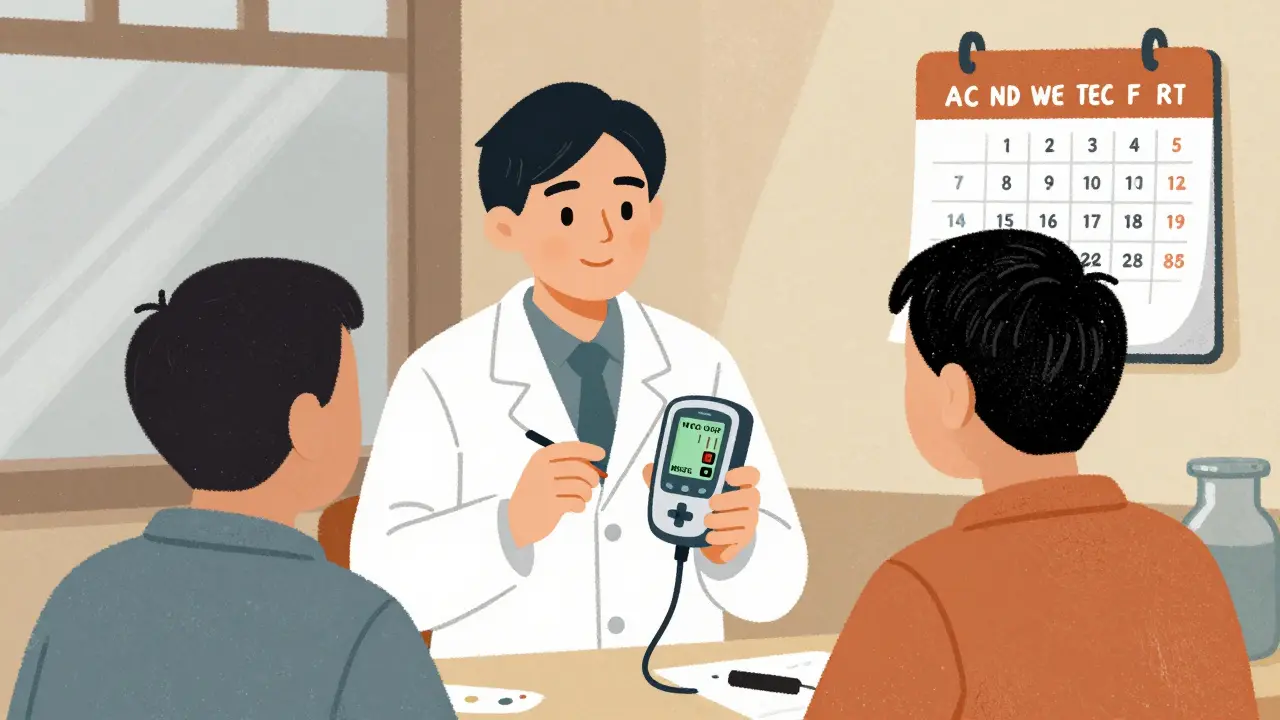
New tools are helping. The Hemocue WBC DIFF device, approved by the FDA in March 2022, gives results in five minutes-right in the clinic. No more waiting 24 to 48 hours. In trials, it boosted adherence by over 30%. For rural patients or those without easy access to labs, this is a game-changer.
The European Medicines Agency classifies drugs into three risk tiers. Tier 1: clozapine, propylthiouracil, dipyrone-strict weekly monitoring. Tier 2: drugs like carbamazepine or sulfasalazine-monthly checks. Tier 3: everything else-no routine screening needed. Knowing your drug’s tier tells you exactly how vigilant you need to be.
What Happens When It’s Caught Early?
Stop the drug. That’s step one. In 90% of cases, neutrophils bounce back within 1 to 3 weeks after stopping the offending medication. But stopping alone isn’t enough. If you have a fever over 38.3°C and your ANC is under 500, you’re in a medical emergency. The Infectious Diseases Society of America says you need antibiotics right away-broad-spectrum ones that cover Pseudomonas, a bacteria that thrives in low-immunity environments.
Without antibiotics, mortality hits 21%. With them? It drops to under 6%. That’s the difference between survival and death. And it’s not just about the drugs-it’s about speed. Every hour counts. Patients who get treated within 2 hours of fever onset have a 70% better survival rate than those who wait.
One patient in a 2021 case report, a 54-year-old man on clozapine, noticed a sore throat on Monday. He waited until Thursday to see his doctor. By Friday, he was in the ICU with pneumonia and sepsis. He survived, but barely. His story isn’t unique. It’s the rule.
The New Frontier: Genetic Testing and AI Alerts
Science is catching up. In January 2023, the FDA approved the first genetic test for clozapine-induced agranulocytosis: the HLA-DQB1*05:02 assay. If you carry this gene variant, your risk jumps 14.3 times higher. Testing before starting clozapine could prevent 30-40% of cases. It’s not yet standard everywhere, but it’s coming fast.
Meanwhile, hospitals are testing AI systems that scan electronic health records for warning signs: a drop in ANC, a recent prescription for a high-risk drug, a fever note. One 2022 study showed these systems cut missed cases by 47%. Imagine your doctor’s system flagging your blood test before you even feel sick.
By 2028, the Personalized Medicine Coalition predicts that 40% of high-risk medications will require genetic screening before prescription. This isn’t sci-fi. It’s the future of safe prescribing.
Who’s Most at Risk-and Who’s Left Behind?
It’s not just about the drug. It’s about access. Rural patients are 2.3 times more likely to die from medication-induced agranulocytosis than urban ones, according to the CDC. Why? No nearby labs. No hematologists. No fast results. A patient in rural West Virginia might wait three days for a CBC result. In London or Boston, it’s two hours.
Low- and middle-income countries have even worse gaps. Only 32% have formal monitoring systems. In places where clozapine is the only option for severe schizophrenia, patients are caught between no treatment and no safety net.
Even in the UK, where the NHS is strong, inconsistent adherence remains a problem. A 2023 review in the British Journal of Clinical Pharmacology found that only 58% of psychiatrists routinely checked ANC levels in the first three months of clozapine therapy. That’s not negligence-it’s systemic neglect.
What You Should Do Right Now
If you’re on clozapine, propylthiouracil, trimethoprim-sulfamethoxazole, or any other high-risk drug:
- Know your drug’s risk tier. Ask your pharmacist or doctor.
- Get blood tests on schedule. No exceptions. Set phone reminders.
- If you develop a fever above 38.3°C, sore throat, or mouth ulcers, go to urgent care immediately. Say: "I’m on [drug name] and I’m worried about agranulocytosis."
- Don’t wait for a doctor to ask. Be the one who speaks up.
- If you live in a rural area, ask about point-of-care testing. Hemocue devices are now available in many community clinics.
For prescribers: don’t assume patients understand. Give them a printed warning card. Show them the symptoms. Tell them: "If you feel sick and your ANC is low, this is an emergency. Don’t wait. Don’t call. Go."
Final Thought: Safety Isn’t Optional
Medications save lives. But some come with invisible dangers. Agranulocytosis is rare, but it doesn’t care if you’re young, healthy, or diligent. It strikes silently. The only thing standing between you and disaster is a blood test and the courage to act fast. Monitoring isn’t bureaucracy-it’s your shield. And if you’re on a high-risk drug, your life depends on it.
Can agranulocytosis be reversed?
Yes, in most cases. If caught early and the triggering medication is stopped immediately, neutrophil levels usually return to normal within 1 to 3 weeks. Bone marrow typically recovers on its own. However, if an infection develops and isn’t treated quickly, complications can be fatal.
How long after starting a drug does agranulocytosis usually occur?
It can happen anytime-from days to years after starting the drug. Most cases appear between 1 and 3 months, but some occur after just a few doses, and others after months or even years. That’s why ongoing monitoring is critical, even if you’ve been on the medication for a long time without issues.
Is agranulocytosis the same as leukemia?
No. Agranulocytosis is a drop in white blood cells caused by drugs or immune reactions. Leukemia is cancer of the blood-forming cells. In agranulocytosis, the bone marrow is usually healthy but suppressed. In leukemia, the marrow is overrun by abnormal cells. The symptoms can look similar, but the causes and treatments are completely different.
Can I take over-the-counter painkillers if I’m at risk?
Most OTC painkillers like ibuprofen or acetaminophen are safe. Avoid dipyrone (metamizole), which is banned in the U.S. but available elsewhere, as it carries a known risk. Always check with your doctor before taking any new medication, even if it’s sold without a prescription.
What should I do if my blood test shows a low ANC?
If your ANC is below 1,000, contact your doctor immediately. If it’s below 500 and you have a fever, go to the emergency room. Do not wait. Your doctor will likely stop your medication and start antibiotics. Do not take any new drugs, supplements, or herbal remedies until you’ve spoken to a hematologist.
11 Comments
Jane LucasDecember 27, 2025 AT 06:29
i took clozapine for a year and never knew this was a thing until my cousin got hospitalized. just got my blood checked last week. thanks for the wake up call.dean du plessisDecember 28, 2025 AT 06:58
this is one of those posts that makes you realize how much we take modern medicine for granted. i live in cape town and we dont even have regular blood tests for some of these meds. scary stuffElizabeth GanakDecember 30, 2025 AT 01:25
i didnt know dipyrone was banned in the us but used everywhere else. kinda wild how different countries handle risk like this. also why dont more doctors just hand out printed warnings like you said?Elizabeth AlvarezDecember 31, 2025 AT 18:15
they dont want you to know this. the pharma giants know clozapine kills people but they keep selling it because the lawsuits are cheaper than developing safer drugs. theyre also suppressing the genetic testing data because if you could screen people before they die, theyd lose billions. the hemocue device? its a distraction. the real fix is banning these drugs entirely and letting people die naturally instead of being poisoned by pills.Miriam PiroJanuary 2, 2026 AT 14:06
we live in a matrix of medical control. the fact that they monitor you weekly for clozapine but not for antidepressants or blood pressure meds? that’s not safety. that’s selective surveillance. why dont they track your soul’s white blood cells too? they already know your dna. they already know your habits. they just dont want you to realize how much power they have over your bone marrow. the real cure is fasting. and sunlight. and refusing the pill. but no one will tell you that because the system depends on your compliance.John BarronJanuary 3, 2026 AT 20:17
I must point out that the FDA’s Clozapine REMS program is not only the gold standard-it is the only viable framework for risk mitigation in psychiatric pharmacotherapy. The 68% adherence rate cited is abysmal and reflects systemic failures in clinical workflow design, not physician negligence. Furthermore, the HLA-DQB1*05:02 assay represents a paradigm shift in pharmacogenomics, yet its adoption remains hindered by payer reimbursement policies and EHR interoperability issues. We are not merely discussing medical ethics-we are confronting the structural inequities of 21st-century healthcare delivery.Will NeitzerJanuary 5, 2026 AT 01:44
This is an exceptionally well-researched and clearly articulated piece. I work in hospital pharmacy and can confirm that the gap between protocol and practice is alarming. We have had multiple near-misses where patients missed a blood draw and presented with sepsis within 48 hours. I personally hand out printed warning cards to every clozapine patient-along with a laminated symptom checklist. If you’re on one of these drugs, do not wait for your doctor to ask. Be proactive. Your life depends on it.Anna WeitzJanuary 5, 2026 AT 03:43
if you think this is rare you havent been paying attention. my cousin died from this after taking sulfamethoxazole for a sinus infection. they told her it was just the flu. she was 28. no one warned her. no one checked her blood. no one cared until it was too late. now i check my own wbc every month. its not paranoia. its survivalAndrew GurungJanuary 6, 2026 AT 23:45
I find it profoundly disturbing that this information is not mandated in medical school curricula. The fact that agranulocytosis is treated as an afterthought in primary care settings speaks volumes about the commodification of human life in modern medicine. You cannot reduce patient safety to a checklist. This is a moral crisis disguised as a clinical protocol.Paula AlencarJanuary 7, 2026 AT 23:03
I want to thank you for writing this. As a nurse in a rural clinic in Appalachia, I see this every day. Patients come in with fevers and say, 'I thought it was just a cold.' We don’t have Hemocue devices here. We wait 72 hours for lab results. Sometimes, we lose them. I’ve started printing these exact guidelines and handing them out with prescriptions. If you’re reading this and you’re on one of these meds-please, don’t wait. Your life matters more than your fear of being a bother.Kishor RaiboleJanuary 9, 2026 AT 20:51
The assertion that agranulocytosis is primarily medication-induced is statistically misleading. The data presented fails to account for confounding variables such as concomitant viral infections, nutritional deficiencies, and environmental toxin exposure. Furthermore, the emphasis on genetic testing implies a deterministic model of disease that is both reductionist and ethically fraught. One must question whether the real objective is not patient safety, but rather the expansion of the pharmacogenomic surveillance state.