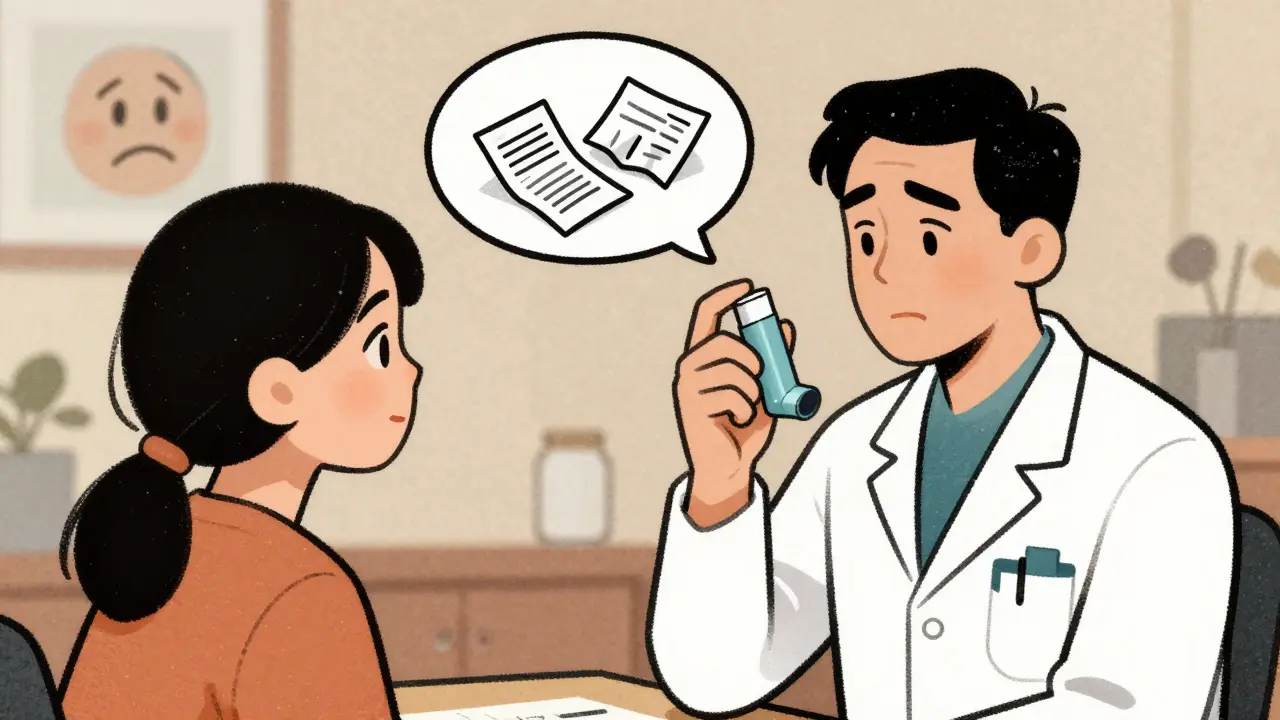
When patients leave the clinic with a stack of pamphlets and a vague sense of "do this, avoid that," how do you know they actually understand what they need to do? Too often, patient education is treated like a checkbox: hand out the info, get a signature, move on. But understanding isn’t about memorizing terms-it’s about knowing how to apply that knowledge in real life. Measuring education effectiveness isn’t about how much was taught. It’s about how much was truly absorbed and can be used.
Why Generic Understanding Matters More Than Memorization
Generic understanding means a patient can take what they learned and use it in new situations. For example, someone with diabetes shouldn’t just memorize that they need to check their blood sugar. They need to know how to adjust their meal plan after eating out, what to do if they feel dizzy, or how to explain their condition to a family member during an emergency. That’s not rote learning. That’s real understanding.Traditional methods-like asking, "Do you understand?"-don’t work. Patients often say yes to avoid embarrassment or because they think they should know. A 2023 study in primary care clinics found that 68% of patients who said they understood their diabetes management plan couldn’t correctly identify their target blood sugar range when tested two weeks later.
What we need is a way to measure whether knowledge sticks, transfers, and becomes part of daily behavior. That’s where tracking generic understanding comes in. It’s not about testing recall. It’s about testing application.
Direct vs. Indirect Methods: What Actually Shows Understanding
There are two main ways to measure learning: direct and indirect. Direct methods look at what the person actually does. Indirect methods ask them how they feel about it.Indirect methods-like post-visit surveys or satisfaction ratings-are easy to collect. But they’re unreliable. Patients might say they felt "well-informed," but that doesn’t mean they can manage their condition. A 2022 review of 47 patient education programs showed that 73% of high-satisfaction scores didn’t match up with actual health outcomes.
Direct methods are harder, but they’re honest. Here’s what works:
- Teach-back method: Ask the patient to explain, in their own words, what they need to do. If they say, "I take the blue pill once a day," but can’t explain why or what happens if they miss a dose, they don’t understand.
- Role-play scenarios: Have them practice calling the pharmacy to refill a prescription or demonstrating how to use an inhaler with a dummy device.
- Problem-solving questions: "What would you do if you felt short of breath at night?" or "Your child has a fever-what’s your next step?"
- Observation: Watch them prepare their insulin dose or read a medication label. Don’t just listen-see.
These aren’t fancy tools. They’re simple, low-cost, and built into real interactions. But they require time-and that’s the biggest barrier.
Formative Assessment: Catching Gaps Before It’s Too Late
Most patient education happens in one visit. But understanding builds over time. That’s why formative assessment-ongoing, low-stakes checks-is critical.Think of it like a GPS. You don’t wait until you’re lost to check your route. You check every few miles.
In practice:
- At the end of a consultation, ask: "What’s one thing you’re still unsure about?"
- Use a 3-question exit ticket: "What’s your main goal? What’s one step you’ll take? What might get in your way?"
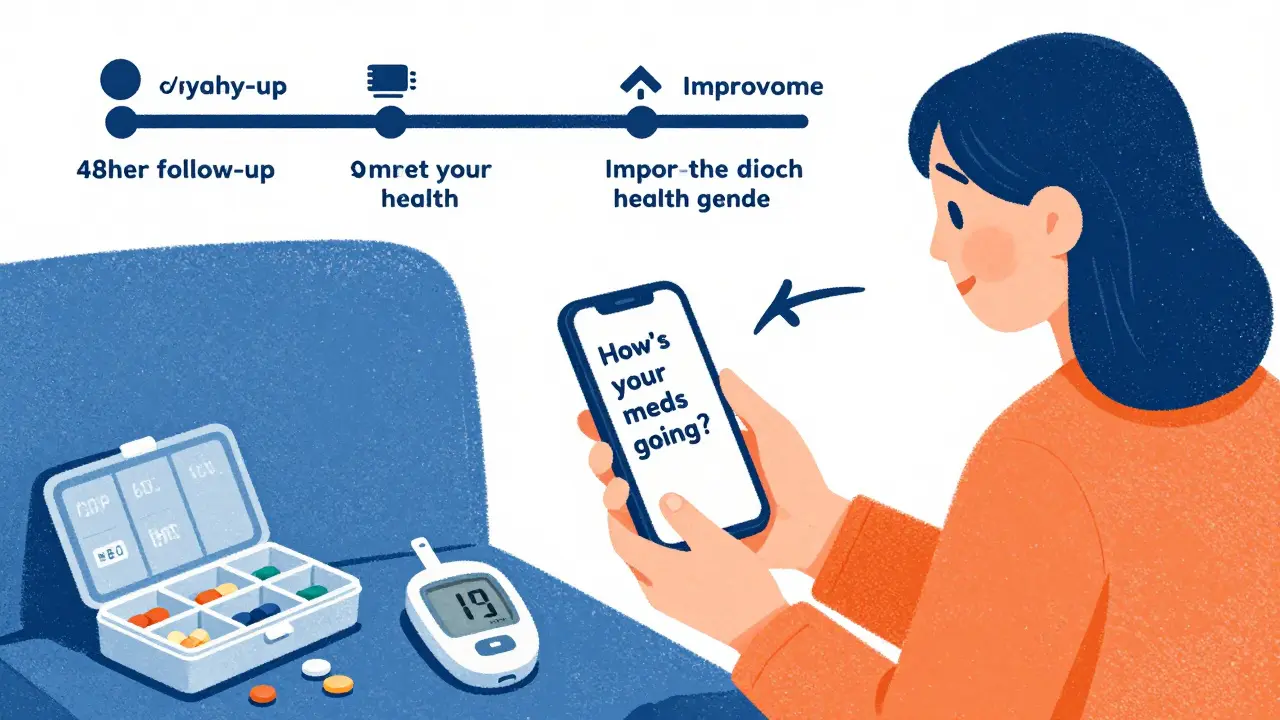
- Follow up with a short voice message or text 48 hours later: "Can you tell me how you’re doing with your new medication schedule?"
A 2023 trial in a UK community health center found that using simple daily check-ins reduced hospital readmissions for heart failure patients by 31% over six months. Why? Because problems were caught early-before they became emergencies.
These aren’t tests. They’re conversations. And they give you real-time feedback to adjust your teaching on the spot.
Summative Assessment: Did It Stick?
Summative assessment happens after the education is done. It asks: Did the patient learn enough to manage their health?This is where outcomes matter:
- Are blood pressure or HbA1c levels improving?
- Are medication adherence rates going up?
- Are emergency visits decreasing?
But here’s the catch: these outcomes take months to show. So you need to connect your teaching to the data. Track which patients received which type of education, then see who improved.
One clinic in Bristol started using a simple tracking system: every patient with hypertension got a unique code on their education materials. Six months later, they matched those codes to pharmacy refill records and clinic visits. They found that patients who had a teach-back session were 42% more likely to refill their meds on time than those who only got printed materials.
That’s not luck. That’s evidence.
The Role of Rubrics: Making Understanding Visible
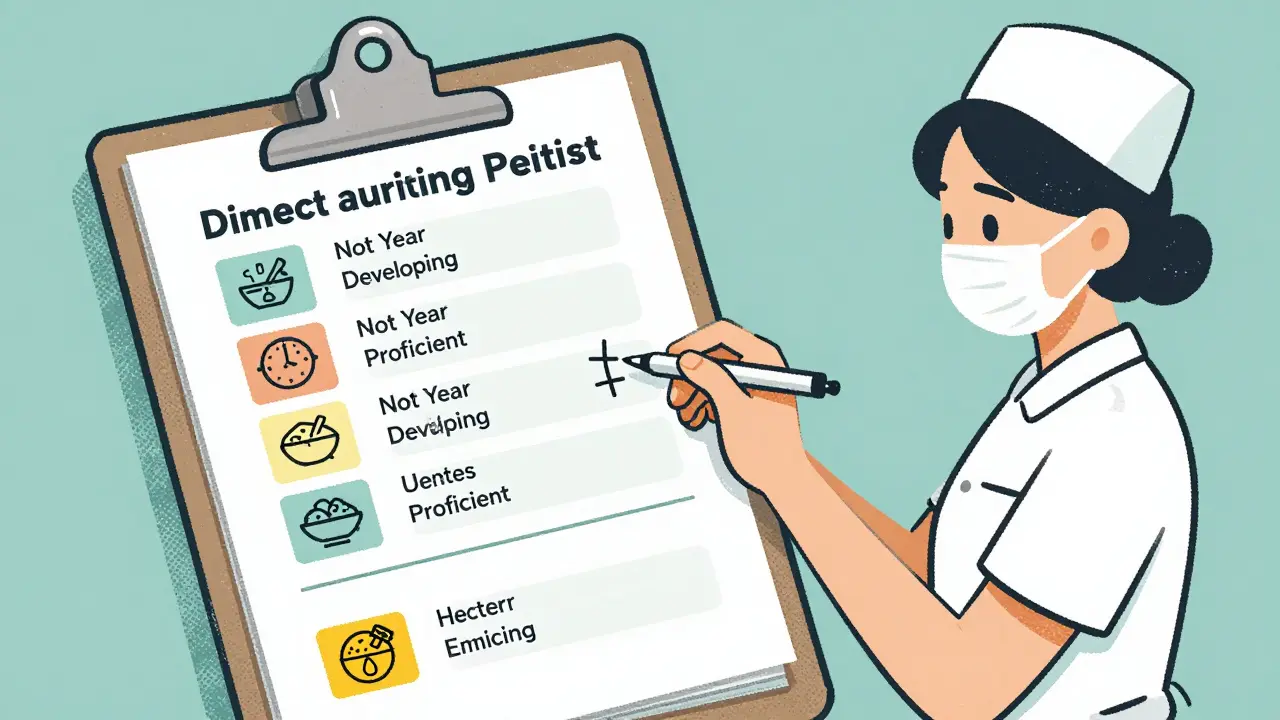
Rubrics turn vague ideas like "understands" into clear, measurable actions.For example, a rubric for "understanding insulin use" might look like this:
| Level | Can Identify Correct Injection Site | Can Explain Timing Relative to Meals | Can Troubleshoot Low Blood Sugar | Can Demonstrate Proper Technique |
|---|---|---|---|---|
| Not Yet | Cannot name any site | Thinks it’s the same every time | Doesn’t recognize symptoms | Uses wrong needle size |
| Developing | Names one correct site | Knows it’s before meals, but not why | Knows symptoms but not what to do | Can inject but skips air bubble |
| Proficient | Names 2+ correct sites | Explains how food affects timing | Knows steps to treat low sugar | Performs all steps correctly |
Using this rubric, a nurse doesn’t just say, "You’re good." They say, "You know where to inject, but you’re still unsure about what to do if your sugar drops. Let’s practice that."
A 2023 survey of 142 healthcare providers found that those using structured rubrics reported 58% higher confidence in their assessment accuracy and 47% fewer repeat education sessions.
What Doesn’t Work (And Why)
Not all methods are created equal. Here are common mistakes:- Asking "Do you understand?" - Patients say yes even when they don’t.
- Using only printed handouts - Most patients forget or misinterpret written info. One study showed 61% of patients couldn’t recall even one key point from a handout a week later.
- Relying on satisfaction surveys - Feeling good doesn’t mean doing well.
- Assessing only at discharge - Learning doesn’t stop when the appointment ends.
And here’s the biggest error: using tests that compare patients to each other (norm-referenced) instead of measuring against a clear standard (criterion-referenced). For example, saying "You did better than 70% of patients" tells you nothing about whether they can manage their condition. What matters is whether they hit the target-not how they stack up against others.
Getting Started: Simple Steps for Any Clinic
You don’t need fancy software or big budgets. Start here:- Choose one condition to focus on-like diabetes, asthma, or high blood pressure.
- Define one clear learning goal: "Patients will be able to recognize and respond to low blood sugar."
- Design one direct assessment: Use the teach-back method after every education session.
- Track results for 3 months: Note how many patients can demonstrate understanding.
- Adjust: If only half get it right, change how you teach it.
That’s it. No need to overhaul everything. Just make one piece better.
The Future Is Continuous
The best patient education doesn’t end at the door. It follows people home. That’s why tools like automated text check-ins, wearable health monitors, and AI-driven prompts are starting to help. But tech alone won’t fix understanding. Human connection still matters most.The goal isn’t to make patients perfect. It’s to make them confident, capable, and in control. And that only happens when we stop guessing-and start measuring what really counts: their ability to understand, adapt, and act.
What’s the difference between generic understanding and memorization in patient education?
Memorization means a patient can repeat facts, like "take your pill every morning." Generic understanding means they know why, what to do if they miss a dose, how to adjust for travel, or how to explain it to someone else. It’s about applying knowledge in real life, not just recalling it.
Is asking "Do you understand?" enough to measure learning?
No. Studies show most patients say yes even when they don’t understand-often to avoid embarrassment or because they think they should know. Direct methods like teach-back or demonstration are far more reliable.
What’s the most effective tool for measuring patient understanding?
The teach-back method is the most widely supported. Ask the patient to explain or demonstrate what they learned in their own words. If they can’t, you know where to reteach. It’s simple, free, and backed by decades of evidence.
How do you know if patient education is actually improving health outcomes?
Track measurable outcomes over time: medication adherence, hospital readmissions, lab results (like HbA1c or blood pressure), and emergency visits. Compare groups who received different types of education to see what works best.
Can technology help measure patient understanding?
Yes-tools like automated text check-ins, video demonstrations, and AI-driven quizzes can reinforce learning and flag gaps. But they work best when paired with human interaction. Tech supports, but doesn’t replace, the clinician’s role in assessing understanding.
Why are rubrics useful in patient education?
Rubrics turn vague ideas like "understands" into clear, observable behaviors. Instead of saying "they got it," you can say "they correctly identified two injection sites and explained timing with meals." This makes feedback specific, consistent, and actionable.
Next Steps for Clinics and Providers
If you’re not measuring understanding, you’re guessing. Start small. Pick one condition. Pick one method-like teach-back. Track it for a month. See what changes. Talk to your team. Share what works.Patients aren’t failing because they don’t care. They’re failing because we’re not giving them the tools to succeed. And the only way to know if they’ve got those tools is to check-clearly, consistently, and compassionately.
8 Comments
Jake MooreJanuary 17, 2026 AT 23:23
Teach-back is the gold standard, no debate. I’ve seen nurses skip it because they’re rushed, then wonder why patients end up back in the ER. One time, a guy with CHF told me he knew how to take his diuretic-until he tried to explain it and said he’d take it ‘when his legs feel puffy.’ No. That’s not understanding. That’s guesswork. We need to stop treating education like a brochure drop-off and start treating it like a skill-building session. It’s not about how much we say-it’s about how much they can do.
And yeah, rubrics help. I made a simple one for asthma inhaler use-three levels: can name it, can demonstrate with spacer, can explain why to rinse mouth. Suddenly, we stopped saying ‘they got it’ and started saying ‘they hit level 3.’ Game changer.
Joni OJanuary 18, 2026 AT 10:20
Thank you for this. As a nurse, I’ve cried in the supply closet after a patient told me they ‘understood’ their insulin regimen… then showed up with a half-used vial and no idea how to prime the pen. Teach-back saved me more than once. I started using the 3-question exit ticket-‘What’s your goal? One step? What might get in your way?’-and it’s like magic. People open up. They say ‘I’m scared to inject’ or ‘My husband thinks I’m overreacting.’ That’s the real stuff. We don’t need fancy tech. We need five extra minutes and the guts to ask.
Also, typo: ‘demonstrate’ not ‘demonastrate.’ 😅
Robert DavisJanuary 19, 2026 AT 23:20
Let me stop you right there. You’re romanticizing ‘teach-back’ like it’s some revolutionary concept. Newsflash: it’s been around since the 80s. The real problem? Hospitals don’t pay for it. They pay for volume. You think a nurse with 12 patients and 7 minutes per visit is going to sit through a 10-minute teach-back? Please. This whole post is just academic navel-gazing wrapped in buzzwords. Real healthcare is about efficiency, not emotional theater. If patients can’t remember their meds, maybe they’re just not responsible enough to manage their own health. That’s not the clinician’s fault.
Also, rubrics? Cute. But who’s gonna train the 300 temp nurses hired last year? You? With your PowerPoint?
Eric GebekeJanuary 20, 2026 AT 15:11
Oh, so now we’re blaming patients for not understanding? That’s rich. You know what’s really happening? The system is designed to fail them. Big Pharma writes the pamphlets. Insurance companies cut visit times. And then we act shocked when people don’t follow instructions they were never properly taught? This isn’t about ‘lack of effort’-it’s about systemic neglect. And you want to fix it with a checklist? No. You want to fix it by paying nurses a living wage, giving them time, and stopping the profit-driven charade that calls itself ‘healthcare.’
And don’t even get me started on ‘satisfaction surveys.’ That’s like asking a hostage if they liked their jailer’s smile. It’s performative nonsense.
Ryan OttoJanuary 21, 2026 AT 18:09
Let us not ignore the elephant in the room: this entire framework is a distraction orchestrated by the medical-industrial complex to shift liability away from pharmaceutical manufacturers and toward the patient. The real issue? The drugs themselves are often ineffective or dangerous, yet patients are told to ‘manage’ them. The teach-back method? A performative compliance ritual. The rubrics? A way to document that the system ‘did its part’-even when the outcome is predictable failure. And the data? Correlation does not imply causation. Who funded the ‘UK trial’? Who owns the AI check-in platforms? This is not healthcare reform. It is algorithmic paternalism dressed in clinical jargon.
Max SinclairJanuary 22, 2026 AT 14:54
I get where Robert’s coming from-time is tight, and systems are broken. But I’ve also seen what happens when we *try*. One of my patients, 72, diabetic, lives alone. We did a 7-minute teach-back on foot care. She showed me how she checked her feet with a mirror. Didn’t know she had a blister. We caught it early. No tech. No rubric. Just me asking, ‘Can you show me?’
It’s not about perfection. It’s about presence. You don’t need a PhD to ask someone to explain it back. You just need to care enough to listen. And honestly? Most patients want to get it right. They just need someone to meet them where they are.
Also, Joni-your typo made me smile. We’re all human here.
Praseetha PnJanuary 24, 2026 AT 07:12
OMG this is literally the most obvious thing ever and NO ONE in the medical system gets it?? Like, seriously?? You think people are dumb? No. They’re overwhelmed. They’re scared. They’re juggling jobs, kids, transportation, and a 10-page handout written in Latin. And you want them to ‘demonstrate’ insulin use after a 5-minute consult? LOL. We need mandatory patient education certification for ALL providers. Like, real training. Not just ‘watch a 2-minute video.’ And why is no one talking about the fact that 80% of meds are prescribed in languages patients don’t speak? Translation isn’t a luxury-it’s a survival tool. And if you’re not using interpreters, you’re not teaching. You’re just yelling. #HealthcareIsACrime
Nishant SonuleyJanuary 26, 2026 AT 05:41
Look, I’ve been in this game since before electronic health records were a thing, and let me tell you-this whole ‘generic understanding’ framing? Brilliant. But also… kind of obvious? Like, of course people aren’t learning if you hand them a pamphlet and say ‘go read this.’ That’s not education-that’s abandonment with a stamp. The real win here isn’t the teach-back or the rubric-it’s the cultural shift. We’re moving from ‘we told them’ to ‘they can do it.’ That’s huge. And yes, it takes time. But guess what? So does a heart attack. So does a diabetic coma. So does a readmission that costs $30K. So why are we still treating prevention like a bonus round?
And for the record? The AI check-ins? They’re not replacing humans. They’re reminding them. Like a GPS that says, ‘You missed your turn-would you like to recalculate?’ That’s not cold tech. That’s a safety net. And if you’re still mad about it, maybe you’re not ready for the future. Or maybe you’re just scared you’ll have to actually listen to your patients. Which, honestly? That’s the scariest part of all.