Missing a dose of your medication while traveling isn’t just inconvenient-it can be dangerous. Whether you’re on insulin, seizure medication, or birth control, crossing time zones throws your routine into chaos. And it’s not rare: over half of Americans who take prescription meds say they’ve struggled with adherence during travel, according to the National Center for Health Statistics. The good news? With the right plan, you can stay on track-even when your body thinks it’s still 3 a.m. back home.
Know Your Medication’s Flexibility
Not all meds are created equal. Some can be taken a few hours early or late without issue. Others? Even a 30-minute delay can cause problems. The University of California San Francisco found that for most medications, a four-hour window (two hours before or after your usual time) is safe. But that’s not a free pass. Insulin, anti-seizure drugs, and hormonal contraceptives don’t play nice with schedule shifts.For example, if you take seizure medication at 8 p.m. EST and fly to London (5 hours ahead), taking it at 8 p.m. London time means you’re dosing 9 hours early. That’s risky. The Epilepsy Foundation warns that missing a dose by more than two hours increases breakthrough seizure risk by 3.7 times. For these drugs, you need precision.
On the flip side, if you take a blood pressure pill at 7 a.m. and land in Los Angeles (3 hours behind), you can probably just stick with your original time for the first day. The Encompass Health Medication Guidelines say that for time zone changes under three hours, no adjustment is needed. Your body doesn’t need to scramble.
Plan Ahead-At Least Four Weeks Before You Go
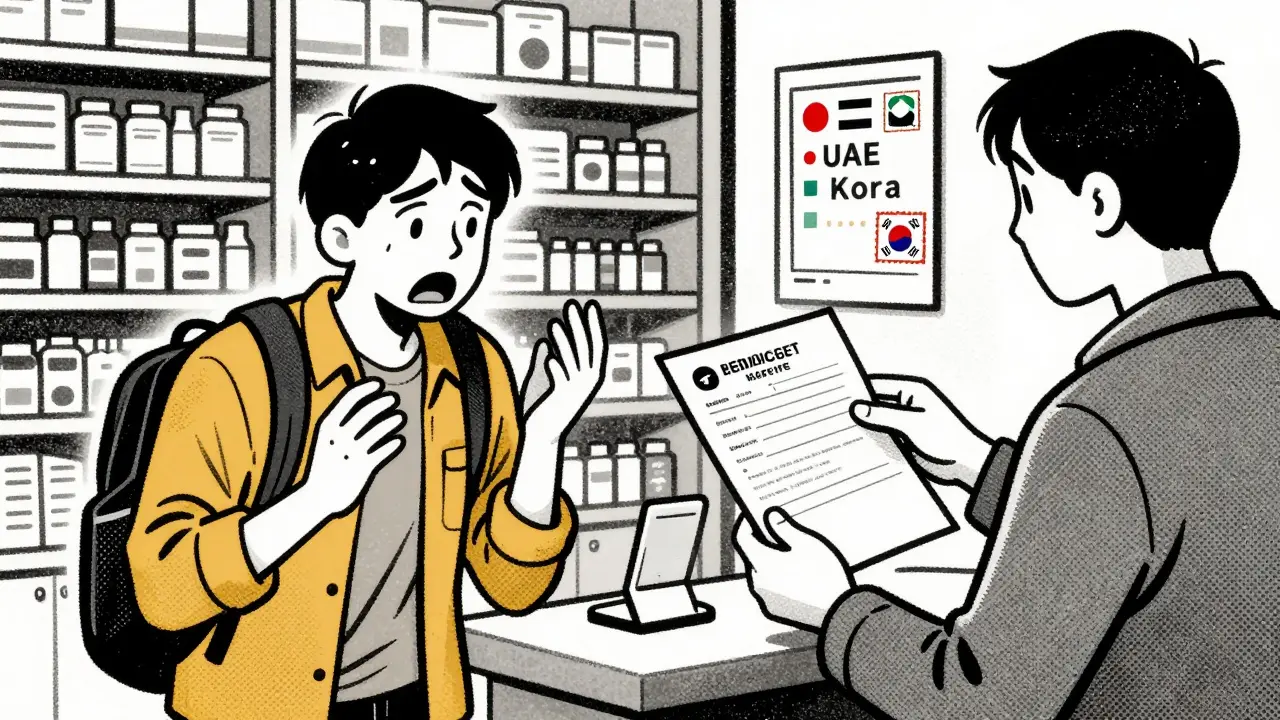
Waiting until the night before your flight is how most people end up in an airport pharmacy, panicking. Don’t be that person.The American Pharmacists Association recommends scheduling a medication review with your doctor or pharmacist at least 4-6 weeks before international travel. Bring your full itinerary: flight times, layovers, hotel locations. This isn’t just advice-it’s a lifesaver. Why? Because some countries, like Japan, South Korea, and the UAE, ban common medications (even some cold medicines) without a doctor’s letter. The American Society of Health-System Pharmacists says 19 countries have strict rules on controlled substances. If you’re on opioids, ADHD meds, or certain antidepressants, you’ll need documentation.
Also, refill your prescriptions early. The CDC advises carrying at least a seven-day surplus beyond your trip length. For international travel, 14 days is safer. Delays happen. Baggage gets lost. You don’t want to be stranded without your meds.
Pack Smart-Don’t Risk Losing Your Meds
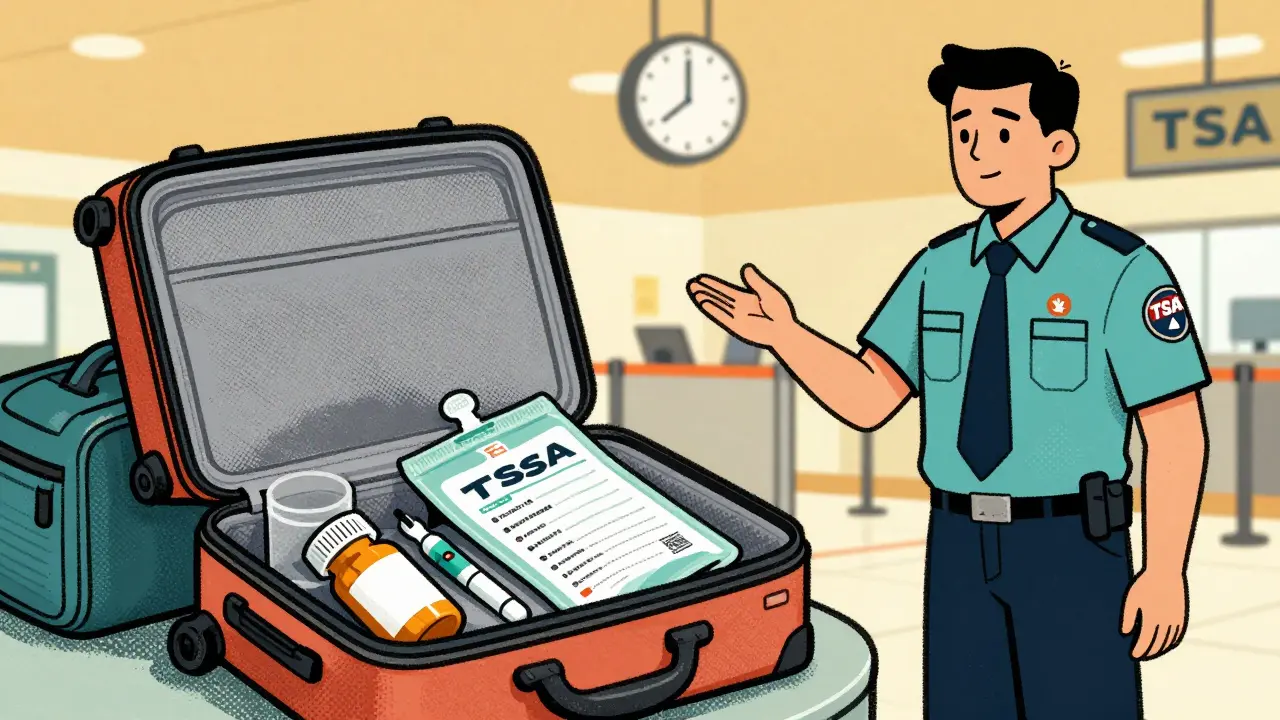
You wouldn’t leave your passport in checked luggage. So why risk your medication?Chemique Pharm’s 2024 survey found that 63% of medication-related travel emergencies happened because people packed pills in checked bags. And 22% lost their entire supply when luggage was delayed. The Transportation Security Administration lets you carry any amount of medication in your carry-on-even liquids over 3.4 ounces-as long as you tell them at security. No need to hide it. Just say: “I have medication.” They’ll screen it separately.
For insulin or other refrigerated meds, use an insulated pouch with ice packs. The St. Hope Rx Cold Chain Protocol says insulin exposed to temperatures above 86°F (30°C) for more than 24 hours can lose up to 27% of its potency. That’s not a small drop-it’s a health risk.
Keep a printed copy of your medication list in your wallet, separate from your pills. Include: brand name, generic name, dosage, frequency, prescribing doctor, and reason for use. Add allergies. The Encompass Health guidelines say 41% of international med emergencies stem from unclear allergy communication. A printed list can save your life if you can’t speak the local language.
Adjusting Your Schedule: What Actually Works
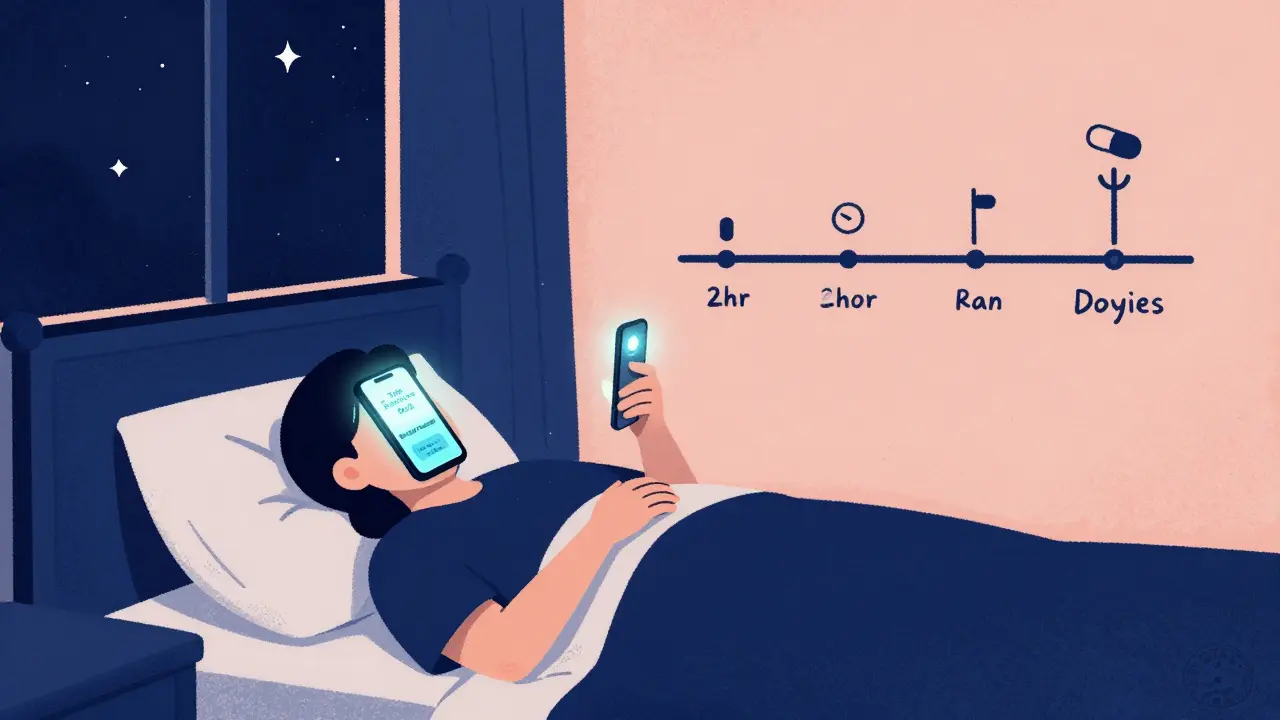
Here’s the real question: when do you switch your pill time?Village Medical’s 2024 Travel Advisory says 78% of doctors recommend this approach: take your first dose at home time, then switch to local time for the next one. For example: you fly from New York to Tokyo (13 hours ahead). Take your 8 p.m. dose at 8 p.m. New York time (which is 9 a.m. Tokyo time). Then, when you wake up the next morning, take your next dose at 8 a.m. Tokyo time. That gives your body a gentle nudge.
For longer trips (5+ time zones), St. Hope Rx suggests shifting gradually. Start 2-3 days before departure: move your dose 1-2 hours earlier or later each day until you’re synced to your destination. This works well for blood pressure pills, thyroid meds, and most chronic condition drugs.
But for insulin? Don’t guess. The American Diabetes Association says if you cross five or more time zones, adjust basal insulin by 20% per additional time zone beyond three. For mealtime insulin, timing depends on flight direction. Eastbound? Eat sooner. Westbound? Eat later. Always consult your endocrinologist.
Use Tech-But Not Just Any App
Your phone alarm won’t cut it. Time zone changes confuse standard alarms. You’ll miss doses because your phone says “7 a.m.” but you’re in a different time zone.NimbleRx’s 2024 study found that travelers using apps with automatic time zone adjustment had 47% fewer missed doses. Apps like Medisafe, MyTherapy, or Dosecast detect your location and shift reminders automatically. Set them up before you leave.
Even better? Use countdown timers. Instead of “Take pill at 8 a.m.,” set a timer for “Take pill in 12 hours.” That way, whether you’re on a plane, in a hotel, or in a taxi, the clock doesn’t lie. The same study showed 89% of users who used timers reported fewer missed doses.
What to Do If You Miss a Dose
You forgot. You overslept. You were on a 14-hour flight and lost track. Now what?Never double up. The Mayo Clinic found that doubling doses to make up for a missed one increases adverse events by 4.2 times. That’s not fixing it-it’s creating a new problem.
For most meds: if you realize you missed a dose within two hours of the scheduled time, take it. If it’s been more than two hours, skip it and wait for the next dose. Don’t try to catch up.
But exceptions exist:
- Antibiotics: Skip the missed dose. Don’t double. Inconsistent dosing raises antibiotic resistance risk by 18%, per CDC data.
- HIV meds: Take it as soon as you remember-even if it’s close to your next dose. Maintaining blood levels is critical.
- Oral contraceptives: If you’re more than 12 hours late, use backup contraception for the next 7 days. The American College of Obstetricians and Gynecologists is clear: timing matters.
- Warfarin: Get your INR tested within 72 hours of returning home. Diet changes and schedule shifts can throw off your clotting levels.
Special Cases: Insulin, Seizure Meds, and Birth Control
These aren’t like your daily multivitamin. They’re high-stakes.Insulin: Basal insulin (long-acting) needs to be adjusted for time zone changes. Rapid-acting insulin must match meal timing. If you’re flying east, meals come sooner. West? Meals come later. Your endocrinologist should give you a personalized plan. Don’t wing it.
Seizure meds: Stay within a two-hour window. The Epilepsy Foundation says even small deviations can trigger seizures. Set two alarms: one for the dose, one for a backup reminder.
Birth control: Take it at the same local time every day. If you miss a pill by more than 12 hours, use condoms or another method for the next week. The ACOG recommends this even if you’re on a short trip.
Final Rule: Never Adjust Without Talking to Your Doctor
No blog, app, or guide can replace your provider’s advice. Your body, your meds, your condition-they’re unique. The World Travel Protection guidelines say travelers should never change their schedule without consulting a clinician. Even if your friend took her pills differently and had no issues, that doesn’t mean it’s safe for you.Call your doctor. Ask: “What’s the safest way to adjust my meds across time zones?” Bring your pill bottles. Show them your itinerary. Get it in writing. You’re not being overly cautious-you’re being smart.
Travel should be exciting. Not a medical emergency. With a little planning, you can enjoy your trip without worrying about your next dose.
Can I carry my medication in my carry-on if it’s over 3.4 ounces?
Yes. The Transportation Security Administration allows medications of any quantity in carry-on luggage as long as they’re for personal use. You must declare them at the security checkpoint. No need to put them in a plastic bag-just inform the officer you’re carrying medication. They’ll screen it separately.
What if I lose my medication while traveling?
If you lose your meds, contact your doctor immediately. Many pharmacies in major cities can fill prescriptions with a doctor’s note. If you have a printed list with generic names and dosages, it helps pharmacists match your regimen. For controlled substances, you may need to visit a local clinic. Always carry a doctor’s letter for these drugs before you travel.
Do I need a doctor’s letter for my medication?
If you’re carrying controlled substances (like opioids, stimulants, or certain antidepressants), yes. Countries like Japan, South Korea, the UAE, and Singapore require a letter from your doctor explaining why you need the medication. The letter should include your name, diagnosis, medication details, and prescription date. Keep a copy in your digital wallet and your printed documents.
Can I use a pill organizer for travel?
Yes, but only if you keep the original prescription bottles with you. Some countries require you to show the original packaging to prove the medication is prescribed to you. A pill organizer is great for convenience, but don’t rely on it alone. Always carry your bottles, especially for controlled substances.
How do I handle insulin on a long flight?
Keep insulin in your carry-on with an insulated pouch and ice packs. Never check it. If your flight is longer than 12 hours, you may need to adjust your basal insulin dose slightly. Talk to your endocrinologist before flying. Also, bring extra supplies-pens, needles, glucose tabs-in case of delays. Airlines are required to accommodate medical needs, so ask for assistance if needed.
14 Comments
Gabriella AdamsFebruary 12, 2026 AT 16:52
Just got back from Tokyo and this post saved my life. Took my insulin at 8 p.m. NY time before I left, then switched to Tokyo time the next morning. No crashes, no panic. Seriously, plan ahead. It’s not rocket science.
Vamsi KrishnaFebruary 14, 2026 AT 09:17
lol you people think you're so smart with your 'four-hour window' and 'time zone adjustments' but have you even considered how your liver metabolizes meds differently at 30,000 feet? Air pressure drops, oxygen levels shift, your CYP450 enzymes are basically throwing a rave. You're not adjusting your schedule-you're playing Russian roulette with your neurochemistry.
Brad RalphFebruary 16, 2026 AT 00:24
So we're telling people to consult their doctor... but also use apps? 🤔
Sophia NelsonFebruary 17, 2026 AT 11:25
Why are we even talking about this? Just don't travel. Stay home. Take your pills. Live. It's that simple.
Skilken AweFebruary 17, 2026 AT 14:27
Insulin adjustments? Basal rate modulation? You're all missing the point. The real issue is pharmaceutical capitalism. Why do we need 14-day buffers? Because Big Pharma wants you to overpay for 'travel packs.' They profit from your anxiety. And now you're giving them your data via those 'NimbleRx' apps. Wake up.
Steve DESTIVELLEFebruary 18, 2026 AT 01:20
Traveling with meds is not about planning or apps or time zones it is about the human condition we are all just temporary vessels of chemistry and gravity and the universe does not care if you take your pill at 8 am or 8 pm or 3 am in a hotel in Bangkok the only thing that matters is that you are alive right now and breathing even if you missed a dose you are still here
Joanne TanFebruary 19, 2026 AT 22:13
i used a pill organizer for my trip to mexico and it was a game changer. just make sure you keep the bottles with u, like the post said. also, set ur phone to the destination time before u even leave. no more confusion. 🙌
Reggie McIntyreFebruary 21, 2026 AT 15:54
Love this. I’ve been on long-term meds for 12 years and this is the first time I’ve felt like someone actually gets it. The part about the printed list? Genius. I keep mine in my wallet next to my ID. Last year in Bali, a local pharmacist recognized my meds from the label and gave me extra refills. No paperwork. Just human connection. ❤️
Carla McKinneyFebruary 22, 2026 AT 05:57
It’s irresponsible to suggest that people ‘adjust’ their insulin based on ‘direction of flight.’ This is not a recommendation-it’s a liability. If you’re on insulin, you do not improvise. You consult an endocrinologist. Period. The fact that this post treats medical advice like a travel hack is dangerous.
Jack HavardFebruary 23, 2026 AT 22:25
Who funded this article? NimbleRx? Dosecast? Did you know that apps like these sell your medication data to insurers? The 'TSA allows carry-on meds' line? That’s a lie. They can still confiscate if they 'suspect' it's not yours. You think they care about your diabetes? They care about your ID matching your pill bottle. And good luck if you're flying to Dubai with ADHD meds. You're already flagged.
Annie JoyceFebruary 25, 2026 AT 16:58
My mom’s on warfarin and we always bring her INR monitor on trips. You don’t need to wait 72 hours after returning-test it the next day. I used to think that was overkill until she had a spike after a trip to Italy. Diet changes + schedule shifts = chaos. Now we just test. It’s 5 bucks. Worth it.
Kristin JareckiFebruary 27, 2026 AT 07:12
Thank you for this comprehensive guide. The emphasis on documentation, especially for controlled substances, cannot be overstated. I work in global health logistics and have seen too many cases where travelers were detained due to lack of a physician’s letter. A single printed document, signed and dated, can prevent international incidents. Please, always carry it.
Jonathan NoeFebruary 28, 2026 AT 14:57
For real though-why isn't this in every airline's pre-flight safety video? 'In case of emergency, take your pill.' Imagine if we had a 10-second clip on every flight: 'Your meds are safe in carry-on. Declare them. Don't panic.' That's public health right there.
Jim JohnsonFebruary 28, 2026 AT 23:37
you guys are overthinking this. just take your meds when you wake up. if you’re on a 12 hour flight, take one before you board, one after you land. your body’s smart. it’ll figure it out. i’ve been traveling for 20 years with bp meds and never missed a beat. no apps. no planners. just chill.