
Managing medications at home isn’t just about popping pills on time. For many older adults and people with chronic conditions, it’s a daily battle against confusion, forgetfulness, and complex schedules. And when patients can’t manage it alone, the responsibility often falls to family members or caregivers. The good news? You don’t have to figure this out on your own. With the right tools, habits, and communication, involving loved ones in medication support can cut errors, prevent hospital visits, and give everyone more peace of mind.
Start with a Complete Medication List
The first step in any medication support plan is a master list. Not a scribbled note on a napkin. Not a list in your phone that’s outdated. A real, updated, printed list with every detail.Each medication should include:
- Brand name and generic name (e.g., Lisinopril, sold as Zestril)
- Exact dosage (e.g., 10 mg, not just "one pill")
- Time of day to take it (e.g., "Take with breakfast at 8 AM")
- Special instructions (e.g., "Take on empty stomach", "Avoid grapefruit")
- Purpose (e.g., "for high blood pressure", "for arthritis pain")
- Prescribing doctor’s name and contact info
- Any known side effects or interactions
The Agency for Healthcare Research and Quality (AHRQ) says this list must be updated within 24 hours of any change - even if it’s just a new prescription from a specialist. That’s critical because 50-60% of medication errors happen during transitions, like when someone leaves the hospital. One caregiver in Ohio told me she caught a dangerous interaction between her mother’s blood pressure med and her arthritis drug because she had the full list and brought it to every appointment.
Use a Pill Organizer - But Choose the Right One
A simple 7-day pill box with morning and evening compartments reduces missed doses by 37%, according to a 2022 study in the Journal of the American Geriatrics Society. But not all organizers work for everyone.If the person has trouble seeing small print, go for large, color-coded boxes. If they’re forgetful or live alone, consider an electronic dispenser like Hero Health. These devices automatically release pills at set times, sound alarms, and even send alerts to your phone if a dose is skipped. Clinical trials show they cut missed doses by 62%.
Don’t just hand someone a pill box and walk away. Spend 15 minutes filling it together. Label each compartment clearly. Check weekly to make sure pills are being taken as scheduled. And always keep a backup list of what’s inside - in case the box gets mixed up or lost.
Build Medication Routines Into Daily Life
People remember habits better than alarms. That’s why linking medication times to existing routines - called "habit stacking" - works so well.Instead of saying, "Take your pill at 8 AM," say, "Take your blood pressure pill right after you brush your teeth." Or, "Take your evening pain reliever before you sit down for dinner." The National Institute on Aging says this simple trick boosts adherence by 28%.
For someone with dementia or memory loss, pair the habit with a visual cue. Put the pill box next to the toothbrush. Leave a sticky note on the coffee maker: "Meds before brew." Consistency turns chaos into routine.
Set Up Reminders - But Don’t Rely on Just One
Phones, smart speakers, and apps all help. But using just one system? That’s risky.Smartphone apps like Medisafe or Round Health send push notifications, track doses, and let caregivers get alerts if someone skips a pill. Studies show they improve adherence by 45% compared to paper logs.
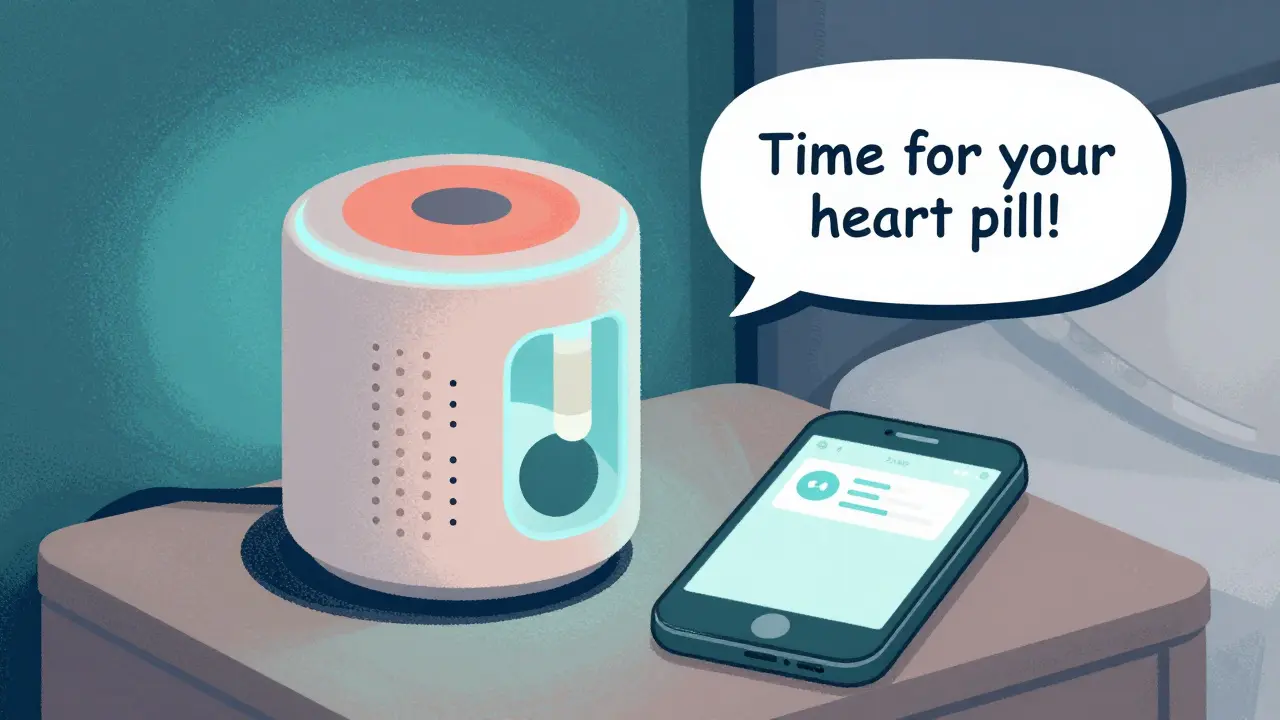
For people who don’t use smartphones, try voice reminders. Amazon Alexa or Google Home can be programmed to say, "It’s time for your heart pill," at the right hour. A 2023 University of Pittsburgh study found these voice alerts reduced missed doses by 37% for people with cognitive decline.
Even low-tech solutions work. Set a kitchen timer. Use a wall calendar with checkmarks. The key is redundancy - if one system fails, another catches it.
Know When to Call the Pharmacist
Your pharmacist is your most accessible medication expert. In 2023, 92% of U.S. pharmacies had pharmacists available for free, walk-in consultations.Don’t wait until something goes wrong. Bring the full medication list to the pharmacy every time you refill. Ask these four questions:
- What time should this be taken relative to meals?
- Are there any foods, drinks, or other meds I should avoid?
- What should I do if I miss a dose?
- When should I expect to see results?
Pharmacists also spot dangerous combinations. The American Geriatrics Society’s Beers Criteria lists 30 medications that are risky for older adults - like certain sleep aids and antihistamines that increase fall risk. If your loved one is taking any of these, ask the pharmacist why they were prescribed and if there’s a safer alternative.
Schedule Regular Medication Reviews
Many people take 5 or more medications - a situation called polypharmacy. It affects 45% of adults over 65. Each extra pill increases the risk of side effects, falls, and hospital stays.Ask the doctor for a full medication review every three months, especially if the person is on four or more drugs. During the review, ask:
- Is every pill still necessary?
- Can any be combined or lowered in dose?
- Are any of these on the Beers Criteria list?
A 2022 study in JAMA Internal Medicine found that regular reviews reduced inappropriate prescriptions by 22%. That’s not just saving money - it’s saving lives.
Create an Emergency Plan
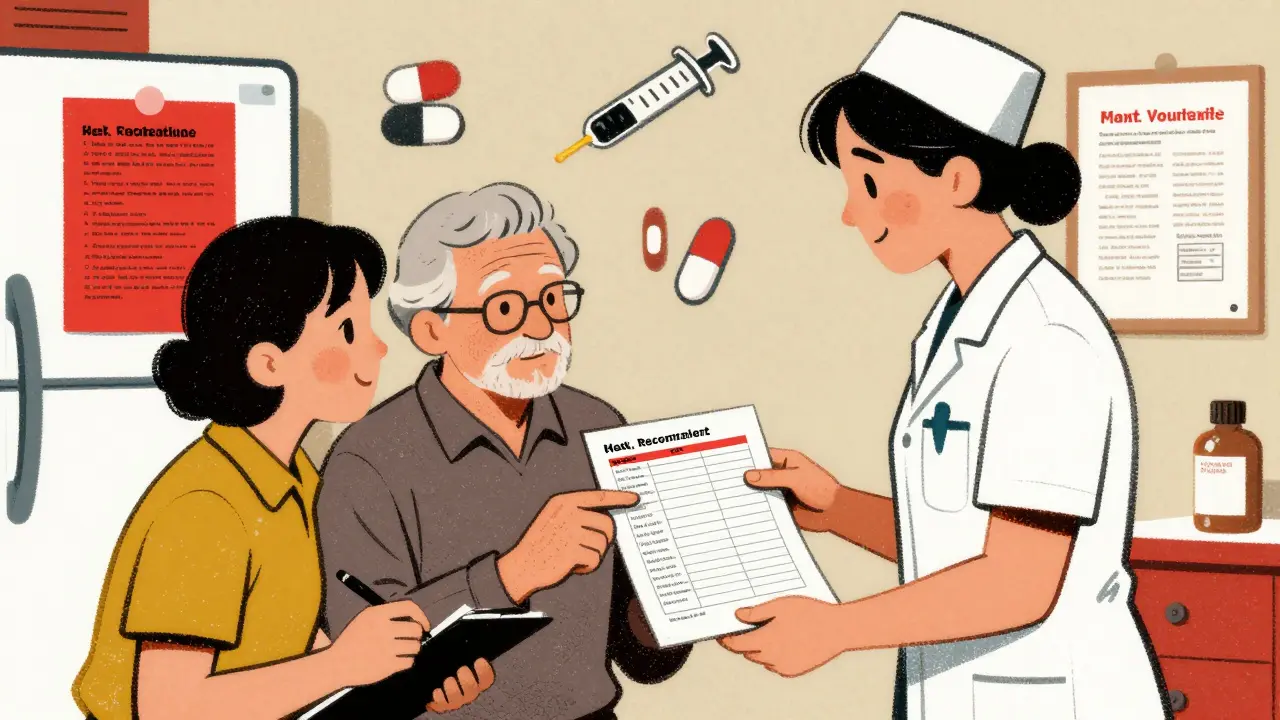
Some medications are dangerous to miss. Insulin. Blood thinners like warfarin. Heart meds like beta-blockers. Stopping these suddenly can lead to strokes, heart attacks, or diabetic emergencies.Make a "medication red list" - a separate, clearly labeled sheet that says:
- Which pills are critical
- What happens if they’re skipped
- Who to call immediately (doctor, 911, poison control)
- Where to find the next dose if the main supply runs out
A 2023 study in the Annals of Internal Medicine showed families who used this red list reduced emergency room visits by 19%. Keep it taped to the fridge. Give copies to neighbors or close friends.
Attend Appointments Together
Too often, the patient goes to the doctor alone. They’re nervous. They forget to mention side effects. They don’t understand the instructions.Go with them. Bring the medication list. Take notes. Ask questions. The AARP found that 89% of caregivers who attended appointments said they understood the medication plan better afterward.
And don’t be afraid to speak up. If a doctor prescribes something new, ask: "Is this absolutely necessary? Are there cheaper or safer options?" Many older adults are prescribed drugs that aren’t needed - or that conflict with others they’re already taking.
Watch for Burnout - And Ask for Help
Managing medications is exhausting. One in two caregivers says it’s their most stressful task. And 42% report feeling overwhelmed by the responsibility, according to the National Alliance for Caregiving.If you’re feeling burnt out, you’re not failing - you’re human.
Reach out. Ask other family members to take turns. Look into Medicare Part D’s Medication Therapy Management (MTM) program - it’s free for people taking 8+ Part D drugs with 3+ chronic conditions. Pharmacists will call you, review the list, and even coordinate with doctors.
Pharmacies like CVS and Walgreens now offer caregiver support hubs with dedicated pharmacists. Some home care agencies provide medication management as part of their service. Don’t try to do it all alone.
Use Technology - But Keep It Simple
Digital tools are growing fast. In 2024, 67% of medication management startups saw annual growth over 60%. But not every app is right for every family.Start with what’s already in the home:
- Amazon Alexa or Google Home for voice reminders
- Medisafe app for tracking and alerts
- Automatic refill programs through your pharmacy (CVS, Walgreens, Medicare Part D)
Automatic refills are easy to set up - just call your pharmacy 7-10 days before running out. Most major pharmacies offer this for free. No more last-minute dashes to the store.
And remember: tech is a tool, not a replacement for human care. A pill box with alarms won’t help if no one checks to make sure the pills are actually being taken.
Prepare for Transitions - Especially Hospital Discharge
One of the riskiest times is when someone comes home from the hospital. In 68% of cases, caregivers report confusion over new or changed medications.Before discharge, ask for a full medication reconciliation. This means the hospital staff must compare what the patient was taking before admission to what they’re leaving with. Make sure you get a printed copy - not just a verbal summary.
Also, ask: "Are any meds being stopped? Any new ones added? Why?" If something doesn’t make sense, don’t sign off until you understand.
The SUPPORT for Patients and Communities Act (2018) requires hospitals to involve caregivers in discharge planning. Use that law. Insist on being part of the conversation.
Final Thought: You’re Not Alone
Medication support isn’t a task you have to master overnight. It’s a process. It takes time, patience, and teamwork.Start small. Build the list. Pick one tool - a pill box or a phone reminder. Talk to the pharmacist. Attend one appointment together.
Every step you take reduces risk. Every time you catch a mistake, you prevent a hospital visit. Every conversation you have with a doctor or pharmacist makes the system work better.
You’re not just helping someone take their pills. You’re helping them live longer, safer, and with more dignity.
14 Comments
Candice HartleyJanuary 26, 2026 AT 11:59
This is so helpful! 🙌 I’ve been using Medisafe with my dad and it’s been a game-changer. He actually takes his pills now instead of hoarding them in a drawer. Also, the pharmacy refill thing? Lifesaver. No more panic at 11pm when he’s out of insulin.Andrew ClausenJanuary 28, 2026 AT 01:02
The article claims 62% reduction in missed doses with electronic dispensers but cites no primary study. The Journal of the American Geriatrics Society paper referenced only tested a specific model under controlled conditions. Real-world adherence drops by nearly half when caregivers aren't present. This is misleading.April WilliamsJanuary 28, 2026 AT 08:08
I can't believe people still use paper lists. My cousin's mom died because her caregiver didn't update the list after the hospital changed her meds. She was on warfarin and they gave her a new antibiotic that interacted. It was avoidable. PEOPLE NEED TO TAKE THIS SERIOUSLY. NO EXCUSES.Harry HendersonJanuary 28, 2026 AT 18:37
STOP WAITING FOR SOMETHING TO GO WRONG. START NOW. Grab that pill box. Call the pharmacist TODAY. Text your sibling and say 'Hey, can you take Mom to her next appointment?' Don't wait for the emergency room. Your future self will thank you. This isn't optional. It's survival.suhail ahmedJanuary 29, 2026 AT 21:43
In India, we call this 'family medicine'-it’s not just about pills, it’s about love in action. My aunt takes her husband’s meds every morning with chai, right after he sits in his favorite chair. We label everything in Hindi and English, and my nephew uses a cheap Android app to send alerts to all of us. No fancy gadgets needed-just consistency and heart.Paul TaylorJanuary 30, 2026 AT 09:58
Ive been doing this for years with my mom shes 84 and on 12 meds and the key is not tech its routine she takes her meds after she puts on her slippers every morning and before she turns on the tv and if she misses one we just do it right then no big deal but the list is everything i keep it in a binder with tabs and i update it every time she sees a doc even if its just for a coldKegan PowellJanuary 31, 2026 AT 05:58
It’s funny how we treat meds like a chore when really they’re tiny acts of self-respect. Every pill taken is a quiet rebellion against chaos. The real magic isn’t in the apps or the boxes-it’s in showing up. Even if it’s just sitting with someone while they swallow their pills. That’s the medicine they really needastrid cookFebruary 1, 2026 AT 12:05
I feel like people act like this is new information. My grandma died in 2010 because her daughter didn't know the difference between aspirin and ibuprofen. And now we're all acting like we just discovered the concept of a pill organizer? We've been failing at this for decades. Why is this even a topic?Kathy McDanielFebruary 2, 2026 AT 12:43
i used the alexa thing and it worked great until one day it just stopped talking and i didnt notice for 3 days cause i was busy with work lol but we fixed it and now i have a timer too so its double backup hehePatrick MerrellFebruary 4, 2026 AT 08:19
I'm Irish and we don't have a word for 'medication management'-we just say 'making sure the auld one doesn't die'. My da takes his pills with a shot of whiskey every night. Doctor says it's fine. So I say: if it works, don't fix it.Conor FlannellyFebruary 5, 2026 AT 11:47
The real issue isn't the tools-it's the silence. Families don't talk about meds because it feels like admitting someone is slipping. But silence kills. I started asking my uncle 'What's the red list today?' and it opened the door. Now we have weekly chats. He says it's the first time he's felt like someone truly sees him.Conor MurphyFebruary 7, 2026 AT 03:21
My brother’s in a nursing home and the staff there use a color-coded system: red for critical, green for maintenance, yellow for PRN. We made a big poster with photos of each pill next to the color. His dementia’s bad but he knows red = stop and call. Simple. Human. Works.Desaundrea Morton-PuseyFebruary 7, 2026 AT 12:26
This is just more American overcomplication. In my country, we just give the pills and say 'take them'. If they die, they died. No apps, no lists, no drama. Why are we turning this into a productivity hack?Murphy GameFebruary 7, 2026 AT 19:36
Who wrote this? Big Pharma? Pill box companies? They want you to think you need 7 different systems. The truth? Most of these meds aren’t even necessary. The real problem is overprescribing. I’ve seen people on 12 pills who could be on 2. This whole system is a money trap. Don’t fall for it.