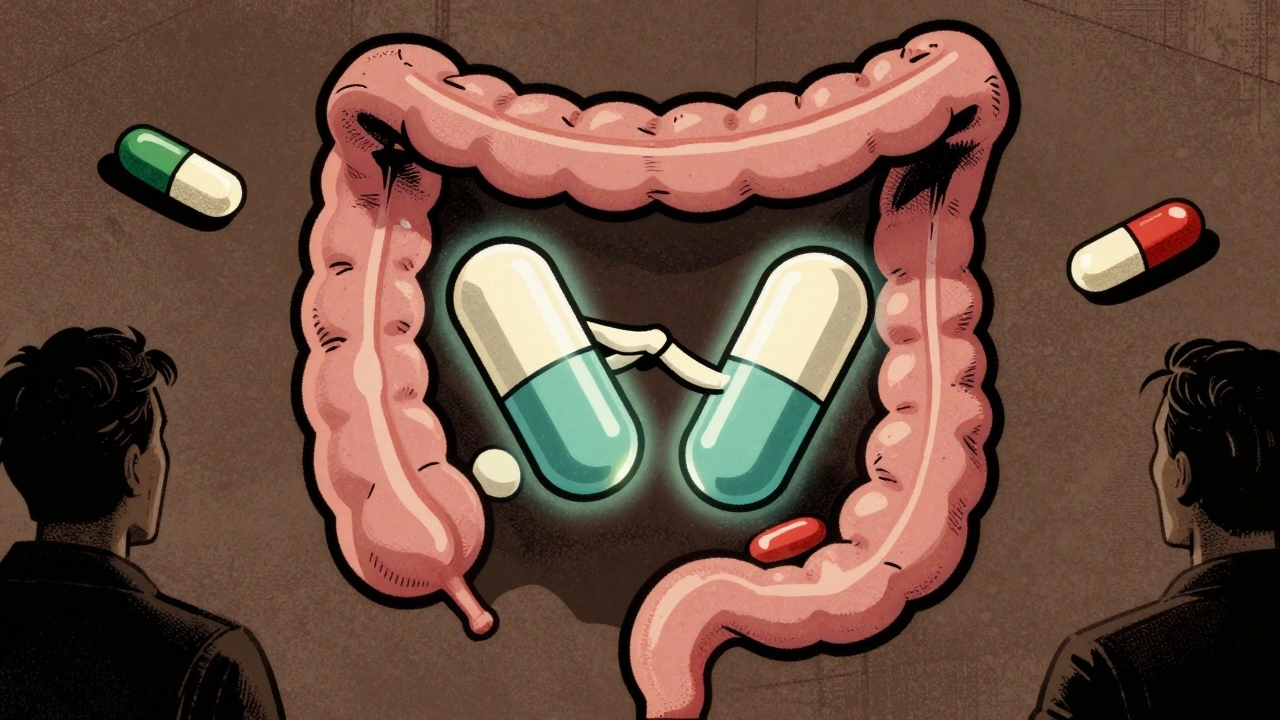
Taking calcium and iron supplements might seem like a simple way to stay healthy, but if you’re also on medication, you could be sabotaging your treatment - and not even know it. These two minerals don’t just compete with each other for absorption; they also block the effectiveness of common prescriptions, from antibiotics to thyroid meds. The problem isn’t rare. It’s happening every day to people who think they’re doing the right thing.
Why Calcium and Iron Fight Each Other
Calcium and iron don’t get along inside your gut. Both are positively charged minerals (cations), and they both use the same tiny transporters in your small intestine to get absorbed. When you take them together - say, a calcium pill with your iron supplement - they literally crowd each other out. One wins. Usually, calcium does. A 1991 study from the American Journal of Clinical Nutrition found that just 600 mg of calcium (about two Tums tablets) cut iron absorption by nearly half. Even worse, when calcium was taken with food, iron absorption dropped by up to 62%.It’s not just about quantity. The form matters too. Calcium carbonate, the cheapest and most common type in supplements and antacids like Tums, also raises the pH in your stomach. Iron needs acid to dissolve and be absorbed. Less acid = less iron. That’s why people on heartburn meds like omeprazole (Prilosec) or famotidine (Pepcid) often end up with iron deficiency - even if they’re eating enough iron-rich food.
Antibiotics Don’t Work When You Take Calcium or Iron
If you’ve been prescribed an antibiotic like ciprofloxacin (Cipro) or doxycycline, taking calcium or iron at the same time can make it useless. These antibiotics belong to two classes - fluoroquinolones and tetracyclines - and they bind tightly to calcium, iron, aluminum, and magnesium. The result? The antibiotic passes right through your system without being absorbed.Doctors see this all the time. A patient comes back with a lingering infection because they took their antibiotic with a multivitamin or a calcium supplement. The fix isn’t complicated: wait at least two hours before or after taking your antibiotic. For tetracycline-class drugs, some experts recommend waiting up to four hours. That’s long enough for the antibiotic to be absorbed before the minerals show up.
It’s not just antibiotics. Iron also messes with Parkinson’s meds like levodopa and seizure drugs like phenytoin. The binding happens in the gut, so the drugs never reach their target in the brain. If you’re on any of these, check with your pharmacist. Don’t assume your doctor told you - many don’t bring it up unless you ask.
Thyroid Meds Are Especially Sensitive
If you take levothyroxine for hypothyroidism, your calcium and iron supplements could be quietly sabotaging your treatment. These minerals bind to the thyroid hormone in your gut, preventing it from entering your bloodstream. The result? You might feel tired, gain weight, or have cold hands - even if your dose is "correct."Studies show that taking calcium or iron within four hours of levothyroxine can reduce hormone absorption by up to 30%. That’s enough to throw your whole thyroid balance off. The standard advice? Take your thyroid pill first thing in the morning on an empty stomach, wait at least 30 to 60 minutes before eating or drinking anything else, and then wait another four hours before taking calcium or iron. Many people find it easier to take their calcium and iron at bedtime - as long as they haven’t eaten for at least two hours.
What About Bone Meds? (Bisphosphonates)
If you’re on a bisphosphonate like alendronate (Fosamax) for osteoporosis, you’re already being told to take it on an empty stomach with a full glass of water and stay upright for 30 minutes. But if you take calcium or iron even an hour after, you’re undoing the whole thing. These bone meds need a completely empty gut to absorb properly. Calcium and iron will bind to them, turning your expensive prescription into expensive waste.The rule is simple: take your bisphosphonate first. Wait at least 30 minutes before eating or drinking anything else. Then wait another two to four hours before taking any mineral supplement. Most people find it easiest to take their calcium and iron at dinner or before bed.
How to Take Iron Without Upsetting Your Stomach
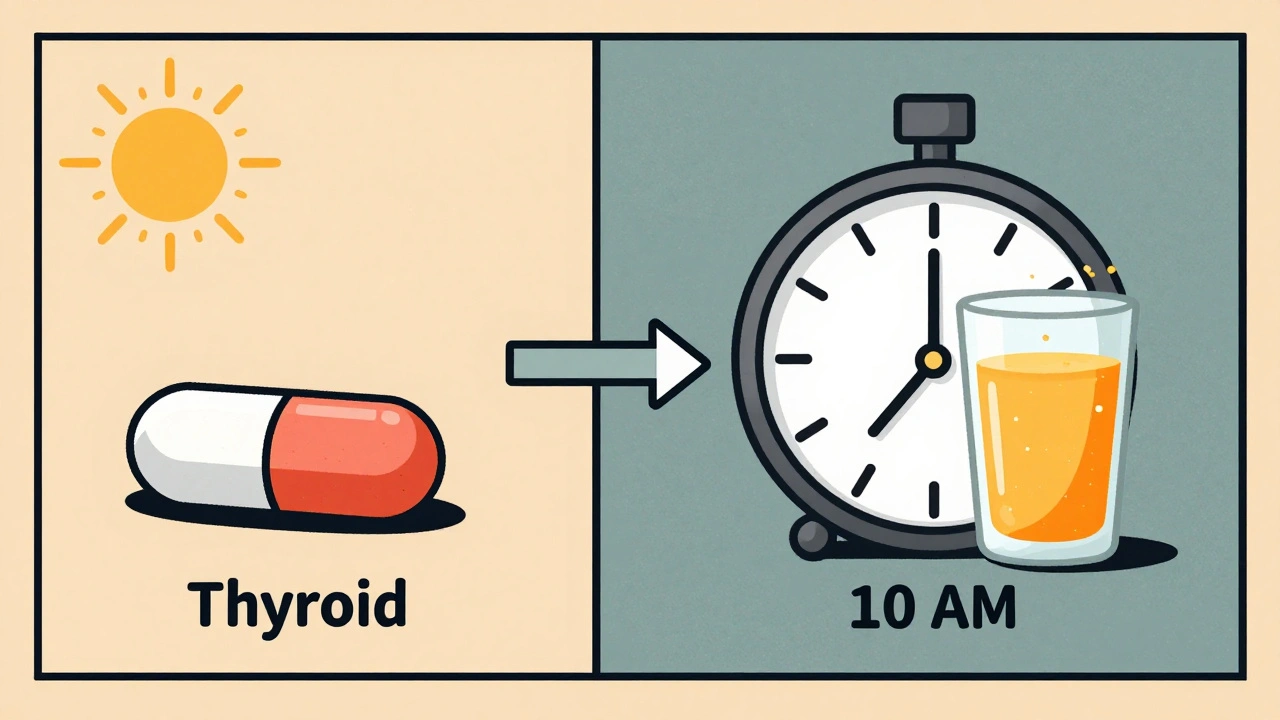
Iron on an empty stomach absorbs best - but it also causes nausea, cramps, and constipation in 30 to 50% of people. So what do you do? You can take it with a small amount of food - like a few crackers - to ease the stomach upset, but avoid dairy, tea, coffee, or whole grains. They contain compounds that block iron even more than calcium.The best trick? Take iron with vitamin C. A study showed that 100 mg of vitamin C (about the amount in a glass of orange juice) can boost iron absorption by up to 300%. Many doctors now recommend taking your iron pill with a glass of orange juice or a vitamin C tablet. Don’t use juice with added calcium - that defeats the purpose. Stick to plain orange, grapefruit, or even a vitamin C supplement.
Timing Is Everything - Here’s the Simple Plan
You don’t need to stop taking your supplements. You just need to space them out. Here’s a real-world schedule that works for most people:- Morning (6-7 AM): Take thyroid medication (levothyroxine) on an empty stomach with water. Wait 30-60 minutes before eating.
- 8-9 AM: Eat breakfast (avoid dairy, coffee, tea, whole grains).
- 10 AM: Take iron supplement with vitamin C (orange juice or tablet).
- 12 PM: Lunch - no calcium-rich foods (dairy, fortified plant milks).
- 2 PM: Take antibiotics if prescribed (wait 2-4 hours before or after any mineral supplement).
- 6 PM: Dinner - includes calcium-rich foods (dairy, leafy greens, fortified foods).
- 8-9 PM: Take calcium supplement with dinner (this helps absorption and avoids nighttime cramps).
This schedule gives you at least 4-6 hours between iron and calcium, and 4 hours between iron and thyroid meds. It’s not perfect for everyone - but it’s a solid starting point.
What You Should Never Do
- Don’t take your iron pill with milk, coffee, tea, or calcium-fortified orange juice.
- Don’t swallow your calcium supplement with your antibiotics or thyroid med.
- Don’t assume your multivitamin is safe - many contain iron or calcium.
- Don’t skip your meds just because you took a supplement. Talk to your doctor or pharmacist instead.
Also, watch for side effects. Black stools are normal with iron. But if your stool is tarry, has red streaks, or you feel dizzy or weak, get checked immediately. Iron overdose is dangerous - especially for kids. Keep supplements locked up.
What About Food vs. Supplements?
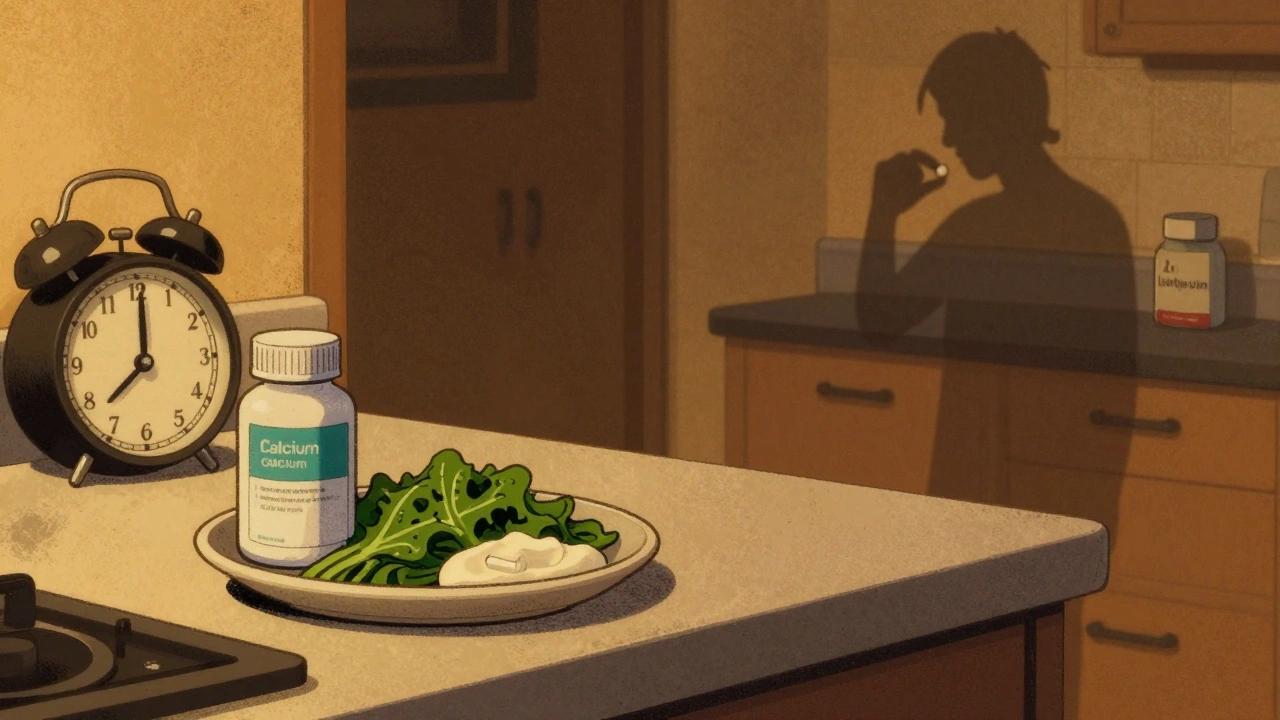
Food sources of iron and calcium don’t cause the same level of interference. Why? Because the amounts are lower, and they’re absorbed slowly over time. A spinach salad with lemon juice won’t block your antibiotic like a 600 mg calcium pill will. The real danger comes from concentrated supplements taken all at once.That said, if you’re eating a lot of calcium-rich foods (yogurt, cheese, fortified cereals) right before or after your iron pill, you’re still risking reduced absorption. It’s not just supplements - timing matters with meals too.
What to Do If You’re Already Taking Them Together
If you’ve been taking calcium and iron with your meds for months - don’t panic. But do act.- Write down every pill you take, including supplements and over-the-counter meds.
- Check the labels for calcium, iron, magnesium, or aluminum.
- Call your pharmacist. They can flag interactions in seconds.
- Ask your doctor if your blood levels need checking - iron (ferritin), calcium, thyroid hormone (TSH), or antibiotic levels if you’ve had a recent infection.
Many people feel fine - until they don’t. A slow decline in iron stores or thyroid function can go unnoticed for months. By then, you’re dealing with fatigue, brain fog, or even anemia. Fixing it is easy - if you catch it early.
Final Thought: Knowledge Is the Real Supplement
You don’t need more pills. You need better timing. Calcium and iron are essential. So are your medications. But they don’t work together. That’s not a flaw in your body - it’s just how chemistry works. The solution isn’t to stop taking them. It’s to space them out, pair them right, and ask questions.Next time you pick up a prescription, ask: "Does this interact with calcium or iron?" Most pharmacists will be happy to help. And if they don’t know - it’s time to find one who does.
Can I take calcium and iron together if I space them out from my meds?
No. Even if you take them hours apart from your medications, calcium and iron still compete with each other for absorption in the gut. The best approach is to take them at least 4 hours apart - ideally iron in the morning on an empty stomach and calcium in the evening with food.
What if I forget and take my iron with my calcium pill?
One mistake won’t ruin your treatment, but doing it regularly will reduce your iron levels over time. If it happens once, just note it and adjust your schedule tomorrow. Don’t double up on doses to "make up" for it - that can cause side effects. Consistency matters more than perfection.
Is liquid iron better than tablets for avoiding interactions?
No. Liquid iron has the same chemical properties as tablets. It still binds to calcium, antibiotics, and thyroid meds. The only difference is that liquid iron can stain your teeth - so use a straw. The absorption rules are the same.
Can I take vitamin D with calcium and iron?
Yes. Vitamin D doesn’t interfere with calcium or iron absorption. In fact, it helps your body use calcium better. You can take vitamin D with calcium at night. Just keep it separate from iron - take it at least 2 hours before or after.
Why do some supplements say "take with food" if iron needs an empty stomach?
That’s because the supplement maker is prioritizing comfort over absorption. Iron on an empty stomach often causes nausea. Taking it with food reduces side effects - but also cuts absorption by up to 60%. If you can tolerate it, take iron on an empty stomach with vitamin C. If you can’t, take it with a light snack (not dairy or fiber-rich foods) and accept slightly lower absorption.
Should I get my iron and calcium levels checked if I take supplements?
Yes, especially if you’re on long-term medications like thyroid or antibiotic therapy. A simple blood test for ferritin (iron stores) and serum calcium can tell you if your supplements are working - or if you’re still deficient. Don’t wait for symptoms like fatigue or muscle cramps. Prevention is easier than correction.
If you’re on multiple medications and supplements, keep a simple log: what you took, when, and with what. Bring it to your next doctor’s visit. It’s one of the most helpful things you can do.
13 Comments
Ryan BradyDecember 9, 2025 AT 00:36
Bro just take your supplements with a beer and call it a day. 🍻 Who has time for this much planning? My thyroid’s fine, my iron’s fine, and my doctor hasn’t fired me yet. 😎
Raja HerbalDecember 10, 2025 AT 15:13
So let me get this straight - in America, you need a PhD just to swallow a pill? 🤦♂️ In India, we just take everything together and pray to Ayurveda. Works 90% of the time. The rest? Well, that’s why we have chai.
Iris CarmenDecember 12, 2025 AT 06:42
i just throw all my pills in a cup and call it a smoothie 🤷♀️ no one told me i needed a chemistry degree to be healthy. also my stomach hates me anyway so who cares?
Rich PaulDecember 13, 2025 AT 20:39
Y’all are overcomplicating this. The real issue is bioavailability kinetics and cationic competition in the duodenum - calcium and iron both chelate via DMT1 transporters, and pH modulation via proton pump inhibitors creates a non-ideal microenvironment for Fe²⁺ solubilization. Bottom line: space em out by 4h. Or just get IV infusions. Done. 💪
Delaine KiaraDecember 15, 2025 AT 07:15
Okay but imagine if your thyroid was a person and every time you took calcium, you slapped it in the face. That’s what’s happening. And your iron? It’s crying in the corner because it’s been ghosted by vitamin C for 3 years. 😭 This isn’t health advice - it’s a soap opera written by a pharmacist.
Ruth WitteDecember 15, 2025 AT 20:53
THIS IS LIFE CHANGING!! 🙌 I just started taking my iron with OJ and my energy is through the roof!! 🍊⚡ Also I bought a pill organizer with color-coded slots and now I feel like a boss!! 💼✨ #SupplementQueen
Noah RainesDecember 16, 2025 AT 17:36
Yeah, I’ve been doing this wrong for 5 years. But I’m not panicking. I just started spacing it out and my brain fog lifted. No magic. Just science. And yes, I still take my calcium at night. Works like a charm. 🛌
Katherine RodgersDecember 17, 2025 AT 08:38
Of course the article says "don’t panic" - because the supplement industry made $50B last year off people like you who think they can outsmart biochemistry. 😏 Next time, read the label. Or better yet - don’t take supplements at all. Food exists.
Lauren DareDecember 18, 2025 AT 04:09
Let’s be real - the only reason this isn’t common knowledge is because pharmaceutical companies don’t profit from timing schedules. They profit from re-prescribing levothyroxine because your TSH is off. The pharmacist knows. Your doctor knows. But they’re not going to tell you unless you ask. And even then, they’ll hand you a pamphlet.
Gilbert LacasandileDecember 19, 2025 AT 17:09
I just started reading this and realized I’ve been taking my iron with my calcium. I feel bad. But I’m gonna fix it. Maybe tomorrow. Or next week. I’ll try. 😅
Lola BchoudiDecember 21, 2025 AT 03:20
Small wins matter. If you can’t take iron on an empty stomach, take it with a banana and vitamin C. Progress > perfection. Track your ferritin every 6 months. You’ve got this. 💪💛
Morgan TaitDecember 21, 2025 AT 06:52
They’re hiding the truth. Calcium and iron are just the tip. The real enemy? Glyphosate in your water. It binds to minerals and tricks your body into thinking it’s full. That’s why you need to drink alkaline water, wear a copper bracelet, and avoid 5G towers. Also, your thyroid is a bio-antenna. 🌱📡
Darcie Streeter-OxlandDecember 22, 2025 AT 08:05
It is, indeed, a most curious phenomenon that the ingestion of divalent cations may impede the gastrointestinal absorption of certain pharmacologically active agents. One might posit, with a modicum of scholarly rigor, that the temporal separation of such compounds constitutes not merely a prudent clinical recommendation, but an empirically substantiated imperative. One wonders, however, why this has not been enshrined in public health policy. Perhaps the public lacks the requisite intellectual fortitude to comprehend such nuance.