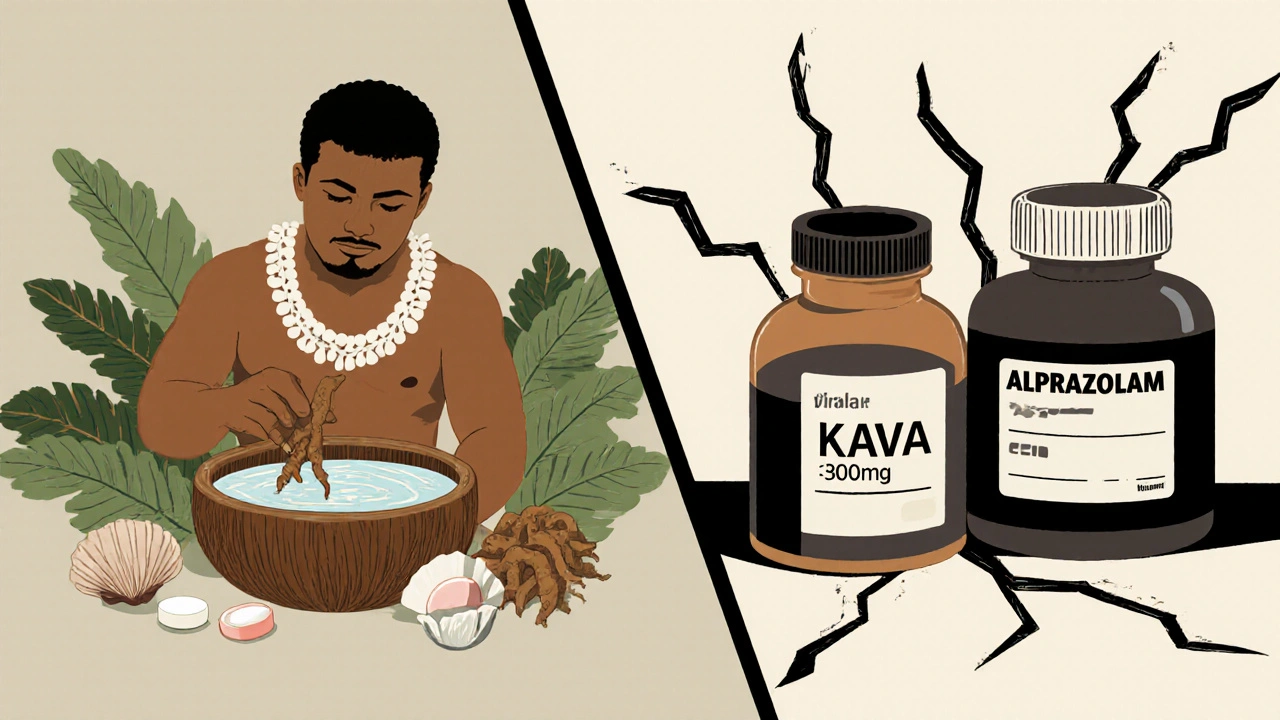
Combining kava with sedative medications isn't just risky-it can land you in the hospital. If you're taking anything for anxiety, sleep, or muscle relaxation, and you're also using kava, you need to know what you're dealing with. This isn't speculation. It's documented. People have developed acute liver failure after mixing kava with prescription drugs like alprazolam or diazepam. Others have passed out for hours, unable to speak or stand. And it’s not rare. The FDA has logged dozens of these cases. The truth? Kava doesn't play nice with sedatives-and your liver pays the price.
What Kava Actually Does to Your Body
Kava comes from the roots of Piper methysticum, a plant used for centuries in Pacific Island ceremonies. Today, it’s sold as a supplement to ease anxiety. But it’s not harmless. Its active compounds, called kavalactones, cross the blood-brain barrier in under 15 minutes. Within 30 minutes, you feel relaxed. By 90 minutes, you’re drowsy. The effects last 2 to 6 hours, depending on your dose. Studies show kava increases slow-wave sleep but cuts REM sleep, which can leave you feeling foggy the next day.
Traditional kava drinks made with water contain about 150-250 mg of kavalactones per serving. But commercial supplements? Those can pack 300 mg or more. And here’s the catch: alcohol or acetone extracts-common in pills and tinctures-concentrate the compounds in ways that traditional preparation never did. That’s why the World Health Organization found that traditional water-based kava has 9 times fewer adverse events than commercial extracts.
How Kava Attacks Your Liver
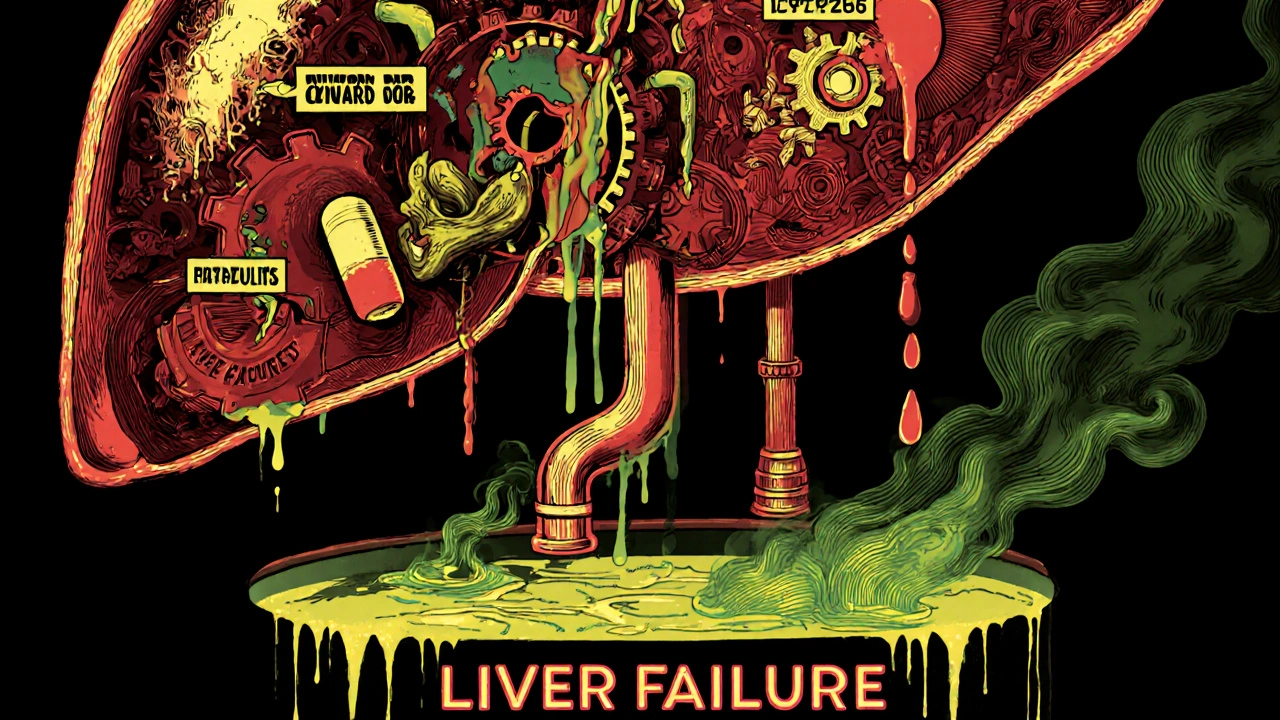
Between 2002 and 2023, over 25 international cases of severe liver injury linked to kava were reported. Some patients needed liver transplants. The FDA issued a warning in 2002, and countries like the UK, Canada, and Switzerland banned kava as a medicinal product. The U.S. still sells it as a dietary supplement-but that doesn’t mean it’s safe.
Scientists still don’t fully understand how kava damages the liver. But we know it interferes with enzymes in the liver that break down drugs. Specifically, it inhibits CYP2D6, CYP2C9, and CYP3A4. These are the same enzymes that process common sedatives like benzodiazepines, antidepressants, and painkillers. When kava blocks them, those drugs build up in your system. Your liver gets overloaded. Toxic byproducts form. Inflammation follows. And then-liver failure.
Case studies from Sacramento County show clear patterns. One 42-year-old took 300 mg of kava daily with 2 mg of alprazolam. Ninety days later, his ALT levels spiked to 2,840 U/L (normal is under 40). He had jaundice. Another patient, 56, combined 250 mg kava with 10 mg diazepam and developed a dangerously high INR of 4.2-meaning his blood couldn’t clot. He was hospitalized.
Why Mixing Kava with Sedatives Is Dangerous
Kava doesn’t just hurt your liver-it multiplies the sedative effects. When you take kava with lorazepam, diazepam, or even sleep aids like zolpidem, the result isn’t just drowsiness. It’s extreme, unpredictable sedation. Reddit users describe being unable to stand for hours, slurring speech, or waking up confused. The WebMD Drug Interaction Checker rates kava’s interaction with benzodiazepines as “Major.”
One study found kava increased midazolam levels in the blood by 27%. That’s not a small bump. That’s enough to cause respiratory depression. Combine that with alcohol-a known liver toxin-and you’re stacking three risks: liver damage, CNS depression, and impaired metabolism. The CDC says people with existing liver conditions should avoid kava entirely. If you’re on any sedative, even low-dose, you shouldn’t take kava.
And here’s something most people don’t realize: kava’s effects vary wildly. A supplement labeled “250 mg kavalactones” might contain 150 or 350. There’s no standardization. No FDA oversight. No batch testing. Two people taking the same pill can have completely different experiences-because the product isn’t consistent.
Who’s at the Highest Risk?
Not everyone who takes kava gets liver damage. But certain groups are far more vulnerable:
- People taking prescription sedatives (benzos, barbiturates, sleep meds)
- Those with pre-existing liver disease (fatty liver, hepatitis, cirrhosis)
- Heavy drinkers (alcohol + kava = double liver stress)
- People using high-dose extracts (over 250 mg daily)
- Those using kava for more than 4 weeks
Women may be at higher risk, too. Some studies suggest hormonal differences affect how kavalactones are metabolized. And older adults? Their livers process drugs slower. That means even moderate doses can build up.
Doctors in Sacramento County found that only 22% of patients with liver problems volunteered that they were taking kava. They didn’t think it mattered. They didn’t know it was dangerous. That’s the real problem. People assume “natural” means “safe.” It doesn’t.
What You Should Do Instead
If you’re using kava for anxiety or sleep, you’re not alone. But there are safer, proven alternatives.
For anxiety: buspirone is a non-sedating prescription option with minimal liver risk. Cognitive behavioral therapy (CBT) has been shown to be as effective as medication for generalized anxiety disorder-with no side effects.
For sleep: melatonin (3-5 mg, taken 1 hour before bed) is well-studied and safe for short-term use. Good sleep hygiene-consistent bedtime, no screens before sleep, cool room temperature-works better than most supplements.
And if you’re already taking sedatives? Don’t quit them cold turkey. Talk to your doctor. They can help you taper safely and find alternatives that won’t harm your liver.
What Healthcare Providers Are Saying
Dr. Jay H. Hoofnagle, a leading liver expert and editor of LiverTox, says: “At least a dozen instances of acute liver failure have been reported in patients taking kava.” He’s not exaggerating. The National Academy of Sciences confirmed 11 documented cases of liver failure linked to kava use.
But not everyone agrees. Some argue that past cases might have been caused by contaminated products or other medications. That’s possible. But here’s the thing: even if kava alone rarely causes liver damage, when it’s mixed with sedatives, the risk skyrockets. And with no regulation on product quality, you can’t be sure what you’re getting.
The European Food Safety Authority says: “No safe level of kava consumption can be established for individuals taking concomitant medications.” That’s not a suggestion. That’s a warning.
Meanwhile, in the U.S., 41% of naturopathic doctors still recommend kava. Only 3% of board-certified psychiatrists do. That gap matters. If your doctor doesn’t ask about supplements, they don’t know your full picture.
What to Do Right Now
If you’re taking kava and a sedative:
- Stop kava immediately. Don’t wait for symptoms.
- Get a liver function test (ALT, AST, bilirubin). Even if you feel fine, liver damage can be silent.
- Talk to your doctor about alternatives. Don’t try to replace kava with another herb-valerian, passionflower, or chamomile can also interact with sedatives.
- If you’ve had symptoms like fatigue, nausea, dark urine, or yellow eyes-seek medical care now.
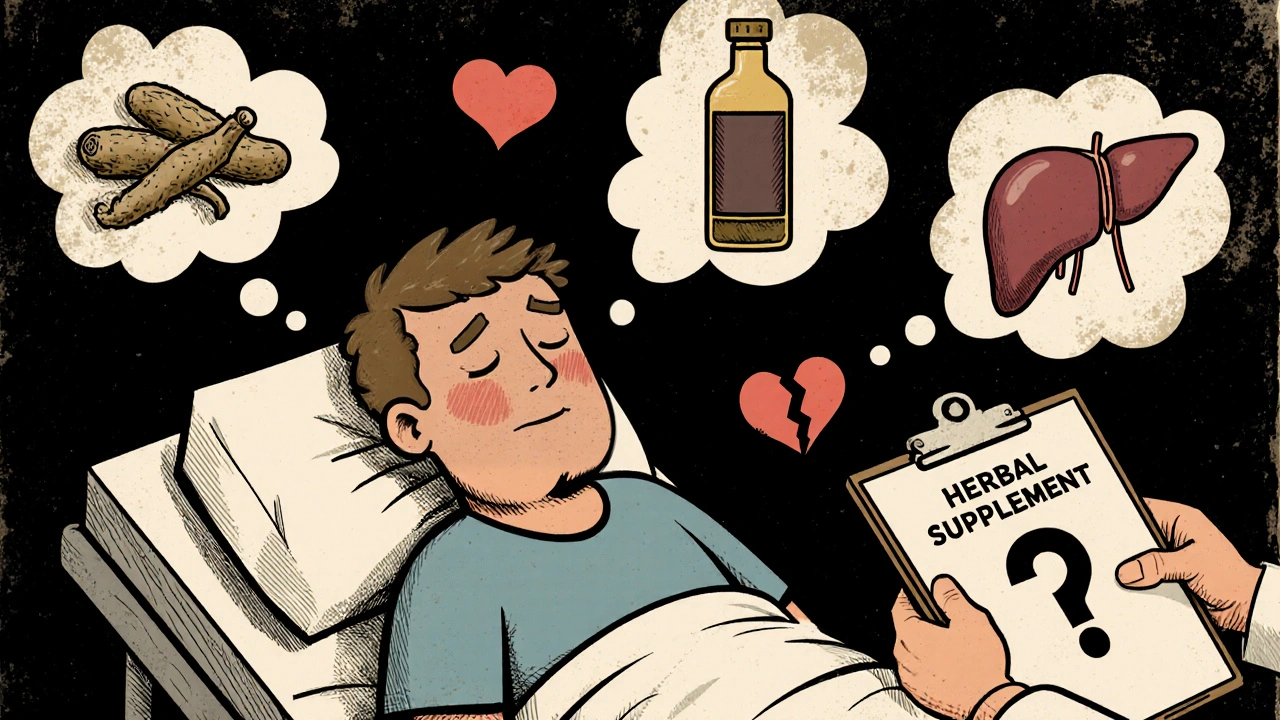
And if you’re a healthcare provider: ask every patient about herbal supplements. Don’t assume they’ll tell you. Write it down. Track it. Your patient’s liver might depend on it.
Final Reality Check
Kava isn’t a miracle cure. It’s a plant with powerful, unpredictable effects. And when you mix it with prescription drugs, you’re gambling with your liver. The data is clear: the risks outweigh the benefits-especially when safer options exist.
You don’t need kava to feel calm. You don’t need it to sleep. What you need is information-and the courage to stop something that could cost you your health.
Can kava cause liver damage even without sedatives?
Yes. While the risk is higher when combined with sedatives, kava alone has been linked to over 25 cases of severe liver injury worldwide, including hepatitis, cirrhosis, and liver failure requiring transplant. The European Medicines Agency and FDA both state that kava poses an unpredictable risk to the liver, even without other drugs.
Is water-extracted kava safer than pills or tinctures?
Yes. Traditional water-based kava drinks have significantly lower rates of adverse events-about 0.8 per 100,000 servings-compared to alcohol or acetone extracts, which have 7.3 per 100,000 servings. Water extraction pulls fewer toxic compounds. Commercial supplements often use solvents that concentrate harmful kavalactones and may include parts of the plant that aren’t traditionally consumed.
How long does it take for kava to affect the liver?
Liver damage can appear anywhere from 1 to 4 months after starting kava use. Symptoms like fatigue, nausea, loss of appetite, and yellowing of the skin or eyes often show up gradually. Many people don’t connect these symptoms to kava because they don’t realize it’s a risk. That’s why regular liver tests are critical if you’re using it long-term.
Can I take kava if I’m not on any medication?
It’s still not recommended. Even without other drugs, kava carries a risk of liver injury. The FDA and European agencies warn against long-term use. If you choose to use it, limit it to under 70 mg daily, avoid daily use for more than 4 weeks, and get liver tests every 6 weeks. But the safest choice is to avoid it entirely.
Are there any safe herbal alternatives to kava for anxiety?
Yes. Valerian root has minimal drug interactions but may cause drowsiness. Passionflower has mild anxiolytic effects and is generally safe. For proven, reliable results, consider cognitive behavioral therapy (CBT) or prescription options like buspirone. Unlike kava, these have been studied in large clinical trials and carry known, manageable risks.
What should I do if I think kava damaged my liver?
Stop taking kava immediately. See your doctor and request a liver panel (ALT, AST, bilirubin, INR). If levels are elevated, you may need follow-up tests and monitoring. Most mild cases improve within 60 days of stopping kava. But severe cases can require hospitalization or transplant. Don’t wait for symptoms to get worse.
9 Comments
Austin SimkoNovember 28, 2025 AT 14:54
They're hiding the truth. Kava's been used for centuries. The FDA bans it because Big Pharma owns the patents on benzodiazepines. They don't want you switching to a plant that costs nothing.Nicola MariNovember 30, 2025 AT 04:36
People who take supplements like this are either naive or dangerously irresponsible. There's no such thing as 'natural equals safe'-that’s how you end up in the ER with a failing liver. No excuses.Sam txfDecember 1, 2025 AT 14:46
Kava is a chemical grenade wrapped in tribal aesthetics. Combine it with benzos? You're not 'relaxing'-you're playing Russian roulette with your hepatocytes. And don't even get me started on those sketchy online vendors selling 'pure' kava powder that’s probably laced with industrial solvents.jaya sreeraagamDecember 3, 2025 AT 03:14
I want to say thank you for writing this with such clarity and care. I was on kava for anxiety for six months and didn't realize how much it was affecting my sleep quality-foggy mornings, no REM, just exhaustion. When I stopped and switched to melatonin and CBT, my energy came back. It’s not magic, but it’s real. You’re not alone if you’re trying to find a safer way. Your body deserves better than guesswork.Katrina SofiyaDecember 4, 2025 AT 23:35
Thank you for sharing this vital information. As a healthcare professional, I cannot stress enough the importance of disclosing all supplements to your provider. Many patients assume herbal remedies are benign-this post is a wake-up call that could save lives.kaushik duttaDecember 4, 2025 AT 23:41
The pharmacokinetic interference of kavalactones with CYP450 isoforms is well-documented in the literature-CYP2D6 inhibition leads to reduced first-pass metabolism of benzodiazepines, resulting in elevated plasma concentrations and prolonged half-lives. This isn't folklore-it's biochemistry. The real tragedy is that regulatory arbitrage allows unstandardized extracts to flood the U.S. market while evidence-based alternatives remain underutilized.doug schlenkerDecember 5, 2025 AT 15:48
I used to take kava nightly after work to unwind. Didn't think twice about it. Then I started feeling off-nausea, dark urine, zero motivation. Got my liver checked and ALT was 1,200. I stopped cold turkey. Three months later, I'm back to normal. This isn't hype. It happened to me. Please, if you're using it-get tested. Even if you feel fine.Olivia Gracelynn StarsmithDecember 6, 2025 AT 17:04
If you're taking kava with anything for sleep or anxiety you need to stop now. Liver damage doesn't announce itself with a siren. It whispers until it's too late. I've seen it in clinics. Get tested. Talk to your doctor. Replace it with sleep hygiene or CBT. You don't need kava to be calm. You just need to stop risking your life for a feelingSkye HamiltonDecember 7, 2025 AT 08:35
So… you’re saying the same plant that Pacific Islanders have used for centuries is suddenly a death trap because some dude in Ohio took 500mg with Xanax? Sounds like the real problem is bad labeling and poor education-not the herb. I mean, maybe stop blaming the plant and start blaming the people who don’t know how to read a label?