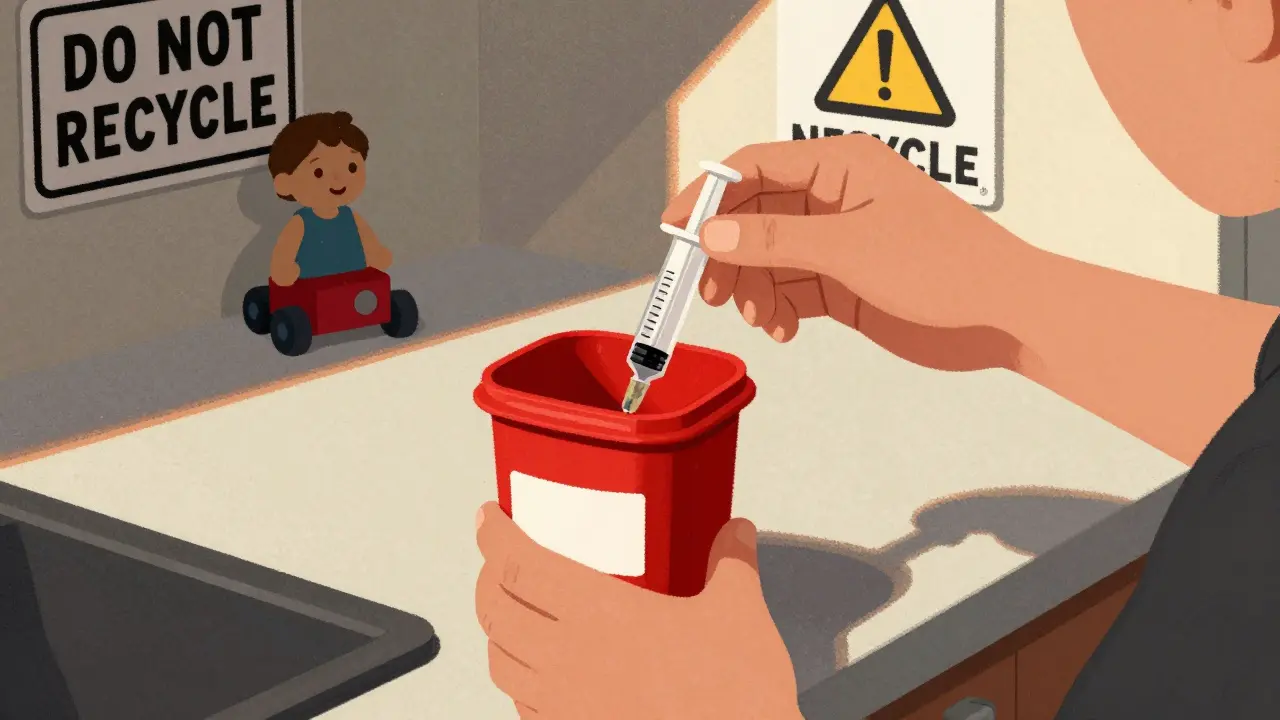
Every year, millions of people in the UK and around the world use injectable medications like insulin, blood thinners, or biologics for chronic conditions. But once the needle is used, what do you do with it? Throwing it in the trash, tossing it in the recycling, or even putting it in a soda bottle might seem like a quick fix - but it’s dangerous. Used sharps aren’t just trash. They’re biohazards. And improper disposal puts you, your family, waste workers, and even children at risk of needlestick injuries and serious infections.
Why Proper Sharps Disposal Matters
A single used needle can carry bloodborne viruses like hepatitis B, hepatitis C, or HIV. The risk isn’t theoretical. In healthcare settings, nearly 400,000 needlestick injuries happen every year in the US alone. While home users aren’t exposed as often, the CDC reports that over 60% of sharps injuries in communities occur because people dispose of needles in regular household trash. That means your neighbour’s bin, your child’s toy box, or a sanitation worker’s glove could be at risk. In the UK, sharps are classified as clinical waste. By law, they must be contained in approved containers before disposal. This isn’t just about rules - it’s about preventing real harm. A needlestick injury can cost thousands in emergency treatment, testing, and follow-up care. Proper disposal isn’t inconvenient - it’s essential.What Counts as a Sharp?
It’s not just needles. Any device that can puncture or cut skin and has been used to deliver medication counts as a sharp. That includes:- Insulin syringes
- Lancets (used with glucose monitors)
- Auto-injectors like EpiPens or Ozempic pens (after removing the needle cap)
- Needles attached to IV lines or infusion sets
- Blunt needles used for drawing medication
- Sharps from wound care or dialysis
What Is an Approved Sharps Container?
Not just any container works. You need a container designed and tested to handle sharps safely. These are called FDA-cleared or UK-compliant sharps containers. They’re made from thick, puncture-resistant plastic with a secure, one-way lid that prevents access once the sharp is inside. The container must be:- Sturdy enough to resist punctures from a needle
- Leak-proof when upright
- Marked with the universal biohazard symbol
- Clearly labelled as "Sharps Waste"
How to Use a Sharps Container
Using a sharps container is simple, but getting it right matters. Follow these steps every time:- After injecting, immediately place the entire used syringe or needle into the container. Don’t wait. Don’t set it down.
- Do not try to remove the needle. Never recap it. Never bend or break it.
- Keep the container upright and within arm’s reach while you’re using sharps.
- Do not overfill. Stop when the contents reach the fill line - usually about 3/4 full. If there’s no line, stop when the sharps are within 2 inches of the top.
- Close the lid tightly after each use. Make sure it clicks or locks.
- Store the container out of reach of children and pets, preferably in a locked cabinet or high shelf.
Where to Dispose of Full Sharps Containers
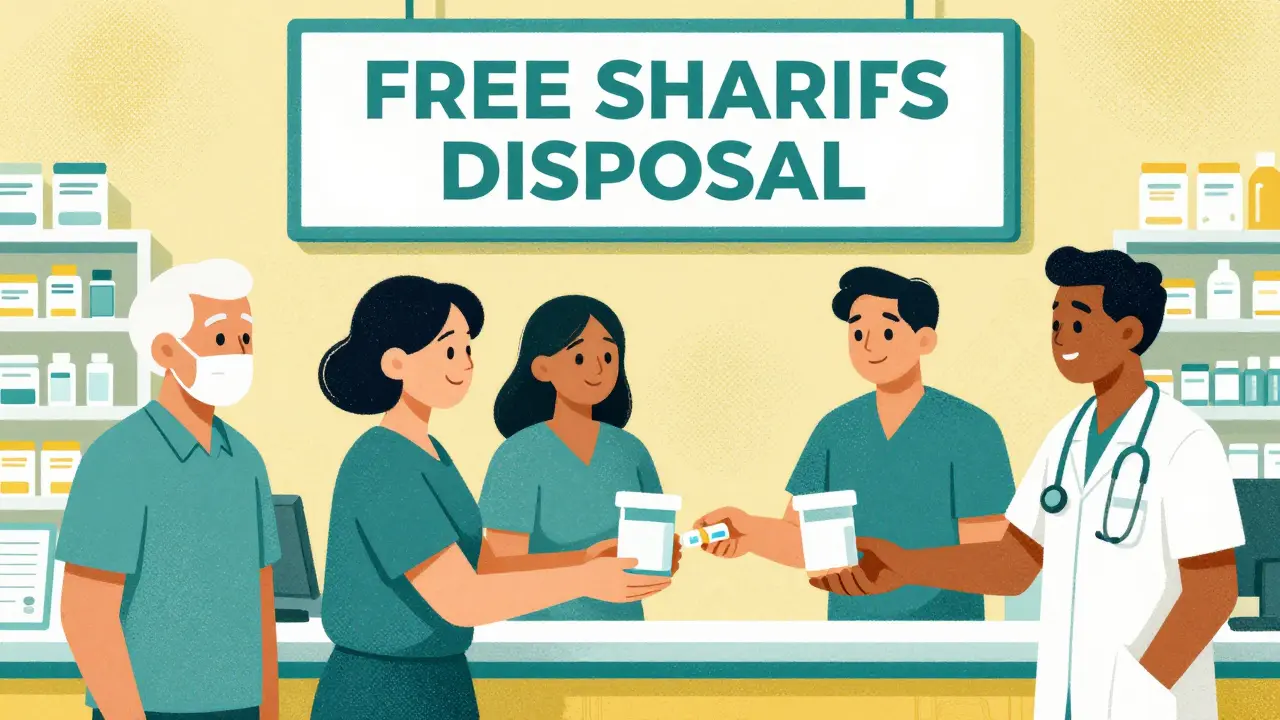
You can’t throw a full sharps container in your regular bin. Here’s how to dispose of it legally and safely in the UK:- Pharmacies: Many local pharmacies offer free sharps disposal drop-off. Chain pharmacies like Boots and Lloyds Pharmacy often have collection boxes near the pharmacy counter. Just ask at the counter - they’ll take your sealed container and replace it with a new one if needed.
- GP Surgeries: Your doctor’s office may accept used sharps containers. Call ahead to confirm.
- Community Waste Disposal Sites: Most local councils provide dedicated clinical waste collection services. You can request a free sharps collection box through your GP or local authority. Some councils offer doorstep collection for home users on long-term treatment.
- Hospital Clinics: If you’re receiving regular treatment (like dialysis or chemotherapy), your clinic will usually provide disposal instructions and may collect used containers.
- Mail-Back Programs: Companies like Sharps Compliance offer prepaid mailers. You seal your container, stick on the label, and drop it in the post. This is ideal if you live in a rural area with limited access to drop-off points.
What If You Don’t Have a Sharps Container?
If you’ve just started using injectables and don’t have a container yet, don’t panic - but don’t improvise either. Here’s what to do:- Use a rigid, leak-proof plastic bottle with a screw-top lid - like a laundry detergent bottle or a heavy-duty bleach bottle. Do not use glass, soda cans, or thin plastic bottles.
- Label it clearly: "SHARPS - DO NOT RECYCLE" in large letters.
- Keep it upright and out of reach of children.
- Get a proper container as soon as possible - within 24 to 48 hours.
- Once you have a proper container, transfer the contents carefully (wear gloves if possible) and dispose of the bottle safely.
Costs and Support
Many people avoid proper disposal because they think it’s too expensive. But the cost of a sharps container is small compared to the cost of an injury. In the UK, if you’re on a long-term treatment (like diabetes), you may qualify for free sharps containers and collection through the NHS. Ask your GP or diabetes nurse. You can also apply for a Clinical Waste Collection Service through your local council - often free for residents with medical needs. If cost is still a barrier, pharmacies often have discount programs or can connect you with patient support groups. Some manufacturers of insulin and other injectables offer free disposal kits to patients enrolled in their patient assistance programs.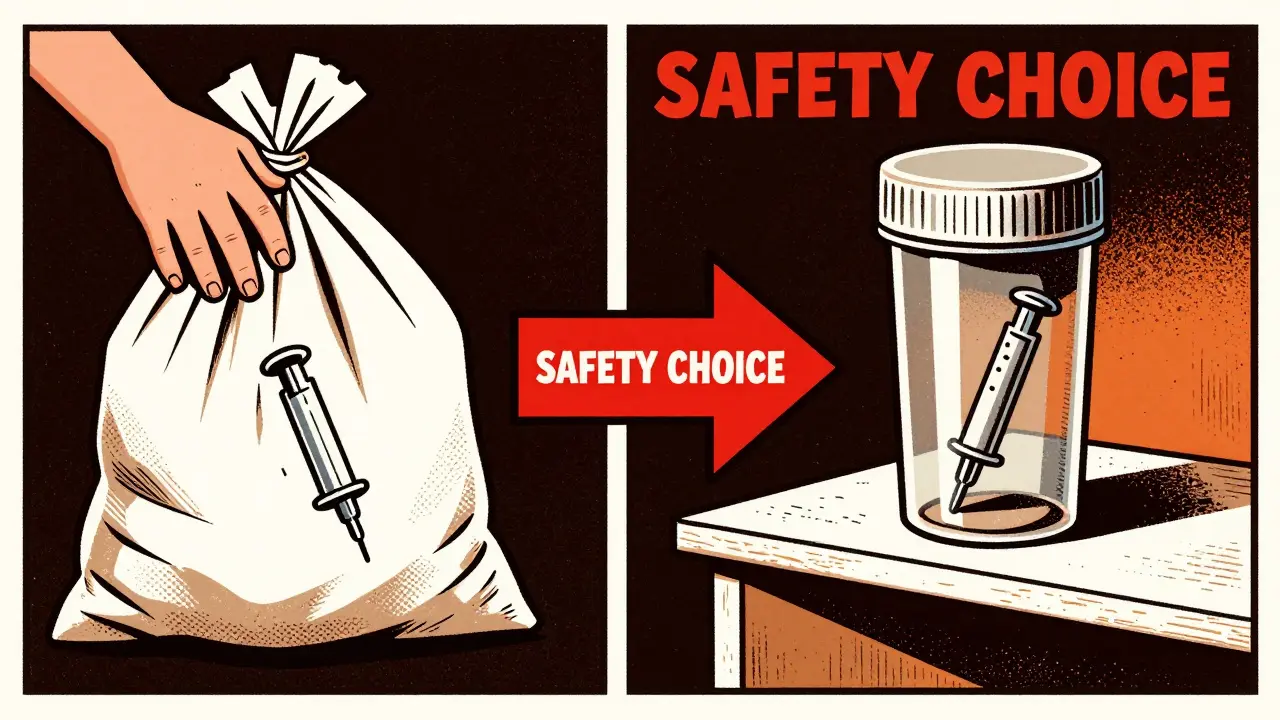
Common Mistakes and How to Avoid Them
Here are the most common errors people make - and how to avoid them:- Mistake: Recapping needles to "save" them. Solution: Never recap. The needle goes straight into the container.
- Mistake: Waiting until the container is full before disposing. Solution: Replace it when it’s 3/4 full. Don’t wait for it to overflow.
- Mistake: Using a yogurt cup or pill bottle. Solution: Only use containers approved for sharps. Household containers can break.
- Mistake: Assuming it’s okay to throw it in the bin if it’s "sealed." Solution: Even sealed sharps can puncture bags. Always use approved disposal routes.
- Mistake: Not telling your family how to handle the container. Solution: Show everyone in your household where it’s stored and how to recognize it.
What’s Changing in 2026?
The UK is moving toward better access. New NHS guidelines released in early 2025 require all GP surgeries to offer sharps disposal advice and containers to patients starting injectable therapy. By 2026, all local councils must provide at least one free sharps collection point per 10,000 residents - a big step for rural areas. Also, new smart sharps containers are being tested in pilot programs. These have sensors that alert pharmacies when they’re full, making collection faster and more efficient. While not yet widely available, this is the future - safer, smarter, and more convenient.Final Reminder: Your Safety Is Non-Negotiable
Using injectable medication doesn’t mean you have to live in fear. But it does mean you need to be smart about what happens after the injection. A few seconds spent placing a needle in the right container can prevent a lifetime of risk. Make it a habit. Keep your container within reach. Replace it before it’s full. Dispose of it properly. And if you’re unsure where to go, call your pharmacy, GP, or local council. They’re there to help.Can I throw used needles in the regular trash?
No. Used needles and sharps are classified as clinical waste and must be disposed of in approved sharps containers. Throwing them in household trash puts waste workers, children, and pets at risk of needlestick injuries and infection. It’s also against UK regulations.
Where can I get a sharps container for free?
Many NHS services provide free sharps containers and collection for patients on long-term injectable treatments like insulin. Ask your GP, diabetes nurse, or pharmacist. Your local council may also offer free clinical waste collection. Some pharmacies and medication manufacturers offer free disposal kits to qualifying patients.
Can I reuse a sharps container?
Only if it’s specifically designed and certified for reuse by the manufacturer, and it’s been professionally sterilised. Most home users should use single-use containers. Reusable containers are typically used in hospitals or clinics with strict decontamination protocols.
What should I do if I accidentally stick myself with a used needle?
Wash the area immediately with soap and running water. Do not suck the wound. Seek medical advice right away - go to your GP, urgent care, or A&E. You may need testing for hepatitis B, hepatitis C, or HIV, and possibly post-exposure prophylaxis. Report the incident to your local health authority.
Are there drop-off locations near me?
Most pharmacies like Boots and Lloyds offer free sharps drop-off. You can also check with your GP surgery or local council. The NHS website has a tool to find your nearest sharps disposal point - just search "sharps disposal near me" on the NHS website. Many locations are open during pharmacy hours, which are often extended.
10 Comments
Karen DroegeJanuary 24, 2026 AT 15:41
Let me tell you something - I’ve been managing diabetes for 18 years and I’ve seen people throw needles in yogurt cups like it’s a TikTok challenge. It’s not just dangerous, it’s disrespectful to the sanitation workers who have to dig through your trash like it’s a treasure hunt. A $7 sharps container isn’t a luxury - it’s a moral obligation. And if you think it’s too expensive, you haven’t seen the bill for a hepatitis C diagnosis. I’ve handed out free containers at my local pharmacy for years. Don’t be the reason someone gets stuck. Just do the right thing.
Ryan WJanuary 25, 2026 AT 22:26
UK regulations? That’s why America’s still ahead. We don’t need your bureaucratic red tape. If I can recycle a soda can, I can toss a needle in the trash. It’s not like it’s radioactive. Plus, most of these people are just lazy diabetics who can’t be bothered to buy a $10 container. Let the free market handle it. If you want safety, pay for it - don’t force taxpayers to foot the bill for your convenience.
Shweta DeshpandeJanuary 26, 2026 AT 04:18
Hey, I just started insulin last month and I was so scared I’d mess up the disposal - I mean, I didn’t even know what a sharps container was! But my nurse gave me one for free at my appointment and showed me how to use it. Now I keep it next to my coffee maker so I don’t forget. It’s become part of my routine, like brushing my teeth. And guess what? My little nephew saw it and asked what it was, so I told him it’s for keeping sharp things safe so no one gets hurt. He calls it my ‘magic box.’ That’s the kind of thing that changes habits. You don’t need to be perfect - just consistent. And if you’re struggling, just ask. Someone’s always willing to help. 💛
Dan NicholsJanuary 26, 2026 AT 23:58
Stop pretending this is a public health crisis. People have been throwing needles in bottles for decades and the world didn’t end. The real problem is the medical-industrial complex pushing expensive containers to make money. A bleach bottle works fine. The CDC stats are inflated to justify funding. You’re being manipulated into buying overpriced plastic. Be skeptical. Question authority. And for god’s sake, stop treating every needle like it’s a live grenade.
Nicholas MiterJanuary 27, 2026 AT 19:56
Used to work in waste management. Saw a kid pull a syringe out of a recycling bin in 2019. Had to get tested for everything. Took six months. Never got sick but the anxiety? Brutal. I’m not trying to scare anyone - just saying, it’s not worth the risk. I keep a container in my glovebox now. Takes 2 seconds. Doesn’t cost much. Just don’t be the reason someone else gets hurt. Simple.
Henry JenkinsJanuary 28, 2026 AT 05:51
There’s a deeper layer here that nobody’s talking about. The fact that we even need sharps containers speaks to how disconnected our healthcare system is from the people who use it. Why should a diabetic have to beg for a free container? Why isn’t this as normalized as getting prescription refills? We treat insulin like a miracle drug but treat its safe use like an afterthought. It’s not about containers - it’s about dignity. If we’re going to ask people to inject chemicals into their bodies daily, we owe them the infrastructure to do it safely. This isn’t just logistics - it’s ethics.
Napoleon HuereJanuary 29, 2026 AT 12:21
Interesting how we’ve turned a simple act - disposing of a needle - into this elaborate ritual. We’ve built whole industries around it: containers, mail-back programs, NHS policies, smart sensors. But at its core, it’s just a piece of metal and plastic. The fear is manufactured. We’ve been conditioned to see every used needle as a ticking bomb. What if we just… didn’t? What if we accepted that risk is part of life? Maybe we should focus on needle-free alternatives instead of perfecting disposal. The real innovation isn’t the container - it’s the day we don’t need it anymore.
Allie LehtoJanuary 30, 2026 AT 07:51
OMG I JUST REALIZED I’VE BEEN PUTTING MY NEEDLES IN A TIDE BOTTLE 😭 I’M SO GUILTY. I thought it was fine because I taped the lid shut. But now I’m scared to even go near my trash can. I’m going to the pharmacy RIGHT NOW. Pls tell me I didn’t kill someone. 🙏💔
Ashley KaranjaJanuary 31, 2026 AT 23:31
As someone who manages multiple chronic conditions and has to juggle 5 different injectables a week, let me tell you - the real pain isn’t the injection, it’s the logistics. Finding drop-off points, remembering to call the council, waiting weeks for a new container. The NHS system works… in theory. In practice? It’s a maze. And if you’re elderly, disabled, or live in a rural area? Good luck. We need mobile collection units. We need automatic refill programs tied to prescriptions. We need to stop treating safe disposal like a privilege and start treating it like a right. This isn’t just about needles - it’s about equity in healthcare.
Ashley PorterFebruary 2, 2026 AT 03:15
Just a heads up - some of those mail-back programs charge $15 to return a container, but if you’re on Medicare, they’re covered under Part B. You just need a prescription from your doc. Most people don’t know that. Also, if you’re using Ozempic or similar GLP-1s, the manufacturer often sends free disposal kits with your first prescription. Check the packaging or their patient portal. You’re probably already eligible.