
Buprenorphine Dose & Safety Calculator
Dose Calculator
Visualize how buprenorphine's effects change with different doses
- Respiratory Depression: Minimal (Below ceiling)
- Euphoria: Peak (Ceiling effect begins)
- Pain Relief: Strong (No ceiling)
- Side Effects: Mild headache/constipation possible
Dangerous Combinations
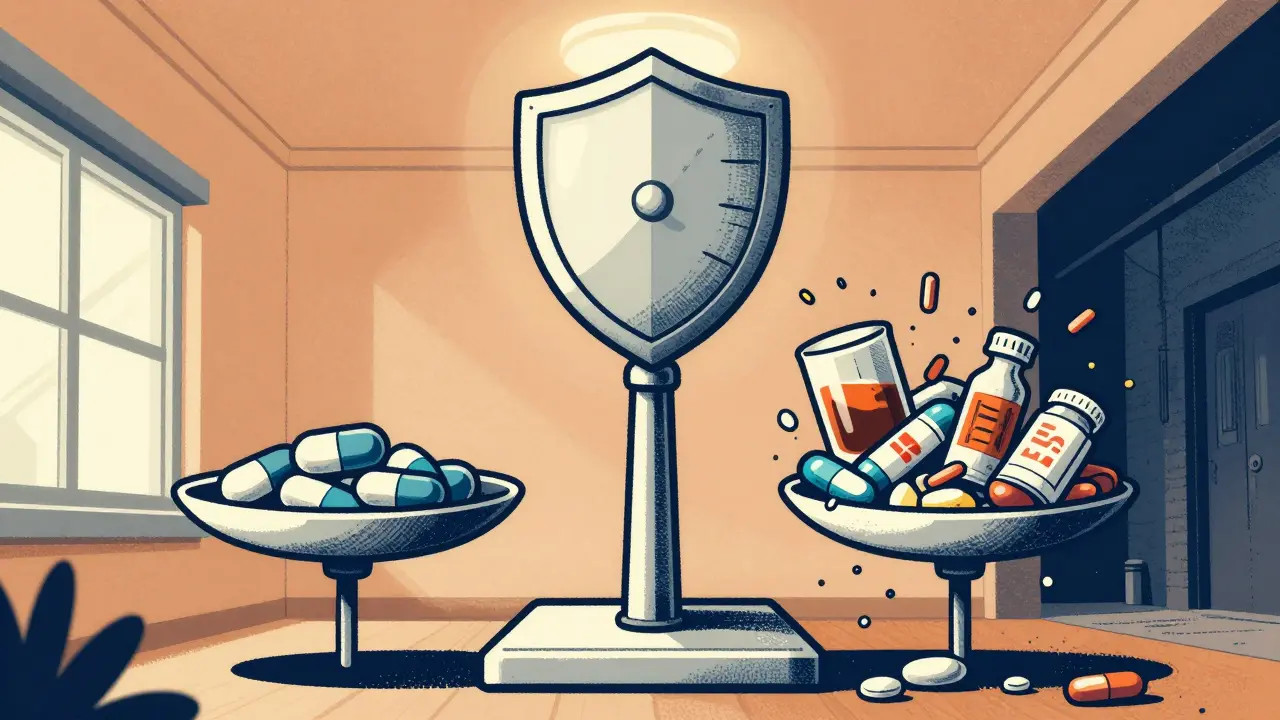
The ceiling effect only applies to buprenorphine alone. Combining with other CNS depressants (alcohol, benzodiazepines, sleeping pills) creates severe risk of respiratory failure.
When someone is trying to get off opioids, the biggest fear isn’t withdrawal-it’s dying from an overdose. That’s why buprenorphine changed the game. Unlike methadone or heroin, it doesn’t keep pushing harder the more you take. There’s a limit. A ceiling. And that’s not just a pharmacology term-it’s what keeps people alive.
What Makes Buprenorphine Different?
Buprenorphine is a partial opioid agonist. That means it turns on opioid receptors in the brain, but only partway. Full agonists like oxycodone or heroin flip the switch all the way. Buprenorphine flips it to 40-60%. That’s enough to stop cravings and withdrawal, but not enough to cause the same level of sedation or breathing trouble.
This isn’t theory. It’s backed by decades of research. A 2021 study in PMC showed that at doses above 24 mg per day, buprenorphine stops increasing respiratory depression. That’s the ceiling. Even if you take 70 mg, your breathing won’t slow down much more than it would at 24 mg. That’s why you rarely hear of someone dying from buprenorphine alone.
Compare that to methadone. A person taking 100 mg of methadone is at real risk of stopping breathing if they miss a dose or take it with alcohol. Buprenorphine doesn’t work that way. It’s like a thermostat that shuts off when it hits the right temperature.
The Ceiling Effect Explained
The ceiling effect isn’t the same for every effect. It’s endpoint-specific. For respiratory depression? Ceiling at 24 mg. For pain relief? No clear ceiling-higher doses can still help. For euphoria? Ceiling kicks in early. After 8-16 mg, taking more doesn’t feel better. That’s why people on buprenorphine don’t get high like they used to.
One Reddit user, u/OpiateFreeJourney, put it simply: “I can take my 16mg and go to work without feeling like I’m on something, which methadone never allowed.” That’s the real win. People aren’t just surviving-they’re working, parenting, driving, living.
But here’s what most people miss: the ceiling doesn’t mean buprenorphine is weak. It means it’s smart. Its high binding affinity means it sticks to opioid receptors tighter than heroin or fentanyl. Once it’s in place, other opioids can’t kick it out. That’s why a 16 mg dose blocks heroin’s effects better than 8 mg. It’s not just treatment-it’s protection.
Common Side Effects: What to Expect
Is buprenorphine side effect-free? No. But compared to full opioids, the list is short and mostly mild.
- Headache - Happens in about 18% of people in clinical trials. Usually fades after a week or two.
- Constipation - Affects 12%. Still happens because opioids slow the gut. Fiber, water, and movement help.
- Nausea - Around 10%. Often linked to starting too soon after last opioid use.
- Precipitated withdrawal - This is the big one. If you take buprenorphine too early-before opioids have cleared your system-you can get sudden, intense withdrawal. That’s why doctors wait 12-24 hours after last use, depending on the opioid. For short-acting opioids like heroin, wait at least 12 hours. For longer ones like oxycodone, 24 hours is safer.
- Sleep changes - Some feel drowsy at first. Others feel more alert. It varies.
These aren’t deal-breakers. They’re temporary. Most people adapt within days. The real risk isn’t these side effects-it’s what happens if you skip the medication.

When Buprenorphine Isn’t Enough
Not everyone responds the same. People with severe, long-term opioid dependence often need higher doses. Some need 20-24 mg daily just to feel normal. That’s not misuse-it’s physiology. Their brains have been rewired by years of heavy use. A low dose won’t block the receptors fully.
Research from MCSTAP in 2023 found that patients with chronic pain required higher buprenorphine doses to stay stable. Same with those who used high-potency opioids like fentanyl. One size doesn’t fit all. The ceiling isn’t a cap on effectiveness-it’s a safety buffer. Dose up to 24 mg if needed. No extra risk.
That’s why methadone still has a place. For some, especially those who’ve tried buprenorphine and still relapse, methadone’s stronger effect is what they need. But methadone requires daily clinic visits. Buprenorphine can be prescribed by a regular doctor. That’s huge for people in rural areas or with jobs, kids, or transportation issues.
The Real Danger: Mixing Drugs
Here’s the truth no one talks enough about: buprenorphine alone is very safe. But combine it with benzodiazepines, alcohol, or sleeping pills? That’s when things go wrong.
A 2022 study in the Journal of Addiction Medicine found 18 fatal overdoses involving buprenorphine between 2019 and 2021. Every single one included another CNS depressant. Not buprenorphine. Not alone. Always mixed.
That’s why doctors ask: “Are you taking Xanax? Klonopin? Alcohol? Sleeping pills?” If the answer is yes, the conversation changes. You can’t just say “I only take one.” The interaction doesn’t care about your dose. It cares about the combo.
Even over-the-counter sleep aids like diphenhydramine (Benadryl) can be risky. The ceiling doesn’t protect you from other drugs. It only protects you from too much buprenorphine.
New Forms, Same Safety
In 2023, the FDA approved Sublocade-a monthly injection of buprenorphine. No daily pills. No risk of missing doses. No chance of selling or sharing. Clinical trials showed 49% of patients stayed abstinent for 26 weeks, compared to 35% on daily sublingual tablets.
That’s not just convenient. It’s life-changing. For people with unstable housing, mental health struggles, or addiction to the ritual of daily dosing, this is a breakthrough.
There are also newer formulations in phase II trials-prodrugs designed to boost absorption without losing the ceiling effect. The goal? Make it work better for the people who don’t respond to current doses.
Who Shouldn’t Use It?
Buprenorphine isn’t for everyone.
- People with severe liver disease-buprenorphine is processed by the liver. High doses can stress it.
- Those allergic to buprenorphine or naloxone (in Suboxone).
- Anyone who can’t commit to regular doctor visits. You need monitoring, especially early on.
- People who expect it to be a quick fix. It’s not. It’s a tool. Therapy, support, and lifestyle matter just as much.
But for the vast majority-people with opioid use disorder, chronic pain, or a history of overdose-buprenorphine is the safest, most effective option we have.
Why It’s Still Underused
Despite being safer than methadone and more accessible than inpatient rehab, only about half of people with opioid use disorder in the U.S. get medication-assisted treatment. Why?
- Stigma. Some still think “you’re just replacing one drug with another.”
- Provider shortages. Not every doctor is trained to prescribe it.
- Insurance barriers. Some plans still make it hard to get.
But the data doesn’t lie. The National Institute on Drug Abuse reports that buprenorphine is now used in 50% of all medication-assisted treatments for opioid use disorder. That number is rising. Because people are living longer. Because families are being kept together. Because overdose deaths are dropping where buprenorphine is widely available.
The ceiling effect isn’t just a pharmacological quirk. It’s a lifeline. It’s the reason someone can go to work, pick up their kid, and not worry they’ll die before dinner.
15 Comments
Katelyn SlackJanuary 6, 2026 AT 13:56
i just started buprenorphine last month and honestly the headache was the worst part… like, i thought i was getting a migraine but it just faded after a few days. still taking it though, no way back to the old life.
Harshit KansalJanuary 6, 2026 AT 20:05
man this stuff is a game changer i swear. my cousin was on heroin for 8 years and now he’s working construction, sleeping through the night, even coaching his kid’s soccer team. no drama. no highs. just life.
Brian AnazJanuary 8, 2026 AT 09:44
so let me get this straight. you’re telling me we’re giving addicts a drug that can’t kill them but still makes them feel normal? what’s next, free pizza for junkies? this is just enabling. we need tough love, not magic pills.
Vinayak NaikJanuary 10, 2026 AT 08:57
yo the ceiling effect is like having a turbo button that auto-disables at 80%-you still go fast, but you don’t blow the engine. i’ve seen people go from OD’ing every month to holding down jobs. this ain’t magic, it’s science with heart.
Kiran PlahaJanuary 11, 2026 AT 23:33
so if someone takes 70mg, they won’t stop breathing? that’s wild. i always thought more = stronger. this makes me wonder why we don’t use this for pain instead of oxycodone.
Matt BeckJanuary 12, 2026 AT 19:53
the ceiling effect… it’s not just pharmacology-it’s mercy. 🤍 It’s the universe whispering: ‘You don’t have to die to feel okay.’ This isn’t a drug. It’s a second chance with a safety net.
Cam JaneJanuary 13, 2026 AT 21:34
constipation? yeah, i got that. drank a gallon of water, ate prunes like they were candy, walked 10k steps a day-fixed it in 3 days. minor price to pay for not being a zombie. you can do this. seriously.
Pavan VoraJanuary 14, 2026 AT 11:06
in india, we have no access to this… people die daily from overdoses or withdrawal. why is this medicine so hard to get? is it because it’s cheap? or because it’s not profitable enough for pharma giants?
Stuart ShieldJanuary 14, 2026 AT 12:49
the way you described buprenorphine sticking to receptors like a stubborn tenant… that’s poetic. i’ve never heard it put that way. it’s not just blocking junk-it’s reclaiming space. dignity, even.
Susan ArleneJanuary 15, 2026 AT 14:04
i used to think addiction was a moral failure. now i see it’s just a broken system. buprenorphine doesn’t fix the system… but it gives you time to fix yourself.
Ashley SJanuary 17, 2026 AT 02:41
so you’re saying we should give people a drug that lets them feel normal instead of forcing them to suffer? that’s just coddling. if you can’t quit cold turkey, you’re weak.
Jeane HendrixJanuary 17, 2026 AT 23:27
the precipitated withdrawal thing is huge-i didn’t know timing mattered that much. took it at 10am after last use at 8pm the night before… ended up in the ER with shaking and vomiting. now i wait 24 hours like clockwork. lesson learned.
Leonard ShitJanuary 19, 2026 AT 05:11
so… the guy who said ‘i can go to work without feeling like i’m on something’… yeah, that’s the whole point. you’re not ‘replaced’-you’re restored. and yeah, i’m being sarcastic about the ‘just replacing one drug’ crowd. they’ve never held someone as they overdosed.
Gabrielle PanchevJanuary 19, 2026 AT 20:21
Wait-so you’re saying the ceiling effect makes it safer… but then you mention Sublocade injections and phase II prodrugs? Isn’t that just trying to bypass the very safety feature you’re praising? Isn’t this just corporate innovation masking profit motives? The ceiling was the point!
Venkataramanan ViswanathanJanuary 21, 2026 AT 05:54
in my country, doctors still think addiction is a sin. i wish they read this. buprenorphine is not a reward. it is a right. every human deserves a chance to breathe without fear.