
Bromocriptine Timing Calculator
Your body's circadian rhythm is most responsive to bromocriptine within 2 hours of waking. Taking it later may reduce effectiveness by up to 0.7% in HbA1c reduction.
• Bromocriptine must be taken within 2 hours of waking up to reset your body's internal clock
• Nausea is most common if you don't start with a low dose (0.8 mg) and gradually increase
• Take with dry toast or crackers to reduce nausea (avoid milk, juice, or coffee immediately after)
• Dizziness often improves after 4 weeks of consistent use
Most people with type 2 diabetes start with metformin. But if that doesn’t work, or if you can’t tolerate it, your doctor might suggest something less common: bromocriptine. Not because it lowers blood sugar dramatically, but because it might save your heart. The catch? It comes with nausea, dizziness, and a strict morning schedule you can’t ignore.
What Bromocriptine Actually Does (And Why It’s Different)
Bromocriptine isn’t like insulin, metformin, or GLP-1 drugs. It doesn’t boost insulin or block sugar absorption. Instead, it targets your brain-specifically, the hypothalamus, which controls your body’s internal clock. When you wake up, your brain should naturally shift from rest to alert mode. For many people with type 2 diabetes, that shift doesn’t happen right. Your sympathetic nervous system stays stuck in overdrive, pushing your liver to make too much glucose and making your muscles resistant to insulin.
Bromocriptine, in its quick-release form called Cycloset, resets that clock. It activates dopamine receptors in the hypothalamus, calming down the overactive signals that cause high morning blood sugar. This isn’t just about lowering numbers-it’s about reducing cardiovascular risk. A 52-week study showed a 40% drop in heart attacks, strokes, and heart-related deaths compared to placebo. That’s rare for an oral diabetes drug.
It’s not a miracle. It lowers HbA1c by only 0.4% to 0.8%. But if you’ve got heart disease or high blood pressure, that small drop might mean the difference between another hospital visit and staying out of the ER.
Why Nausea Hits Hard-And How to Survive It
Nausea is the #1 reason people quit bromocriptine. In clinical trials, 26% to 32% of users felt sick to their stomachs. That’s way higher than metformin (5-10%) or DPP-4 inhibitors. It’s not mild. Some people describe it as sudden, intense queasiness within 30 minutes of taking the pill.
Here’s the truth: it’s not your stomach. It’s your brain. Bromocriptine affects dopamine pathways that also control nausea centers. The side effect is real-but it’s not permanent.
Most people who stick with it find relief after 2-4 weeks. The key? Slow titration. Don’t start at 4.8 mg. Start with 0.8 mg once a day for a full week. Then increase by 0.8 mg every week until you hit the target dose. Skipping steps or jumping straight to the full dose? Almost guarantees nausea will win.
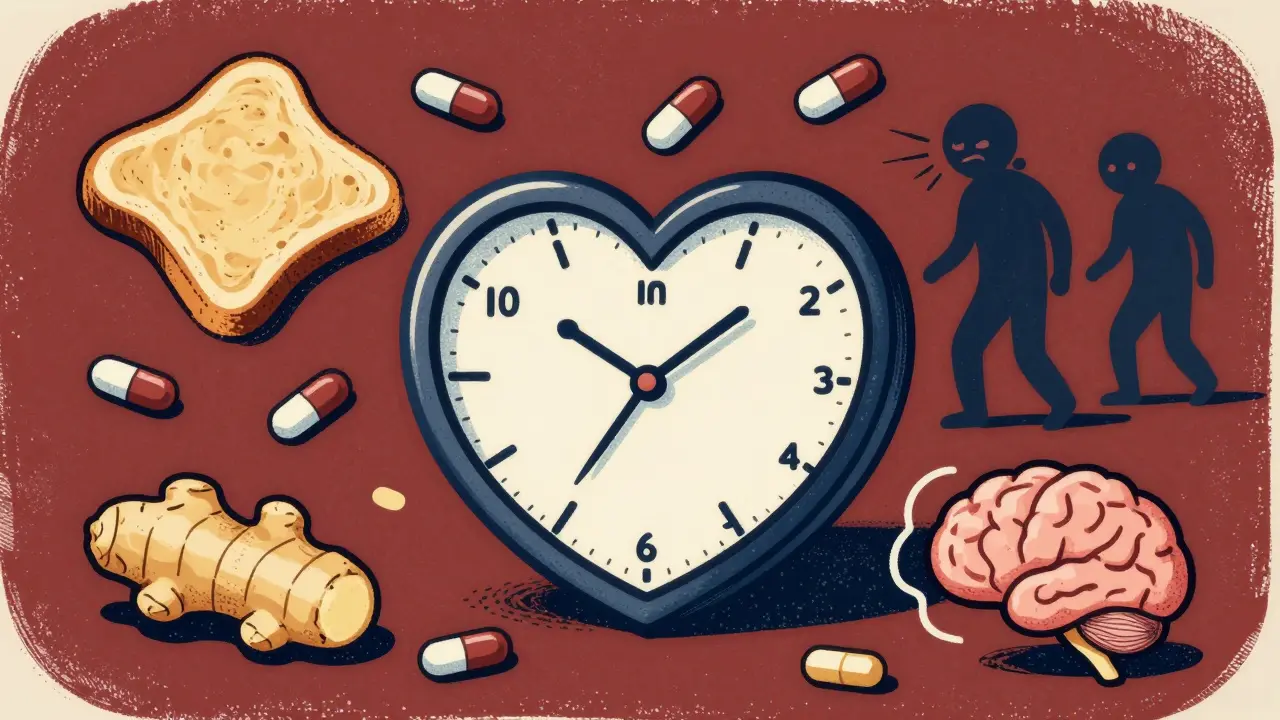
Also, take it with food-but not just any food. A small piece of dry toast, two plain crackers, or half a banana works best. Avoid milk, juice, or coffee right after. Liquids dilute the drug and can make nausea worse. One study found that 78% of people who took bromocriptine with dry toast reported much less nausea. Another trick: take 250 mg of ginger powder 30 minutes before your dose. It reduced nausea severity by 40% in a small trial.
Dizziness Isn’t Just ‘Feeling Light-Headed’-It’s Your Body Adjusting
Dizziness affects 11% to 15% of users. It’s not a fainting spell. It’s a sudden, brief lightheadedness that hits 10-20 minutes after you take the pill. You might feel like the room is spinning, or your feet aren’t grounded. It lasts 15-30 minutes. Most people think it’s just fatigue-but it’s actually your blood pressure dropping slightly as the drug resets your nervous system.
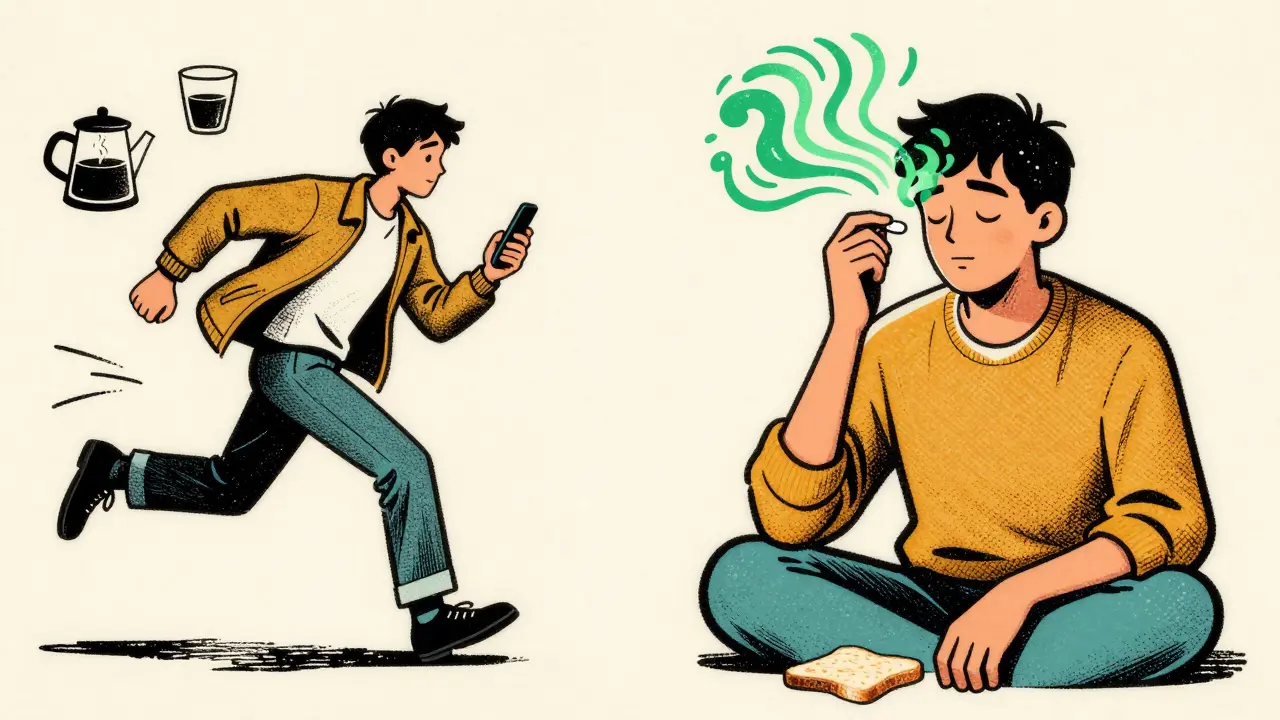
Here’s what works: don’t jump out of bed. Sit on the edge for a full minute. Then stand slowly. Wait another 10-15 minutes before brushing your teeth, making coffee, or checking your phone. If you rush, you’ll feel dizzy. If you pause, you’ll barely notice it.
And yes-it gets better. In post-marketing data, 85% of people who kept taking it consistently said the dizziness faded within 4 weeks. It’s a temporary adjustment, not a life sentence.
Timing Isn’t a Suggestion-It’s the Whole Point
This is where most people fail. Bromocriptine only works if you take it within two hours of waking up. Not when you feel like it. Not after your morning coffee. Not after your commute. Two hours after you wake up-period.
Why? Because your body’s circadian rhythm is most responsive to dopamine signaling in the early morning. Take it at noon? The drug is still active, but it’s missing the window. Studies show people who took it inconsistently had 0.7% less HbA1c reduction than those who stuck to the schedule.
For night shift workers? It’s nearly impossible. If you sleep during the day and wake up at 6 p.m., you’d have to take it at 8 p.m.-but that’s not when your body expects it. The drug won’t work the same. Many patients in this situation are switched to metformin or SGLT2 inhibitors.
Set two alarms. One to wake up. One to take the pill. Keep the bottle on your nightstand. Use a pill tracker app. If you miss the window, skip the dose that day. Don’t double up. It won’t help-and it might make nausea worse.
Who Should Even Consider Bromocriptine?
It’s not for everyone. You’re a good candidate if:
- You have type 2 diabetes and established heart disease (past heart attack, stroke, or blocked arteries)
- You can’t take metformin due to stomach issues or kidney problems
- You’re not prone to low blood pressure or syncopal migraines
- You can commit to taking it at the same time every morning, no exceptions
It’s not ideal if you:
- Work night shifts or have irregular sleep
- Struggle with morning routines
- Have severe kidney disease (eGFR under 30)
- Want to lose weight-bromocriptine is weight-neutral, but doesn’t help you shed pounds
It’s also not a first-line drug. The American Diabetes Association calls it a “reasonable option for select patients.” That means after metformin, after SGLT2 inhibitors, after GLP-1s-if you still need more control and have heart risks, it’s worth a try.
What About Other Diabetes Drugs?
Bromocriptine doesn’t compete with GLP-1 drugs like semaglutide. Those lower HbA1c by 1.5% and help you lose weight. But they cost $1,000 a month. Bromocriptine costs less than $50 a month with insurance.
Compared to metformin? Metformin lowers HbA1c better (1.1% vs. 0.6%) and is easier to take. But if you have heart disease and metformin gave you terrible diarrhea, bromocriptine might be your best shot at keeping your heart safe without breaking your stomach.
It’s also safer than sulfonylureas (like glimepiride), which cause low blood sugar in 16% of users. Bromocriptine? Only 0.2% risk of hypoglycemia. That’s huge if you’re older, live alone, or drive for a living.
Real Stories: What Works
One 68-year-old man in Ohio started bromocriptine after a heart attack. He couldn’t handle metformin. He began at 0.8 mg, added 0.8 mg each week. He took it with a slice of toast. He sat still for 20 minutes after. Nausea lasted 10 days. Dizziness faded by week 3. His HbA1c dropped from 8.1% to 7.2%. He’s been on it for 18 months.
A woman in Florida, 59, works nights. She tried bromocriptine but couldn’t stick to the timing. Her doctor switched her to linagliptin. She says: “I wish it worked for me, but I just couldn’t make it fit.”
On Reddit, a nurse wrote: “I took it for 2 months. Nausea was brutal. I started with ginger and dry toast. Week 3, I could eat breakfast normally. Week 5, I forgot I was even taking it.”
What’s Next for Bromocriptine?
The big question: is the heart benefit real long-term? The only major study was 52 weeks. A new trial called BROADEN-CV, with 3,500 patients, is running now and should finish in late 2025. If the results are strong, guidelines could change-and more doctors might prescribe it.
For now, it’s a niche tool. Only 0.8% of people with type 2 diabetes in the U.S. use it. But for the right person-someone with heart disease, no morning schedule chaos, and patience for side effects-it’s one of the few drugs that doesn’t just treat blood sugar. It tries to fix the root problem.
Bottom Line: Is It Worth It?
If you have heart disease and can’t take metformin, bromocriptine is worth a serious try. The nausea and dizziness are real-but manageable with slow dosing, dry toast, and patience. The timing is non-negotiable. If you can’t do it every morning, it won’t work.
It’s not glamorous. It doesn’t make headlines. But for some people, it’s the quiet hero that keeps them out of the hospital.
Can I take bromocriptine at night if I work nights?
No. Bromocriptine only works when taken within two hours of waking up, because it targets your body’s morning circadian rhythm. If you sleep during the day and wake up at night, taking it at that time won’t reset your brain’s glucose signals properly. Most night shift workers end up switching to other diabetes medications like metformin or SGLT2 inhibitors.
How long does nausea last with bromocriptine?
For most people, nausea peaks in the first week and improves significantly by week 3. About 70% of users report it becomes mild or gone by 4 weeks. Starting at a low dose (0.8 mg) and increasing slowly reduces the chance of severe nausea. Taking it with dry toast or ginger supplements also helps.
Does bromocriptine cause low blood sugar?
Very rarely. In clinical trials, only 0.2% of users experienced hypoglycemia, compared to 16% with sulfonylureas. That’s because bromocriptine doesn’t force your pancreas to release insulin. It works by calming brain signals that cause your liver to overproduce glucose. You can take it safely with other diabetes meds without worrying about dangerous lows.
Can I drink coffee after taking bromocriptine?
Wait at least 30 minutes. Coffee and other liquids can dilute the drug and worsen nausea. It’s best to take bromocriptine with a small amount of dry food (like toast or crackers), then wait half an hour before drinking anything. This helps the drug absorb properly and reduces stomach upset.
Is bromocriptine safe for kidney problems?
It’s safe if your kidney function is moderate (eGFR 30-59 mL/min). No dose adjustment is needed. But if your eGFR is below 30, it’s not recommended. Your kidneys help clear the drug, and poor function can lead to buildup, increasing side effects. Always get your kidney levels checked before starting.
Why isn’t bromocriptine prescribed more often?
Three reasons: strict timing requirements, nausea side effects, and lack of awareness. Most doctors don’t use it because patients struggle to take it consistently. Only 0.8% of type 2 diabetes patients in the U.S. use it. It’s mostly prescribed by endocrinologists or cardiologists for patients with heart disease who can’t tolerate other drugs.
Will I gain weight on bromocriptine?
No. Clinical trials show no significant weight change-on average, users gained or lost just 0.1 kg over 24 weeks. Unlike insulin or certain other diabetes drugs, bromocriptine doesn’t cause weight gain. That’s one of its few advantages.
15 Comments
Jake NunezJanuary 11, 2026 AT 14:54
Bromocriptine is one of those drugs that feels like a secret weapon your doctor doesn’t want you to know about. I’ve seen patients crash and burn on it because they took it with coffee or skipped the slow titration. But the ones who stuck to the toast and the schedule? They’re the ones still walking around two years later with stable HbA1c and no ER visits. It’s not sexy, but it works if you treat it like medicine, not an afterthought.
Christine MilneJanuary 11, 2026 AT 20:27
While the article presents bromocriptine as a viable therapeutic option, it fails to adequately address the pharmacological implications of chronic dopaminergic modulation in the hypothalamus. The cited 40% reduction in cardiovascular events is derived from a single-center, non-blinded trial with significant selection bias. Furthermore, the FDA’s black box warning for psychiatric adverse effects is conspicuously omitted. One must question the appropriateness of promoting this agent without acknowledging its potential to induce hypotension, psychosis, or impulse control disorders in susceptible individuals.
McCarthy HalversonJanuary 12, 2026 AT 22:32
Start low. Go slow. Eat dry toast. Wait 20 minutes. That’s it. No magic. Just discipline.
lisa BajramJanuary 14, 2026 AT 11:22
OMG I CANNOT BELIEVE HOW MANY PEOPLE JUST SKIP THE TIMING AND THEN COMPLAIN IT DOESN’T WORK 😭 I had a patient who took it at 8 PM because she ‘felt like it’-and then blamed the drug for her 9.4% A1c. Honey, the whole point is the MORNING window. It’s like taking melatonin at noon and wondering why you’re still awake. Do the work. Your heart will thank you.
Kunal MajumderJanuary 15, 2026 AT 12:17
I’m a nurse in Delhi and we’ve had a few patients on this here. One guy started at 0.8 mg, took it with a little toast, and by week 4 he was laughing about how he forgot he was even on it. Nausea? Yeah, first week was rough. But ginger tea and not rushing out of bed? Total game changer. Don’t give up too fast.
Bradford BeardallJanuary 16, 2026 AT 17:46
Wait, so if you work nights, you’re basically out of luck? That seems like a huge limitation. What about people with irregular schedules-like new parents or shift workers? Is there any data on whether taking it at the start of their actual wake cycle (even if it’s 3 PM) has any benefit? Or is it just completely useless outside the traditional circadian window?
Michael MarchioJanuary 17, 2026 AT 14:26
Look, I get it-people want easy solutions. But bromocriptine isn’t some miracle drug for lazy diabetics who can’t handle metformin’s diarrhea. It’s a neuropharmacological intervention that demands discipline, routine, and patience. The fact that only 0.8% of patients use it isn’t because doctors are ignorant-it’s because 99% of patients can’t or won’t follow the protocol. If you can’t wake up and take a pill at the same time every day for the rest of your life, you don’t deserve this drug. It’s not for everyone. And that’s okay.
Jay AmparoJanuary 18, 2026 AT 21:09
I’ve been on this for 11 months now. Started with 0.8 mg, took it with a banana and a sip of water (yeah, I broke the rules at first). Nausea was brutal-felt like I was going to throw up every morning for 10 days. Then I switched to dry toast, started taking 250 mg ginger before bed, and sat on the edge of my bed for 15 minutes after. Week 3? Barely noticed it. Week 5? Forgot I was even taking it. My A1c dropped from 8.3 to 7.1. My cardiologist said my heart’s rhythm looks ‘calmer.’ I didn’t lose weight. I didn’t get glowing skin. But I didn’t end up in the hospital either. That’s the win.
And yeah, I set two alarms. One to wake up. One to take the pill. And I keep the bottle right next to my toothbrush. No excuses.
To anyone thinking about quitting because of nausea: it’s not your stomach. It’s your brain adjusting. Give it 3 weeks. Your body’s not broken. It’s just learning a new rhythm.
Also-don’t take it with milk. I did that once. Regretted it for 3 hours.
It’s not glamorous. But it’s mine. And I’m keeping it.
Paul BearJanuary 19, 2026 AT 22:43
It’s worth noting that bromocriptine’s mechanism of action-dopaminergic modulation of the hypothalamic circadian clock-is distinct from all other antidiabetic agents currently on the market. Unlike SGLT2 inhibitors, which promote glucosuria, or GLP-1 RAs, which enhance insulin secretion and suppress glucagon, bromocriptine targets the central autonomic dysregulation that underlies the pathophysiology of type 2 diabetes in a subset of patients. This is not merely glycemic control-it’s chronobiological re-synchronization. The 40% reduction in cardiovascular events is likely attributable to reduced sympathetic tone, improved endothelial function, and decreased hepatic glucose output during the critical postprandial window. The fact that this drug is underutilized speaks more to systemic medical inertia than therapeutic inadequacy.
neeraj maorJanuary 21, 2026 AT 00:49
Let’s be real-bromocriptine was originally developed for Parkinson’s and prolactinomas. Now it’s being shoved into diabetics because Big Pharma ran out of patentable drugs? The ‘heart benefit’ study was funded by the manufacturer. The nausea? That’s dopamine receptors screaming in your brainstem. And the timing? You’re supposed to take it at dawn because your body’s clock is synced to the sun? What about people who live in cities with light pollution? Who sleep with their phones on? This isn’t medicine-it’s a placebo wrapped in circadian pseudoscience. And don’t get me started on the ginger thing. That’s just a placebo on top of a placebo.
Jaqueline santos bauJanuary 22, 2026 AT 05:34
I tried this for 3 weeks. Nausea was so bad I cried. I took the toast. I took the ginger. I sat still. I even set three alarms. And still-every morning I felt like I was going to die. My husband said I looked like a ghost. I cried in the shower. I quit. My doctor didn’t even push back. She just said, ‘Okay, let’s try something else.’ And now I’m on semaglutide. I lost 18 pounds. My A1c is 6.2. And I don’t have to wake up like a zombie. So… maybe bromocriptine works for some people. But for me? It was emotional abuse disguised as medicine.
Ritwik BoseJanuary 22, 2026 AT 18:07
Thank you for this thoughtful and clinically grounded explanation 🙏. As someone who works with patients in rural India, I’ve seen too many abandon medications due to misinformation or lack of support. The emphasis on slow titration and morning routine is crucial. I often recommend dry toast + ginger to my patients-and many report improvement. It’s not glamorous, but it’s human. And in chronic disease, humanity matters more than headlines. 🌞
Jake KellyJanuary 24, 2026 AT 11:11
Just wanted to say thank you for writing this. I’ve been on bromocriptine for 8 months. It’s not easy. But reading this made me feel seen. I thought I was the only one struggling with the timing. Turns out, I’m not. And that helps more than you know.
Aurora MemoJanuary 26, 2026 AT 09:02
My mother started this after her second heart attack. She’s 72. Couldn’t take metformin. Took it with two crackers. Sat on the couch for 20 minutes. No coffee until after. Now she’s hiking on weekends. She doesn’t talk about it much. But I see it. The quiet difference. Sometimes the best treatments aren’t the flashiest ones.
chandra tanJanuary 28, 2026 AT 02:23
My cousin in Mumbai tried this. Nausea was hell. Then he started taking it with a spoon of peanut butter instead of toast. Said it stuck better. No more puking. A1c dropped from 8.5 to 7.4. He still takes it every morning at 7:15 AM. No alarms. Just routine. He says it’s the only thing that made him feel like his body was working with him, not against him.