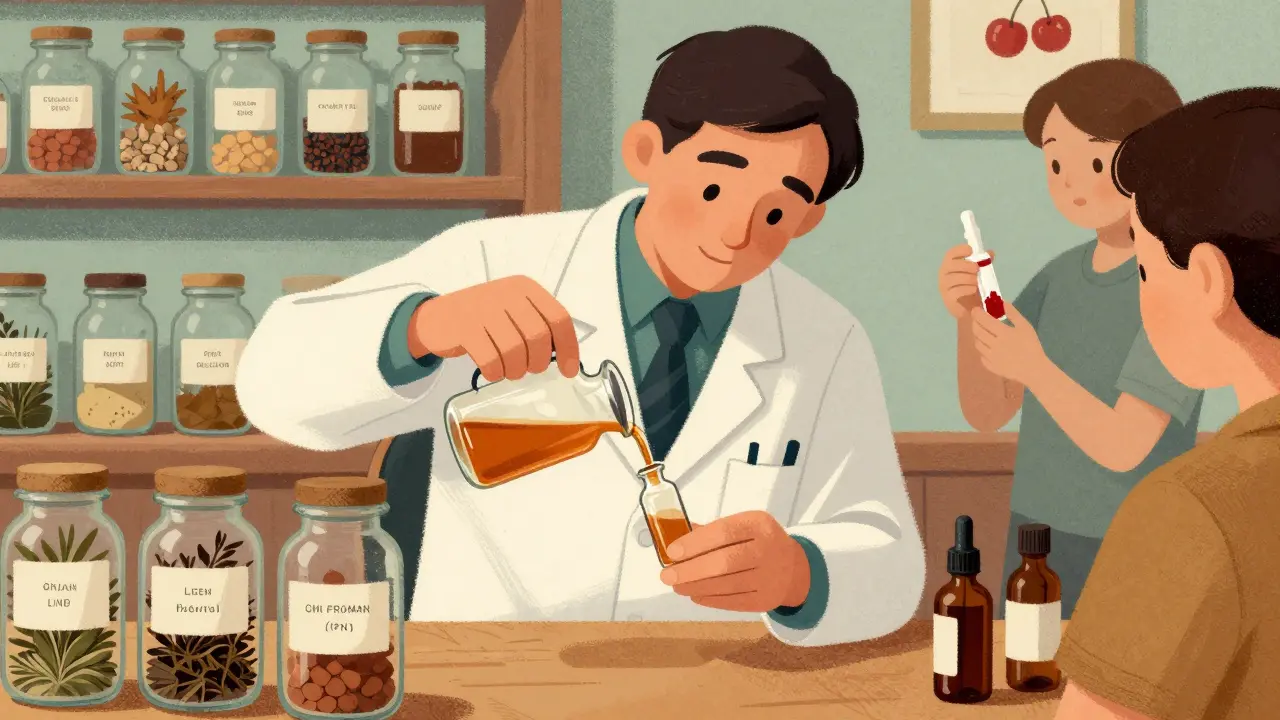
Most pills you pick up at the pharmacy are made the same way-thousands of identical tablets pressed from the same formula. But what if your body can’t handle those standard doses? What if you’re allergic to the dye in the pill, or can’t swallow it at all? That’s where compounded medications come in.
What Exactly Are Compounded Medications?
Compounded medications aren’t mass-produced. They’re made by pharmacists, one at a time, to match a patient’s exact needs. Think of it like ordering a custom cake instead of buying a pre-made one. You might need it gluten-free, sugar-free, or in liquid form because you can’t chew. That’s what compounding does for medicine.The FDA doesn’t approve these drugs before they’re made. That’s a big difference from regular prescriptions. Commercial drugs go through years of testing for safety, purity, and effectiveness. Compounded ones don’t. They’re built on a case-by-case basis, using approved ingredients, but without the same level of oversight.
This isn’t new. Back in the 1800s, almost all prescriptions were compounded. Pharmacists mixed powders, made tinctures, and shaped pills by hand. Today, it’s a niche but growing field-worth over $10 billion in 2022-and still vital for people who can’t use standard options.
Why Do People Need Custom Formulas?
There are real, everyday reasons why a doctor might prescribe a compounded medication.- Dosage issues: You need 1.5 mg of a drug, but the pharmacy only stocks 1 mg and 2 mg. Instead of taking half a pill or two at once, a compounding pharmacist can make the exact dose.
- Allergies or intolerances: About 15 million Americans react to ingredients like lactose, gluten, or artificial dyes in pills. A compounded version can remove those triggers entirely.
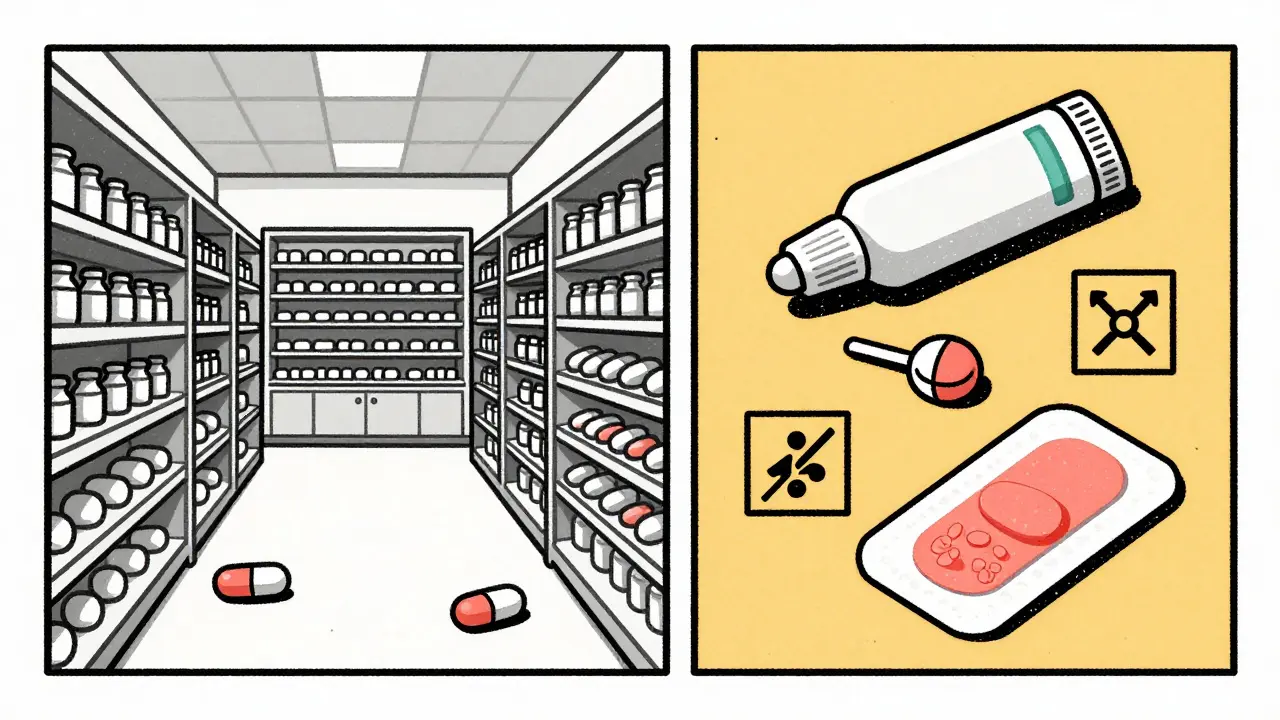
- Difficulty swallowing: Around 40% of adults and up to 80% of kids struggle with pills. Compounding can turn a tablet into a flavored liquid, a topical gel, or even a lollipop.
- Combining multiple drugs: If you take five pills a day, your pharmacist can combine them into one capsule or cream-cutting down on confusion and improving adherence.
- Specialized needs: For kids, a cherry-flavored liquid helps them take their ADHD medicine. For older adults with digestive problems, a skin patch avoids the gut entirely. In pets, a cat might need a tiny dose of a human drug in tuna-flavored paste.
One parent on Reddit shared that their child’s adherence to ADHD medication jumped from 40% to 95% after switching to a compounded cherry-flavored liquid. That’s not just convenience-it’s life-changing.
The Risks: When Compounding Goes Wrong
Just because a drug is custom-made doesn’t mean it’s safe. The biggest danger? Lack of standardization.In 2012, a compounding pharmacy in Massachusetts shipped contaminated steroid injections. The result? 64 deaths and nearly 800 people sickened with fungal meningitis. It was a wake-up call. Since then, the FDA has cracked down.
Between 2010 and 2020, compounded drugs made up only 1% of all prescriptions-but 17% of all drug recalls. Why? Because quality control varies wildly. One pharmacy might test every batch. Another might skip it.
Patients report inconsistent results. One person on PatientsLikeMe said their compounded thyroid medication caused wild swings in their TSH levels-because the strength changed from batch to batch. That’s not a fluke. Without strict controls, potency can drift.
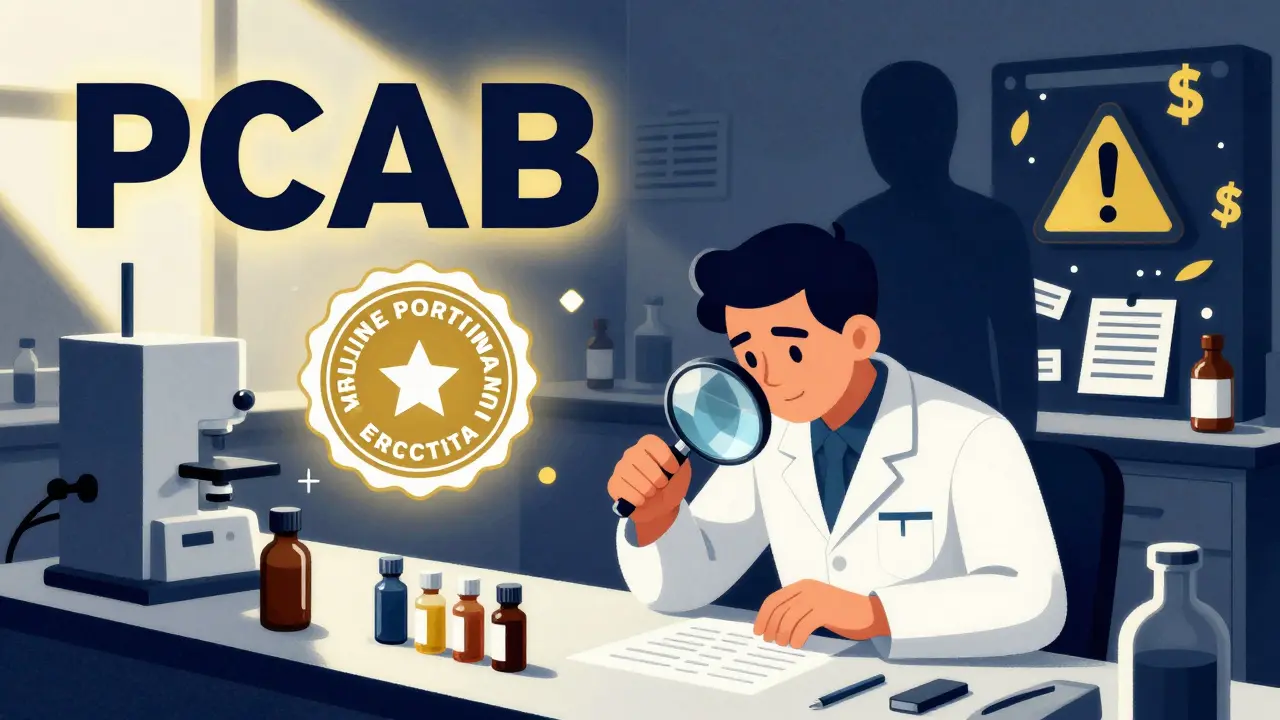
And while most compounding pharmacies are careful, the system isn’t foolproof. Only about 350 out of 7,500 compounding pharmacies in the U.S. are accredited by the Pharmacy Compounding Accreditation Board (PCAB). That’s less than 5%.
Who Should Use Compounded Medications?
Not everyone needs them. In fact, experts agree: compounding should be the exception, not the rule.They’re best for situations where no FDA-approved drug works. For example:
- Hormone therapy: Bioidentical hormone creams or pellets are often compounded to match a patient’s unique levels.
- Chronic pain: Topical gels with multiple pain-relieving agents (like ketamine, gabapentin, and lidocaine) can target pain locally without side effects from oral drugs.
- Veterinary care: Animals can’t tell you they hate the taste of a pill. Compounded flavors and forms make treatment possible.
- Discontinued drugs: If a manufacturer stops making a drug you rely on, a compounding pharmacy might be your only option.
But don’t use them as a shortcut. If a generic version of your drug exists and works fine, stick with it. Compounding isn’t better-it’s different. It’s for when there’s no other choice.
How to Find a Safe Compounding Pharmacy
Not all pharmacies can do this well. Here’s how to protect yourself:- Ask for PCAB accreditation. It’s the gold standard. You can check their website to see if a pharmacy is listed.
- Verify the pharmacist’s training. Look for pharmacists with certifications in compounding, not just general pharmacy licenses.
- Ask about testing. Do they test each batch for potency and purity? Do they use clean rooms for sterile products?
- Check reviews. Specialty compounding pharmacies average 4.6 out of 5 stars on Healthgrades. General pharmacies offering limited compounding? Around 3.8.
- Don’t buy online from unverified sources. Many websites sell compounded drugs without prescriptions or quality controls. These are risky-and often illegal.
Also, remember: you need a prescription from a licensed provider. No pharmacy can legally compound a drug without one.
Cost and Insurance: What to Expect
Compounded meds aren’t cheap. A simple non-sterile cream might cost $30-$100. A complex sterile injection? $200-$500. Compare that to a $10-$50 generic pill.Insurance coverage is patchy. Medicare Part D covers only 42% of compounded claims. Private insurers vary. Some won’t cover anything compounded unless it’s medically necessary and no alternative exists.
Always ask your pharmacy for a detailed receipt. Some will submit claims for you. Others won’t. Know your options before you start.
The Future of Personalized Medicine
New tools are making compounding smarter. Some pharmacies are now using genetic testing to tailor doses based on how a person metabolizes drugs. For example, people with a CYP2D6 gene variant break down certain painkillers too slowly-or too fast. Compounding allows for adjustments that standard pills can’t offer.But the FDA is watching closely. In early 2023, they issued warnings to pharmacies compounding weight-loss drugs like semaglutide in large batches. That’s not compounding-it’s manufacturing. And it’s against the rules.
The goal isn’t to replace FDA-approved drugs. It’s to fill the gaps when they’re not enough.
Final Thoughts
Compounded medications aren’t magic. They’re a tool. A powerful one, when used correctly. For people with allergies, swallowing problems, or rare conditions, they can be the only way to get the treatment they need.But they come with risks. Quality isn’t guaranteed. Costs are higher. Insurance doesn’t always help.
The key? Use them only when necessary. Work with a trusted pharmacist. Ask questions. Demand transparency. And never assume a custom drug is automatically safer or better-just different.
If your doctor suggests compounding, ask: Is there an FDA-approved alternative? If the answer is no, then it’s worth exploring. If the answer is yes-stick with the standard.
Are compounded medications FDA-approved?
No. Compounded medications are not FDA-approved. The FDA does not review them for safety, effectiveness, or quality before they’re dispensed. They’re made under different rules than mass-produced drugs. That’s why it’s critical to use only accredited compounding pharmacies with strict quality controls.
Can I get compounded medications without a prescription?
No. Federal law requires a valid prescription from a licensed provider-like a doctor, nurse practitioner, or physician assistant-for any compounded medication. Pharmacies that offer them without a prescription are operating illegally and pose serious safety risks.
How do I know if my compounding pharmacy is safe?
Look for accreditation from the Pharmacy Compounding Accreditation Board (PCAB). Only about 350 out of 7,500 U.S. compounding pharmacies have this certification. Ask the pharmacy if they test each batch for potency and purity, and whether they use sterile environments for injectables. Check reviews on trusted platforms like Healthgrades.
Why are compounded medications so expensive?
They’re made by hand, one at a time, using specialized equipment and high-purity ingredients. Sterile compounds require clean rooms, trained staff, and lab testing-all costly. A simple cream might cost $30-$100, while an injectable can run $200-$500, compared to $10-$50 for a generic pill.
Can I switch back to a regular drug later?
Yes-if your situation changes. Many people start with compounded meds because they couldn’t tolerate the commercial version. Once the issue is resolved (like a child learning to swallow pills or an allergy being outgrown), you can often switch back. Always talk to your doctor and pharmacist before making any changes.
13 Comments
Sue StoneJanuary 24, 2026 AT 05:32
My grandma used compounded meds for her chronic pain-topical gel with gabapentin and lidocaine. No more stomach issues from pills. She said it felt like magic, but honestly? Just good pharmacy work.
Stacy ThomesJanuary 25, 2026 AT 19:48
THIS. My kid went from screaming at pill time to begging for cherry liquid. 95% adherence? That’s not a win-that’s a miracle. Thank you for writing this.
dana torgersenJanuary 26, 2026 AT 17:40
compounded meds arent magic.. they're just... people making stuff.. like.. in a basement?.. with.. like.. gloves? and.. uh.. maybe a scale?.. i mean.. what if they sneeze?..
Andrew SmirnykhJanuary 28, 2026 AT 07:49
I’ve seen this play out in rural clinics-where the only pharmacy that can compound is 80 miles away. People drive for hours because the standard meds make them sick. It’s not about preference-it’s about survival.
Susannah GreenJanuary 30, 2026 AT 04:21
Don’t forget: compounding isn’t just for humans. My dog’s thyroid med was a tuna-flavored paste. He used to spit out pills like a tiny, furry rebel. Now he wags his tail when he sees the syringe. That’s worth every penny.
Oladeji OmobolajiJanuary 31, 2026 AT 05:39
Back home in Nigeria, we’ve been doing this for decades-pharmacists mixing powders for patients who can’t swallow tablets. It’s not new. It’s just not always legal here. The system’s broken, but the need? Always real.
charley lopezFebruary 1, 2026 AT 10:20
The pharmacokinetic variability inherent in non-sterile compounded formulations introduces unacceptable risk profiles for chronic therapeutic regimens. The absence of bioequivalence validation renders clinical outcomes non-predictable.
Vanessa BarberFebruary 2, 2026 AT 11:20
So you’re saying we should trust a guy in a garage with a blender and a dream to make my hormones? Cool. I’ll just take my $4 generic and suffer like a normal person.
Dawson TaylorFebruary 3, 2026 AT 23:13
Compounding fills gaps. Not replacements. That’s the line. Cross it, and you risk harm. Respect it, and you save lives.
Laura RiceFebruary 4, 2026 AT 17:42
My cousin got a compounded version of her epilepsy med after the brand got pulled. She’s been seizure-free for 3 years. The pharmacy tests every batch. They even call her to check in. That’s care. That’s not a business-it’s a lifeline.
Kerry MooreFebruary 4, 2026 AT 22:23
I appreciate the balanced perspective. The 2012 outbreak remains a sobering reminder that quality control is non-negotiable. Accreditation isn’t a luxury-it’s the minimum standard for ethical practice.
Janet KingFebruary 6, 2026 AT 01:30
Insurance coverage is the biggest barrier. My patient had to pay $380 out-of-pocket for a compounded thyroid med. She skipped doses because she couldn’t afford it. We need better reimbursement policies.
Kerry EvansFebruary 7, 2026 AT 13:39
Anyone who uses compounded meds is just playing Russian roulette with their health. If you can’t follow the rules of FDA-approved drugs, maybe you shouldn’t be taking them at all.