Medication Side Effect Tolerance Calculator
This tool estimates how long it may take for your medication side effects to improve as your body develops tolerance. Based on clinical studies from the article.
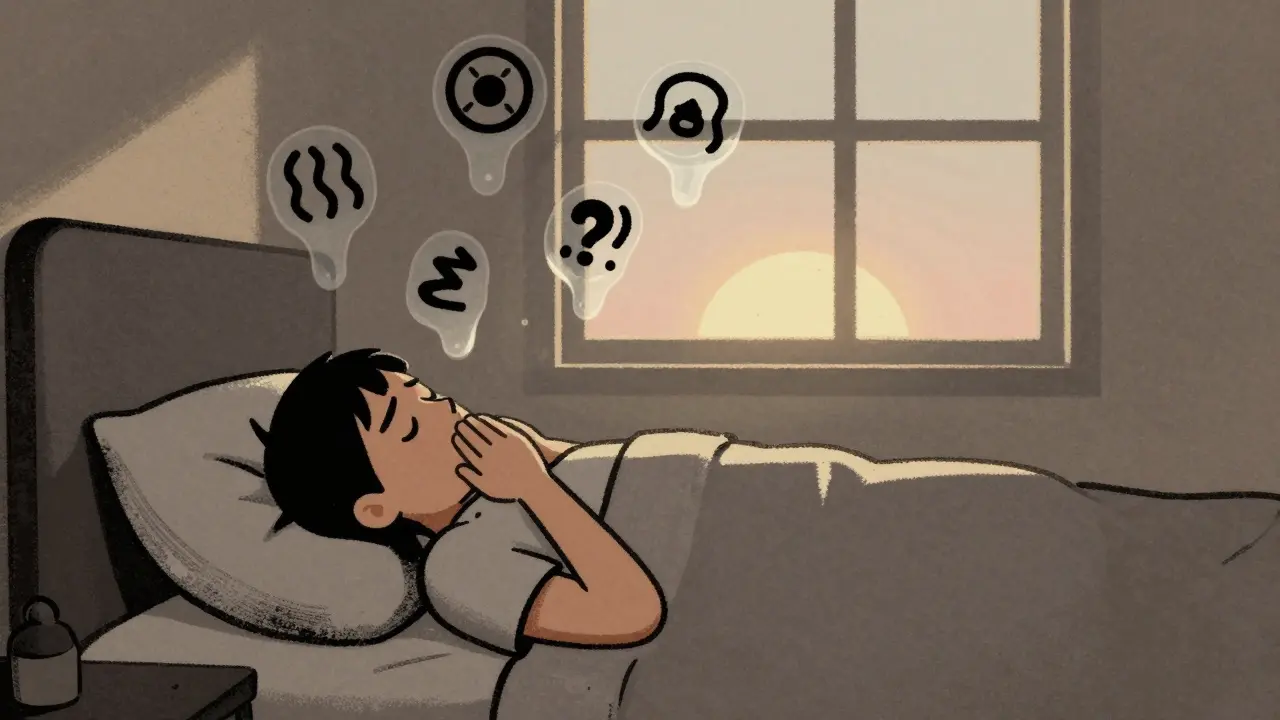
When you start a new medication, it’s common to feel like your body is betraying you. Nausea hits out of nowhere. Your head feels foggy. You can’t sleep. Or maybe you’re too sleepy. You wonder: Is this going to get better? The answer isn’t always yes - but for many people, it’s surprisingly often.
Why Your Side Effects Might Fade
Your body isn’t broken. It’s adapting. This process is called tolerance development - and it’s not just about needing more of the drug to feel its effects. It’s also about your body learning to handle the unwanted parts too. Tolerance happens because your cells and enzymes change how they respond to the drug over time. Some of these changes happen in your liver, where enzymes break down the medication faster. Others happen in your brain or gut, where receptors become less sensitive. The result? The same dose that made you feel awful at first starts to feel normal. This isn’t magic. It’s biology. And it’s well-documented across many types of medications. For example, if you’re taking an SSRI like sertraline or escitalopram for depression, the nausea and dizziness that hit in week one? They drop off for about 70% of people within two to three weeks. A 2024 analysis of over 8,000 patient reviews on Drugs.com showed side effect ratings for Zoloft falling from 7.2/10 at the start to 4.1/10 after four weeks.Not All Side Effects Are Created Equal
Here’s the catch: tolerance doesn’t treat all side effects the same way. Some fade fast. Others barely budge. Take opioids. If you’re on pain medication like oxycodone, you might notice your drowsiness or dizziness improves within a week or two. That’s because your brain adapts quickly to those effects. But constipation? That rarely gets better. Your gut doesn’t adjust the same way. In fact, studies show only about 12% of people develop tolerance to opioid-induced constipation - meaning it’s likely to stick around unless you manage it separately. Same goes for antipsychotics. Weight gain and metabolic changes? These side effects usually don’t improve over time. They can even get worse. That’s why doctors monitor blood sugar and cholesterol closely in people on these meds long-term. On the flip side, stimulants like Adderall or methylphenidate? Appetite suppression is brutal at first - but 92% of kids and teens on these drugs report it easing up within 10 to 14 days. Benzodiazepines for anxiety? Sedation fades in about 85% of users within three weeks. But the calming effect? That can take longer to stabilize.How Long Should You Wait?
There’s no universal timeline - but most side effects tied to your central nervous system (brain and nerves) tend to settle down in 7 to 14 days. That’s the window most doctors expect. If you’re on an antidepressant, anti-anxiety med, or sleep aid, and you’re still feeling awful after three weeks, it’s time to talk to your provider. Here’s what most patients experience:- Days 1-3: Side effects peak. You feel the worst.
- Days 4-7: Some improvement begins. The nausea eases. The dizziness lessens.
- Days 8-14: Major shift. Most people feel significantly better.
- Weeks 3-4: If side effects haven’t improved by now, they probably won’t - or they might signal something else.
What About the Medication Itself?
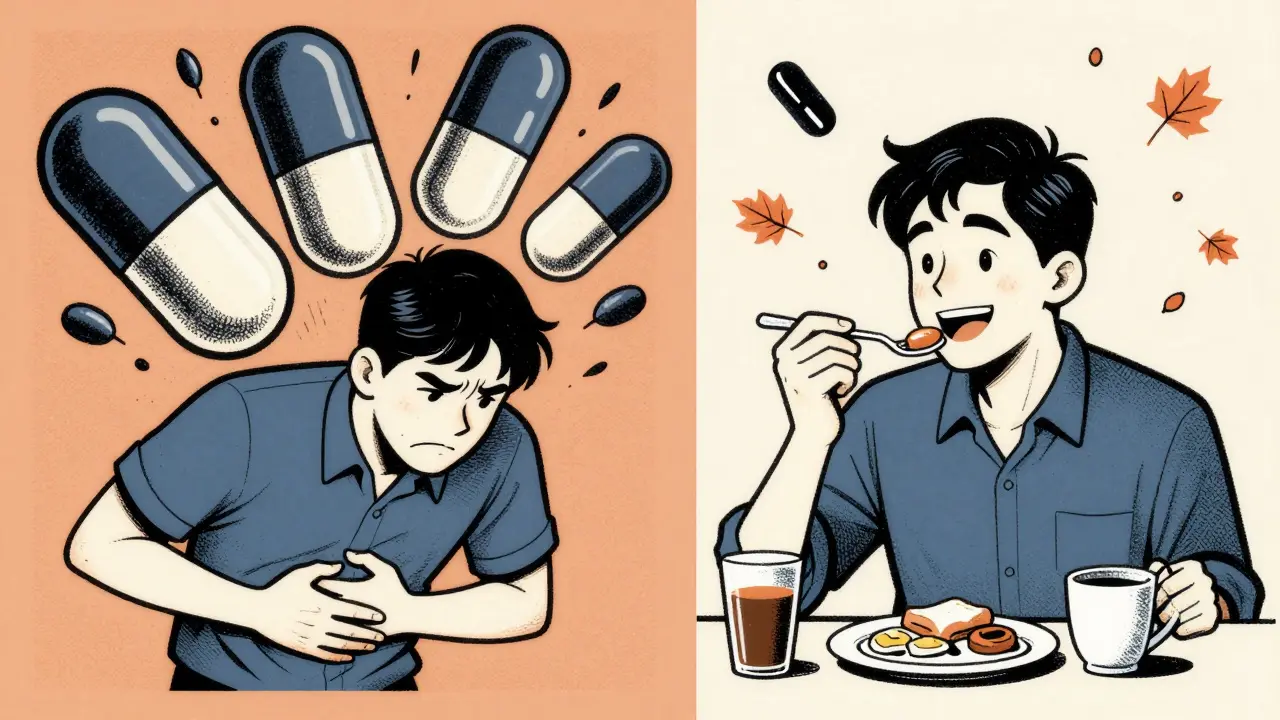
Here’s the thing people don’t talk about enough: tolerance can affect how well the drug works, too. Just because your nausea fades doesn’t mean the antidepressant is still working as well as it did at first. That’s called differential tolerance. Your body gets used to the side effects faster than the therapeutic effect. Or sometimes, the opposite happens. A 2022 study of 12,450 patients on opioids found that while tolerance to breathing problems developed quickly, the pain relief didn’t fade as fast - meaning the drug kept working even as side effects dropped. But for some meds, especially antiepileptic drugs or certain mood stabilizers, tolerance to the main effect can develop faster than to side effects. That’s why your doctor might need to adjust your dose after a few weeks - not because you’re "getting used to it," but because your body’s response has changed.Real Stories: What Patients Actually Experience
Look at Reddit’s r/medication community. In a 2023 thread asking if antidepressant side effects improve, over 1,200 people responded. Nearly 90% said yes - and most said it happened between days 10 and 21. One user wrote: "Lexapro made me sick to my stomach for the first week. I almost quit. Then, on day 14, I woke up and realized I hadn’t thought about nausea all day. It was gone. I cried." Another: "Adderall killed my appetite. I lost 8 pounds in 10 days. Then, around day 12, I started craving food again. I didn’t even realize how much better I felt until I ate a full sandwich and didn’t feel guilty." These aren’t rare cases. A 2023 GoodRx report found that patients who saw side effects fade were 3.2 times more likely to stick with their medication for six months or longer. That’s huge. Because if you stop your med too soon, you’re not just losing symptom relief - you’re risking relapse.When Side Effects Won’t Go Away
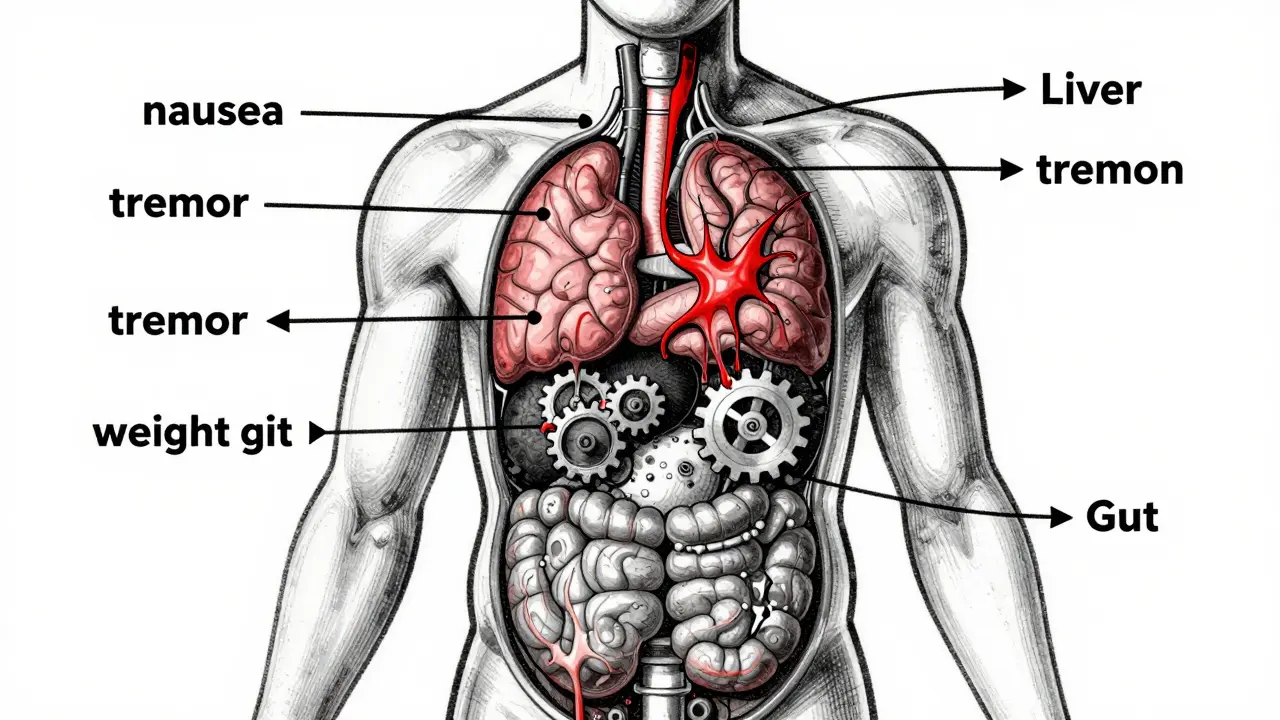
Some side effects are stubborn. And that’s okay - but you need to know which ones.- Constipation from opioids: Rarely improves. You’ll likely need laxatives or stool softeners long-term.
- Weight gain from antipsychotics: Often continues or worsens. Diet and activity matter more than time.
- Hand tremors from lithium: Can persist. Dose adjustments or switching meds may be needed.
- Sexual side effects from SSRIs: These are tricky. For some, they fade. For others, they don’t. It’s unpredictable.
What You Can Do Right Now
You don’t have to just wait and suffer. Here’s what helps:- Start low, go slow. Doctors often begin with half the usual dose to give your body time to adjust. If you were prescribed a high dose right away, ask if you can lower it temporarily.
- Track your symptoms. Keep a simple log: "Day 1: nausea, headache. Day 5: nausea gone, still tired." This helps you and your doctor spot patterns.
- Hydrate and eat regularly. Dehydration and skipped meals make side effects worse. Even if you’re not hungry, try small, bland snacks.
- Don’t stop cold turkey. Suddenly quitting can cause withdrawal - which feels like side effects, but isn’t. Always talk to your provider first.
- Ask about timing. Some meds cause less nausea if taken at night. Others are easier on the stomach with food.
The Future: Medications Designed for Tolerance
Science is catching up. In 2023, GlaxoSmithKline launched Brexanolone XR - the first antidepressant engineered specifically to help your body adapt to sedation faster, while keeping the mood-boosting effect strong. In trials, 94% of users reported minimal drowsiness after two weeks, compared to just 42% on the old version. This isn’t science fiction. Researchers at Stanford and the NIH are now mapping the exact biological pathways that let your brain tolerate side effects but keep the treatment working. That means in the next five years, we’ll see more meds built with this in mind - not just luck.Final Thought: Give It Time - But Stay Alert
Most side effects fade. That’s the good news. But not all. And you’re the best person to notice when something’s off. If you’re starting a new medication, expect the first two weeks to be rough. But don’t assume it’ll get worse. It’s more likely to get better. Keep a journal. Talk to your doctor at your next check-in. And remember: the fact that you’re still taking the pill after the first week? That’s already a win.Side effects aren’t a sign you’re doing something wrong. They’re a sign your body is learning. And sometimes, learning means letting go of the discomfort - one day at a time.
15 Comments
Tim GoodfellowDecember 18, 2025 AT 19:19
This is the kind of post that makes me want to hug a pharmacist. Seriously. The way you broke down tolerance like it’s a dance between your body and the drug? Chef’s kiss. I’ve been on SSRIs for 5 years and still tell new patients:It’s not you. It’s your neurons learning a new language. And yeah, day 14 is when the fog lifts. I remember staring at my coffee and thinking, ‘Wait… I’m not gonna puke?’ That was the day I started believing in science again.
Alana KoertsDecember 19, 2025 AT 22:11
70% improvement? That’s not science that’s marketing. You cherry-picked Drugs.com reviews and ignored the 30% who quit because they felt like garbage for 6 weeks. And you call that empathy? Pathetic.Elaine DouglassDecember 20, 2025 AT 08:31
I just started sertraline last week and I’m terrified but this made me feel less alone thank you for writing thisKelly MulderDecember 20, 2025 AT 21:38
The empirical data presented here is statistically underwhelming. While anecdotal reports are emotionally resonant, they lack the rigor of double-blind, placebo-controlled longitudinal studies. One must question the validity of self-reported symptom scales on consumer platforms such as Drugs.com. The absence of standardized psychometric instruments renders this entire narrative suspect.Dikshita MehtaDecember 22, 2025 AT 14:31
I’m a pharmacist in Mumbai and I see this every day. People stop meds because of nausea in week one. But 80% of them? They’d be fine if they just waited. I always tell them: your gut is the first to protest, but the last to adapt. Try ginger tea. Eat rice. Don’t panic.pascal pantelDecember 23, 2025 AT 03:02
You say tolerance develops in CNS side effects but completely ignore neuroadaptation kinetics. The pharmacokinetic half-life of SSRI metabolites like desmethylsertraline is 6-8 days. That means steady-state isn’t even reached until day 14-21. Of course symptoms improve. It’s not tolerance-it’s pharmacokinetic equilibrium. You’re conflating mechanism with perception.Gloria ParrazDecember 23, 2025 AT 06:51
To the person starting their med today: you’re not broken. You’re not weak. You’re not failing. You’re doing the hardest thing-showing up every day even when your body feels like it’s fighting you. That’s courage. And it’s okay if today is still rough. Tomorrow might be lighter. And if it’s not? You still did the brave thing by reading this. That counts.Sahil jassyDecember 24, 2025 AT 02:11
Bro I was on Adderall for ADHD and thought I was gonna die from no appetite. Then day 13 I ate a whole pizza and didn’t cry. That’s the moment I knew my body got it. Stay strongChris ClarkDecember 25, 2025 AT 02:01
I’m from Kenya and we don’t have access to most of these meds. But I’ve seen people on antidepressants here and they just power through. No one talks about side effects. They say ‘God will heal.’ But your post? It’s the first time I’ve seen someone explain it like biology not magic. Thank you.William StorrsDecember 26, 2025 AT 10:57
I know it’s hard. I’ve been there. The nausea, the fog, the guilt for even thinking about quitting. But listen-you’re not alone. And this phase? It’s temporary. You’re not failing. You’re adapting. And that’s not weakness. That’s your body doing its job. Keep going.James StearnsDecember 26, 2025 AT 23:19
The notion that side effects are merely a transient inconvenience is a dangerous oversimplification. One must consider the ethical implications of normalizing pharmaceutical discomfort as an inevitable rite of passage. The pharmaceutical industry profits from compliance, not from patient well-being. One must question the institutional incentives behind this narrative.Nina StaceyDecember 27, 2025 AT 00:14
I just want to say that I started my new med last month and I was ready to quit on day 5 but then I remembered what my therapist said about giving it two weeks and honestly I woke up on day 16 and felt like a human again and I cried because I didn’t think it would ever happen and now I’m so grateful I didn’t give upDominic SuyoDecember 27, 2025 AT 05:45
Tolerance development? Please. That’s just the industry’s way of saying ‘suck it up.’ You cite a 2024 Drugs.com analysis like it’s peer-reviewed literature. That’s a crowdsourced forum. Half the reviews are from people who didn’t even take the drug properly. And you act like constipation is the only opioid side effect that doesn’t fade? What about the cognitive blunting? The emotional numbness? You’re sanitizing the real cost.Takeysha TurnquestDecember 27, 2025 AT 22:01
We think we’re taking pills. But really we’re letting our cells rewrite their prayer. The nausea? That’s the old self screaming. The fog? That’s the old mind dissolving. And when it lifts? It’s not tolerance. It’s surrender. And surrender is the quietest form of healing. I didn’t get better. I let go. And in that letting go, I became who I was meant to be.Chris portoDecember 29, 2025 AT 04:56
This is a good summary. I’d add that for some meds like lithium or valproate, side effects don’t fade because the therapeutic window is narrow. It’s not about adaptation-it’s about finding the dose that doesn’t kill you while helping you. Sometimes the side effects are the price of staying alive.