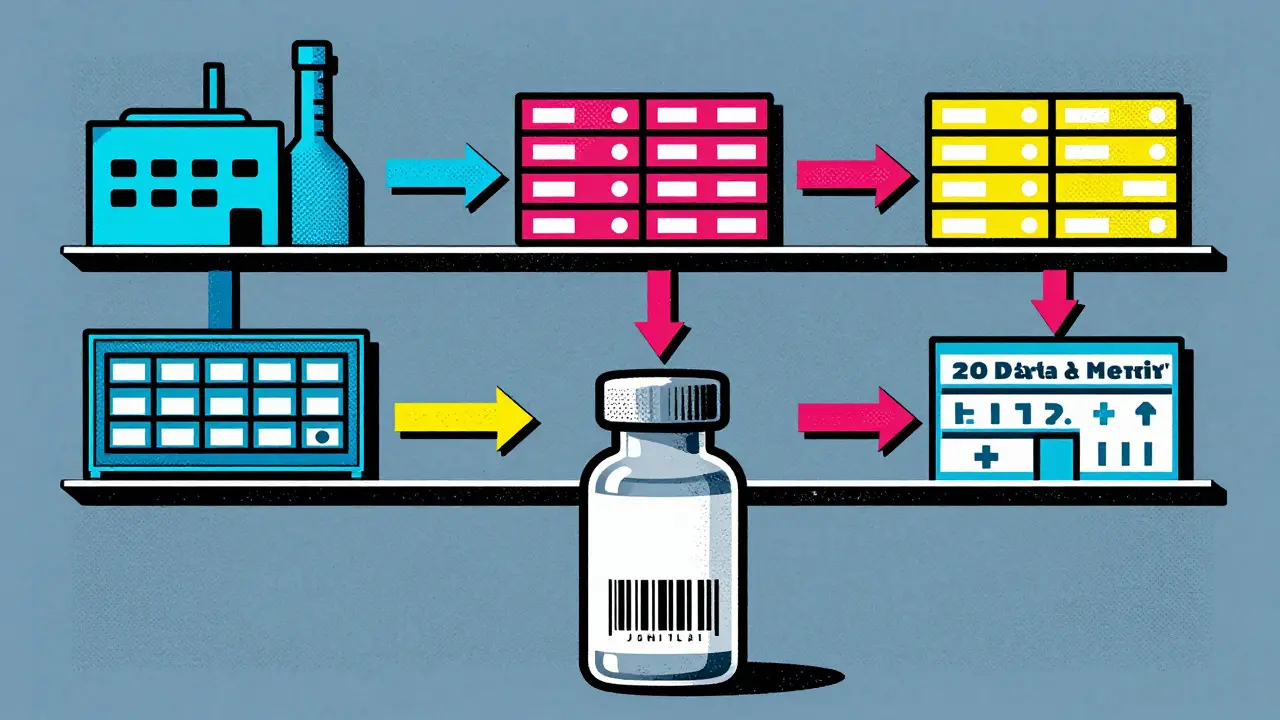
Imagine picking up a prescription for a life-saving medication, only to find out later that the pills contained chalk or an incorrect dosage. This isn't a scene from a dystopian novel; it is a real risk that the global pharmaceutical industry fights daily. The question isn't just whether fake drugs exist-they do-but how we stop them from reaching your hands. The answer lies in a massive, invisible digital infrastructure known as supply chain security, specifically within the pharmaceutical sector. This system tracks every single pill bottle from the factory floor to your local pharmacy shelf, using advanced technology and strict laws to ensure what you take is safe, effective, and legitimate.
In this article, we break down exactly how this protection works. We will look at the legal frameworks driving these changes, the specific technologies like barcodes and databases that make tracking possible, and the real-world challenges companies face. By understanding this process, you gain insight into why your medicine comes with certain labels and how regulators keep the pipeline clean.
The Legal Backbone: DSCSA and Global Regulations
Security doesn't happen by accident. It happens because governments mandate it. In the United States, the primary driver is the Drug Supply Chain Security Act (DSCSA). Signed into law in 2013, the DSCSA created a step-by-step plan to build a secure drug distribution network. The goal was simple but ambitious: prevent harmful drugs from entering the supply chain, detect them if they slip through, and remove them quickly.
The implementation has been gradual. Starting in 2015, manufacturers had to begin tracing products at the package level. By November 2018, wholesalers were required to verify suspect products. The most significant shift occurred in November 2023, when the requirement for full electronic, interoperable data exchange kicked in. This means that instead of paper invoices, every transaction between trading partners-manufacturers, wholesalers, repackagers, and dispensers-is now recorded digitally.
| Date | Requirement | Impact on Stakeholders |
|---|---|---|
| November 2017 | Product Tracing | Manufacturers must trace drugs to one level below themselves. |
| November 2018 | Verification of Suspect Products | Wholesalers must investigate and verify questionable drugs. |
| November 2023 | Electronic Data Exchange | All partners must exchange transaction history electronically. |
| November 2027 | Full Interoperability | Real-time verification across all systems without manual checks. |
Internationally, other regions have their own rules. The European Union uses the Falsified Medicines Directive (FMD), which relies on a centralized repository called the European Medicines Verification System (EMVS). While the U.S. focuses on decentralized electronic exchanges between partners, the EU requires pharmacists to scan a unique identifier and decommission it in a central database before handing the drug to the patient. These differences create complexity for global companies, but the end goal remains the same: stopping counterfeits.
How Serialization Works: The Digital ID for Every Package
At the heart of supply chain security is serialization. Think of it like a passport for each box of medicine. Under current regulations, every prescription drug package must carry a Unique Product Identifier (UPI). This UPI is embedded in a 2D Data Matrix barcode that you can see on the box.
This barcode contains four critical pieces of information:
- National Drug Code (NDC): Identifies the specific drug product.
- Serial Number: A unique number assigned to that individual package.
- Lot Number: Tracks the batch in which the drug was manufactured.
- Expiration Date: Ensures the product hasn't gone bad.
Why is this important? If a counterfeit drug enters the supply chain, investigators can scan the serial number and trace it back to its origin. According to FDA data, this system generates approximately 1.2 million unique identifiers per day in the U.S. alone. When a wholesaler receives a shipment, they scan these codes. If a code has already been used, is missing, or doesn't match the expected manufacturer data, the system flags it immediately.
This technology prevents "diversion" as well. Diversion happens when legitimate drugs are stolen or sold outside authorized channels. Because each package has a unique ID, if a hospital receives a drug that should have been sent to a different facility, the mismatch is caught during the scanning process.
Data Interoperability: Speaking the Same Language
Having a unique ID is useless if different companies can't read each other's data. This is where data interoperability comes in. The industry standard for this is GS1's Electronic Product Code Information Services (EPCIS). You can think of EPCIS as the universal translator for supply chain data.
Before 2023, many companies used proprietary systems or paper records. Now, they must use standardized digital formats. As of late 2024, the FDA mandated that all transactions use EPCIS 2.0 with JSON format. This allows a manufacturer’s system to talk directly to a wholesaler’s system, which then talks to a pharmacy’s system.
The benefits are speed and accuracy. In 2022, FDA compliance reports showed that EPCIS processes over 15 million daily transactions with 99.95% accuracy. This high level of precision reduces human error, which is often the weak link in security chains. When a suspect product is identified, trading partners must conduct a risk-based investigation within 24 hours. With digital records, this investigation takes minutes rather than days.
Authorized Trading Partners: Vetting the Players
Technology alone isn't enough. You also need to trust the people you're doing business with. This is the role of Authorized Trading Partner (ATP) requirements. Before exchanging any drugs, companies must verify that their partners are legally registered and compliant with safety standards.
FDA provides tools like the DSCSA ATP Verification Router Service to help with this. This service processes over 50,000 daily verification requests. If a company tries to sell drugs to an unverified buyer, the transaction is blocked. This stops criminals from setting up fake distribution centers to launder counterfeit drugs into the legitimate supply chain.
However, enforcement gaps remain. Critics point out that not all wholesale distributors conduct these verifications rigorously. In 2022, audits showed that only 47% of wholesale distributors were fully conducting required ATP verifications. This highlights a ongoing challenge: ensuring that smaller players in the chain adhere to the same strict standards as major corporations.
Challenges and Costs: The Human Side of Security
While the system is robust, it is not perfect, and it is expensive. For large pharmaceutical companies, the cost is manageable. But for small businesses, particularly independent pharmacies, the burden is heavy. The Healthcare Distribution Alliance reported that average implementation costs for distributors hit $4.7 million. For a small pharmacy, annual compliance costs can reach $18,500 in software and hardware alone.
There are also technical hurdles. Barcode readability is a common issue. Field testing in 2022 found that 12.7% of packages had barcodes that scanners couldn't read properly due to damage or printing errors. This leads to false positives, where legitimate drugs are flagged as suspect, causing delays and extra work for staff.
Cybersecurity is another major concern. Since the entire system relies on digital data, it is vulnerable to hacking. The 2023 Change Healthcare cyberattack disrupted verification services for 72 hours, affecting 35% of U.S. pharmacies. When the digital backbone goes down, the physical supply chain grinds to a halt. Companies are now investing heavily in cybersecurity protocols meeting HITRUST CSF v11.2 standards to protect this sensitive data.
The Future: AI, Blockchain, and Global Harmony
The next phase of supply chain security involves smarter technology. Many major pharmaceutical companies are experimenting with blockchain to create immutable records of transactions. Unlike traditional databases, blockchain entries cannot be altered once written, adding an extra layer of trust. Currently, 34% of major pharma firms are running blockchain trials.
Artificial Intelligence (AI) is also being deployed for anomaly detection. AI algorithms can analyze millions of transactions to spot patterns that suggest fraud, such as unusual shipping routes or sudden spikes in orders for controlled substances. Wholesalers using AI report faster identification of suspect products.
Looking ahead to 2027, the final deadline for full interoperability, the industry aims for a seamless global network. The International Council for Harmonisation (ICH) is working on aligning serialization standards across more than 60 countries. If successful, this would mean a drug manufactured in Japan could be tracked seamlessly through Europe and into the U.S., reducing the compliance costs that currently penalize multinational companies.
What is the Drug Supply Chain Security Act (DSCSA)?
The DSCSA is a U.S. federal law signed in 2013 that establishes requirements for the tracing and verification of prescription drugs throughout the supply chain. Its main goal is to prevent counterfeit, stolen, contaminated, or otherwise fraudulent drugs from entering the legitimate supply chain.
How can I tell if my medication is genuine?
As a consumer, you may not see the full digital tracking, but you can look for tamper-evident seals on packaging. In the future, some regions may allow patients to scan QR codes on boxes to verify authenticity. Always purchase medications from licensed pharmacies and avoid buying drugs from unknown online sources.
What is a Unique Product Identifier (UPI)?
A UPI is a unique code printed on each drug package, usually as a 2D Data Matrix barcode. It includes the National Drug Code, serial number, lot number, and expiration date, allowing each package to be tracked individually through the supply chain.
Why is interoperability important in drug supply chains?
Interoperability ensures that different computer systems used by manufacturers, wholesalers, and pharmacies can communicate with each other. Without it, data would be trapped in silos, making it impossible to track a drug's journey in real-time or verify its authenticity quickly.
Are there international standards for drug tracking?
Yes, but they vary by region. The EU uses the Falsified Medicines Directive with a centralized verification system, while the U.S. uses the DSCSA with a decentralized electronic exchange model. Efforts are underway to harmonize these standards globally to simplify trade and improve security.