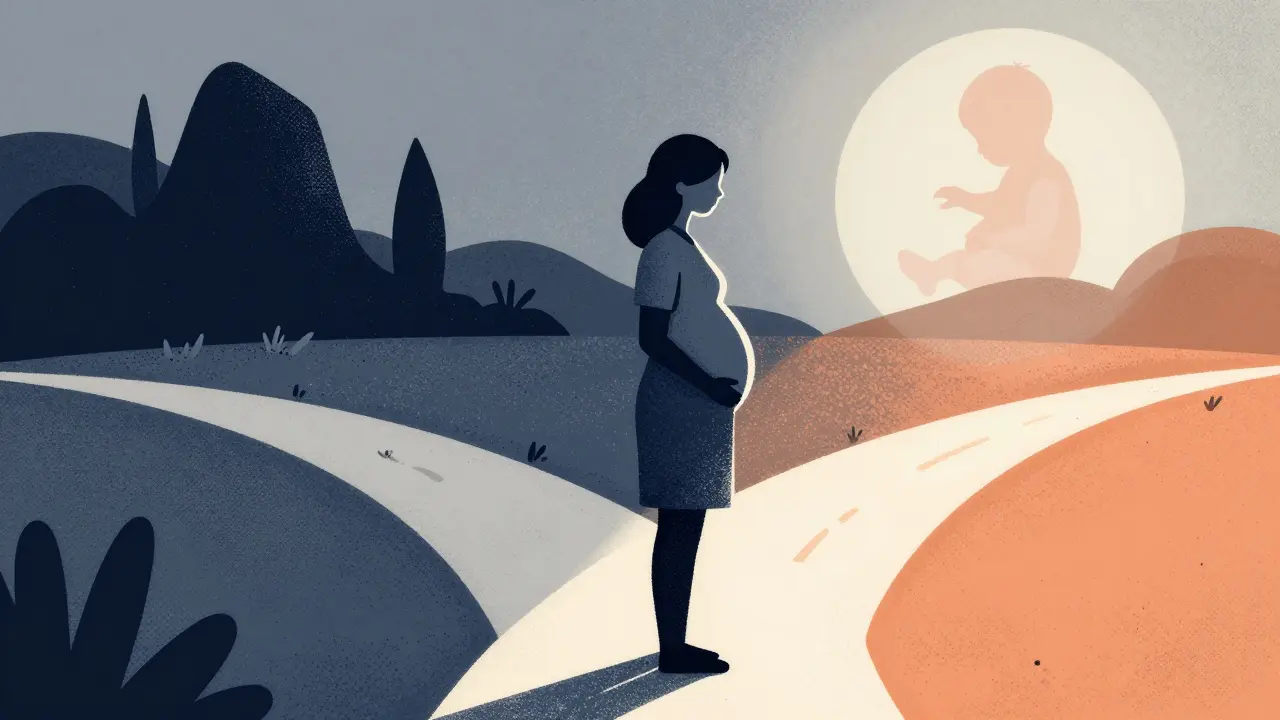
Imagine standing at a crossroads where every path feels risky. On one side is the fear that medication might harm your growing baby. On the other is the heavy weight of untreated depression or anxiety, which can feel impossible to carry alone. If you are pregnant and take Selective Serotonin Reuptake Inhibitors (SSRIs) for mental health, this dilemma is likely keeping you up at night. You want what is best for your child, but you also need to survive and thrive as a mother.
The good news? The medical consensus has shifted significantly in recent years. Major health organizations now agree that for many women, the dangers of stopping medication far outweigh the potential risks of continuing it. This article cuts through the noise to give you clear, evidence-based facts about SSRIs like sertraline (Zoloft), fluoxetine (Prozac), and others, so you can make an informed decision with your doctor.
Why Untreated Depression Is a Serious Risk
We often hear warnings about medications, but we rarely hear enough about the risks of doing nothing. Untreated depression during pregnancy is not just "feeling sad." It is a serious medical condition that affects both you and your baby.
According to data from the Centers for Disease Control and Prevention (CDC), suicide is the leading cause of death related to pregnancy in the United States, accounting for 20% of all pregnancy-related deaths. That is a staggering statistic that highlights why managing mental health is critical.
Beyond immediate safety, untreated depression impacts physical health outcomes. Women with untreated depression are more likely to experience:
- Preterm birth: Occurring in 10.5% of pregnancies compared to 6.8% in non-depressed populations.
- Poor nutrition: Difficulty maintaining a healthy diet due to lack of appetite or energy.
- Substance use: Higher rates of alcohol or drug use as a coping mechanism (25% in untreated vs. 8% in treated groups).
- Impaired bonding: Lower scores on maternal attachment scales, which can affect early infant development.
If you stop your medication abruptly, the risk of relapse skyrockets. A 2022 study published in JAMA Psychiatry found that discontinuing SSRIs leads to a 92% relapse rate, compared to only 21% for those who continue treatment. So, the question isn't really "medication vs. no medication." It is "managed mental health vs. unmanaged crisis."
What Do the Guidelines Say?
In 2023, two major bodies-the American College of Obstetricians and Gynecologists (ACOG) and the Society for Maternal-Fetal Medicine (SMFM)-released joint guidelines on mental health during pregnancy. Their message was clear: robust evidence shows that most SSRIs do not increase the risk of birth defects.
In July 2025, there was some controversy when an FDA advisory panel discussed SSRI risks. However, ACOG President Steven J. Fleischman criticized the panel as "alarmingly unbalanced," noting that only one out of ten experts discussed the benefits of treatment. The SMFM echoed this, stating that available data consistently show SSRI use is not associated with congenital anomalies or long-term developmental problems.
The current standard, updated by the Pregnancy and Lactation Labeling Rule (PLLR) in 2015, requires detailed risk summaries rather than simple letter grades. Most SSRIs now indicate no substantial evidence of increased major congenital malformations based on massive population studies, including a 2020 analysis of 1.8 million births in Nordic countries.
Which Antidepressants Are Safest?
Not all SSRIs are created equal when it comes to pregnancy. Your doctor will likely recommend specific options based on safety profiles and your personal history.
| Medication | Recommendation | Key Considerations |
|---|---|---|
| Sertraline (Zoloft) | First-Line Choice | Lowest risk of Persistent Pulmonary Hypertension of the Newborn (PPHN). Placental transfer rate is ~60-70%. |
| Citalopram (Celexa) | First-Line Choice | Good safety profile; often used if insomnia is a predominant symptom. |
| Escitalopram (Lexapro) | First-Line Choice | Similar safety to citalopram; well-tolerated. |
| Fluoxetine (Prozac) | Second-Line Choice | Long half-life (stays in system longer); useful if missed doses are a concern. |
| Paroxetine (Paxil) | Avoid if Possible | Associated with a 1.5-2.0 fold increased risk of cardiac septal defects in the first trimester. |
Sertraline is generally preferred because it has the lowest association with PPHN, a rare lung condition in newborns. If you were already stable on another SSRI before pregnancy, doctors often recommend staying on it rather than switching, unless it is paroxetine.
Understanding the Specific Risks
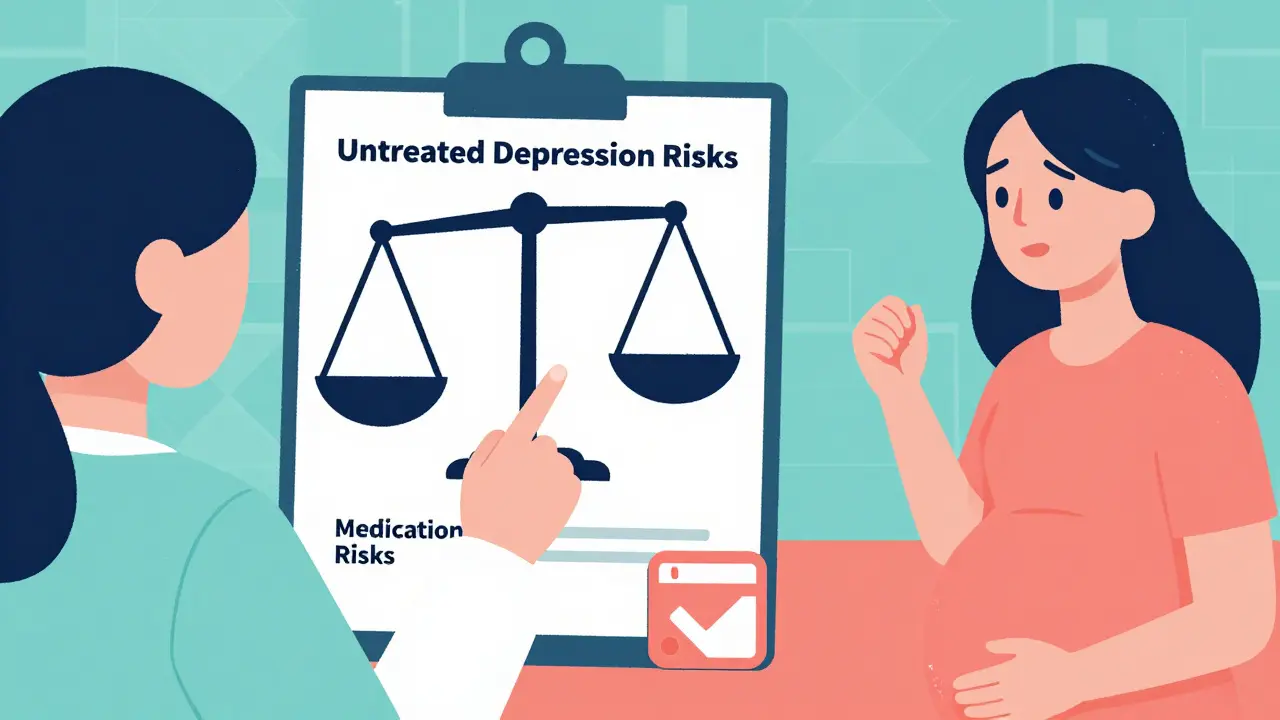
Transparency matters. While the overall risk is low, there are specific outcomes to be aware of. It is important to look at absolute numbers, not just relative percentages, to avoid unnecessary panic.
Persistent Pulmonary Hypertension of the Newborn (PPHN): In the general population, PPHN occurs in 1 to 2 babies per 1,000 live births. With third-trimester SSRI exposure, this rises to 3 to 6 per 1,000. While this sounds like a big jump, the absolute risk remains very low (less than 1%).
Preterm Birth and Low Birth Weight: Studies show preterm birth occurs in 12.5% of SSRI-exposed pregnancies compared to 9.5% in non-exposed depressed women. However, when researchers control for the severity of depression itself, this difference shrinks dramatically. Severe depression alone increases preterm birth risk by 2.2-fold, whereas SSRI treatment increases it by only 1.42-fold. Essentially, the illness poses a greater threat than the medicine.
Neonatal Adaptation Syndrome: About 30% of babies exposed to SSRIs near delivery may experience temporary symptoms like jitteriness, mild respiratory distress, or feeding difficulties. These symptoms usually resolve within two weeks and are managed easily in the hospital. They are not permanent damage.
What About Long-Term Development?
This is the area with the most debate. Some studies, particularly from Columbia University led by Dr. Jay Gingrich, suggested that children exposed to SSRIs in utero had higher rates of depression by age 15 (28% vs. 12%). This sparked significant concern.
However, larger studies that account for genetics and family history tell a different story. A 2021 study in The Lancet found no significant association between SSRI exposure and autism spectrum disorders when familial confounding was adjusted for (OR 1.02, 95% CI 0.95-1.10). The NIH’s 2023 comprehensive review concluded that while mixed evidence exists, the risks of untreated maternal mental illness are far more damaging to child development than the medication itself.
The key takeaway here is that mental health runs in families. If a mother has depression, her child is at higher risk regardless of medication due to genetic and environmental factors. Treating the mother’s health creates a stable environment, which is crucial for healthy development.
Practical Steps for Your Care Plan
If you decide to continue SSRIs, work with your obstetrician and psychiatrist to create a monitoring plan. Here is what that typically looks like:
- Start Low, Go Slow: Doctors often start with the lowest effective dose. For sertraline, this might be 25-50mg daily, titrating up to 150-200mg if needed.
- Regular Monitoring: Expect weekly blood pressure checks after 20 weeks gestation to monitor for gestational hypertension, which is slightly more common in SSRI users (8.5% vs. 6.2%).
- Mood Tracking: Use tools like the PHQ-9 questionnaire regularly to ensure your depression is controlled.
- Birth Plan Communication: Inform your labor and delivery team that you are taking SSRIs. This allows them to monitor your baby closely for neonatal adaptation syndrome immediately after birth.
If you are considering stopping your medication, do not quit cold turkey. Abrupt discontinuation leads to withdrawal symptoms in 73% of women, including dizziness, nausea, and "brain zaps." A safe taper takes 4-6 weeks under medical supervision.
Frequently Asked Questions
Can I switch from Paroxetine to Sertraline if I find out I am pregnant?
Yes, this is a common recommendation. Because paroxetine is associated with a slightly higher risk of heart defects in the first trimester, doctors often suggest switching to sertraline or citalopram. However, this should be done gradually under medical supervision to avoid withdrawal symptoms or a spike in depression.
Will my baby be addicted to the antidepressant?
No, SSRIs do not cause addiction in the way opioids or benzodiazepines do. However, babies may experience "neonatal adaptation syndrome," which involves temporary irritability or feeding issues as their body adjusts to life without the medication. This is not addiction and typically resolves within two weeks.
Is it safer to treat depression with therapy instead of medication?
For mild depression, therapy alone (such as Cognitive Behavioral Therapy) is often recommended as the first step. However, for moderate to severe depression, medication combined with therapy is the most effective treatment. Untreated severe depression poses significant risks to both mother and baby that therapy alone may not fully mitigate quickly enough.
Do SSRIs affect breastfeeding?
Most SSRIs are considered compatible with breastfeeding. Sertraline and paroxetine pass into breast milk in very low amounts. The benefits of breastfeeding and treating maternal depression usually outweigh the minimal exposure risk. Always discuss this with your pediatrician.
What should I do if I feel suicidal thoughts while pregnant?
This is a medical emergency. Call your local emergency number or go to the nearest emergency room immediately. In the US, you can call or text 988 for the Suicide & Crisis Lifeline. Your life and safety are the priority, and help is available 24/7.