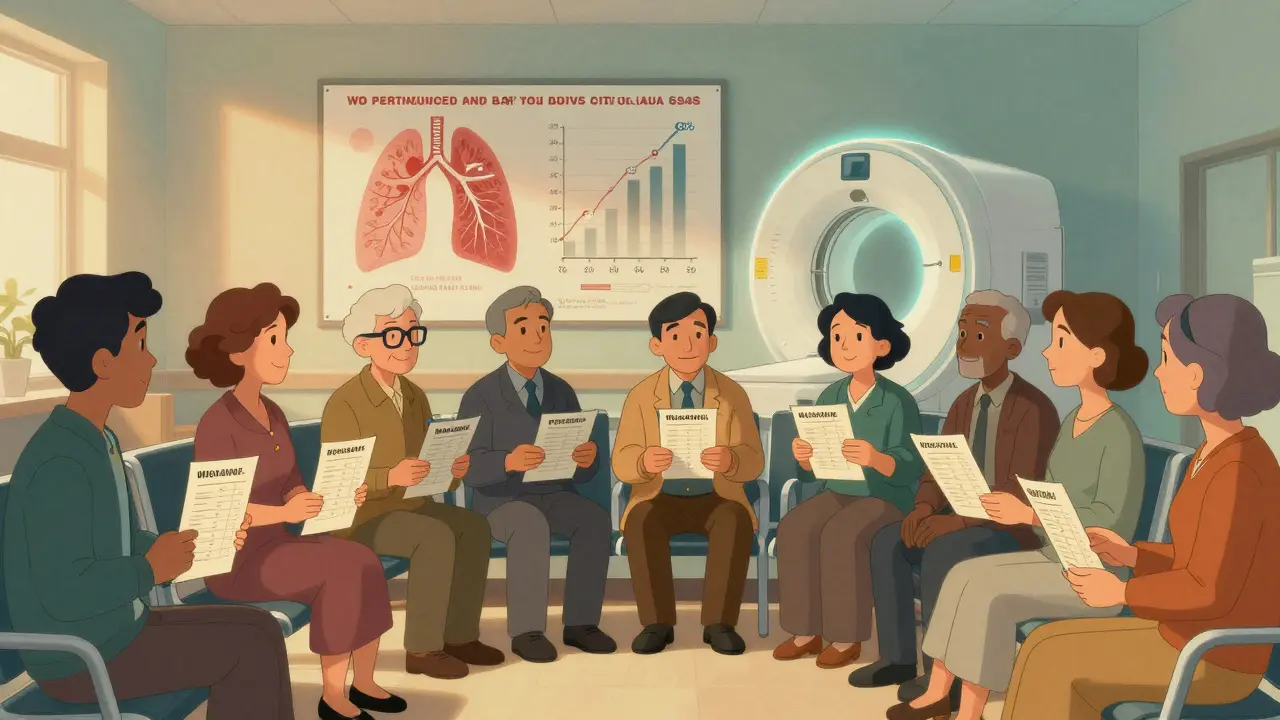
Every year, over 120,000 people in the U.S. die from lung cancer. That’s more than colon, breast, and prostate cancers combined. And the worst part? Most of these deaths happen because the cancer wasn’t caught until it was too late. But here’s the good news: if you catch lung cancer early - before it spreads - your chances of survival jump from 6% to nearly 60%. That’s not a guess. That’s data from the American Lung Association. So why aren’t more people getting screened? The answer isn’t just about access. It’s about who qualifies, how the system works, and what’s changed in the last few years.
Who Should Be Screened? It’s Not Just Longtime Smokers Anymore
For years, lung cancer screening was limited to people over 55 who smoked at least 30 pack-years and had quit within the last 15 years. A pack-year? That’s one pack a day for a year. So 30 pack-years could mean smoking a pack a day for 30 years, or two packs a day for 15. But in 2021 and again in 2023, those rules changed - and dramatically.The U.S. Preventive Services Task Force (USPSTF) updated its guidelines in 2021 to include people as young as 50 with just 20 pack-years of smoking history. Then, in March 2023, the American Cancer Society went even further: they dropped the 15-year quit limit entirely. That means if you smoked 20 pack-years - even if you quit 20 years ago - you still qualify for annual screening. Why? Because research shows your risk doesn’t disappear. A 2022 study in JAMA Oncology found former smokers 15 to 30 years after quitting still had 2.5 times the risk of lung cancer compared to people who never smoked.
That shift matters. Before 2023, about 6.8 million Americans were eligible. After the USPSTF update, that number jumped to 14.5 million. The ACS’s 2023 guidelines could add another 15 million. But here’s the catch: only 18% of those eligible are actually getting screened. In 2021, just 2.6 million people got an LDCT scan. That’s less than one in five. And in rural areas? There are 67% fewer screening centers than in cities. If you live outside a major metro area, finding a facility that does lung screening isn’t easy.
What Is LDCT Screening? And Why It’s Not a Regular Chest X-Ray
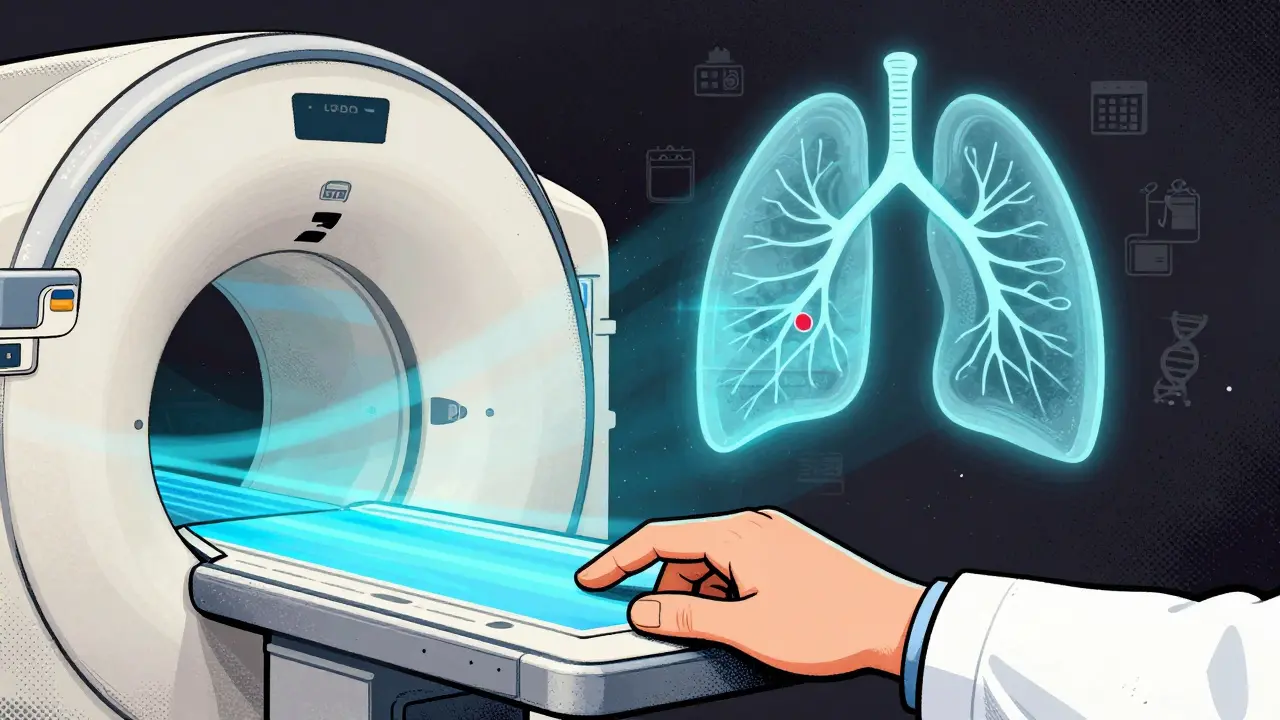
The only proven method to catch lung cancer early is low-dose computed tomography - or LDCT. It’s not a regular X-ray. It’s a specialized CT scan that uses 70-80% less radiation than a standard diagnostic CT. The machine takes dozens of detailed images of your lungs in seconds. No needles. No fasting. No prep. You just lie on a table, hold your breath for 10 seconds, and it’s done.The settings matter. According to the American College of Radiology, a proper LDCT scan uses 120 kVp, 30-50 mAs, and slice thickness between 1.25 and 2.5 mm. These aren’t just technical specs - they’re what make the scan accurate enough to spot a nodule smaller than a grain of rice. Most primary care offices don’t have this equipment. Only 2,800 facilities in the U.S. are accredited by the ACR to do lung screening. And if your scan isn’t done at one of these centers, insurance might not pay for it.
But LDCT isn’t perfect. In the National Lung Screening Trial, 96.4% of positive results turned out to be false alarms. That means for every 100 people told they might have cancer, 96 didn’t. Those false positives lead to more scans, biopsies, and anxiety. That’s why the process now includes a shared decision-making visit - a 15-minute conversation with your doctor about risks, benefits, and whether screening makes sense for you. Medicare and most insurers require this before covering the scan.
The Screening Gap: Why So Few People Are Getting Tested
You’d think with clear guidelines and proven results, screening rates would be high. But they’re not. Only 5.7% of eligible people in the U.S. got screened in 2021. Why? Three big reasons:- Doctors don’t know the rules. A 2022 AMA survey found 42% of primary care doctors didn’t know about the 2021 USPSTF update. Many still think you need 30 pack-years or must have quit within 15 years.
- Patients don’t know they’re eligible. Most people assume lung cancer only affects heavy smokers who still smoke. They don’t realize former smokers are still at risk - even decades after quitting.
- Systems aren’t built for it. Electronic health records rarely flag eligible patients. No pop-up. No reminder. No automated alert. A 2021 study in JAMA Internal Medicine showed that adding automated prompts to EHRs boosted screening rates by 32%.
There’s also a racial gap. Black eligible individuals are 35% less likely to be screened than White eligible individuals. Rural residents are 42% less likely. These aren’t random. They’re the result of unequal access to specialists, transportation, and awareness.
How to Actually Get Screened: A Real-World Step-by-Step
If you think you qualify, here’s how to get it done - without getting lost in the system:- Calculate your pack-years. Multiply the number of packs you smoked per day by the number of years you smoked. Example: 1 pack/day for 25 years = 25 pack-years.
- Check if you meet the criteria. Are you 50-80? Do you have 20+ pack-years? Are you a current smoker or quit within the last 15 years (for USPSTF)? Or quit anytime (for ACS)?
- Ask your doctor. Don’t wait for them to bring it up. Say: “I’ve smoked for X years. Am I eligible for lung cancer screening?”
- Get a shared decision-making visit. This isn’t optional. Medicare and insurers require it. Bring a list of questions. Ask about false positives, radiation, and what happens if something shows up.
- Go to an accredited center. Use the American College of Radiology’s facility finder. If you’re in a rural area, ask if your local hospital has a partnership with a nearby accredited center.
- Get screened annually. One scan isn’t enough. The benefit comes from yearly checks. Missing a year means you lose the early detection advantage.
And if you’re still smoking? That’s the biggest risk factor. But here’s the good news: 70% of current smokers who get screened say they want to quit. Yet only 30% get any help. That’s why the best screening programs now bundle in quit-smoking support - counseling, nicotine patches, prescription meds. Ask for it. Demand it.
Targeted Therapy: When Screening Leads to Better Treatment
Screening doesn’t just find cancer early. It changes what happens next. When cancer is caught at Stage I or II, surgery is often curative. But now, even after surgery, targeted therapies are changing outcomes.Take osimertinib. Approved in late 2020, this drug targets tumors with EGFR gene mutations - a mutation found in about 15% of non-small cell lung cancers. The ADAURA trial, published in The New England Journal of Medicine in 2021, showed that after surgery, patients who took osimertinib for three years had an 83% reduction in the risk of cancer returning. That’s not just survival. That’s long-term remission.
Here’s the game-changer: early-stage cancers found through screening are far more likely to have these targetable mutations than late-stage ones. The International Association for the Study of Lung Cancer predicts that by 2025, 70% of early-stage lung cancers detected through screening will have actionable genetic markers - compared to just 30% in late-stage cases. That means screening isn’t just about finding cancer. It’s about unlocking the right treatment before it spreads.
And it’s getting smarter. AI tools like LungQ, approved by the FDA in January 2023, help radiologists spot nodules faster and reduce false positives by up to 22%. Liquid biopsies - blood tests that detect tumor DNA - are now in phase II trials. One trial (NCT04541082) is testing whether these tests can find cancer mutations before a tumor even shows up on a CT scan. Imagine a future where a simple blood test, combined with your smoking history, tells you whether you need a scan - before you even have symptoms.
What’s Next? The Future of Lung Cancer Screening
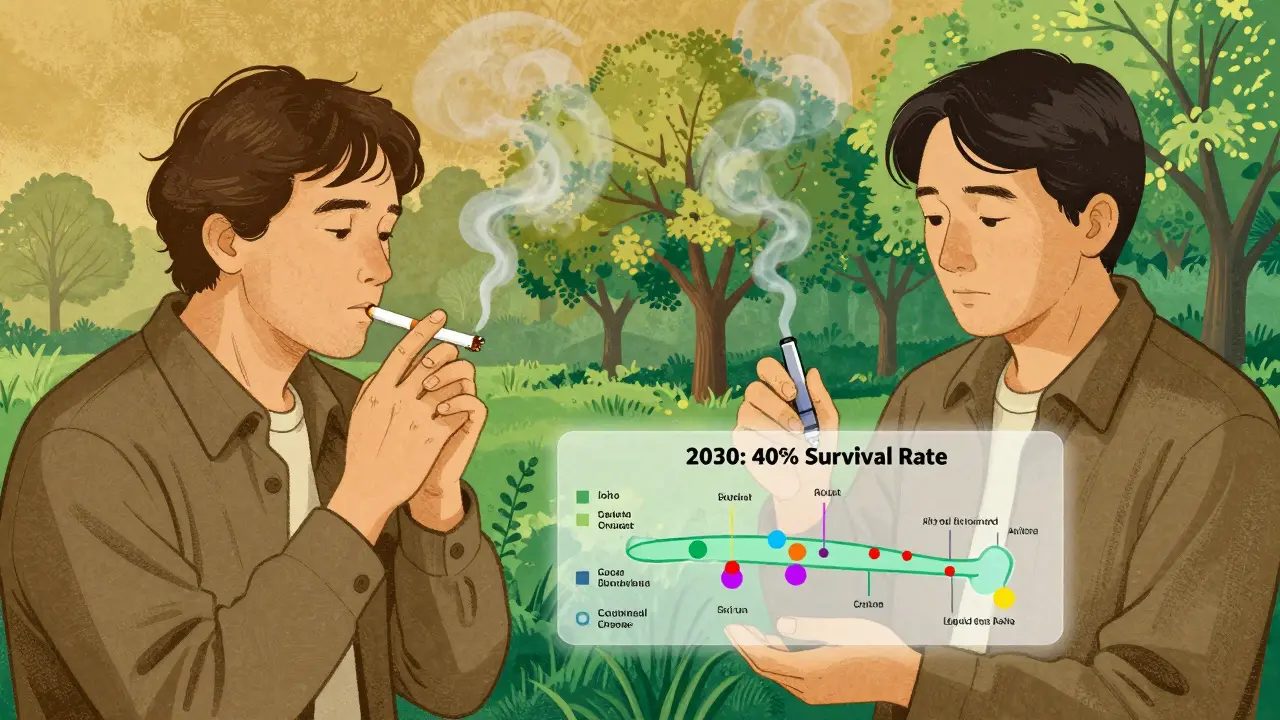
The National Cancer Institute is launching the PACIFIC trial in 2024, tracking 10,000 people to see if combining genetic risk, environmental exposure, and smoking history can better predict who’s most at risk. This could mean screening isn’t just for smokers - it could be for people with family history, radon exposure, or air pollution exposure.By 2030, experts predict lung cancer screening programs will be fully integrated with genomic testing and targeted therapy eligibility. The goal? Raise the overall five-year survival rate from 23% today to over 40%. That’s not a fantasy. It’s the roadmap.
But none of this matters if people don’t get screened. The tools are here. The guidelines are clear. The science is solid. What’s missing is action - from patients, doctors, and systems that still treat lung cancer like it’s a death sentence instead of a preventable disease.
Who qualifies for lung cancer screening in 2026?
As of 2026, eligibility depends on which guideline you follow. The American Cancer Society (ACS) recommends screening for adults aged 50-80 with at least 20 pack-years of smoking history, whether they currently smoke or quit at any time in the past. The U.S. Preventive Services Task Force (USPSTF) guidelines - which most insurers follow - require the same age range and pack-year threshold, but only if you quit smoking within the last 15 years. Medicare covers screening for people aged 50-77 with 20+ pack-years who currently smoke or quit within 15 years. The American Association for Thoracic Surgery allows screening for those aged 55-79 with 30+ pack-years, or 50+ with 20+ pack-years and additional risk factors like family history or radon exposure.
Is lung cancer screening covered by insurance?
Yes, under the Affordable Care Act, private insurers and Medicare must cover annual low-dose CT (LDCT) screening for eligible individuals without a copay or deductible. Medicare covers it for people aged 50-77 with a 20+ pack-year history who currently smoke or quit within the past 15 years. Most private insurers follow the USPSTF 2021 guidelines. However, some older plans may still use outdated rules requiring 30 pack-years or age 55+. Always confirm coverage with your insurer before scheduling.
What if my screening result is abnormal?
Most abnormal findings are not cancer. About 96% of positive LDCT scans turn out to be false alarms - usually benign nodules, scar tissue, or inflammation. The next step is almost always a follow-up scan in 3-6 months to see if the nodule grows. If it does, you may need a biopsy or PET scan. If it doesn’t change, you’ll continue annual screening. A structured follow-up plan is critical. Never ignore an abnormal result, but don’t panic either - most findings are not cancer.
Can I get screened if I never smoked?
Currently, no major U.S. guideline recommends routine screening for never-smokers. But about 20% of lung cancer deaths occur in people who never smoked - often due to radon, air pollution, genetics, or secondhand smoke. Research is ongoing. The upcoming PACIFIC trial (2024) will test whether combining genetic and environmental factors can identify high-risk never-smokers. For now, if you’re a never-smoker with symptoms like a persistent cough, chest pain, or unexplained weight loss, talk to your doctor about diagnostic testing - not screening.
Does quitting smoking reduce my need for screening?
No. Even if you quit 20 years ago, your risk of lung cancer remains elevated. Studies show former smokers have 2.5 times the risk of never-smokers decades after quitting. Screening is still recommended as long as you meet the age and pack-year criteria. In fact, quitting smoking while being screened is one of the best things you can do - it lowers your risk of future cancers and improves your overall health. Screening programs that offer smoking cessation support have higher patient retention and better outcomes.
9 Comments
Melba MillerMarch 8, 2026 AT 13:05
I got screened last year after my sister died of lung cancer at 52. She never smoked. But her dad did. And her mom worked in a factory with asbestos. They told me I don’t qualify because I only smoked 18 pack-years. Bullshit. If you’re alive, you’re at risk. My doctor didn’t even know the 2023 ACS update. I had to print the guidelines and shove them in his face. Now he’s sending me for another scan. Don’t wait for them to catch up. Fight for your life.Katy ShamitzMarch 9, 2026 AT 05:27
I’m so tired of people acting like lung cancer is just a smoker’s disease. My best friend was a never-smoker. Got diagnosed at 48. Radon in her basement. They didn’t even screen her because she ‘didn’t fit the profile.’ Now she’s gone. And you’re telling me we’re still using 15-year quit rules? That’s not medicine. That’s negligence dressed up as policy.Philip MattawashishMarch 10, 2026 AT 05:34
You people are missing the point entirely. Screening isn’t prevention. It’s a band-aid on a hemorrhage. The real issue is that we’ve turned healthcare into a profit-driven lottery. Insurance companies don’t want to pay for LDCTs because they’re expensive. Doctors don’t want to talk about it because it takes 15 minutes they don’t have. And patients? They’re too busy working three jobs to even think about screening. This isn’t about guidelines. It’s about capitalism killing people quietly.Tom SandersMarch 10, 2026 AT 09:09
I’m 53, smoked for 22 years, quit 8 years ago. Never even thought about screening until I saw this post. Just called my doc. He said ‘oh yeah, you’re eligible’ like it was no big deal. Then he hung up. I’m scheduling the scan tomorrow. Why didn’t anyone tell me this before?Jazminn JonesMarch 10, 2026 AT 15:32
The empirical rigor of the current screening protocols is, frankly, anemic. While the USPSTF guidelines represent a marginal improvement over prior iterations, they remain tethered to outdated epidemiological models predicated on binary smoker/non-smoker dichotomies. The exclusion of never-smokers with high environmental exposure indices-particularly those in the Rust Belt and Appalachian regions-is not merely an oversight; it is a systemic epistemic failure. Moreover, the reliance on ACR accreditation as a gatekeeping mechanism for insurance reimbursement perpetuates spatial inequities that are both statistically significant and morally indefensible. A more robust framework would integrate geospatial risk modeling with genomic stratification, thereby enabling precision public health interventions.Stephen RuddMarch 10, 2026 AT 21:53
You know what’s funny? All this talk about screening and targeted therapy. Meanwhile, the same people pushing this are the ones who voted against Medicare expansion and defunded public health clinics. You want to save lives? Fix the damn system. Stop treating cancer like a personal responsibility puzzle. It’s not about whether you smoked 20 or 30 years. It’s about whether you have access to a machine that costs $500. And guess what? In rural Iowa, they don’t even have a CT scanner. So stop preaching. Start fixing.Erica SantosMarch 11, 2026 AT 17:23
Oh wow. So now we’re supposed to be grateful that the system finally caught up to science? Let me guess-the next step is a PSA campaign with a smiling doctor holding a CT machine while background music plays. Meanwhile, the 15 million people who qualify but can’t get to a center because they don’t own a car, can’t take time off, or live 100 miles from the nearest accredited facility? Yeah. That’s the real miracle. The fact that we’re celebrating a 22% reduction in false positives like it’s a breakthrough, while ignoring the 78% who still get terrorized by false alarms… it’s grotesque.George VouMarch 13, 2026 AT 01:59
I heard on a podcast that the government is using lung screening to track people’s DNA. They’re building a database to sell to insurance companies. That’s why they’re pushing it so hard. And why the scan has to be done at ACR centers? Because those are the ones with the secret AI that uploads your genetic code. I know a guy who got screened and then his premiums went up 400% next month. Coincidence? Nah. It’s all connected. Don’t let them scan you.Scott EasterlingMarch 14, 2026 AT 08:17
I’m not saying this isn’t important, but… 96% false positives? That’s insane. You get one scan, you’re terrified for six months, then you get another scan, then another… and you spend $10k in out-of-pocket costs just to find out you’re fine. And the radiation? They say it’s low-dose, but it’s still ionizing radiation. I’ve read studies that say repeated exposure increases cancer risk. So… we’re scanning people to prevent cancer… but the scan itself might cause it? That’s not science. That’s a trap. Who’s really benefiting here? The radiologists? The machine manufacturers? The insurance companies? Not the patients.