
When your child comes home from school with a red, crusty sore on their face, or you wake up with a swollen, painful patch of skin on your leg, it’s easy to assume it’s just a rash or a bug bite. But in many cases, it’s something more serious: a bacterial skin infection. Two of the most common types-impetigo and cellulitis-look different, behave differently, and need completely different treatments. Getting it wrong can mean days of discomfort, unnecessary antibiotics, or even hospitalization.
What Is Impetigo? It’s Not Just a ‘School Sore’
Impetigo is often called a ‘school sore’ because it spreads fast among kids, especially in daycare and elementary school settings. But it’s not harmless. The most common form, nonbullous impetigo, starts as tiny red bumps or blisters, usually around the nose or mouth. Within a day or two, they burst and form a thick, honey-colored crust. It’s unmistakable once you’ve seen it.
It’s caused by bacteria-mostly Staphylococcus aureus, and sometimes a mix with Streptococcus pyogenes. This matters because decades ago, doctors thought it was mostly strep. Now, we know that nearly 95% of cases involve staph, and most of those staph strains make a enzyme called penicillinase that destroys penicillin. That’s why penicillin often doesn’t work anymore. In fact, studies show it fails in about 68% of cases.
Impetigo only affects the top layer of skin-the epidermis. That’s why it’s usually not painful, just itchy and annoying. Kids get it after scratching a cut, bug bite, or eczema patch. The infection spreads easily through touch, towels, or shared toys. In childcare centers, outbreaks can hit 15-20% of exposed children.
What Is Cellulitis? A Deeper Threat
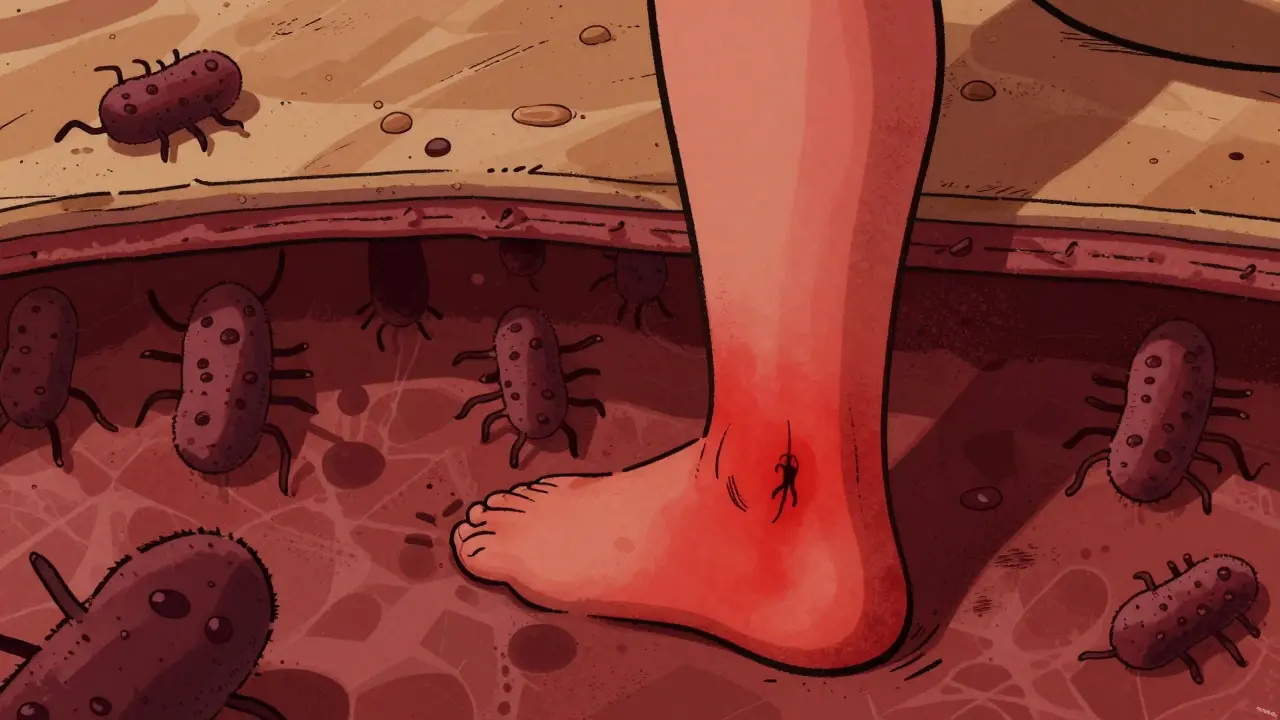
Cellulitis is a whole different beast. It doesn’t just sit on the surface. It burrows into the deeper layers of skin and fat. You’ll know it by the red, swollen, warm, and tender area that keeps spreading. The edges are blurry, not sharp. It often shows up on the lower leg, especially in adults.
While impetigo is mostly staph, cellulitis is usually caused by Streptococcus pyogenes (in 60-80% of cases) or staph (20-30%). It doesn’t spread from person to person. Instead, it starts when bacteria sneak in through a tiny crack-a cut, scrape, athlete’s foot fissure, or even a bug bite. About 65% of cases trace back to minor skin damage.
Unlike impetigo, cellulitis can be dangerous. If it’s not treated, it can lead to bacteremia (bacteria in the blood), sepsis, or worse-necrotizing fasciitis, the rare but deadly “flesh-eating” infection. About 5-9% of people with cellulitis develop bloodstream infections. People with diabetes, obesity, or poor circulation are at highest risk. In fact, diabetes increases your chance of getting cellulitis over threefold.
How Do You Tell Them Apart?
It’s not always easy, but here’s the quick guide:
- Location: Impetigo is mostly on the face-especially around the nose and mouth. Cellulitis is usually on the legs or arms.
- Appearance: Impetigo has crusts. Cellulitis has red, swollen, hot skin without crusts.
- Depth: Impetigo is shallow. Cellulitis goes deep.
- Contagious? Yes, impetigo. No, cellulitis.
- Age group: Impetigo? Kids 2-5. Cellulitis? Adults over 55.
Doctors usually diagnose both by sight. You don’t need a lab test unless the infection doesn’t improve or there’s an outbreak. But if you’re unsure, it’s better to get it checked. A skin infection that looks like cellulitis could be a blood clot or a reaction to a drug-mistakes happen.
Antibiotics: What Works, What Doesn’t
Antibiotics are the go-to treatment, but the wrong one can waste time and fuel resistance.
For impetigo, if it’s mild and limited to a few spots, topical mupirocin (Bactroban) is the first choice. Applied three times a day for five days, it cures 85-95% of cases. Just clean the area with warm soapy water first, gently remove the crusts, then apply the ointment. Kids become non-contagious within 24 hours of starting treatment.
But if the infection is widespread, or if it’s the bullous type (large blisters in babies), you need oral antibiotics. Cephalexin (Keflex) or dicloxacillin are common choices, taken for 7 days. The cure rate is high when used correctly.
Cellulitis? You need systemic antibiotics-pills or IV. For mild cases, cephalexin (500 mg four times a day) or dicloxacillin (same dose) for 5-14 days works well. But here’s the twist: today, over half of community staph infections in the U.S. are methicillin-resistant (CA-MRSA). That means these older antibiotics often fail.
If CA-MRSA is suspected, guidelines now recommend doxycycline (100 mg twice daily) or trimethoprim-sulfamethoxazole (Bactrim) for 7-10 days. These work better against resistant strains, with cure rates of 85-90%. Severe cases? Hospitalization. IV antibiotics like cefazolin are needed.
And don’t forget: antibiotics aren’t magic. Elevation, rest, and pain relief with acetaminophen or ibuprofen help too. Keep the area clean. Monitor for fever, spreading redness, or swelling that gets worse after 48 hours-that’s a red flag.
What About Resistance? It’s Getting Worse
Antibiotic resistance isn’t a future problem. It’s here. In the U.S., 50% of staph skin infections are now MRSA. Globally, 65% of staph strains are resistant to erythromycin, and 45% don’t respond to clindamycin. That’s why using the right drug matters more than ever.
Doctors are shifting away from old-school choices like penicillin or amoxicillin. Even some first-line antibiotics are losing ground. That’s why the CDC and the Infectious Diseases Society of America updated their guidelines in 2022-pushing toward drugs that still work.
And new options are coming. A topical antibiotic called retapamulin (Altabax) showed 94% effectiveness in a 2024 study with over 1,200 kids. It’s not yet widely used, but it’s a sign that better tools are on the horizon.
When to Worry: Red Flags
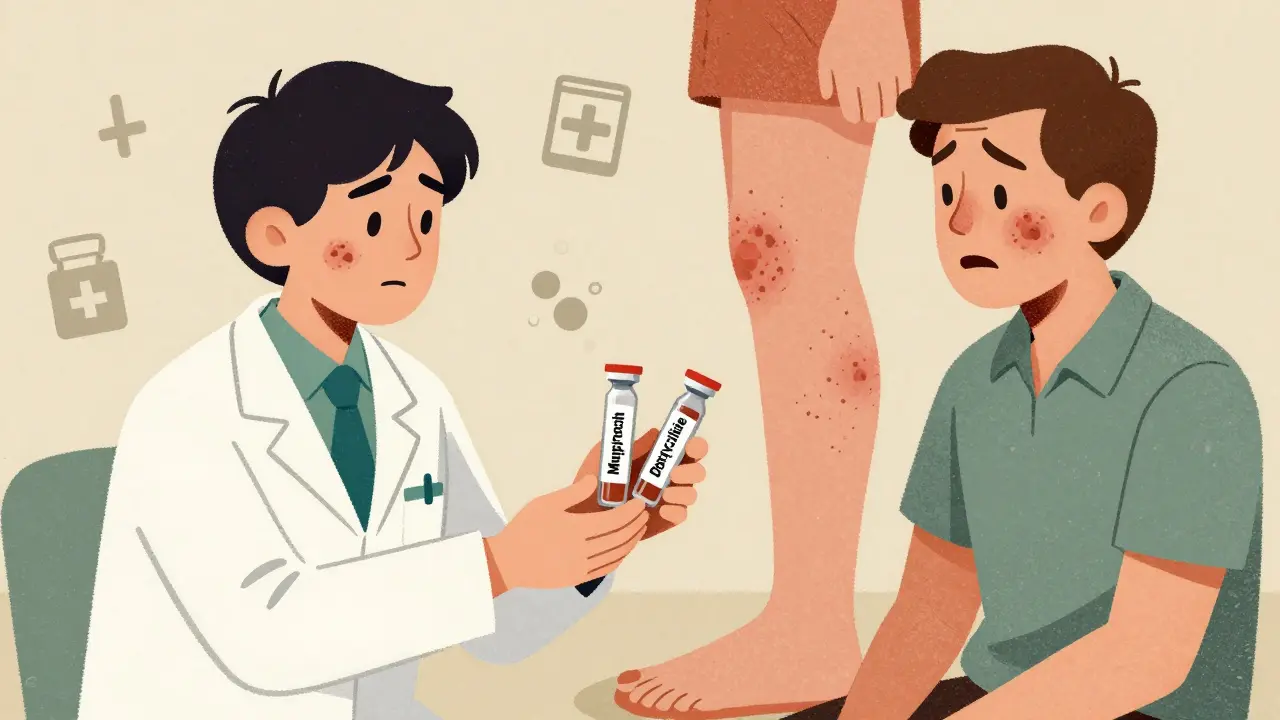
Most impetigo and cellulitis cases are manageable. But some signs mean you need emergency care:
- High fever (over 101°F) with skin that looks burned or peeling off-that’s staphylococcal scalded skin syndrome (SSSS), mostly in babies. Call 911.
- Redness spreading fast-more than 2 cm in 24 hours.
- Pain that gets worse instead of better.
- Swelling in the face, hands, or genitals.
- Chills, confusion, or dizziness.
These aren’t normal. They mean the infection is getting deeper or spreading into the bloodstream. Delaying care can be life-threatening.
Prevention: Stop It Before It Starts
The best treatment is no treatment at all. Here’s how to reduce risk:
- Keep skin clean. Wash cuts and scrapes with soap and water.
- Treat eczema and athlete’s foot early-they create openings for bacteria.
- Avoid sharing towels, clothing, or razors.
- If there’s an outbreak at daycare or school, wash linens daily in hot water.
- Don’t pick at scabs or sores.
During summer months, impetigo peaks. That’s when you need to be extra careful. Kids sweat more, skin gets irritated, and they’re in close contact. A quick wipe with antibacterial soap after playtime can make a big difference.
What Happens After Treatment?
Most people recover fully. Impetigo crusts fade in 7-14 days. Sometimes, the skin looks lighter where the sore was-this fades over weeks. Cellulitis swelling can take days to go down, even after antibiotics start working.
But there’s one rare complication to watch for: post-streptococcal glomerulonephritis. It’s a kidney problem that can happen after strep-related impetigo. It’s rare-only 1-5% of cases-but it can cause swelling, dark urine, and high blood pressure. If your child has these symptoms weeks after the infection clears, see a doctor.
Bottom line: don’t guess. If you see a crusty sore on a child’s face, treat it as impetigo. If you have a hot, swollen leg that’s spreading, treat it like cellulitis. And if you’re unsure, see a doctor-not a search engine.
9 Comments
Charlotte DacreFebruary 16, 2026 AT 11:19
So let me get this straight-we’ve got kids running around with honey-crusted faces like they’re auditioning for a medieval plague documentary, and the solution is a $15 tube of mupirocin? Meanwhile, my GP prescribed amoxicillin like it’s 1997. I swear, medicine moves faster than my Wi-Fi.
Daniel DoverFebruary 17, 2026 AT 05:47
Topical mupirocin works. Just clean it first.
Erica Banatao DarilagFebruary 18, 2026 AT 07:02
I appreciate how thorough this breakdown is. As a nurse, I’ve seen too many parents panic over a rash, only to realize it’s impetigo-simple, treatable, but easily misunderstood. The part about not sharing towels? So important. I always remind families: clean hands, clean linens, no picking. Small steps, huge difference.
Also, thank you for highlighting that cellulitis isn’t contagious. Too many people isolate kids unnecessarily when it’s really just a deeper infection from a tiny cut. Education saves stress-and stigma.
Virginia KimballFebruary 20, 2026 AT 01:46
Yessss this is the kind of post I need in my life! I just had my 4-year-old diagnosed with impetigo last week and I was terrified it was something worse. The honey crust thing? So weird but so telling. We used mupirocin and wow-24 hours later, the contagiousness was gone. My heart stopped when the doc said ‘staph’ but then relaxed when they said ‘topical works 90% of the time.’
Also, the part about eczema being a gateway? YES. We’ve been slathering on ointments like it’s sunscreen now. No more scratching without a barrier. Thank you for the clarity!
Betty KirbyFebruary 20, 2026 AT 11:29
Wow. Just wow. You actually wrote a whole article without saying ‘antibiotics are overused’ like every other blog. Finally. Someone who understands that the problem isn’t antibiotics-it’s using the wrong ones. Penicillin for staph? That’s like using a spoon to dig a tunnel. And don’t even get me started on people who still think ‘natural remedies’ fix cellulitis. No. Just no.
Also, CA-MRSA is not a myth. It’s in gyms, schools, dorms. If you’re treating a skin infection with cephalexin and it’s not improving in 48 hours? Switch. Now. Or your kid’s going to end up in the ER.
Esha PathakFebruary 21, 2026 AT 18:22
Imagine your skin as a castle 🏰 and bacteria as sneaky ninjas 🥷… impetigo is like a broken fence on the outer wall-easy to patch with mupirocin (the castle’s handyman). But cellulitis? That’s the ninjas breaching the inner keep, setting fires, and stealing the crown. You don’t send a peashooter-you deploy the royal guard (doxycycline/Bactrim). And if you ignore it? Well… welcome to necrotizing fasciitis, the dragon 🐉 that eats your leg. Stay vigilant, folks. Skin ain’t just skin-it’s your first line of defense. 🛡️
Kapil VermaFebruary 23, 2026 AT 16:54
Why are Americans so lazy about hygiene? My village in India, we wash every cut with neem water and turmeric paste-no antibiotics needed. But you? You wait till your leg looks like a map of hell and then cry for pills. Pathetic. And you call this ‘modern medicine’? We have centuries of wisdom and you still rely on lab-made chemicals. Shame.
Also, why is everyone so scared of staph? We’ve had it for generations. Cleanliness. Discipline. That’s the cure. Not your $200 ointments.
Michael PageFebruary 24, 2026 AT 03:35
It’s interesting how the epidemiology shifts. Staph dominance in impetigo wasn’t always known. We used to blame strep because it was easier to culture. Now, PCR and genomic sequencing reveal the truth: staph is the silent puppet master. And yet, many clinics still default to penicillin-class drugs out of habit. Resistance isn’t a future threat-it’s the present we’re ignoring. The real tragedy? We’re not teaching this in med school early enough.
Mandeep SinghFebruary 24, 2026 AT 20:28
Let me tell you something-this whole article is 90% common sense wrapped in medical jargon. You don’t need a PhD to know that if your kid has crusty sores around the nose, it’s not a bug bite. And if your leg looks like a tomato that got run over by a truck, you don’t wait till Monday to see the doctor. People are dying because they Google ‘red leg’ and think it’s a sunburn. Meanwhile, the CDC is updating guidelines like we’re still in the Stone Age. And don’t even get me started on how doctors still prescribe amoxicillin like it’s a magic potion. It’s not. It’s a relic. We need to stop treating patients like lab rats and start treating them like humans who need clear, simple, urgent advice. Also, your ‘bottom line’? Too polite. The real bottom line: if you’re unsure, go to urgent care. Not tomorrow. Not after coffee. Now. Because your leg doesn’t care about your schedule.