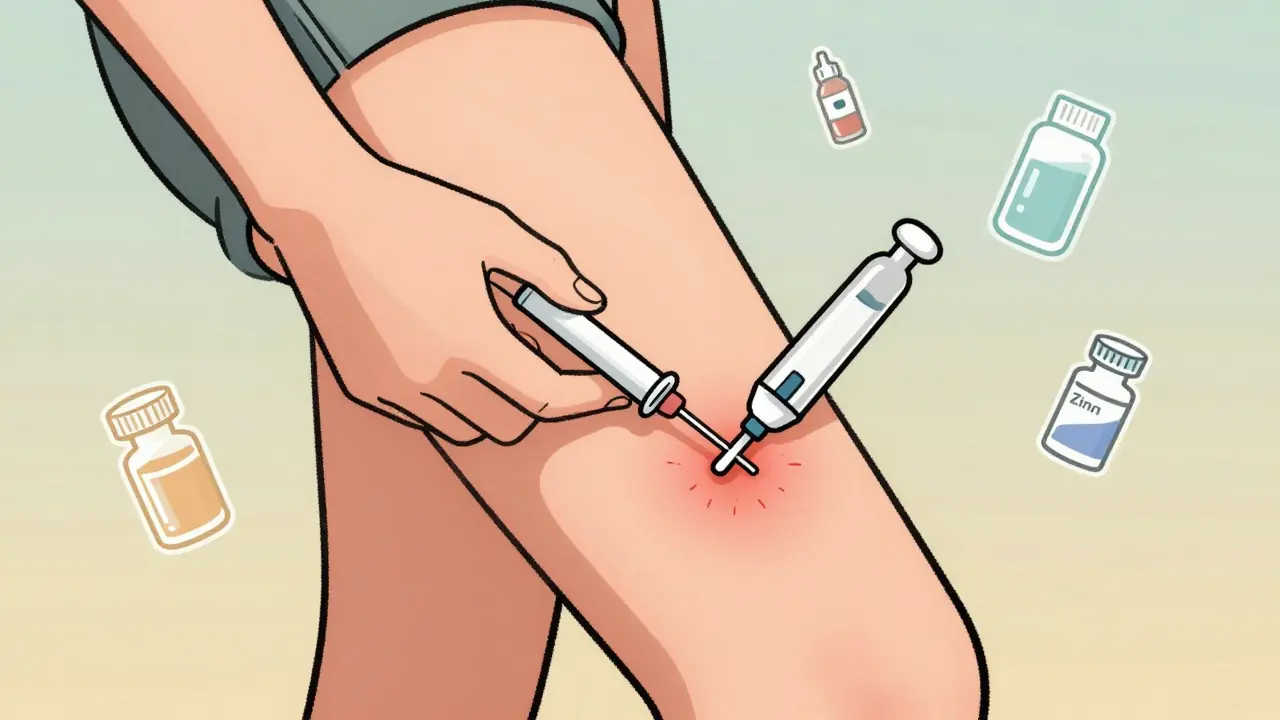
Most people with diabetes rely on insulin to survive. But for a small number, the very thing that keeps them alive can trigger a dangerous reaction. Insulin allergies are rare - affecting about 2.1% of users - but when they happen, they can be confusing, frightening, and even life-threatening. The good news? With the right knowledge, you can recognize the signs early and manage them safely without stopping insulin.
What Does an Insulin Allergy Actually Look Like?
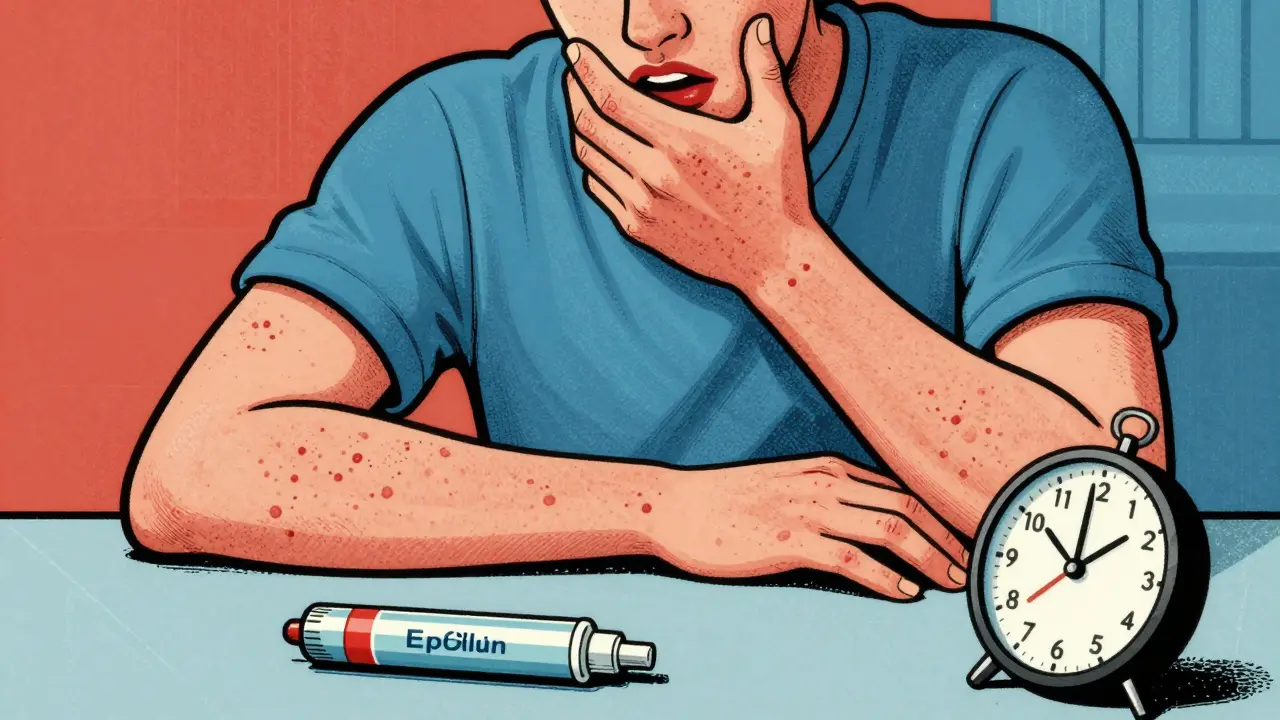
An insulin allergy isn’t like a peanut or pollen allergy. It doesn’t always mean sneezing or hives all over your body. Most reactions are local - meaning they happen right where the needle goes in. You might notice swelling, redness, or itching at the injection site within 30 minutes to 6 hours. These symptoms usually fade within 24 to 48 hours in 85% of cases. But some reactions go deeper. You could develop a tender, rubbery lump under the skin that sticks around for days. That’s not just irritation - it’s your immune system reacting to insulin or one of its additives, like metacresol or zinc. These are preservatives, not the insulin molecule itself. Some insulins, like Humalog, have more metacresol than others, which might explain why one person reacts to a specific brand but not another. Then there are the rare but serious systemic reactions. These happen in less than 0.1% of users, but they demand immediate action. Symptoms include:- Hives or widespread rash
- Swelling of the lips, tongue, or throat
- Difficulty breathing
- Dizziness or sudden drop in blood pressure
- Skin turning pale, blue, or blotchy
Delayed Reactions Are Real - And Often Overlooked
Many people assume if they’ve been using the same insulin for years without issues, they’re safe. That’s not true. Delayed hypersensitivity reactions can show up even after a decade of uneventful use. These aren’t IgE-mediated like immediate reactions. They’re T-cell driven, which means they show up hours or even a day later. Symptoms include:- Joint or muscle pain
- Bruising at the injection site that lasts 1-2 weeks
- Red, inflamed patches that feel warm to the touch
How to Tell It’s an Allergy - Not Just a Side Effect
A lot of insulin side effects look like allergic reactions. Sweating, shaking, anxiety - those are signs of low blood sugar, not an allergy. Nausea or headaches? Could be your body adjusting. But true allergic reactions involve your immune system going into overdrive. Here’s how to tell the difference:- Allergy: Swelling, itching, hives, throat tightness - happens within minutes to hours after injection, regardless of blood sugar.
- Low blood sugar: Shaking, sweating, hunger, confusion - improves after eating or taking glucose.
- Injection irritation: Minor redness that fades in a few hours, no swelling beyond the needle mark.
What to Do If You Suspect an Allergy
Do not stop insulin. That’s the biggest mistake people make. Stopping insulin - even for a day - can lead to diabetic ketoacidosis (DKA), a life-threatening condition. Instead, contact your diabetes team right away. Your doctor will likely refer you to an allergist. Diagnosis isn’t just guessing. It’s testing:- Prick or intradermal skin tests using different insulin types
- Blood tests to measure IgE antibodies specific to insulin or excipients
- Challenge tests under supervision - slowly reintroducing insulin to see what triggers a reaction
How Insulin Allergies Are Treated
There’s no one-size-fits-all fix, but proven strategies exist. For mild, localized reactions: - Use antihistamines like cetirizine or loratadine daily to reduce itching and swelling. - Apply topical calcineurin inhibitors - tacrolimus or pimecrolimus - right after injecting. Reapply 4-6 hours later. This suppresses the immune response locally without steroids. - Rotate injection sites religiously. Don’t reuse the same spot for at least a week. For delayed, persistent reactions: - Topical corticosteroids like flunisolide 0.05% applied immediately and again 4-6 hours after injection can calm inflammation and prevent bruising. - Avoid injecting into areas with previous reactions - even if they look healed. For systemic or severe reactions: - Emergency epinephrine (EpiPen) should be prescribed if you’ve had any signs of anaphylaxis. - Always carry it with you. Know how to use it. Teach someone close to you too. For long-term management: - Switch insulin types: About 70% of people find relief by switching from human insulin to analogs like insulin glargine, detemir, or degludec - or vice versa. Some react to pork-derived insulin but tolerate recombinant human insulin, and others have the opposite reaction. - Desensitization: In a controlled setting, allergists slowly increase insulin doses over days or weeks. This works in about two-thirds of cases, based on clinical studies. It’s not quick, but it’s effective and allows patients to stay on insulin long-term. - Change the formulation: If metacresol is the culprit, switching to an insulin without it (like some newer formulations) can eliminate reactions entirely.When Other Options Are Needed
For people with type 2 diabetes who can’t tolerate any insulin - even after trying multiple types and desensitization - switching to oral medications like metformin, SGLT2 inhibitors, or GLP-1 agonists may be possible. But this isn’t an option for type 1 diabetes. If you have type 1, insulin is non-negotiable. In rare cases, insulin pumps or continuous glucose monitors (CGMs) help. CGMs allow doctors to monitor blood sugar closely during desensitization, reducing the risk of dangerous lows while you build tolerance.
What You Can Do Right Now
If you’ve had a strange reaction after an insulin shot:- Don’t panic. Don’t stop insulin.
- Write down everything: date, time, insulin brand, dose, location of injection, symptoms, how long they lasted.
- Call your diabetes care team - not your GP, not the pharmacist. Your diabetes specialist knows what to look for.
- Ask for a referral to an allergist who has experience with insulin reactions. Not all allergists do.
- Keep your EpiPen accessible if you’ve had breathing trouble or throat swelling in the past.
Why This Matters More Than You Think
Insulin allergies used to be a death sentence for people with type 1 diabetes. In the 1930s, up to 15% of patients had severe reactions to animal insulin. Today, with purified human and analog insulins, that number is under 3%. But the risk hasn’t vanished. The real danger isn’t the allergy itself - it’s the fear that makes people stop taking insulin. That’s what kills. With proper diagnosis and management, nearly everyone with an insulin allergy can continue their treatment safely. The key is acting fast, staying informed, and working with the right team.What’s Next for Insulin Allergy Treatment
Newer insulin formulations are being designed with fewer immunogenic additives. Some are already on the market with reduced metacresol or alternative preservatives. Research is also looking at biomarkers that could predict who’s at risk before they even have a reaction. For now, the best tools we have are awareness, testing, and personalized care. If you’ve had a reaction, you’re not alone. And you’re not out of options. With the right approach, you can keep your insulin therapy - and your life - on track.Can you develop an insulin allergy after years of using it safely?
Yes. Delayed hypersensitivity reactions can appear even after 10 or more years of using the same insulin without problems. These are T-cell mediated, not IgE-mediated, and often show up as joint pain, bruising, or inflamed skin patches days after injection. It’s not a sign that your body is breaking down - it’s your immune system changing how it responds.
Is insulin allergy the same as an insulin side effect?
No. Side effects like shaking, sweating, or nausea are usually caused by low blood sugar or your body adjusting to insulin. Allergic reactions involve your immune system - think swelling, hives, itching, or trouble breathing - and happen regardless of your blood sugar level. If symptoms don’t improve with glucose, it’s likely an allergy.
Can you outgrow an insulin allergy?
Not really. Unlike childhood food allergies, insulin allergies don’t typically fade on their own. But they can be managed. Many people successfully switch insulin types or undergo desensitization therapy to tolerate insulin again. The goal isn’t to outgrow it - it’s to find a way to keep using insulin safely.
Should I carry an EpiPen if I have an insulin allergy?
If you’ve ever had swelling in your throat, trouble breathing, dizziness, or a sudden drop in blood pressure after an insulin shot, yes - you should carry an EpiPen. Even if your reactions have been mild so far, anaphylaxis can escalate quickly. Always have it with you, and make sure someone close to you knows how to use it.
Can switching insulin brands help with an allergy?
Yes - and it’s one of the most effective steps. About 70% of people find relief by switching to a different insulin type or brand. Reactions are often triggered by preservatives like metacresol or zinc, not the insulin molecule itself. Newer analogs like degludec or glulisine may have different additives, making them better tolerated. Work with your doctor to test alternatives.
Is desensitization safe for type 1 diabetes patients?
Yes, and it’s often the best long-term solution. Desensitization involves slowly increasing insulin doses under medical supervision, usually over several days. Studies show it works in two-thirds of patients, allowing them to return to regular insulin therapy. It’s done in a hospital or clinic with monitoring to prevent hypoglycemia or worsening reactions. For type 1 patients, it’s life-changing.
What should I do if I react to insulin while alone?
If you have mild symptoms like itching or redness, call your diabetes team right away. If you have swelling in your throat, trouble breathing, or feel faint - call 999 immediately. Do not wait. Do not try to drive yourself. Emergency responders can give you epinephrine and oxygen on the spot. Always keep your insulin and emergency contact info with you.
13 Comments
LIZETH DE PACHECOJanuary 1, 2026 AT 08:50
I had a weird rash after my Lantus shot last month-thought it was just dry skin. Turns out it was a delayed reaction. Started using pimecrolimus after my endo recommended it, and wow, the redness vanished in 3 days. Don’t ignore those little signs. You’re not overreacting.
Also, rotate sites like your life depends on it. Because it kinda does.
Lee MJanuary 2, 2026 AT 19:36
Let’s be real-this whole ‘insulin allergy’ thing is just Big Pharma’s way of selling you new versions of the same drug. The real issue is that your body’s been poisoned by processed foods for 20 years. Your immune system isn’t allergic to insulin-it’s allergic to your lifestyle.
Stop blaming the medicine and start blaming the system.
Matthew HekmatniazJanuary 3, 2026 AT 06:42
I’ve seen this play out in my clinic. A patient comes in terrified after a rash on her thigh-thinks she’s going to die. Turns out it’s metacresol sensitivity. We switch her to degludec, no more issues. The fear is real, but the solution is often simple.
What matters isn’t the brand-it’s the individual. One size doesn’t fit all, especially when your immune system is involved.
And yes, you can develop this after 15 years. Biology doesn’t care about your routine.
Dusty WeeksJanuary 3, 2026 AT 07:05
bro i got a rash after my last shot and i thought it was just a pimple lmao
then i read this and was like… ohhhhh
so i switched to humalog no metacresol and boom no more itching
also i carry my epipen now even tho i’ve never used it
just in case 😅
Paul OngJanuary 4, 2026 AT 03:24
Don’t stop insulin. That’s the rule. Always.
Write it down. Track it. Talk to your team.
If your skin reacts, it’s not weakness. It’s data.
Switch brands. Try desensitization. Don’t give up.
You’ve got this.
Austin Mac-AnabrabaJanuary 5, 2026 AT 14:50
Let’s cut through the fluff. This article is technically correct, but it ignores the elephant in the room: insulin allergies are a symptom of a broken medical system that pushes synthetic analogs over natural alternatives. The fact that you need a specialist to diagnose something this basic? That’s not progress. That’s negligence.
And why are we still using metacresol in 2024? It’s a known irritant. Why not reformulate? Because profit > patient safety.
Don’t trust your doctor. Trust your body. And question everything.
Phoebe McKenzieJanuary 6, 2026 AT 05:04
HOW ARE PEOPLE STILL DYING FROM THIS?!
YOU’RE TELLING ME SOMEONE CAN GET A RASH AND NOT GET TESTED FOR 5 YEARS?!
IF YOU’RE NOT CARRYING AN EPIPEN, YOU’RE PLAYING RUSSIAN ROULETTE WITH YOUR LIFE.
MY COUSIN DID THIS AND ENDED UP IN ICU. DON’T BE THAT PERSON.
YOU THINK YOU’RE SAFE? YOU’RE NOT.
READ THIS. SAVE YOURSELF.
gerard najeraJanuary 7, 2026 AT 23:53
Immune system changes. Insulin doesn’t.
That’s the gap.
Stephen GikumaJanuary 8, 2026 AT 13:03
Who controls the insulin supply? Who decides what additives go in? Why do we only hear about this now?
Look at the patents. Look at the mergers. Look at the FDA approvals.
This isn’t biology. This is control.
They want you dependent on their exact formula.
Switching brands? That’s not a solution. That’s a distraction.
Real change? It’s not coming from a doctor’s office.
Bobby CollinsJanuary 8, 2026 AT 16:01
ok but what if i told you insulin is actually a government mind control chemical and the allergies are just your body fighting back?
like… why do they make it so hard to find pure insulin?
why do they keep adding weird stuff?
are we being tested?
just saying… i’ve had the same lantus for 8 years and now i get joint pain… coincidince? i think not.
Layla AnnaJanuary 10, 2026 AT 01:28
i’ve been on insulin for 12 years and never had a reaction until last winter
then i got this weird bruise that lasted 3 weeks
thought it was from hitting a vein
but then i read this and realized… oh
my endo didn’t even know about delayed reactions
we’re switching to glargine next week
thank you for writing this
i felt so alone before
sharad vyasJanuary 11, 2026 AT 10:26
in my country, insulin is expensive. We use old types. But if someone gets rash, we use antihistamine and change place. No doctor? No problem. We learn from each other. Your body tells you. Listen.
Insulin saves life. Don’t fear. Adapt.
Bill MedleyJanuary 12, 2026 AT 07:05
It is imperative that individuals experiencing any suspected hypersensitivity reaction to insulin promptly consult with a qualified endocrinologist and allergist-immunologist to initiate appropriate diagnostic evaluation and therapeutic intervention. Delay in diagnosis may result in significant morbidity or mortality.