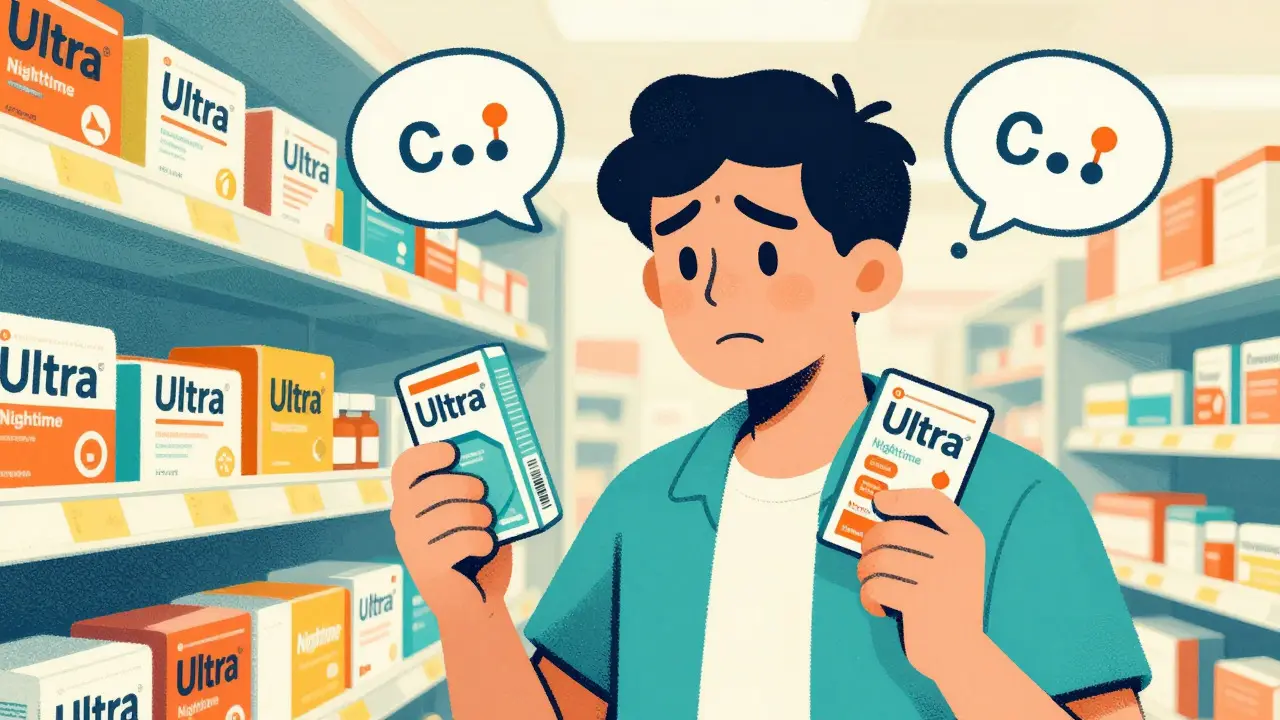
You grab a box of cold medicine because your head is pounding and you can't stop sneezing. You check the front for "Daytime" or "Nighttime," toss it in your cart, and move on. It feels simple enough. But what if that box contains the exact same pain reliever you took an hour ago? What if you just doubled your dose without realizing it?
This isn't a hypothetical scare tactic. According to Dr. Karen Mahoney, Deputy Director of the FDA's Division of Nonprescription Drug Products, 70% of medication errors involving over-the-counter (OTC) drugs happen because shoppers don't check the active ingredients. The result? Accidental overdoses that send people to the emergency room with liver toxicity or other serious side effects.
The problem isn't that the medicines are dangerous when used correctly. The problem is that we've been trained to look at brand names-Tylenol, Advil, NyQuil-instead of the chemical compounds actually doing the work. To shop safely, you need to ignore the flashy packaging and focus entirely on one section of the label: the active ingredient.
What Is an Active Ingredient?
Think of an active ingredient as the engine of the car. The paint job, the radio, and the leather seats are nice (these are the inactive ingredients like flavors, dyes, and fillers), but they don't make the car move. The active ingredient is the specific chemical compound responsible for fixing your headache, clearing your sinuses, or stopping your itch.
In the United States, the Food and Drug Administration (FDA) mandates that every OTC product must display this information clearly. Under the Drug Facts label system, established in 1999, manufacturers must list the generic name of the active ingredient and the exact amount per dose unit.
For example, instead of saying "Pain Reliever #1," the label must say "acetaminophen 325 mg." This standardization was created after studies showed that nearly 80% of consumers couldn't identify active ingredients on older, confusing labels. Today, the goal is transparency. If you know what acetaminophen does, you know exactly what you're taking, regardless of whether the bottle says "Cold & Flu Multi-Symptom Relief" or "Extra Strength Headache Formula."
The Hidden Danger: Duplicate Ingredients
Here is where most shoppers get tripped up. Many people believe that different brand names mean different medicines. They think Tylenol is one thing, and Excedrin is another. In reality, both often contain acetaminophen as their primary active ingredient.
A 2023 survey by Consumer Reports found that only 28% of adults could correctly identify that Aleve contains naproxen sodium, while 63% struggled to identify active ingredients from product names alone. This confusion leads to a common and dangerous mistake: stacking products.
Imagine you have a fever and a sore throat. You take two tablets of Tylenol PM. Then, feeling congested, you drink a cup of TheraFlu Nighttime. You assume these are different treatments. But if you checked the Drug Facts label, you would see that TheraFlu also contains acetaminophen. By combining them, you might have accidentally exceeded the safe daily limit, putting stress on your liver.
Dr. Sarah Vinson, a pediatrician at Nationwide Children's Hospital, emphasizes this point for parents: "Children's Motrin and Children's Zyrtec both come in liquid form but contain completely different active ingredients-ibuprofen versus cetirizine-that treat different symptoms." If you mix them up based on the color of the bottle or the shape of the cap, you aren't treating the right symptom, or worse, you're doubling up on the wrong one.
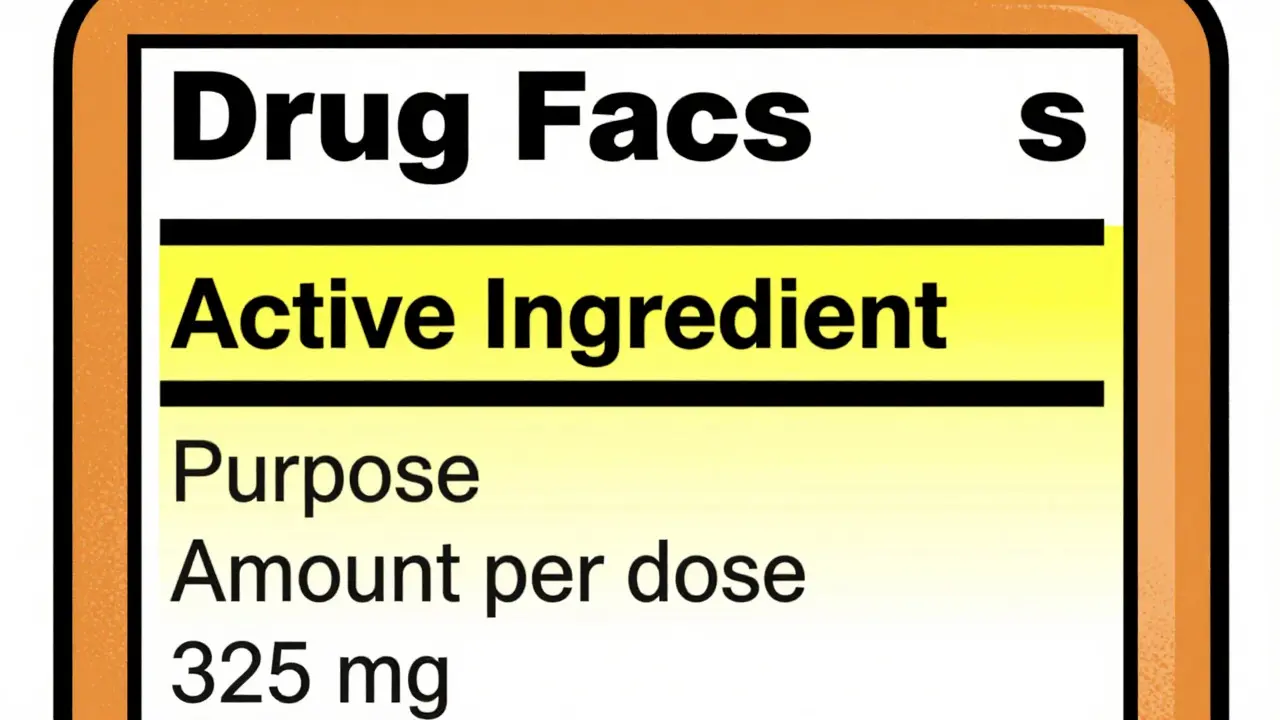
Decoding the Drug Facts Label
To avoid these pitfalls, you need a systematic way to read labels. The FDA recommends a four-step process that takes less than a minute but can save you from a medical error.
- Locate the 'Active Ingredient' section: This is always the first section on the Drug Facts panel. It is separated from the rest of the text by a horizontal line. Do not skip this.
- Verify the ingredient matches your need: Are you looking for a pain reliever? An antihistamine? A decongestant? Check the 'Purpose' column next to the ingredient name.
- Check the amount per dose: Look for the milligram (mg) amount. For example, "diphenhydramine hydrochloride 25 mg." Note that internal medications use milligrams, while topical creams might use percentages (e.g., "clotrimazole 1% w/w").
- Cross-check with other meds: Before buying or taking, ask yourself: "Am I already taking something with this ingredient?"
Nationwide Children's Hospital suggests spending at least 45 seconds examining the label. Their 2022 study showed that this brief pause reduces medication errors by 68% among parents. It’s a small investment of time for a huge return in safety.
Common Active Ingredients You Should Know
You don't need a chemistry degree, but knowing the generic names of a few common ingredients will make you a smarter shopper. Here are the heavy hitters you'll see most often:
| Generic Name | Common Brand Examples | Purpose | Safety Note |
|---|---|---|---|
| Acetaminophen | Tylenol, Excedrin, TheraFlu | Pain relief, Fever reduction | Max 3,000-4,000 mg/day. High doses cause liver damage. |
| Ibuprofen | Advil, Motrin | Pain relief, Inflammation, Fever | Can irritate stomach lining. Take with food. |
| Naproxen Sodium | Aleve | Pain relief, Inflammation | Longer lasting than ibuprofen. Risk of heart issues if overused. |
| Diphenhydramine | Benadryl, ZzzQuil | Allergy relief, Sleep aid | Causes drowsiness. Do not drive after taking. |
| Loratadine/Cetirizine | Claritin/Zyrtec | Allergy relief | Non-drowsy options. Safe for daytime use. |
| Phenylephrine/Pseudoephedrine | Sudafed, various cold meds | Nasal decongestant | Can raise blood pressure. Keep behind pharmacy counter (Sudafed). |
Notice how many cold and flu products contain acetaminophen? That is why checking the label is non-negotiable. If you take a dedicated painkiller and then a multi-symptom cold medicine, you are likely doubling up on acetaminophen.

The Rise of Digital Labels and QR Codes
Reading tiny print on a crinkled box isn't easy for everyone. Recognizing this, the FDA and health organizations are pushing for digital solutions. The American Medical Association recently recommended mandatory QR codes on OTC packaging that link to full digital Drug Facts labels.
Pilot testing showed that scanning these codes improved active ingredient comprehension by 47% among consumers with limited health literacy. By 2026, the FDA proposes requiring all OTC medications to provide scannable QR codes. This won't replace the physical label, but it will give you access to detailed allergen warnings and inactive ingredient lists that are too long to fit on the box.
Until then, you can download the FDA's "Active Ingredient Reference Chart," which lists 35 common ingredients. It was downloaded over 278,000 times in 2022 alone. Keeping a copy in your medicine cabinet is a smart backup plan.
Practical Tips for Safer Shopping
So, how do you put this into practice the next time you're in the pharmacy aisle? Here are three strategies used by pharmacists and safety experts.
- Use the 'Cross-Check' Method: If you buy multiple OTC products, write down the active ingredient from each box before you leave the store. Compare the list. If "acetaminophen" appears twice, put one box back or adjust your dosage carefully.
- Ignore the Marketing: Words like "Ultra," "Maximum Strength," or "Fast-Acting" tell you nothing about the chemical inside. Focus on the milligram count. A "Maximum Strength" version of ibuprofen usually just means 200 mg per tablet, whereas prescription versions can go up to 800 mg. Stick to the OTC limits unless a doctor tells you otherwise.
- Check for Inactive Allergens: While active ingredients treat you, inactive ingredients can hurt you if you have allergies. One user on Drugs.com shared a story of giving their toddler Children's Motrin, not realizing it contained Red Dye #40, which caused severe hives. If you have known allergies, scan the "Inactive Ingredients" section at the bottom of the label.
The U.S. OTC market is worth over $127 billion, with more than 800,000 distinct products. It's easy to feel overwhelmed. But remember, most of those products rely on just 25 common active ingredients. Once you learn those names, the complexity disappears.
Next time you reach for a bottle, pause. Turn it around. Find the Drug Facts panel. Read the first line. That simple habit separates safe self-care from accidental harm.
Why is it dangerous to mix different brands of OTC cold medicine?
Different brands often contain the same active ingredients. For example, many multi-symptom cold medicines contain acetaminophen for pain and fever. If you take a standalone pain reliever like Tylenol and then a cold medicine like TheraFlu, you may exceed the safe daily limit of acetaminophen (4,000 mg for adults), leading to potential liver damage. Always check the "Active Ingredient" section on every box.
Where can I find the active ingredient on an OTC drug label?
The active ingredient is always listed in the very first section of the "Drug Facts" panel on the package. It is separated from the rest of the information by a horizontal line. The FDA requires this standardized format so consumers can easily locate the chemical name and concentration (e.g., "ibuprofen 200 mg") before reading the uses or directions.
What is the difference between active and inactive ingredients?
Active ingredients are the chemicals that produce the therapeutic effect, such as reducing pain or stopping an allergic reaction. Inactive ingredients are substances like colors, flavors, preservatives, and binders that help manufacture the pill or liquid but do not treat your condition. While generally safe, inactive ingredients can sometimes cause allergic reactions in sensitive individuals.
How much acetaminophen is safe to take in a day?
For most healthy adults, the maximum daily dose of acetaminophen is 4,000 mg, though some doctors recommend staying under 3,000 mg for safety. However, this limit includes acetaminophen from ALL sources, including prescription painkillers, cold medicines, and sleep aids. Exceeding this limit can cause severe liver toxicity. Always add up the amounts from every product you take.
Will OTC drug labels change in the future?
Yes. The FDA is moving toward requiring QR codes on OTC packaging by 2026. These codes will link to digital Drug Facts labels that provide more detailed information, including full inactive ingredient lists and allergen warnings. This initiative aims to improve comprehension for consumers with limited health literacy and reduce medication errors.