
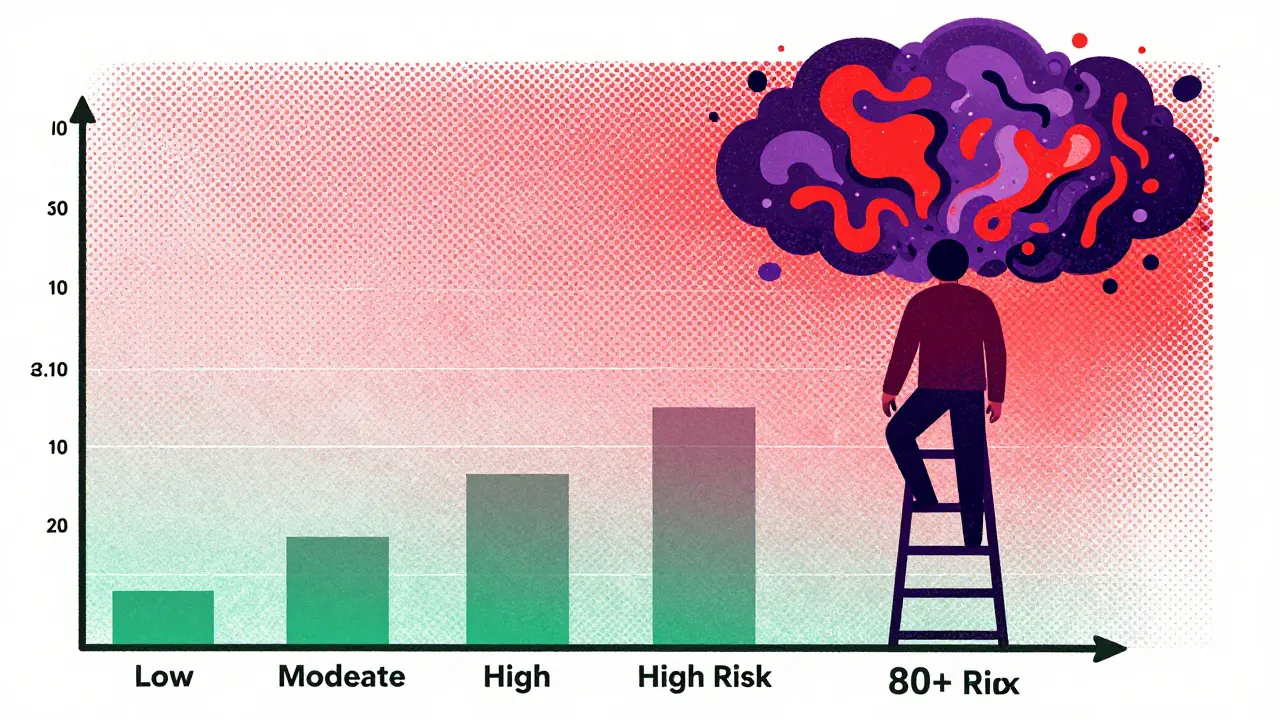
Corticosteroid Psychosis Risk Assessment Tool
< 40 mg
40-80 mg
> 80 mg
Women show higher susceptibility
Older adults have increased vulnerability
Prior bipolar or depression history
Long-term steroid use increases risk
Imagine starting a new medication for a serious inflammatory condition, only to find yourself experiencing intense euphoria one day and deep depression the next. For many patients, this isn't just stress-it's a direct chemical reaction to their treatment. Corticosteroid-induced psychosis is a severe psychiatric adverse effect caused by systemic corticosteroid therapy that can manifest as delusions, hallucinations, or manic behavior. While these drugs are lifesavers for conditions like rheumatoid arthritis and asthma, they carry a hidden risk that affects up to 18% of high-dose users.
You might wonder if your sudden personality shift is 'just in your head.' It’s not. The link between steroids and mental health changes is well-documented, dating back to the late 1940s. Understanding this connection helps you recognize early warning signs before they escalate into a crisis.
The Spectrum of Steroid-Induced Mood Changes
Not everyone who takes steroids will develop full-blown psychosis, but almost everyone experiences some degree of mood alteration. These symptoms exist on a spectrum, ranging from mild irritability to severe cognitive impairment. Recognizing where you fall on this spectrum is crucial for timely intervention.
The most common early signs include:
- Euphoria: Reported in approximately 27.5% of cases, this feels like an uncharacteristic burst of confidence or happiness.
- Insomnia: Affecting 42.3% of patients, sleep disruption often precedes more severe mood swings.
- Mood Swings: Rapid shifts between anger, sadness, and anxiety occur in nearly 39% of users.
- Personality Changes: Friends and family may notice you acting out of character in about 29% of cases.
As the dose increases, so does the severity. Severe depression affects roughly 14.6% of patients, while frank psychosis-characterized by delusions or hallucinations-affects between 5% and 18% of those on high doses. According to DSM-5 diagnostic criteria, these psychotic symptoms must cause significant functional impairment and cannot be explained by pre-existing mental disorders to qualify as corticosteroid-induced.
Dose-Dependent Risk: How Much Is Too Much?
The relationship between steroid dosage and psychiatric risk is linear and predictable. This makes it easier for clinicians to assess danger levels based on your prescription strength.
| Dosage (Prednisone Equivalent) | Risk Level | Estimated Prevalence |
|---|---|---|
| Below 40 mg/day | Low | ~1.3% |
| 40-80 mg/day | Moderate | Increases significantly |
| 80+ mg/day | High | Up to 18.4% |
The primary threshold for increased risk sits at 40 mg of prednisone or its equivalent daily dose. Above this level, the likelihood of experiencing mood disturbances rises sharply. However, individual susceptibility varies. Some patients develop symptoms even at lower doses, particularly if other risk factors are present.
Who Is Most at Risk? Identifying Vulnerable Groups
While anyone can experience steroid-induced psychiatric effects, certain groups face higher probabilities. Knowing your risk profile helps you monitor yourself more closely.
Key risk factors include:
- Female Sex: Multiple studies indicate women are more susceptible to these effects than men.
- Age: Older adults, particularly those over 65, show higher vulnerability due to age-related brain changes.
- Pre-existing Psychiatric Conditions: Individuals with a history of bipolar disorder or major depression are at significantly higher risk.
- Prolonged Therapy: Long-term use increases cumulative exposure and potential for side effects.
Research published in Frontiers in Pharmacology (2025) highlights that prolonged high-dose therapy combined with female sex and older age creates a perfect storm for adverse reactions. If you fit multiple categories here, discuss preventive strategies with your doctor before starting treatment.
Why Do Steroids Affect the Brain? The Pathophysiology
To understand why this happens, we need to look inside the brain. Corticosteroids don’t just reduce inflammation; they interact directly with neural pathways involved in mood regulation.
The leading theory involves the hypothalamo-pituitary-adrenal (HPA) axis, which regulates stress response and cortisol production. When you take external steroids, your body suppresses its natural cortisol output, disrupting this delicate balance. Additionally, steroids impact the hippocampus, the brain region responsible for memory and emotional processing. Studies show deficits in verbal and declarative memory are among the earliest cognitive changes observed.
In animal models, corticosteroids increase tyrosine hydroxylase activity, leading to elevated dopamine levels. Dopamine is a neurotransmitter linked to reward and motivation, but too much can trigger psychotic symptoms. This explains why euphoria often precedes mania or psychosis. Recent research also suggests that these symptoms can persist even after stopping steroids, indicating complex, long-lasting neurological impacts.
Timeline: When Do Symptoms Appear?
Timing matters. You won’t usually see immediate effects upon taking the first pill. Instead, symptoms emerge gradually as drug levels build up in your system.
The median onset time is three to four days after initiating therapy. Early indicators within the first five days include confusion, perplexity, and agitation. These subtle signs are critical red flags. Ignoring them can lead to rapid escalation into full psychosis within weeks. Interestingly, symptoms can also appear after discontinuation, challenging the assumption that stopping the drug instantly resolves issues.

Diagnosis: Ruling Out Other Causes
If you’re experiencing strange thoughts or behaviors, how do you know it’s the steroids and not something else? Diagnosis requires careful exclusion of other causes.
Doctors must rule out organic psychiatric disorders, drug interactions, metabolic disturbances, infections, and neoplasms. As noted by experts, steroid-induced psychosis is primarily a diagnosis of exclusion. This means your medical team will likely order blood tests, imaging, and possibly a psychiatric evaluation to ensure no other underlying condition is driving your symptoms.
Management Strategies: Tapering and Medication
Good news: most cases are reversible. The cornerstone of treatment is adjusting the steroid regimen. According to clinical guidelines, tapering corticosteroids to less than 40 mg/day of prednisone (or 6 mg dexamethasone equivalent) leads to full symptom resolution in 92% of patients.
When tapering isn’t possible due to the underlying disease, pharmacological management becomes necessary. Although no FDA-approved drugs specifically target steroid-induced psychosis, low-dose antipsychotics have shown efficacy in case reports:
- Haloperidol: 0.5 to 1 mg/day
- Olanzapine: 2.5 to 20 mg/day
- Risperidone: 1 to 4 mg/day
Symptoms typically resolve within days to weeks of starting these medications. Lithium has been used for prevention in some cases, but its side effect profile requires careful monitoring and consultation with liaison psychiatry.
Practical Steps for Patients and Caregivers
Navigating this issue requires teamwork. Here’s what you can do right now:
- Monitor Daily: Keep a journal of mood changes, sleep patterns, and unusual thoughts.
- Communicate Early: Report any agitation or confusion to your doctor immediately-don’t wait for a routine check-up.
- Involve Family: Ask loved ones to observe for personality changes you might miss.
- Avoid Alcohol: Mixing steroids with alcohol can worsen mood instability and cognitive impairment.
- Multidisciplinary Care: Ensure your primary care provider coordinates with specialists like rheumatologists or pulmonologists.
Remember, glucocorticoids are the most commonly prescribed anti-inflammatory medications worldwide. With 10 million new oral prescriptions written annually in the US alone, awareness is key to preventing unnecessary suffering.
Can steroid-induced psychosis become permanent?
In most cases, symptoms resolve completely after tapering or discontinuing corticosteroids. However, recent studies note that in some documented cases, manic or psychotic symptoms can persist even after stopping the medication. This suggests complex neurological changes that may require longer-term psychiatric support.
What is the safest alternative to high-dose steroids?
There is no single safe alternative for all conditions. Doctors may consider non-steroidal immunosuppressants like methotrexate or biologics depending on the underlying disease. Always consult your specialist before making changes to avoid flare-ups of your primary condition.
How quickly do symptoms appear after starting steroids?
The median onset is three to four days after initiation. Early signs like insomnia and agitation often appear within the first five days. Full-blown psychosis typically develops within the first few weeks of treatment.
Do topical steroids cause psychiatric side effects?
Topical steroids generally do not cause systemic psychiatric effects because minimal amounts enter the bloodstream. Risks are associated with systemic administration, such as oral pills, injections, or intravenous treatments.
Is there a blood test to predict steroid psychosis?
Currently, no specific biomarker or blood test predicts susceptibility to steroid-induced psychosis. Diagnosis remains clinical, based on symptom observation and exclusion of other causes. Research is ongoing to identify genetic or biochemical markers for future screening.