Coronary artery disease (CAD) isn't just a buzzword in medical journals-it's the leading cause of death worldwide. Every year, more than 13% of all global deaths are tied to ischemic heart disease, according to the World Health Organization. In the U.S. alone, about 18.2 million adults over 20 have it. And yet, many people don’t realize how silently this disease creeps in-often without warning-until it’s too late.
What Exactly Is Atherosclerosis?
Atherosclerosis is the root of coronary artery disease. It’s not a sudden event. It’s a slow, years-long process where fatty deposits-called plaques-build up inside your coronary arteries. These are the blood vessels that deliver oxygen and nutrients to your heart muscle. Over time, these plaques harden and narrow the arteries. But here’s the twist: the most dangerous plaques aren’t always the biggest ones.
Stable plaques can block more than 50% of an artery and cause predictable chest pain during physical exertion. But unstable plaques? They might only block 30% or 40%, yet they’re the ones that rupture without warning. These plaques have a thin outer layer, a large oily core, and are packed with inflammatory cells. When they burst, they trigger blood clots that can completely block an artery-and cause a heart attack.
Think of it like a cracked pipe. A slow leak might be annoying, but a sudden burst? That’s the emergency. That’s why doctors now focus less on just how narrow the artery is, and more on what the plaque is made of.
Who’s at Risk? The Real Culprits
It’s easy to blame genetics, but lifestyle plays the biggest role. The 2023 ACC/AHA guidelines break risk into three clear categories: low (<1% chance of heart attack or death per year), intermediate (1-3%), and high (>3%). About 60% of patients fall into the high-risk group-and they’re responsible for 75% of all major heart events.
Here’s who’s most at risk:
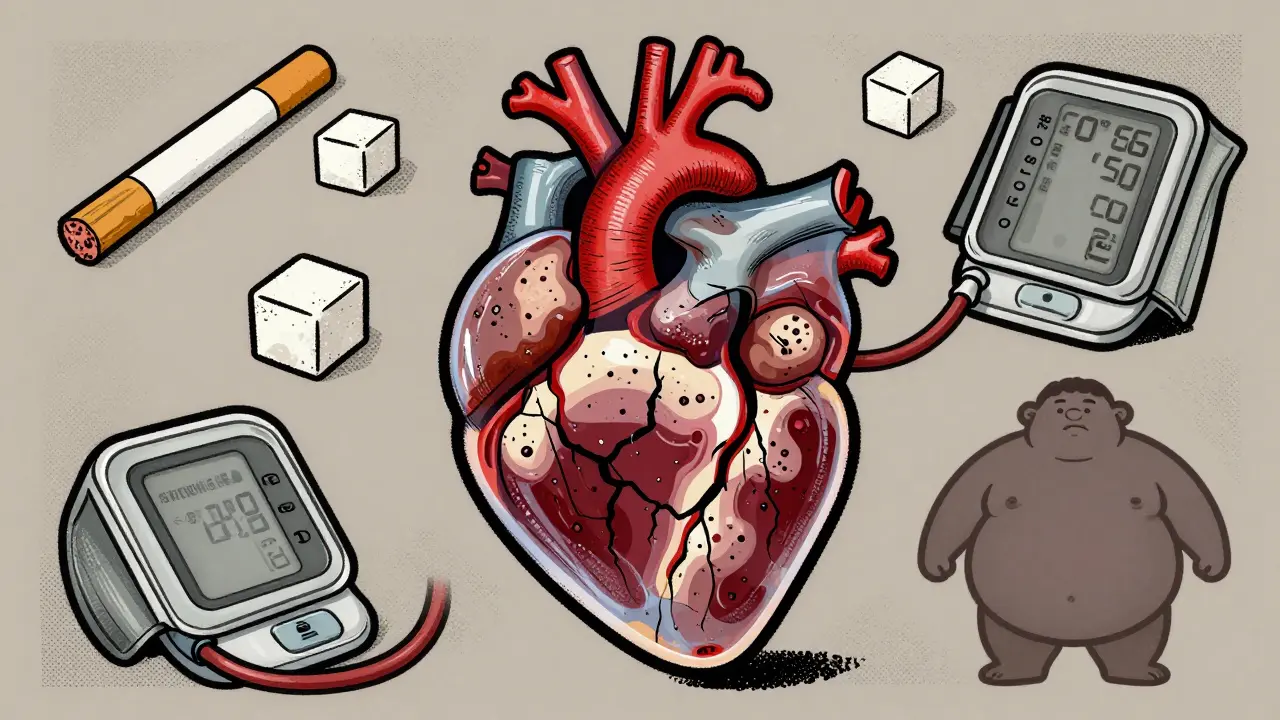
- Smokers-even occasional smoking damages the lining of your arteries, making plaque buildup easier.
- People with diabetes-high blood sugar speeds up artery damage. In fact, having diabetes is as risky as already having had a heart attack.
- Those with high LDL (bad) cholesterol-LDL particles slip into the artery wall, start inflammation, and become the core of plaque.
- People with high blood pressure-constant pressure wears down artery walls, letting plaque in more easily.
- Those with obesity or a sedentary lifestyle-extra weight strains the heart and often comes with insulin resistance and inflammation.
- People with chronic kidney disease-poor kidney function means toxins build up, accelerating artery damage.
And here’s something surprising: you can have a perfectly normal cholesterol number and still be at high risk. Why? Because inflammation, not just cholesterol, drives plaque growth. That’s why doctors now look at markers like C-reactive protein (CRP) alongside traditional tests.
How Is It Diagnosed?
Most people don’t know they have CAD until they have chest pain-or worse, a heart attack. But catching it early changes everything.
Here’s how doctors check:
- Electrocardiogram (ECG)-this simple test records your heart’s electrical activity. It can show signs of past damage or current strain.
- Stress tests-you walk on a treadmill or ride a stationary bike while your heart is monitored. If your arteries are narrowed, your heart won’t get enough oxygen under stress, and the test will show it.
- Coronary angiography-this is the gold standard. A thin tube is threaded into your artery, dye is injected, and X-rays show exactly where blockages are. It’s invasive, but it’s the only way to see the full picture.
- Ankle-Brachial Index (ABI)-this quick test compares blood pressure in your ankle and arm. If the numbers are very different, it often means you have blockages elsewhere, including in your heart.
Some people have INOCA-Ischemia with Non-Obstructive Coronary Arteries. That means their arteries aren’t clogged, but their heart still doesn’t get enough blood. This is often missed, but it’s real-and just as dangerous.
Treatments: Beyond Just Pills
Treatment isn’t one-size-fits-all. It’s layered. You don’t just take a pill and call it done. You change your life.
1. Lifestyle Changes Are Non-Negotiable
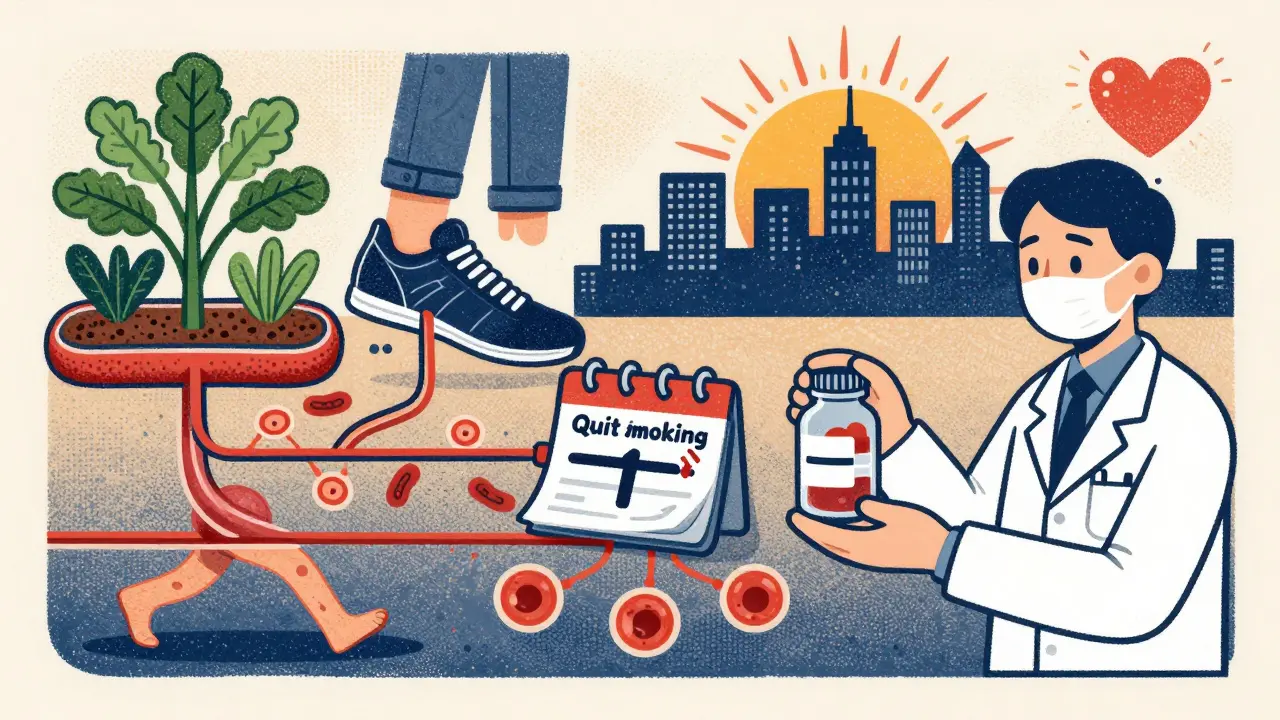
Medications help-but they can’t fix a bad diet or a couch potato lifestyle. The most effective treatment for CAD is a combination of:
- Heart-healthy diet-focus on vegetables, fruits, whole grains, fish, nuts, and olive oil. Cut back on sugar, processed meats, and fried foods.
- Regular exercise-at least 150 minutes a week of moderate activity like brisk walking. It improves blood flow, lowers blood pressure, and reduces inflammation.
- Quitting smoking-your risk drops by half after just one year of quitting.
- Weight management-even losing 5-10% of your body weight can significantly improve cholesterol and blood pressure.
2. Medications
Doctors don’t just throw pills at you. They pick based on your risk level:
- Statins-these lower LDL cholesterol and also stabilize plaques. Even if your LDL is “normal,” statins are often recommended for high-risk patients.
- Aspirin-low-dose aspirin is used to prevent clots, but only if your risk is high enough. For low-risk people, it does more harm than good.
- Beta-blockers-slow your heart rate and lower blood pressure, reducing strain on the heart.
- ACE inhibitors or ARBs-especially helpful if you have high blood pressure, diabetes, or heart failure.
- PCSK9 inhibitors-newer injectable drugs for people who can’t get LDL low enough with statins alone.
3. Procedures
If lifestyle and meds aren’t enough, doctors turn to procedures:
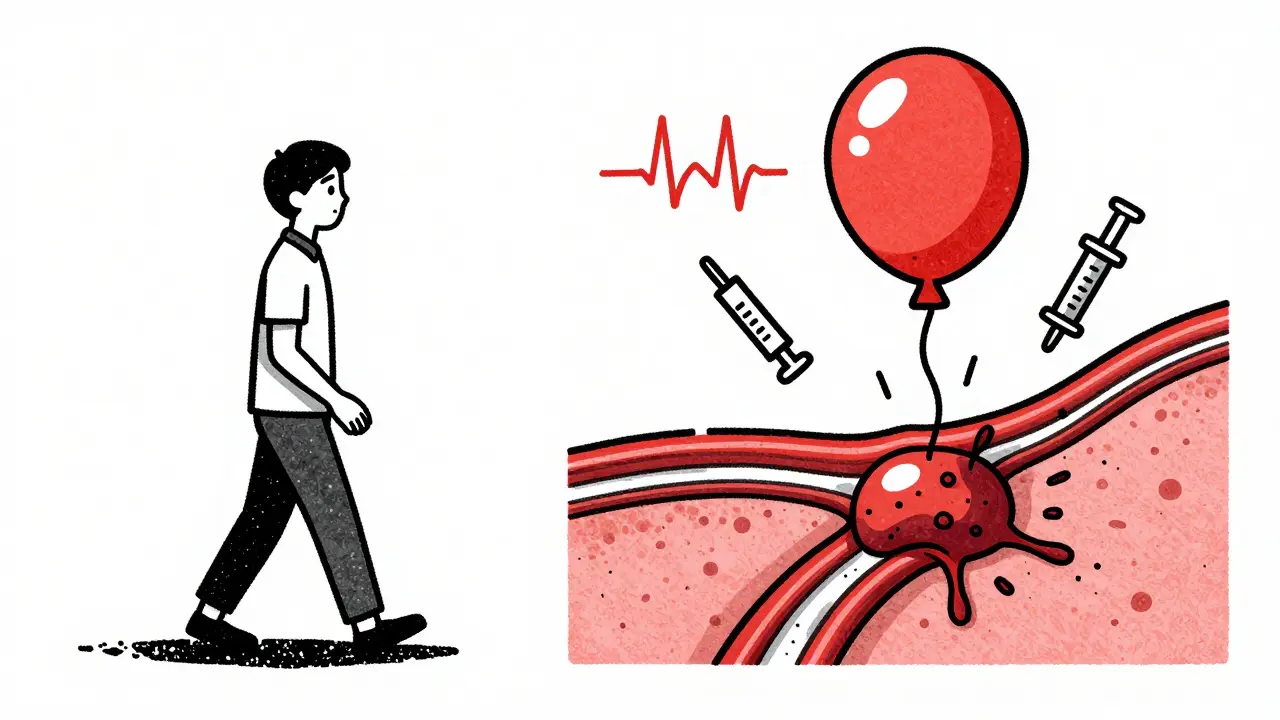
- Percutaneous Coronary Intervention (PCI)-also called angioplasty. A balloon is inflated in the blocked artery, and a metal mesh stent is placed to keep it open. It’s quick, minimally invasive, and often done the same day as diagnosis.
- Coronary Artery Bypass Grafting (CABG)-surgery to create a detour around blocked arteries using a vein or artery from elsewhere in your body. It’s more serious than PCI but often needed if you have multiple blockages or diabetes.
PCI works great for sudden blockages. But for long-term survival, especially in people with diabetes or multiple blockages, CABG often gives better results over 5-10 years.
The New Frontier: Personalized Care
The 2023 guidelines are clear: one size doesn’t fit all. Your treatment must match your risk level.
If you’re low-risk? Focus on diet, exercise, and monitoring. No need for daily aspirin or aggressive statins.
If you’re high-risk? You need more than one drug. You might need a statin, a blood thinner, and a PCSK9 inhibitor. You need regular checkups, not just annual visits.
And here’s something new: cardio-oncology. As more people survive cancer, doctors are seeing that cancer treatments like chemotherapy and radiation can damage the heart. Now, specialists are working together to protect both the heart and the cancer patient. It’s not just about treating CAD-it’s about treating the whole person.
What Happens After Diagnosis?
CAD isn’t cured. It’s managed. Like diabetes or high blood pressure, it’s a lifelong condition. But with the right approach, you can live a full, active life.
Many people think once they have a stent or bypass, they’re “fixed.” They’re not. Without lifestyle changes, plaques can form again. New blockages can appear. Medications must be taken consistently-even if you feel fine.
Regular follow-ups matter. Your doctor will check your cholesterol, blood pressure, kidney function, and inflammation markers. They’ll adjust your meds as needed. And they’ll keep asking: Are you exercising? Are you eating well? Are you still smoking?
The goal isn’t just to avoid a heart attack. It’s to keep your heart strong, your blood flowing, and your life full-for decades to come.
11 Comments
Divya MallickMarch 2, 2026 AT 03:52
Let me tell you something-this whole ‘atherosclerosis is silent’ thing is a myth propagated by Big Pharma to sell statins. In India, we’ve seen generations of elders live to 90 without a single cholesterol test, eating ghee, fried samosas, and smoking bidi cigarettes. The real epidemic? Sedentary urban lifestyles and processed sugar, not LDL. You think a plaque is dangerous? Try living in Delhi with PM2.5 levels that make your lungs feel like sandpaper. The heart doesn’t care about your lab values-it cares about oxygen. And right now, the air is the enemy.
Stop pathologizing normal aging. My grandmother had a 70% blockage and rode her bicycle to market every morning. She didn’t need a PCSK9 inhibitor. She needed clean air. And we’re not getting it.
Also, why is everyone ignoring the fact that inflammation markers like CRP are elevated in EVERY chronic stress condition? PTSD, pollution, sleep deprivation-they all spike CRP. But we blame cholesterol. Convenient, isn’t it?
Stop overmedicalizing survival. The heart is tougher than your algorithm suggests.
Pankaj GuptaMarch 2, 2026 AT 03:58
While the emotional tone of the previous comment is understandable, I must respectfully correct several scientific inaccuracies. Atherosclerosis is not a myth-it is a well-documented, histologically confirmed pathological process. The fact that some populations exhibit resilience despite high-fat diets does not negate the mechanistic role of LDL oxidation, endothelial dysfunction, and inflammatory cascades.
Studies from the PURE trial, for instance, show that while saturated fat intake alone is not strongly predictive of CAD in low-income populations, the combination of high carbohydrate intake, low fiber, and low physical activity creates a perfect storm. This is not a Western phenomenon-it is a global metabolic shift.
Furthermore, air pollution (PM2.5) is now classified by the AHA as a Class A risk factor for CAD, independent of traditional markers. The correlation between respiratory exposure and plaque vulnerability is robust. But correlation ≠ causation. We must still address lipid metabolism, hypertension, and glycemic control. One cannot be dismissed for the other.
Alex BradMarch 3, 2026 AT 20:59
Statin use isn't about fear. It's about data. If you're high risk, the numbers don't lie.Renee JacksonMarch 5, 2026 AT 12:47
Thank you for this meticulously researched and compassionate breakdown. It’s rare to see a medical article that doesn’t reduce human health to a series of checkboxes.
I work with patients who’ve been told, ‘Your numbers are fine,’ only to suffer a heart attack two months later. The truth is, we need to move beyond cholesterol targets and embrace holistic risk assessment-especially for women, diabetics, and those with autoimmune conditions.
And yes-CABG is often the better long-term solution for diabetics with multivessel disease. Too many are pushed toward PCI out of convenience, not clinical superiority.
You’ve given me the language to explain this to my patients with clarity and hope. Grateful for this.
RacRac RachelMarch 6, 2026 AT 04:23
This is the kind of post that makes me want to go for a walk and eat a kale smoothie 😍❤️ Seriously though-thank you for breaking down the science without drowning us in jargon. I showed this to my dad who’s got CAD and he finally got why his doctor won’t just give him aspirin and call it a day. 💪🫀 #HeartHealth #LifestyleOverPillsJane Ryan RyderMarch 7, 2026 AT 21:36
So let me get this straight-you’re telling me the solution to a disease caused by eating food and breathing air is to take more pills and run on a treadmill? Wow. What a revolution. Next you’ll tell me the cure for cancer is yoga and a coupon for organic quinoa. 🙄Callum DuffyMarch 8, 2026 AT 14:24
Thank you for the clarity. The distinction between stable and unstable plaques is particularly insightful. In my clinical practice, I’ve observed that patients who are told their arteries are "only 30% blocked" often underestimate their risk. The emphasis on plaque composition over stenosis is a paradigm shift that needs wider dissemination.
One addition: emerging evidence suggests that periodontal disease may contribute to systemic inflammation and plaque instability. A simple dental check-up may be as critical as a lipid panel.
Levi ViloriaMarch 10, 2026 AT 09:26
As someone who grew up in a culture where heart disease was considered a "Western" problem, this post changed my perspective. My grandfather died of a heart attack at 58. We thought it was stress. Turns out, it was a perfect storm: fried foods daily, no movement, and uncontrolled hypertension because he refused to see a doctor.
What I’ve learned is that CAD doesn’t care about your nationality, religion, or diet tradition. It only cares if your arteries are being slowly eaten from the inside. The solutions aren’t exotic-they’re universal: move more, eat real food, quit smoking, and listen to your body before it screams.
Richard Elric5111March 11, 2026 AT 00:14
One cannot help but contemplate the metaphysical implications of atherosclerosis as a metaphor for societal decay. The arterial plaque-accumulated, calcified, inert-is the physical manifestation of accumulated neglect: of self, of community, of ecological balance. The heart, that most sacred pump, becomes a silent witness to the civilization’s refusal to address its internal corruption.
Modern medicine, in its reductionist pursuit of biomarkers and stents, fails to confront the ontological root: the human disconnection from rhythm, from season, from silence. The stent may open the artery, but does it open the soul?
Perhaps the true treatment is not pharmaceutical, but existential.
Jeff CardMarch 11, 2026 AT 04:13
I’ve been living with CAD for 8 years. Was diagnosed after a minor heart scare at 42. I didn’t believe it at first. Thought I was too young, too active, too healthy.
Turns out, I was eating like a teenager and sleeping like a zombie. The statin scared me at first-then I learned it wasn’t about punishment. It was about protection.
My biggest win? Walking 45 minutes every morning. No phone. Just me, the sunrise, and my heartbeat. I don’t feel "cured." But I feel alive. And that’s more than I ever thought possible.
If you’re reading this and you’re scared-don’t be. Just start small. One walk. One less soda. One less cigarette. You’ve got this.
Matt AlexanderMarch 11, 2026 AT 18:52
If you smoke, quit. If you’re fat, lose weight. If you’re not moving, start walking. It’s that simple. The science is clear. You don’t need a PhD to save your heart.