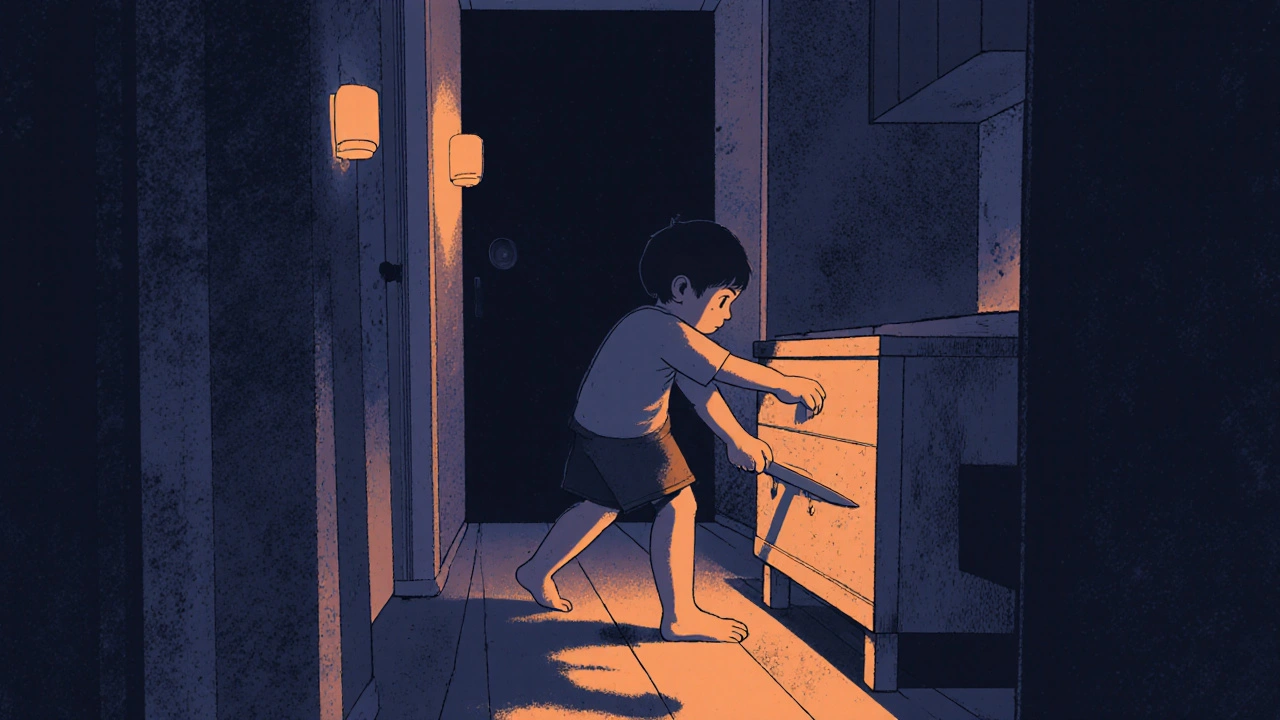
Imagine waking up in the kitchen at 3 a.m., holding a knife, with no memory of how you got there. Or your child screaming in terror, eyes wide open but unresponsive, heart racing, drenched in sweat-then falling back asleep as if nothing happened. These aren’t nightmares. They’re parasomnias: disruptive sleep behaviors that happen during deep sleep, not dreams. Sleepwalking and night terrors are two of the most common, and they’re far more dangerous than most people realize.
What Exactly Are Sleepwalking and Night Terrors?
Sleepwalking (somnambulism) and night terrors (sleep terrors) both happen during deep non-REM sleep, usually within the first two hours after falling asleep. This is when your brain is stuck in slow-wave mode, not dreaming like in REM sleep. That’s why people don’t remember these episodes. About 95% of those who sleepwalk or have night terrors have zero recall the next morning.
Sleepwalking can be anything from sitting up in bed to walking around the house, opening cabinets, or even driving a car. One study found that 15% of children who sleepwalk have done something dangerous during an episode-like leaving the house or trying to use appliances. Night terrors are more about intense fear: screaming, thrashing, rapid heartbeat (up to 140 bpm), sweating, and wide-eyed panic. But unlike nightmares, there’s no story, no dream to recount. It’s pure physiological terror.
These aren’t just odd quirks. They affect 1-15% of children and 1-4% of adults. Kids between 4 and 8 are most at risk, but adults can develop them too-especially if they have sleep apnea, stress, or a family history. And unlike nightmares, which fade with age, untreated parasomnias can persist for years.
Why This Isn’t Just a ‘Phase’
Many parents are told, ‘They’ll grow out of it.’ And yes, 80% of childhood sleepwalking and 90% of night terrors do resolve by adolescence. But waiting isn’t always safe-or smart.
Here’s what you need to know: if episodes happen more than twice a week, involve injury risk, last longer than 10 minutes, or start in adulthood, you’re not dealing with a ‘normal’ phase. Adult-onset parasomnias are often linked to underlying issues: sleep apnea, restless legs syndrome, anxiety, depression, or even neurological conditions like Parkinson’s. The American Academy of Sleep Medicine flags adult-onset cases as red flags requiring urgent evaluation.
One 2023 study found that 30-40% of adults who suddenly start sleepwalking or having night terrors have undiagnosed obstructive sleep apnea. Fixing the apnea often stops the parasomnia. Ignoring it could mean missing something serious.
First Step: Make the Bedroom Safe
Before you try anything else, secure the environment. This isn’t optional-it’s life-saving.
- Lock all windows and exterior doors. Install alarms that sound if someone opens them.
- Remove sharp objects, glass tables, and clutter from near the bed. A 2022 survey found 73% of families had experienced at least one injury during an episode.
- Place the mattress directly on the floor. This reduces fall injuries by 75%.
- Install motion-sensor nightlights so the person doesn’t trip in the dark.
- Keep keys, wallets, and shoes out of reach. People have been known to drive, leave the house, or even attempt to climb out of second-story windows.
Simple fixes cost under $100 and prevent most injuries. One parent in Bristol told me her son sleepwalked every night. After installing a door alarm ($35) and removing all sharp objects, he went from three injuries a month to none. No meds, no therapy-just safety.
Scheduled Awakenings: The Most Effective Behavioral Fix
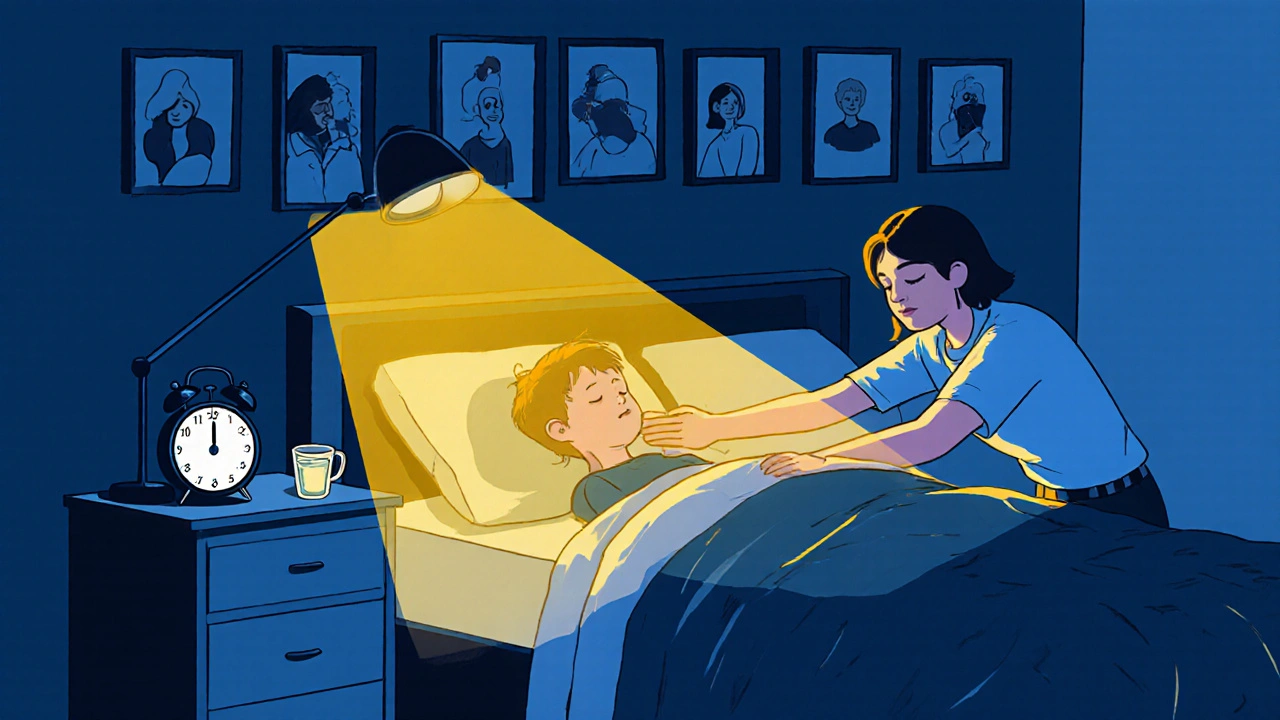
If episodes happen at the same time every night, scheduled awakenings can stop them in their tracks. This isn’t guesswork-it’s science.
Here’s how it works:
- Track episodes for 2 weeks. Note the exact time they usually start.
- Wake the person 15 to 30 minutes before that time. Gently, calmly, no talking.
- Keep them awake for 5 minutes. Let them sit up, drink water, go to the bathroom.
- Let them go back to sleep.
- Do this every night for 7 to 14 days.
Studies show this works 70-80% of the time for sleepwalking. The theory? You interrupt the deep sleep cycle before the brain triggers the episode. It’s like resetting a faulty circuit. One 2022 study in children showed complete resolution after just 10 nights.
It’s not fun to wake someone up every night. But if your child is running into walls or climbing out windows, it’s worth it.
Sleep Extension: The Hidden Key
Most people don’t get enough sleep. And when you’re sleep-deprived, your brain spends more time in deep slow-wave sleep-the exact stage where parasomnias happen.
Dr. Carlos Schenck’s research at the Minnesota Sleep Center found that adding just 30-60 minutes of extra sleep per night reduced episodes by 65% in kids. For adults, going from 6.5 hours to 8 hours made a huge difference.
How to do it:
- Set a consistent bedtime and wake-up time-even on weekends.
- Gradually move bedtime earlier by 15 minutes every few days.
- Avoid screens an hour before bed. Blue light delays melatonin.
- Keep the room cool (60-67°F). Cooler temps promote deeper, more stable sleep.
One man in his 50s, who had weekly night terrors for 3 years, started sleeping 8.5 hours instead of 7.2. Within 8 weeks, the episodes stopped. No pills. Just more sleep.
When to Consider Therapy or Medication
Behavioral changes work for most people. But if episodes are violent, daily, or continue past age 10, you need professional help.
Cognitive Behavioral Therapy for Parasomnias (CBT-P) is the gold standard for adults. It combines sleep hygiene, relaxation training, and mental imagery to retrain the brain. A 2023 trial showed a 50-60% drop in episodes after 6-8 sessions. Apps like Sleepio now offer digital CBT-P, making it accessible without a therapist.
Medication is rare-and only for severe cases. Clonazepam (a benzodiazepine) works in 60-70% of cases but carries risks: drowsiness, dependency, and tolerance in as little as 3 months. Melatonin is safer, with 40-50% effectiveness and no addiction risk. It’s often used in kids.
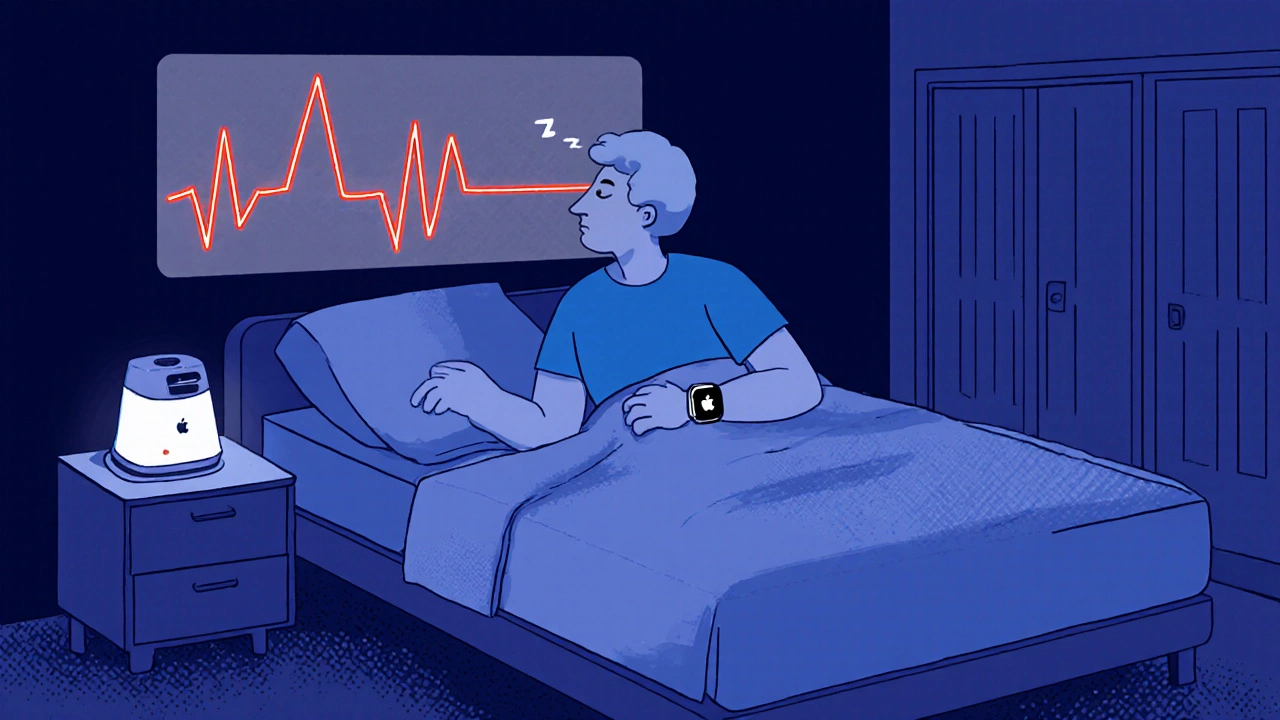
The FDA approved a new device in 2022: Nightware. It’s an Apple Watch app that detects rising heart rate before a night terror starts and gently vibrates to interrupt it. In trials, it cut episodes by 35%. It’s not a cure, but it’s a breakthrough for people who can’t tolerate drugs.
What Doesn’t Work (And Why)
Don’t waste time on these myths:
- Waking someone during an episode-It rarely works. They’re in deep sleep. You might get a violent reaction or confusion that lasts 15+ minutes.
- Scaring them-Shouting or splashing water increases trauma. They’re not awake. They’re not in control.
- ‘Just ignore it’-Especially in adults. Ignoring adult-onset parasomnias can delay diagnosis of sleep apnea or neurological disease.
- Herbal remedies-Chamomile, valerian, lavender? They help with sleep onset, not deep-sleep parasomnias.
One man in his 40s tried every supplement and meditation app. His night terrors kept happening. He finally got a sleep study and found severe sleep apnea. After using a CPAP machine, the terrors vanished.
When to See a Sleep Specialist
You don’t need to wait for disaster. Go to a sleep specialist if:
- Episodes happen more than twice a week
- There’s injury risk (falls, wandering, violence)
- Confusion lasts longer than 15 minutes after waking
- It starts in adulthood
- It’s linked to snoring, gasping, or leg movements
Polysomnography (an overnight sleep study) is the only way to confirm parasomnias and rule out other disorders. Insurance often covers it if symptoms are frequent or dangerous.
Most sleep centers now offer parasomnia-specific clinics. In the UK, NHS sleep services can refer you. Private clinics like the Bristol Sleep Centre also specialize in this.
Long-Term Outlook
For kids: 90% outgrow it. For adults: it’s manageable. With the right approach, 60-70% of cases see major improvement.
The biggest mistake? Treating it as a behavioral problem instead of a neurological one. This isn’t about discipline. It’s about sleep architecture. You’re not failing as a parent or a patient-you’re just caught in a glitch of the brain’s sleep cycle.
What works? Safety first. Sleep longer. Wake up early. Get help if needed. Don’t wait for someone to get hurt.
Parasomnias are rare, but they’re real. And they’re treatable. You don’t need to live in fear of the night.
14 Comments
Matthew HigginsNovember 30, 2025 AT 09:24
Been there. My cousin sleepwalked for years-once tried to cook pancakes at 2 a.m. with a lighter. We installed door alarms, moved the mattress to the floor, and started scheduled awakenings. No meds. Just safety and consistency. Life changed. Seriously, if you’re reading this and your kid’s running into walls-do the cheap stuff first. It works.
Also, sleep extension? Game changer. My buddy went from 6 hours to 8.5. Night terrors vanished. No joke.
Jennifer WangDecember 2, 2025 AT 00:49
As a sleep technician, I’ve seen hundreds of polysomnograms involving parasomnias. The data is unequivocal: adult-onset sleepwalking or night terrors should trigger an immediate sleep apnea workup. Over 30% of these cases are undiagnosed OSA. CPAP therapy resolves the parasomnia in nearly 70% of those cases. This is not a behavioral issue-it’s a physiological one. Please prioritize diagnostic testing before attempting behavioral interventions.
Richard ThomasDecember 2, 2025 AT 18:15
The assertion that herbal remedies are ineffective is both reductive and empirically unsound. While chamomile and valerian root may not modulate deep non-REM sleep architecture directly, their influence on GABAergic pathways and pre-sleep anxiety reduction can indirectly mitigate parasomnias by improving sleep continuity and reducing sleep fragmentation. The study cited lacks methodological rigor in dismissing these modalities outright. Furthermore, the recommendation to use melatonin without addressing circadian misalignment is clinically premature. A properly timed melatonin protocol, aligned with dim-light melatonin onset, demonstrates superior efficacy in pediatric populations when combined with chronobiological intervention.
Mary Kate PowersDecember 3, 2025 AT 19:48
This is exactly the kind of practical, science-backed advice we need more of. So many people panic or feel guilty when their kid sleepwalks, but the truth is-it’s not their fault. It’s biology. The safety tips alone could save a life. I’m sharing this with every parent I know. And scheduled awakenings? My niece tried it and hasn’t had an episode in 4 months. No meds, no drama. Just a little routine and a lot of love. You’re doing good work.
Brandy JohnsonDecember 5, 2025 AT 00:54
It is both alarming and indicative of cultural decline that so many Americans treat life-threatening neurological phenomena as mere inconveniences to be solved with $35 alarms and ‘sleep extension.’ The normalization of chronic sleep deprivation in this nation has created a generation of vulnerable individuals whose brains are literally malfunctioning due to systemic neglect of basic biological needs. The fact that you recommend ‘more sleep’ as a primary intervention-rather than demanding structural reform of work hours, school schedules, and screen culture-reveals a profound failure of civic responsibility. This is not a personal issue. It is a national emergency.
Sara ShumakerDecember 5, 2025 AT 22:30
There’s something deeply human about this. We’ve all heard the myth that sleep is just downtime. But parasomnias reveal how fragile our consciousness is-that the same brain that writes poetry, loves deeply, and solves equations can, in a single moment, become a stranger to itself. These aren’t ‘episodes’ to be fixed. They’re whispers from a part of us that’s been pushed too far. Maybe the real question isn’t how to stop them-but why we let ourselves get so exhausted in the first place. What are we running from when we refuse to rest?
Latika GuptaDecember 6, 2025 AT 19:02
I had night terrors as a child in India. My mom would sit beside me, humming a lullaby until I calmed down. We never told anyone. No alarms, no sleep studies. Just presence. I never thought it was medical-just something that happened. But reading this, I realize maybe it was. Maybe I needed help. I wish I’d known then. I hope parents today don’t wait like we did.
Robert BashawDecember 7, 2025 AT 02:07
Bro. I woke up in my neighbor’s yard last winter holding a spatula and wearing only one sock. I didn’t even know I owned a spatula. My wife said I was trying to ‘defend the garden from the raccoons.’ Turns out I had sleep apnea so bad my oxygen dipped to 78%. Got a CPAP. Three weeks later, I slept like a baby. No more midnight kitchen raids. No more confused neighbors. Just peace. And yes, I still have the spatula. It’s now a trophy.
jamie siglerDecember 8, 2025 AT 13:16
Ugh. Another ‘sleep hack’ article. I’ve read 17 of these this month. All the same stuff. Scheduled awakenings? Really? That’s your big idea? I’ve been sleepwalking since I was 6. I’ve tried everything. It’s not about alarms or melatonin. It’s about trauma. It’s about your brain screaming because you’ve ignored it for too long. But sure, let’s just slap a nightlight on the wall and call it a day.
Scott CollardDecember 9, 2025 AT 13:08
Clonazepam is dangerous. Melatonin is not a cure. And that Nightware app? A gimmick. Real solutions require professional diagnosis, not DIY fixes from Reddit. If you’re having frequent episodes, you need a sleep specialist-not a blog post. Stop self-diagnosing. Get tested. Your life depends on it.
Andrew KehDecember 10, 2025 AT 21:11
Thank you for writing this. I’ve been afraid to talk about my sleepwalking because people think I’m crazy. But reading this made me feel seen. I’m 32 and started having episodes after my dad passed. I didn’t realize stress could trigger this. I’m scheduling a sleep study next week. You’re right-it’s not about discipline. It’s about the brain. And it’s okay to ask for help.
Peter AxelbergDecember 11, 2025 AT 13:25
Just wanted to add: the ‘sleep extension’ advice is gold. I used to think ‘I just need 6 hours’ was a badge of honor. Turns out it was a death sentence for my brain. I started going to bed at 10:30 instead of midnight. No phone after 9. Room at 65°F. Within three weeks, my night terrors dropped from 4x a week to once a month. And I have more energy. Who knew sleeping more was the secret to not being a zombie?
Monica LindseyDecember 11, 2025 AT 21:35
Anyone who recommends melatonin for adults is giving bad advice. It’s not FDA-approved for this. And ‘scheduled awakenings’? That’s just sleep disruption disguised as therapy. Real treatment requires psychiatric evaluation, not bedtime routines. You’re enabling denial.
Steven HowellDecember 12, 2025 AT 18:05
As someone who has worked in sleep medicine for over two decades, I can confirm the effectiveness of the interventions outlined here. The emphasis on environmental safety, scheduled awakenings, and sleep extension aligns with clinical guidelines from the AASM and the European Sleep Research Society. The avoidance of pharmacological intervention as a first-line approach is not only prudent-it is evidence-based. The inclusion of the Nightware device as an adjunctive tool reflects the growing integration of wearable neurotechnology into clinical practice. This is a model of responsible, accessible, and compassionate care.