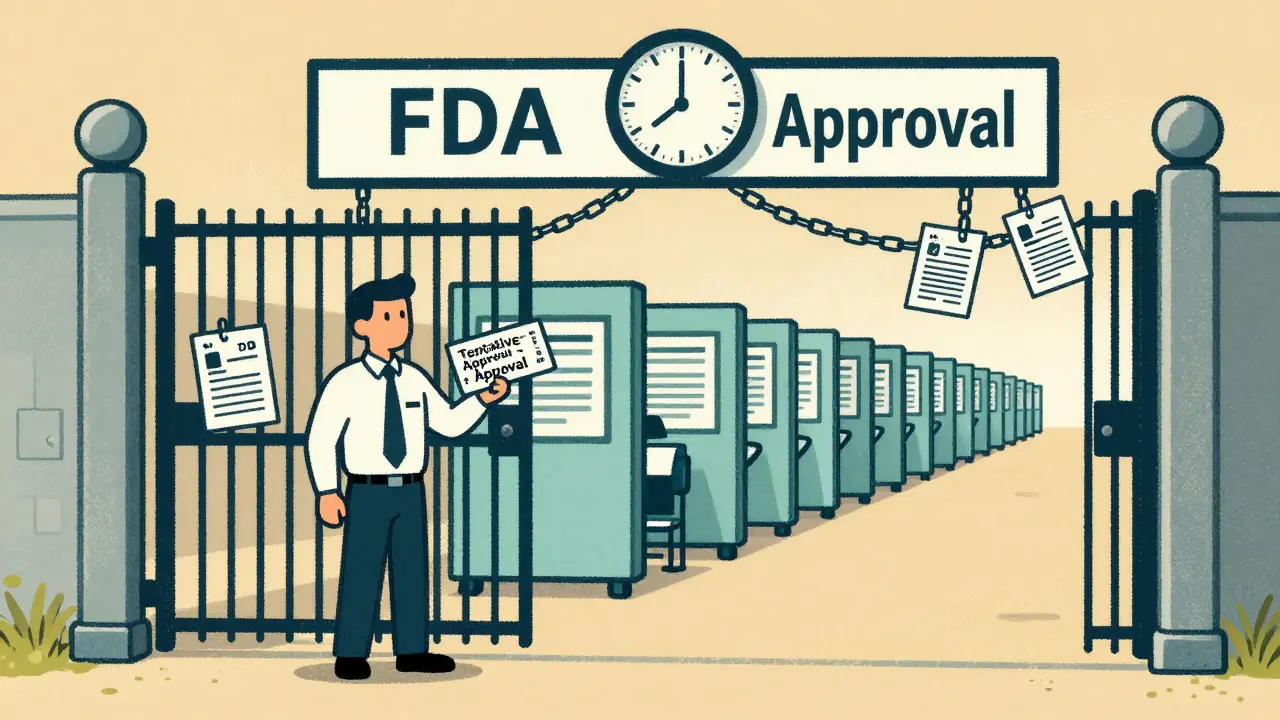
When a generic drug company gets a letter from the FDA saying their application is tentatively approved, it’s not a celebration-it’s the start of a long, high-stakes wait. This isn’t final approval. It doesn’t let them sell the drug. But it does mean they’ve passed every scientific test the FDA can throw at them. The only thing holding them back? Patents. And litigation. And timing.
What Tentative Approval Really Means
Tentative approval is a regulatory limbo. The FDA has reviewed the generic drug’s chemistry, manufacturing, and labeling. It’s found no flaws. The product is ready. But the brand-name drug still has patents or exclusivity protections in place. So the FDA can’t give final approval-not yet.
This system was created by the Hatch-Waxman Act of 1984. It was designed to balance two things: letting drug companies protect their innovation for a while, and letting generics enter the market as soon as those protections expire. Without tentative approval, generic makers would have to wait until the last patent expired before even starting their FDA review. That could mean years of delay. With tentative approval, they can get their application fully reviewed years in advance. Then, when the patent clock runs out, they hit ‘go’.
Think of it like being first in line at a concert. You’ve got your ticket, you’re at the gate, the band hasn’t even walked on stage yet-but you’re already in. Everyone behind you is still waiting to buy tickets. You just have to wait for the doors to open.
The Litigation Game: Paragraph IV and the 30-Month Clock
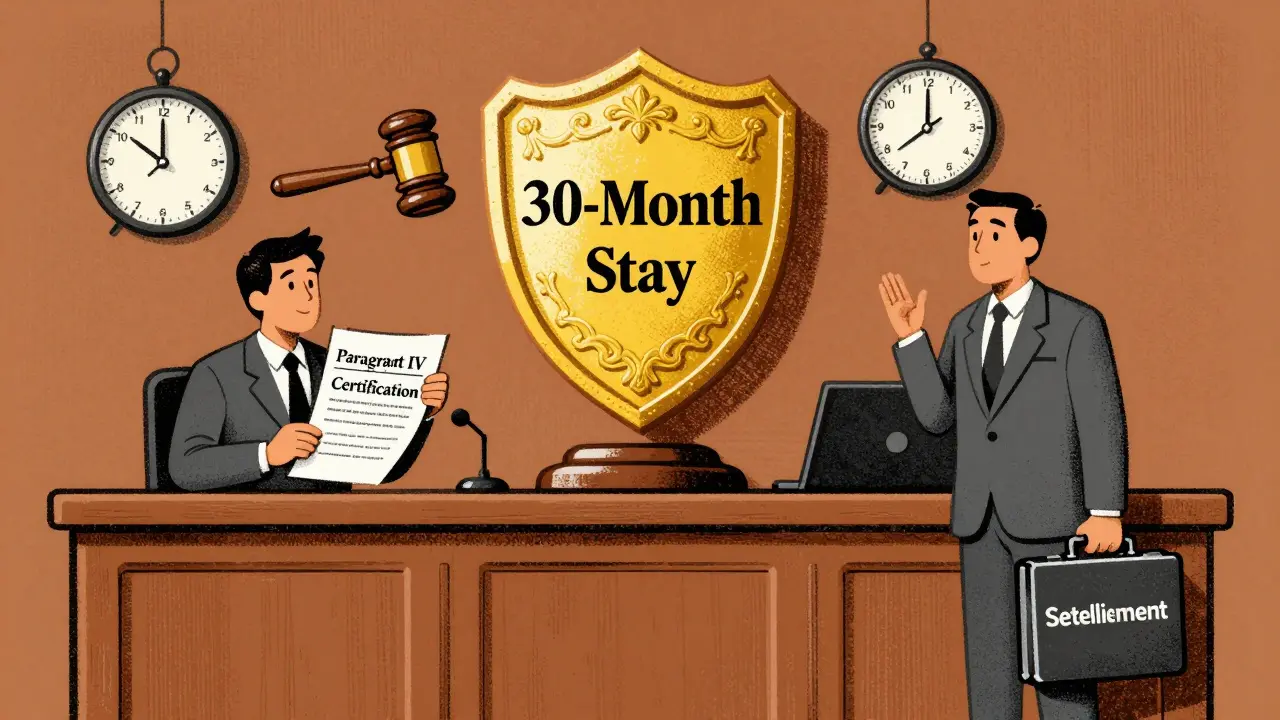
Most generic companies don’t just wait passively. They challenge the patents. That’s called a Paragraph IV certification. It’s a legal shot across the bow: “Your patent is invalid, or we don’t infringe it.”
When a generic company files this, the brand-name drugmaker has 45 days to sue. If they do, the FDA is legally required to delay final approval for up to 30 months. That’s the “30-month stay.” It’s not a guarantee the patent will hold up. It’s just a pause button.
Here’s where it gets strategic. If the generic company wins the lawsuit-or if the patent expires before the court decides-they get 180 days of exclusive market access. No other generics can enter. That’s a massive financial win. A single drug can generate hundreds of millions in revenue during that window.
But here’s the catch: if they lose, they’re back to square one. And if they settle with the brand company? Many do. That’s how you get deals where the generic enters the market six months after patent expiry, instead of immediately. Those deals are controversial, but they’re common.
The Hidden Work: Managing the Wait
A lot of people think once you get tentative approval, you just sit back and wait. That’s a dangerous myth.
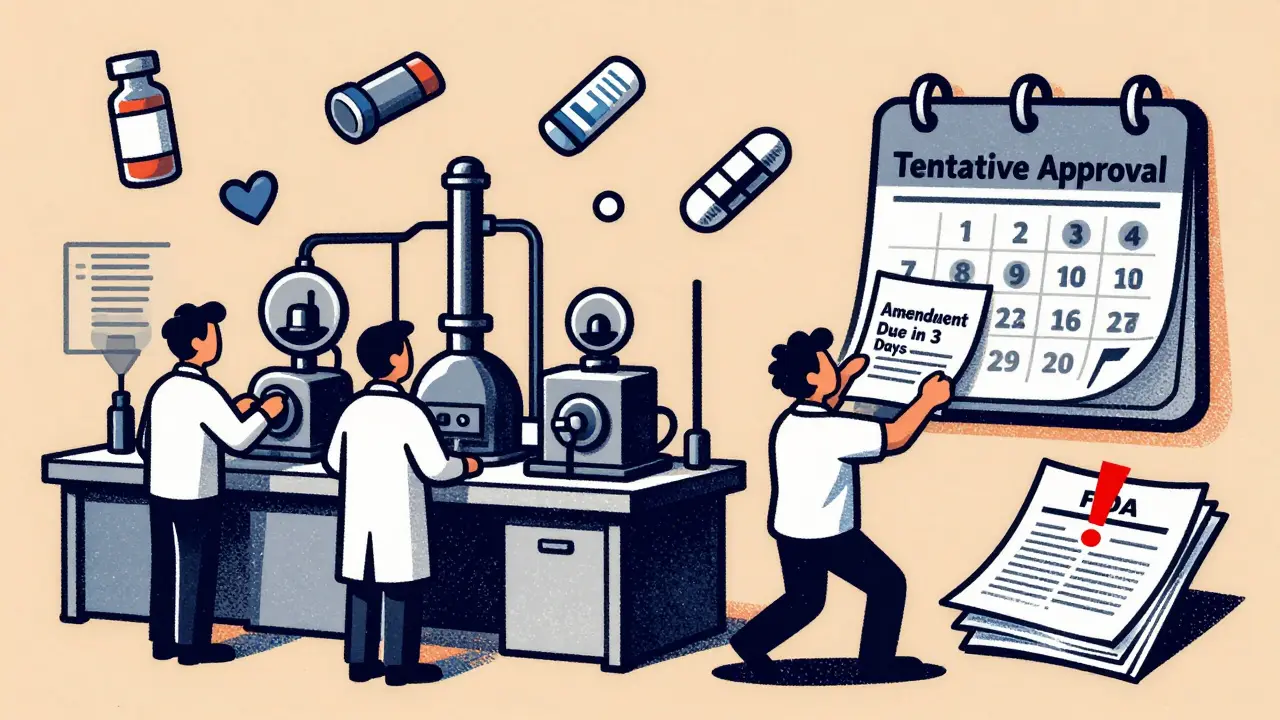
The FDA requires you to submit amendments to your application at least three months before the patent expires if you’re making minor changes-like updating a label. If you’re making major changes-like switching manufacturing sites-you need to file ten months in advance. Miss that deadline? Your final approval gets delayed. Even if the patent expired yesterday.
One company, Teva, got it right with their generic version of Januvia. They submitted their final approval request exactly 90 days before the patent expired. They launched within hours. Another company, Mylan, missed a pediatric exclusivity extension on their EpiPen generic. Even though they had tentative approval for 18 months, they didn’t account for that extra six months of protection. Their launch got pushed back by half a year.
And it’s not just timing. Manufacturing sites must stay compliant with cGMP standards. If the FDA inspects your facility and finds a problem during the waiting period, your tentative approval can be pulled. In 2022, 27% of delayed final approvals were because of manufacturing issues-not patents, not litigation. Just sloppy paperwork or equipment.
Why This Matters to Patients and Prices
The U.S. generic drug market is worth $75 billion. About 85% of generics enter through this tentative approval pathway when patents are in play. Without it, patients would pay more for longer. Drugs like insulin, asthma inhalers, or heart medications would stay expensive for years after their patents expired.
First-filers with tentative approval and successful Paragraph IV challenges capture 65% to 80% of the market during their 180-day exclusivity. That’s why companies fight so hard for it. Lupin’s generic version of Cialis launched within 24 hours of patent expiry in 2018 and took 42% of the market in the first month. That’s the power of being ready.
But delays hurt. Aurobindo Pharma lost $150 million in revenue when their Jardiance generic got delayed four months because they didn’t properly document a manufacturing change. That’s not just a loss for the company. It’s a loss for patients who needed the cheaper drug sooner.
What’s Changing Now
The FDA is trying to speed things up. In May 2023, they cut the review time for final approval requests from 60-90 days down to 30 days for minor changes. That’s a big deal. It means if you file on time, you’re more likely to launch right when the patent expires.
But complexity is rising. Newer drugs-especially biologics and complex generics-have layered patent portfolios. Some have 15 or 20 patents stacked together. That makes predicting the earliest lawful approval date harder than ever.
There’s also political pressure. In March 2023, a bill called the Protecting Drug Patents Act was introduced in Congress. If it passes, it could extend patent terms even further, pushing back tentative approval timelines. That’s bad news for generic makers and patients alike.
Still, industry analysts agree: tentative approval isn’t going away. Barclays says there’s a 95% chance it’ll still be around in 2030. It’s too essential to the system. The real question isn’t whether it’ll survive-it’s whether the FDA can keep up with the growing complexity.
How to Get It Right
If you’re a generic drug company, here’s what you need to do:
- File your ANDA with a strong Paragraph IV certification if you believe the patent is weak or invalid.
- Track every patent, every exclusivity period, and every possible extension. Use a legal-regulatory tracker, not a spreadsheet.
- Submit amendments early. Don’t wait until the last minute. Three months is not enough if the FDA is backlogged.
- Keep your manufacturing site in perfect compliance. Inspections don’t stop just because you’re tentatively approved.
- Work with experts who’ve done this before. The learning curve takes 6-12 months. Don’t guess.
There’s no shortcut. But if you do it right, you can go from tentative approval to market leader in a matter of hours.
Is tentative approval the same as final approval?
No. Tentative approval means the FDA has approved the drug scientifically but cannot grant final approval because of active patents or exclusivity. Final approval allows you to sell the drug. Tentative approval does not.
Can a generic drug be sold while it has tentative approval?
No. Selling a drug with only tentative approval is illegal in the U.S. The FDA explicitly states that a tentatively approved product is not an approved drug and cannot be marketed until final approval is granted.
How long does it take to get tentative approval?
The FDA aims to complete its review within 10 months under the GDUFA timeline. But if the application has deficiencies, the process can take longer due to multiple rounds of feedback and amendments.
What happens if the patent litigation ends before the 30-month stay?
If the court rules in favor of the generic company or the patent is invalidated, the FDA can immediately grant final approval-provided the application is ready and all amendments are submitted. Many companies time their final request to coincide with the court’s decision.
Why do some companies settle patent lawsuits instead of fighting them?
Settlements avoid the risk of losing in court and losing the 180-day exclusivity. They also save millions in legal fees. Some settlements allow the generic to enter the market months after patent expiry, in exchange for a share of profits during exclusivity. These are called "pay-for-delay" deals and are under regulatory scrutiny.
What’s the biggest mistake companies make with tentative approval?
Waiting until the last minute to submit final approval amendments. Many companies assume the FDA will approve them automatically when the patent expires. But without a timely amendment, the approval gets delayed by weeks or months-even if the patent is gone.
9 Comments
Dave Old-WolfJanuary 7, 2026 AT 22:05
So let me get this straight-you can pass every single FDA test, have your drug ready to go, but you can’t sell it because some big pharma company owns a patent that might not even be valid? That’s not regulation, that’s legal extortion.
Luke CrumpJanuary 8, 2026 AT 14:30
It’s like being told you’ve won the race… but you can’t cross the finish line until the guy who set the course decides to move the tape. And if you try to move it yourself? He sues you. Welcome to American capitalism, folks.
Donny AirlanggaJanuary 9, 2026 AT 12:44
I worked in a pharmacy for 12 years. Patients would beg for cheaper insulin, and we’d have to tell them, ‘It’s coming next month.’ Then it got pushed back. Again. This system breaks my heart. The science is ready. The people need it. The bureaucracy? Still sleeping.
Kristina FelixitaJanuary 10, 2026 AT 15:28
OMG this is wild!! I had no idea generic drugs had to play this whole legal game just to exist?? Like, they do all the work, pass every test, and then get stuck waiting?? And the 180-day exclusivity?? That’s like winning the lottery… but only if you survive the lawsuit!!
Manish KumarJanuary 12, 2026 AT 00:03
You know, in India, we don’t have this nonsense. We make generics fast, cheap, and right. The FDA’s 30-month stay? It’s just a delay tactic by American monopolists. They don’t want competition-they want control. And the patients? They’re just collateral damage in a game of corporate chess. This isn’t innovation-it’s rent-seeking dressed up as law.
Aubrey MalloryJanuary 12, 2026 AT 03:36
Let’s be clear: if you’re a generic company and you’re not tracking every patent extension like your life depends on it, you deserve to lose. This isn’t complicated. It’s just tedious. And if you think the FDA will save you because you ‘missed a deadline’? Wake up. The system doesn’t care about your excuses. You either prepare or you get buried.
Annette RobinsonJanuary 12, 2026 AT 12:30
Thank you for explaining this so clearly. I’ve seen people complain about drug prices without understanding the mechanics behind them. This is a perfect example of how policy, law, and business intersect-and how easily patients suffer when any one of those pieces breaks. The FDA’s recent 30-day review window is a step forward, but it’s still a bandage on a broken leg.
Lois LiJanuary 13, 2026 AT 17:42
Wait, so if a company settles a lawsuit and gets to enter the market 6 months late, but still gets the 180-day exclusivity… isn’t that just paying off the brand name company to stay quiet? Like… isn’t that the definition of a kickback? And why is this even legal? I feel like I’m missing something here.
Prakash SharmaJanuary 15, 2026 AT 06:59
India makes 20% of the world’s generics. We don’t wait for patents to expire-we challenge them in court and win. America’s system is broken because it lets corporations write the rules. This isn’t about innovation. It’s about profit. And patients? They’re just numbers on a balance sheet.