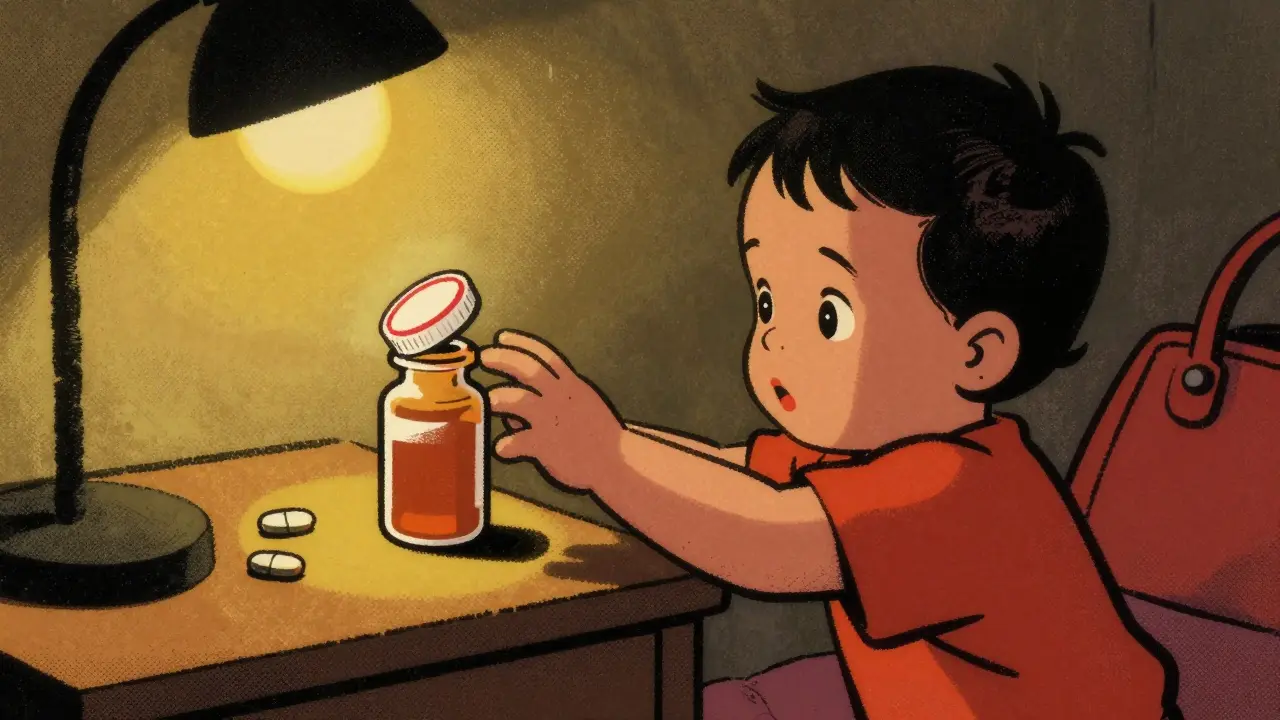
Every year, thousands of children accidentally swallow medications they shouldn’t. Some find pills in a parent’s purse. Others spot a bottle left on the nightstand. A few even manage to open what looks like a secure medicine container. These aren’t rare accidents - they’re preventable. That’s where child-resistant containers come in. They’re not magic. They don’t make medicine completely safe. But they do give kids a serious obstacle - and that’s often enough to save a life.
How Child-Resistant Packaging Actually Works
Child-resistant packaging, or CR packaging, isn’t about making bottles impossible to open. It’s about making them hard enough that a young child can’t do it quickly. The U.S. Consumer Product Safety Commission (CPSC) set the standard back in 1970 with the Poison Prevention Packaging Act. Since then, it’s been updated, tested, and refined. Today, any CR container must pass a strict test: at least 85% of children aged 42 to 51 months must fail to open it within 10 minutes. That’s not a suggestion - it’s the law for most prescription and many over-the-counter medicines.
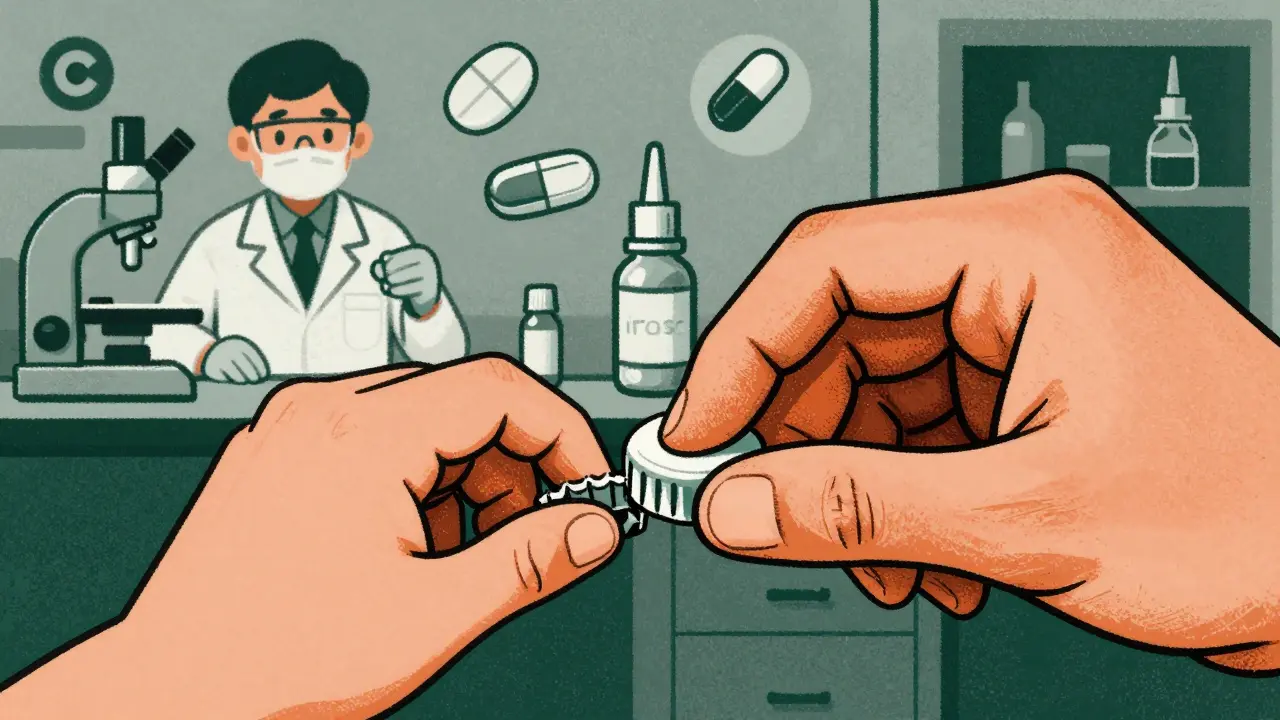
But here’s the catch: it’s not just about keeping kids out. It also has to let adults in. Seniors, people with arthritis, or anyone with limited hand strength can’t be locked out. So the same packaging must allow at least 90% of adults aged 50 to 70 to open and close it properly within five minutes. That’s why the best designs - like the push-and-turn caps used by Aptar Pharma - require two different motions at once. You can’t just twist. You have to push down first, then turn. It’s awkward for a toddler trying to figure it out. For an adult? It’s a quick, familiar motion.
Why Some Bottles Still Fail
Not all medicine bottles are created equal. Prescription drugs, especially those classified as Schedule II-V controlled substances, are required to have CR packaging 100% of the time. But for over-the-counter (OTC) medicines, it depends on the active ingredient. If a product contains more than 0.08 milligrams of imidazoline - a common ingredient in some cold and allergy meds - it must have CR packaging. Same goes for aspirin, acetaminophen, and iron supplements above certain doses.
Still, failures happen. A 2023 Consumer Reports test found that some store-brand CR caps failed child resistance tests 22% of the time. That’s nearly one in five bottles that a child might actually open. Why? Poor design. Loose threading. Cheap plastic. Even the best mechanism can break down if the bottle isn’t made right. And here’s the biggest problem: most parents don’t realize CR packaging loses effectiveness after the first use. About 15% of the time, adults don’t re-close the cap properly. That means the locking mechanism doesn’t engage. The bottle looks closed. It’s not. A child can twist it open like a regular cap.
What About Liquid Medicines and Nasal Sprays?
Liquid medications are trickier. They’re often more dangerous in small amounts - a teaspoon of adult cough syrup can be deadly for a toddler. Yet 38.7% of non-compliant packaging incidents involve liquids, according to FDA data. Why? Because liquid bottles often have wide mouths and simple screw caps. Even if they’re labeled CR, many aren’t tested to the same standard as pills. Blister packs are an alternative, but only if the foil requires at least 15 pounds of force to peel. Most standard blister packs don’t meet that. They’re child-resistant in theory, but not in practice.
Nasal spray pumps are the worst offenders. The CPSC has been clear since 2012: a nasal spray pump alone is not child-resistant. You need an over-cap that requires a push-and-turn or squeeze-and-turn motion. But many OTC nasal sprays still come with just the pump. Parents assume it’s safe. It’s not. In fact, only 22% of nasal spray products on the market meet full CR requirements without special modifications. That’s a gap in protection - and a hidden risk.
The Real Cost of CR Packaging
Designing and testing CR packaging isn’t cheap. Pharmaceutical companies spend between $8,500 and $15,000 per design to get it certified by a CPSC-accredited lab. That’s why some manufacturers cut corners - or skip testing entirely for OTC products that aren’t strictly required to have it. The result? Inconsistent safety. You might find a child-resistant bottle of ibuprofen at one pharmacy, and a non-compliant one at another.
And it’s not just about the bottle. The law requires labeling. If a package doesn’t meet CR standards, it must say: "Should not be used in households where young children are present." If a pharmacy dispenses medicine in a non-CR bag or envelope - like a ziplock or paper sack - they’re breaking the law. A 2022 survey found that nearly half of veterinary clinics were doing this. They’re not thinking about kids. But kids are still there.
What’s New in Medication Safety?
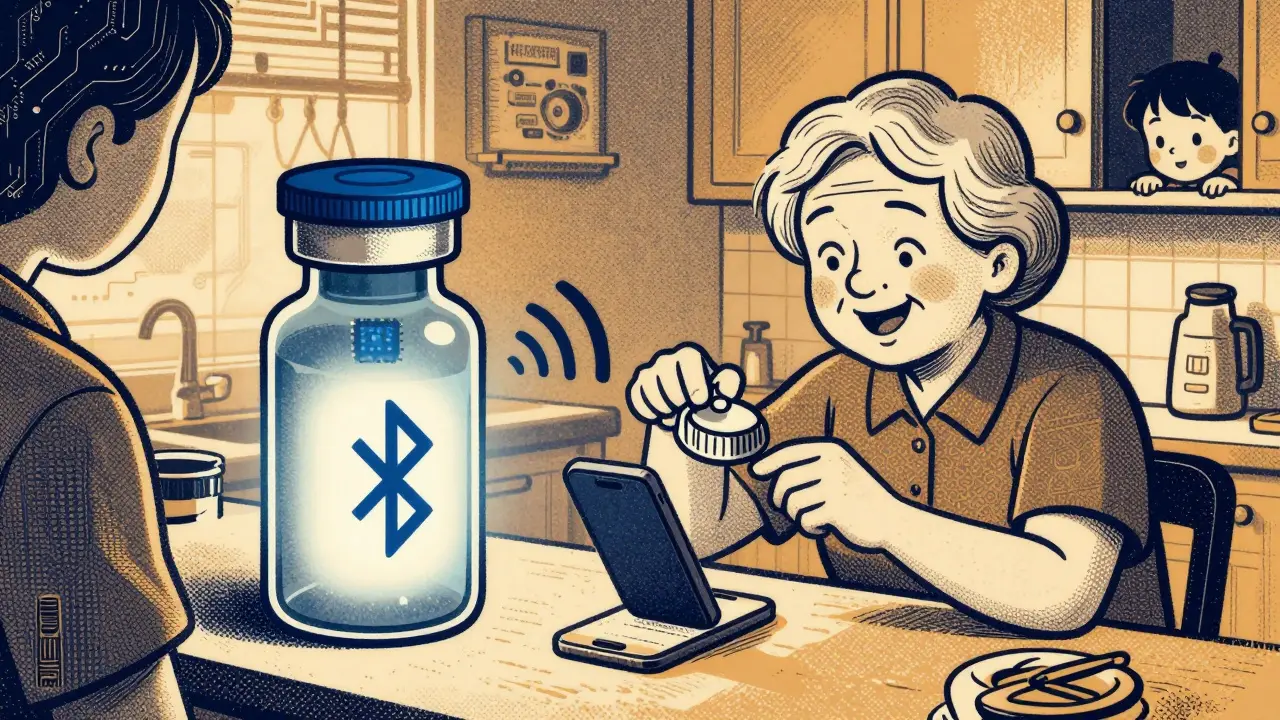
Technology is stepping in. In January 2023, Aptar Pharma launched the first FDA-cleared smart CR cap called SmartDose. It looks like a regular child-resistant cap, but it has a Bluetooth chip inside. It logs every time the bottle is opened - and sends a notification to your phone if it’s opened when it shouldn’t be. For parents of kids with chronic conditions, this is a game-changer. It doesn’t stop a child from opening it - but it tells you when they did.
Other innovations are focused on seniors. Sixty-two percent of new CR packaging patents filed between 2018 and 2023 include features for easier opening. Think larger grips, softer materials, or caps that pop open with a simple press. Amazon reviews for these designs show 4.2 out of 5 stars. One user wrote: "Finally a child-safe cap my 70-year-old mother can open without assistance." That’s the balance we need: safety for kids, usability for adults.
What You Can Do Right Now
CR packaging is a tool. It’s not a solution. The best way to keep medicine away from kids is to store it out of sight and out of reach - preferably in a locked cabinet. Never leave pills on counters, in purses, or on nightstands. Even if the cap is CR, a child can climb, reach, or find a stool.
Check every bottle. If you’re unsure whether it’s CR, look for the CPSC logo or the words "child-resistant" on the label. If it’s not there, ask your pharmacist for a CR version. If they say they don’t have one, request it. You have the right to ask.
Teach your kids that medicine isn’t candy. Even if it’s flavored or colorful, tell them it’s dangerous. Kids are curious. But they listen. And if they know it’s off-limits, they’re less likely to try.
And if you have trouble opening your own meds? Talk to your doctor. Ask for a non-CR version. It’s legal. You just need to sign a form acknowledging the risk. Many pharmacies offer easy-open caps or blister packs with pull-tabs. You don’t have to struggle - and you don’t have to choose between your health and your grandchild’s safety.
Why This Matters Beyond the U.S.
The U.S. led the way with CR packaging, but other countries are catching up. Brazil made it mandatory in 2021. India followed in 2022. The European Union uses similar standards under EN ISO 8317:2023. And new threats are emerging. In 2023, the CPSC proposed rules requiring CR packaging for all cannabis edibles with more than 2mg of THC per serving. That’s because kids are eating them - and getting sick. These aren’t just old problems. They’re evolving ones.
Global sales of CR packaging are expected to hit $4.87 billion by 2028. That’s not just about profit. It’s about protection. Every bottle designed with this standard has saved lives. But only if it’s used right.
Are child-resistant containers really effective?
Yes - but not perfectly. Since the 1970s, CR packaging has reduced pediatric poisoning deaths by 45%. It prevents an estimated 900,000 accidental ingestions each year. But it’s not foolproof. About 12,842 incidents were reported in 2022 alone, mostly because adults didn’t re-close the cap properly. CR packaging reduces risk - it doesn’t eliminate it.
Can a child open a child-resistant cap?
Some can - especially if the cap is damaged, old, or not closed properly. The CPSC tests require that at least 85% of children under five fail to open the cap within 10 minutes. But 15% might succeed. And if a child sees an adult open it, they’ll try to copy. That’s why storage matters more than the cap alone.
What medicines must have child-resistant packaging?
In the U.S., all prescription drugs and many OTC medications must have CR packaging. This includes aspirin, acetaminophen, ibuprofen, iron supplements, and any product with 0.08 mg or more of imidazoline. It also covers certain pesticides and household chemicals. Not all OTC drugs require it - only those with high-risk ingredients. Always check the label.
Why do some seniors struggle with CR caps?
Many CR caps require a combination of pushing and turning, which demands hand strength and coordination. A 2022 Arthritis Foundation survey found 68% of people with hand impairments had trouble opening them. The average force needed exceeds the 5-pound threshold recommended for seniors. Newer designs are addressing this with easier grips and one-touch releases.
Can I request non-child-resistant packaging for myself?
Yes. If you have arthritis, limited hand mobility, or other conditions that make CR caps difficult to use, you can ask your pharmacist for a non-CR version. You’ll need to sign a form acknowledging the risk to children. Many pharmacies offer this service. It’s legal, safe, and common - especially for older adults living alone.
Is there a difference between "child-resistant" and "child-proof"?
Yes - and it’s critical. "Child-proof" suggests it’s impossible for a child to open. That’s not true. "Child-resistant" means it’s hard enough to delay or prevent access - but not impossible. The FDA and CPSC are clear: no packaging is completely child-proof. Always assume a child can find a way in. That’s why storing medicine out of reach is just as important as the cap.
8 Comments
Kevin SieweMarch 23, 2026 AT 16:44
Just wanted to add something important - I’ve been a pharmacist for 18 years, and the #1 issue isn’t the cap design, it’s how people store the bottles. I’ve seen kids get into meds because mom left the bottle on the bathroom counter after washing her face. CR caps help, but they’re not a substitute for locked cabinets. If you’ve got kids, lock it up. Period.
Also, don’t assume your OTC bottle is CR just because it looks fancy. Check the label for "child-resistant" and the CPSC logo. If it’s not there, ask for a different one. It’s your right.
Chris FarleyMarch 25, 2026 AT 04:00
Let’s be real - this whole CR packaging thing is just government overreach disguised as safety. My 7-year-old opened a bottle in 3 seconds. So what? He didn’t eat the whole thing. Kids are gonna explore. You can’t babyproof the whole world. Let people make their own choices. If your kid gets into medicine, maybe they need better parenting, not more regulations.
Darlene GomezMarch 26, 2026 AT 07:44
Chris, I hear you - but your tone misses the point. This isn’t about controlling parents. It’s about preventing tragedies. I lost a cousin at age 3 to an accidental overdose because her grandpa thought "it’s just Advil." It took 12 minutes for the ambulance. Twelve minutes. That’s all it took.
CR caps aren’t perfect, but they buy us time. And time is everything when seconds count. Let’s not romanticize ignorance. A little inconvenience for adults saves lives. That’s not overreach - that’s responsibility.
Katie PutbreseMarch 28, 2026 AT 00:35
Ugh. I’m so tired of people acting like this is some noble sacrifice. My grandma can’t open her blood pressure meds. She cries. She has to sit there for 10 minutes just to get one pill. And for what? So some kid who’s just being curious gets a "lesson"? Nah. This system is broken. Why not just put meds in locked boxes and call it a day? Why make old people suffer? It’s not fair. It’s cruel. And someone’s gotta say it.
Jacob HesslerMarch 29, 2026 AT 16:54
lol this whole thread is wild. i had a kid open a "child resistant" bottle like it was a toy. he just sat there and twisted it like a fidget spinner. no push, no turn. just twist. it opened. i was like... wtf? so now i keep all my stuff in a locked toolbox. that's the real solution. no cap is gonna stop a determined 4 year old. stop trusting plastic.
Amber GrayMarch 31, 2026 AT 11:30
Yessss this! 😍 I just bought a new bottle of ibuprofen and the cap was so stiff I thought I was gonna break my wrist. Then I realized it wasn’t even closed right. 😤 Like, if the cap doesn’t click, it’s NOT locked. Why isn’t that on the label? 🤦♀️
Danielle ArnoldApril 1, 2026 AT 15:15
So let me get this straight - we’re spending $15k per cap design to make adults struggle, while kids still get into meds because parents are lazy? Wow. We’ve officially turned healthcare into a performance art piece. Bravo. 🎭
Jesse HallApril 2, 2026 AT 09:13
Thanks for this deep dive. Seriously. I’ve been using the SmartDose cap since January and it’s been a game-changer. Got a notification last week that my 3-year-old opened the bottle while I was in the shower. I ran in, grabbed it, and had a calm talk with him. No panic. No trauma. Just a teachable moment.
And yeah - my mom uses the easy-open version. We did the paperwork. She’s 73. She’s safe. I’m not judging. We’re just doing what works. That’s the balance. Safety for kids. Dignity for adults. Both matter.