Medications save lives-but sometimes, they can turn deadly. A severe adverse drug reaction (ADR) doesn’t just cause a rash or upset stomach. It can shut down your breathing, peel off your skin, or stop your heart. And if you don’t act fast, it can kill you. The difference between life and death often comes down to one thing: when you recognize the signs and call for help.
What Counts as a Severe Drug Reaction?
Not every side effect is dangerous. Nausea from antibiotics? Common. But if you start swelling up, struggling to breathe, or your skin begins to blister and slough off, that’s not a side effect-it’s an emergency. The U.S. Food and Drug Administration defines a serious adverse drug reaction as one that causes death, is life-threatening, requires hospitalization, leads to permanent damage, or causes a birth defect. Three drugs are responsible for the majority of these life-threatening events: blood thinners (like warfarin or apixaban), diabetes medications (especially insulin), and opioids (like oxycodone or morphine).Anaphylaxis: The Silent Killer That Happens in Minutes
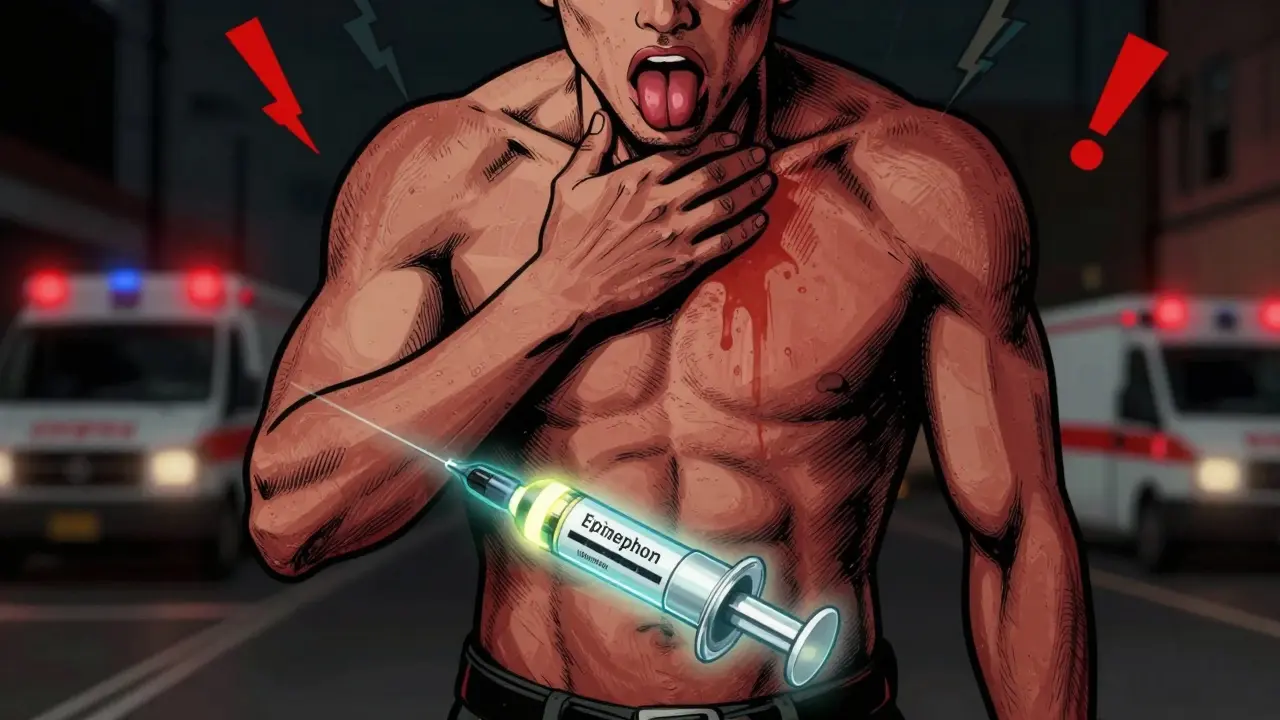
Anaphylaxis is the most urgent type of drug reaction. It’s an all-out immune system meltdown triggered by something as simple as penicillin, aspirin, or even a contrast dye used in imaging scans. It can start within seconds or minutes of taking the drug. You might notice a few warning signs: a sudden rash or hives, swelling of the lips or tongue, tightness in your chest, wheezing, or dizziness so bad you feel like you’re going to pass out. Your blood pressure can crash. Your airway can close. Without treatment, up to 1% of people die.There’s no time to wait and see. If you or someone else shows these signs, use an epinephrine auto-injector immediately-right into the outer thigh. Don’t wait for an ambulance. Don’t try antihistamines first. Epinephrine is the only thing that can reverse this reaction in time. After giving the shot, call 999. Even if you feel better, you still need to go to the hospital. Symptoms can come back worse hours later.
Stevens-Johnson Syndrome and Toxic Epidermal Necrolysis: When Your Skin Starts Dying
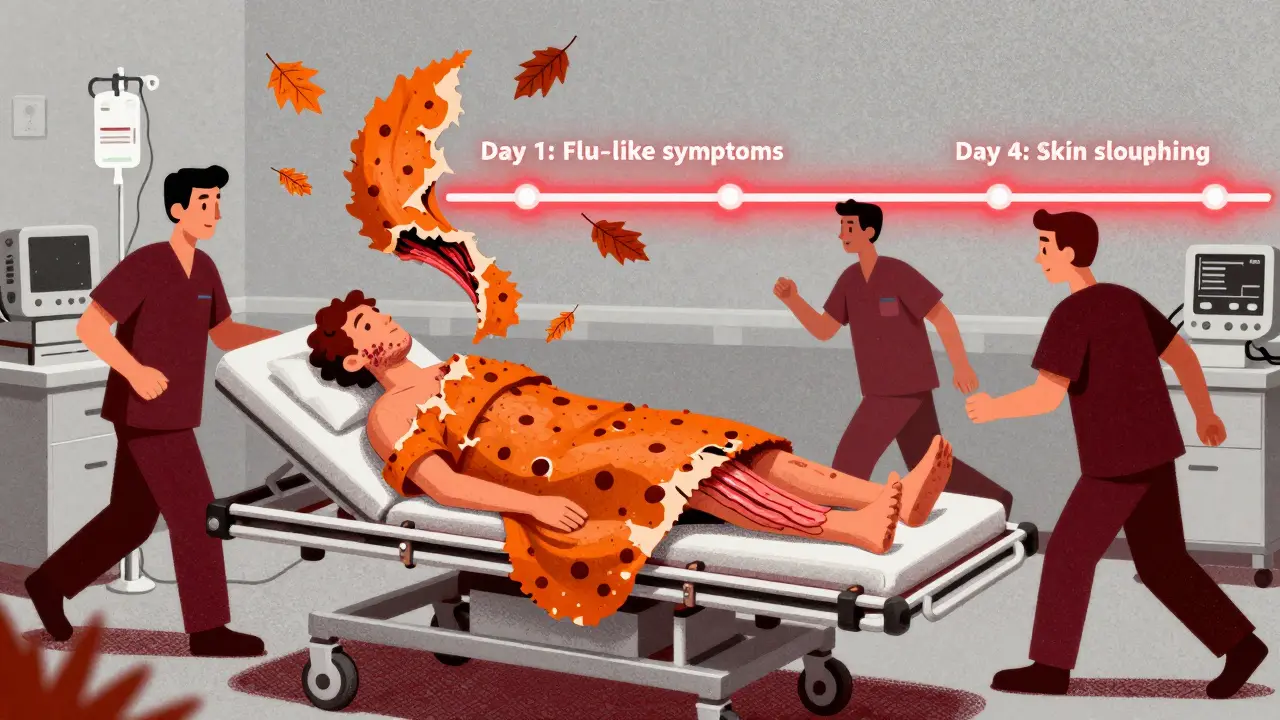
These are rare but devastating reactions, often caused by antibiotics like sulfonamides, anticonvulsants like carbamazepine, or painkillers like ibuprofen or naproxen. It starts like the flu-fever, sore throat, burning eyes. Then, within days, a painful red or purple rash spreads across your body. Blisters form. Your skin begins to peel off in sheets, like a severe burn. If more than 30% of your skin is affected, it’s called Toxic Epidermal Necrolysis (TEN). The mortality rate for TEN is 30-50%. For Stevens-Johnson Syndrome (SJS), it’s around 10%.This isn’t something you can treat at home. You need to be admitted to a burn unit or intensive care. Stopping the drug is critical-but even then, recovery takes weeks. You’ll need fluids, pain control, and specialists to manage infections and eye damage. If you notice skin peeling after starting a new medication, get to an emergency room immediately. Don’t wait for it to get worse.
Drug Reaction with Eosinophilia and Systemic Symptoms (DRESS)
DRESS is sneaky. It doesn’t hit right away. You might take a drug like allopurinol, minocycline, or abacavir for weeks before symptoms appear. Then, out of nowhere: high fever, swollen lymph nodes, a widespread rash, and your liver or kidneys start failing. Blood tests show high levels of eosinophils-a type of white blood cell that shouldn’t be elevated. It’s easy to mistake DRESS for a virus or flu. But if you’ve been on a new medication in the last 2-6 weeks and suddenly feel terrible, don’t ignore it. Stopping the drug is the first step, but you’ll likely need steroids and close monitoring in a hospital. Left untreated, DRESS can cause permanent organ damage.What to Do Right Now: Your Emergency Action Plan
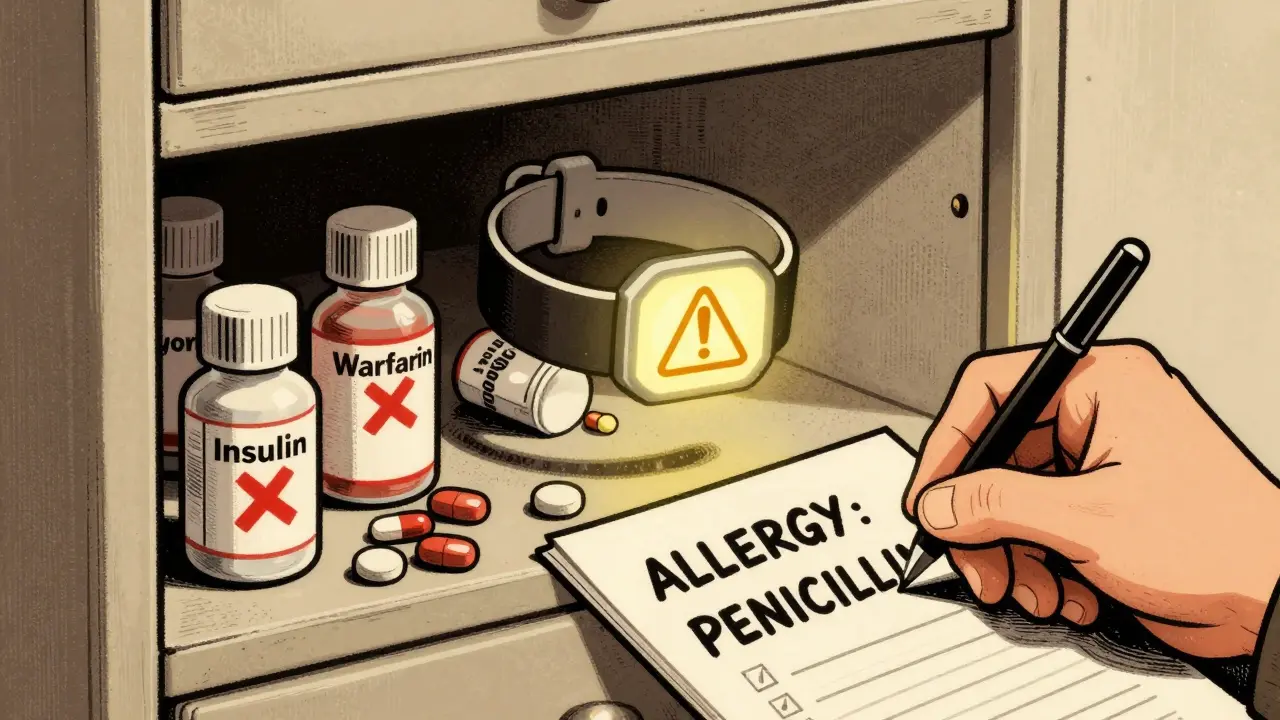
If you’ve ever had a serious reaction to a drug, you need a plan. Here’s what to do:- Know your triggers. Keep a written list of every drug you’ve had a bad reaction to-even if it was years ago. Include the name, what happened, and when.
- Carry epinephrine if you’re at risk. If you’ve had anaphylaxis before, your doctor should have given you an auto-injector (like an EpiPen or Adrenaclick). Keep it with you at all times. Check the expiry date every six months.
- Teach someone how to use it. Your partner, parent, or coworker should know where it is and how to inject it. Practice with a trainer device.
- Wear a medical alert bracelet. It tells first responders you have drug allergies before they give you something dangerous.
- Call 999 immediately if you have trouble breathing, swelling, or skin peeling. Don’t drive yourself. Don’t wait. Ambulances carry epinephrine and can start treatment on the way.
What Not to Do
Don’t take antihistamines like Benadryl and think that’s enough. They help with mild itching-but they won’t stop anaphylaxis. Don’t wait to see if symptoms get better. Severe reactions don’t wait. Don’t assume you’re safe just because you’ve taken a drug before. Allergies can develop at any time-even after years of using the same medication without issue.
What Happens After the Emergency?
Once you’re stable, you’ll need follow-up with an allergy specialist. They’ll do tests to confirm what caused the reaction and help you avoid it in the future. You might get a personalized action plan, including which drugs to avoid and what alternatives are safe. You’ll also be advised to report your reaction to the national drug safety system-in the UK, that’s the Yellow Card Scheme run by the MHRA. Your report helps other people avoid the same danger.Can These Reactions Be Prevented?
Some can. Genetic testing is now used before prescribing certain drugs-like abacavir for HIV, which can trigger a deadly reaction in people with a specific gene variant (HLA-B*57:01). Doctors now test for that before giving the drug. For others, like penicillin allergies, skin tests can confirm if you’re truly allergic-or if you outgrew it. Many people think they’re allergic to penicillin because they had a rash as a child, but only 1 in 10 are actually allergic. Getting tested can open up safer treatment options.Always tell every doctor, dentist, and pharmacist about your drug reactions-even if you think it’s not important. A simple question like, “Have you had any bad reactions to medications?” could save your life.
What are the top three drugs that cause life-threatening reactions?
The three drugs most often linked to serious, life-threatening reactions are anticoagulants (like warfarin or rivaroxaban), which can cause dangerous bleeding; diabetes medications (especially insulin), which can lead to severe low blood sugar; and opioids (like morphine or oxycodone), which can slow or stop breathing. These are the top targets for drug safety programs in the U.S. and UK.
Can you survive anaphylaxis without epinephrine?
It’s possible, but extremely risky. Antihistamines and steroids don’t stop the airway swelling or blood pressure drop that kills in anaphylaxis. Epinephrine is the only treatment that reverses these effects quickly. Without it, death can occur within minutes. Studies show survival rates drop dramatically when epinephrine is delayed or not given at all.
How do I know if my rash is just an allergy or something worse like SJS?
A mild allergic rash is usually flat, red, itchy, and doesn’t blister. SJS or TEN starts with flu-like symptoms, then a painful red or purple rash that spreads fast. Blisters form, and skin begins to peel off in sheets-like a burn. If you’re also running a fever, your mouth or eyes are sore, or more than 10% of your skin is affected, treat it as an emergency. Don’t wait-go to A&E.
Should I carry epinephrine if I’ve never had a severe reaction?
Only if your doctor recommends it. Most people don’t need it. But if you’ve had a previous anaphylactic reaction, even if it was years ago, or if you have a known allergy to a high-risk drug like penicillin or bee venom, your doctor will likely prescribe one. Never carry it without proper training-using it wrong can be dangerous.
Can a drug reaction happen the first time you take it?
Yes. While some reactions require prior exposure to develop an allergy, others-like anaphylaxis to antibiotics or contrast dye-can happen the very first time. Your immune system doesn’t need to have seen the drug before to overreact. That’s why doctors always ask about past reactions, even if you’ve never had one.
What should I do if I think a medication caused a reaction but I’m not sure?
Stop taking the drug immediately and contact your doctor. Write down exactly when you started the medication, when symptoms began, and what they were. Even if it turns out to be harmless, reporting it helps build better safety data. If symptoms are severe-trouble breathing, swelling, skin peeling-go to the emergency room right away. Don’t guess. Err on the side of caution.
10 Comments
Annie ChoiJanuary 16, 2026 AT 07:14
Epinephrine isn't just a shot it's your lifeline when your body decides to betray you
No waiting no praying just inject and move
I carry two because I've seen what happens when you hesitate
Dan MackJanuary 17, 2026 AT 01:04
They say these reactions are random but they're not
Big Pharma knows exactly which drugs will kill a few to make billions
They bury the data and push the next pill like it's candy
They don't care if you die as long as your insurance pays
They're not here to save you they're here to profit
And they'll make you believe it's your fault when your skin starts peeling
Amy EhingerJanuary 18, 2026 AT 18:11
I had a friend who got SJS from ibuprofen after a headache
She was fine one day and in the ICU the next
Her skin came off like wet tissue paper and they had to put her in a burn unit
She lost her eyelashes and her vision almost didn't come back
It took six months to heal and she still gets panic attacks when she sees a pharmacy
People think meds are safe until they're not
And by then it's too late to read the label
I tell everyone now if you get a weird rash after a new drug just go to the ER
Don't Google it don't wait don't hope it goes away
It won't
Amy VickbergJanuary 19, 2026 AT 16:53
This is the kind of info everyone needs to hear
Not just the people who've had reactions but everyone
Because you never know when you or someone you love will need this
Thank you for laying it out so clearly
My mom had anaphylaxis to penicillin when she was 12 and she still carries her EpiPen at 78
She taught me to never ignore a weird reaction
And now I carry one too
Jami ReynoldsJanuary 20, 2026 AT 05:44
Did you know the FDA approves drugs based on clinical trials with under 5000 subjects
That means rare but deadly reactions like DRESS or TEN occur in 1 in 10000 people
And those don't show up until the drug is on the market for years
Meanwhile doctors are incentivized to prescribe the newest most expensive options
They don't have time to dig into the real risks
And you're just supposed to trust them
Meanwhile your life is a statistical outlier waiting to happen
ellen adaminaJanuary 22, 2026 AT 01:22
Can someone explain why DRESS takes weeks to show up?
Why does the immune system wait like that?
Crystel AnnJanuary 22, 2026 AT 10:09
It's because your immune system is slowly building up a response
Like a slow burn instead of a flash fire
It's not attacking the drug right away
It's training its cells to recognize it as a threat
By the time the rash and fever hit your organs are already under siege
That's why it's so easy to mistake it for the flu
By then it's too late to just stop the drug
You need steroids and ICU care
Sarah MaillouxJanuary 23, 2026 AT 08:48
My cousin took minocycline for acne and ended up in the hospital with DRESS
They thought it was mono for two weeks
He almost lost his liver
Now he won't take anything without checking with his pharmacist
And he makes his whole family know what to look for
Don't wait until it's too late
Just ask
RUTH DE OLIVEIRA ALVESJanuary 25, 2026 AT 03:04
It is imperative that individuals who have experienced adverse drug reactions document their history with precision and communicate it comprehensively to all healthcare providers, as this constitutes a critical component of patient safety and risk mitigation within the clinical setting. The systemic underreporting of such events remains a persistent and preventable public health concern.
Diane HendriksJanuary 25, 2026 AT 14:45
Why do Americans trust pills more than their own bodies?
Every other country tests for HLA-B*57:01 before giving abacavir
But here we just hand it out like candy
Because profit beats prevention
And we're too lazy to ask questions
We want a quick fix and we'll die for it if we have to
It's not medicine it's a religion and we're the blind followers