Steroid Hyperglycemia Risk & Insulin Adjustment Calculator
Enter your details and click "Analyze Risk & Adjustments" to see estimated insulin changes and risk factors.
Starting a course of steroids can feel like a necessary evil. You need them to calm an autoimmune flare, support a transplant, or treat severe inflammation. But there is a hidden side effect that often catches patients off guard: your blood sugar spikes. This isn't just minor fluctuation; it is Steroid Hyperglycemia, also known as steroid-induced diabetes mellitus (SIDM), which is defined as an abnormal increase in blood glucose levels directly linked to the administration of glucocorticoids. For people with pre-existing diabetes, this means your usual regimen might suddenly fail. For those without diabetes, it can trigger temporary or permanent high blood sugar.
The stakes are high. In hospital settings, more than 50% of patients receiving high-dose steroids develop hyperglycemia. Research by Umpierrez et al. shows that 86% experience at least one episode of high blood sugar, and nearly half maintain levels above 140 mg/dL. If you are adjusting your own medications at home, understanding how steroids attack your body’s ability to process sugar is the first step to staying safe.
Why Steroids Spike Your Blood Sugar
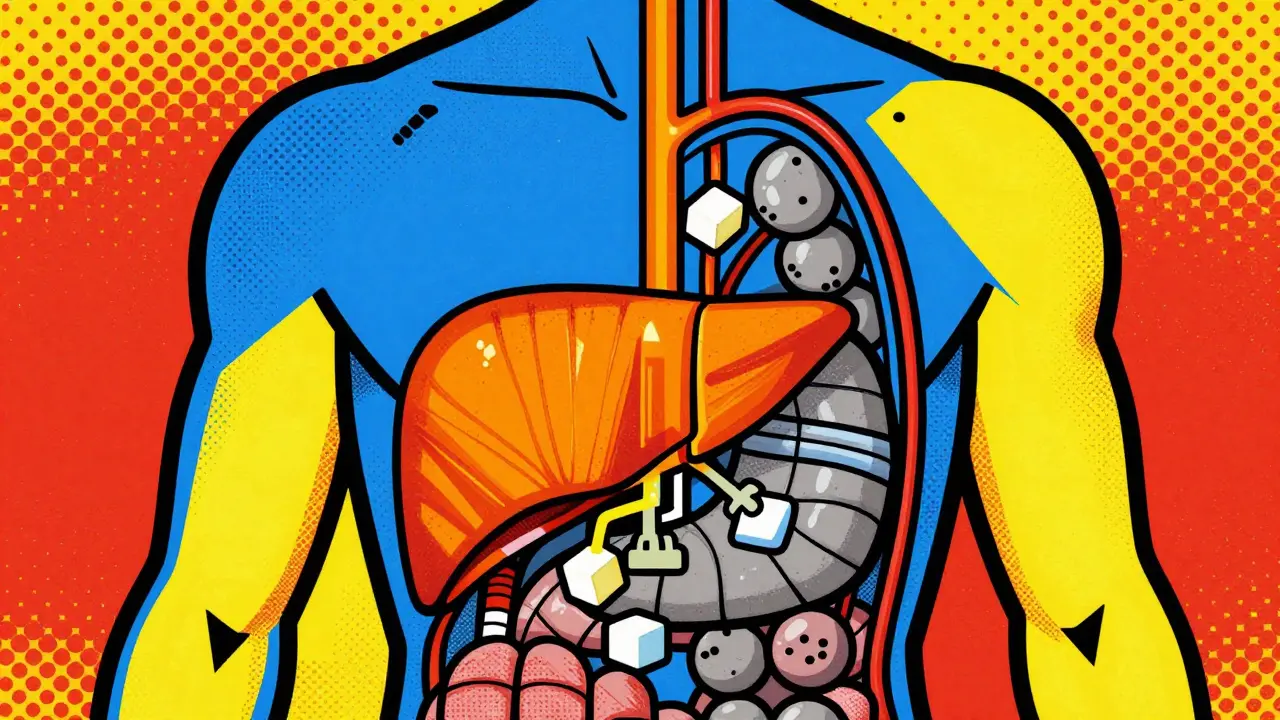
To manage steroid hyperglycemia, you have to understand what the drug is doing inside your body. It is not just adding sugar; it is breaking the machinery that removes it. Corticosteroids disrupt normal glucose metabolism through three primary mechanisms.
- Insulin Resistance: Steroids make your cells deaf to insulin signals. They interfere with key pathways like glycogen synthase and GLUT4 translocation, meaning glucose stays in your bloodstream instead of entering your muscles.
- Increased Glucose Production: Your liver starts pumping out more sugar into your blood, treating your body as if it is in a stress state.
- Reduced Insulin Secretion: Steroids inhibit the pancreatic β-cells from producing and releasing insulin when they should.
The severity depends heavily on the dose. A study by Gurwitz et al. found that patients taking hydrocortisone equivalents of 50 mg daily had triple the odds of needing hypoglycemic therapy compared to controls. Those taking over 120 mg daily had more than ten times the risk. The type of steroid matters too. Short-acting steroids like hydrocortisone have a half-life of 8-12 hours, while long-acting ones like dexamethasone last 36-72 hours. This difference dictates exactly when you need to adjust your insulin.
The Post-Prandial Pattern: Why Fasting Tests Lie
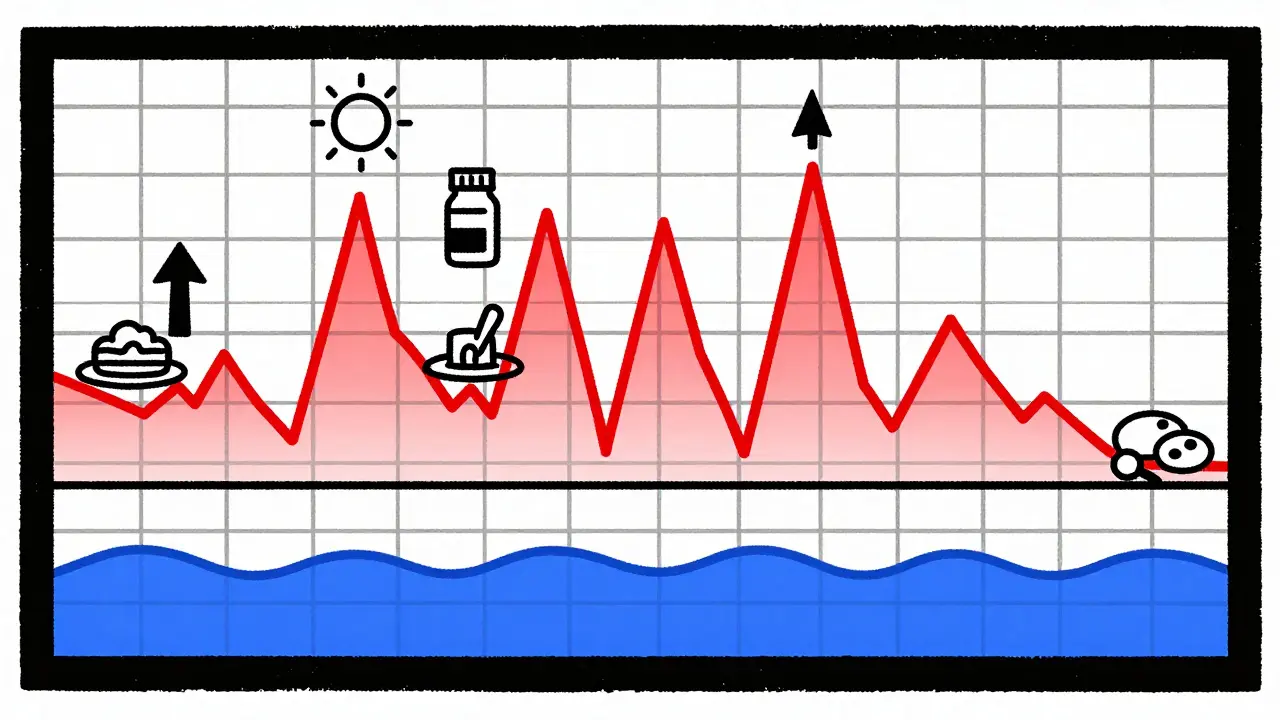
One of the biggest traps in managing steroid hyperglycemia is relying solely on fasting blood glucose checks. Steroids predominantly cause post-prandial (after-meal) hyperglycemia rather than fasting hyperglycemia. Standard fasting measurements may underestimate the true incidence of SIDM by 15-20%.
If you take your steroid in the morning, the peak effect hits 4-8 hours later. This corresponds to midday. Your breakfast and lunch will see significant glucose spikes, but your dinner and overnight levels might remain relatively stable. Dr. Mary-Elizabeth Patti of Harvard Medical School emphasizes that management must follow the pharmacokinetics of the specific steroid. Ignoring this circadian pattern leads to under-treating daytime highs and over-treating nighttime lows.
Adjusting Insulin: The Basal-Bolus Strategy
Sliding scale insulin alone is rarely enough for steroid-induced hyperglycemia. Expert consensus, including guidelines from the American Association of Clinical Endocrinologists, favors basal-bolus regimens. Here is how experts recommend adjusting doses based on clinical data.
| Patient Status | Basal Insulin Change | Prandial (Mealtime) Insulin Change | Key Timing Note |
|---|---|---|---|
| Pre-existing Diabetes | Increase by 20-30% | Increase by 50-100% | Focus on breakfast/lunch if morning dosing |
| New Onset SIDM | Initiate low dose | High prandial focus | Monitor 2 hours post-steroid dose |
| Per 50mg Hydrocortisone Eq. | Increase by 10-20% | Increase by 20-40% | Adjust meal following steroid admin |
Dr. Guillermo Umpierrez notes that insulin requirements typically increase by 30-50% in patients with pre-existing diabetes starting moderate-dose therapy (≥20 mg prednisone equivalent). The key is targeting the meals closest to the steroid dose. If you take prednisone at 8 AM, your rapid-acting insulin for breakfast needs a substantial boost. Lunch may also require adjustment. Dinner often requires little to no change unless you are on a long-acting steroid.
Risk Factors That Complicate Control
Not everyone reacts the same way. Several factors amplify the risk of severe hyperglycemia, requiring even more aggressive medication adjustments.
- Concurrent Immunosuppressants: Drugs like tacrolimus (a calcineurin inhibitor used in transplants) inhibit insulin production independently. This increases glucose intolerance risk by 35-45%. Mycophenolate mofetil also stresses beta cells, compounding the issue.
- Magnesium Levels: There is an inverse correlation between magnesium and glycemic control. Each 0.1 mg/dL drop in serum magnesium increases hyperglycemia risk by 10-15% during steroid therapy.
- Chronic Conditions: Hepatitis C virus infection increases the likelihood of developing steroid-induced diabetes by 2.3-fold.
- Demographics: Age ≥65 years, BMI ≥30 kg/m², and family history of diabetes significantly raise susceptibility.
If you fall into these categories, standard adjustment protocols may not be enough. You likely need closer monitoring and potentially earlier intervention with insulin rather than oral agents.
The Taper Trap: Avoiding Hypoglycemia
The most dangerous phase of steroid therapy is not the start-it is the end. As you taper off steroids, your insulin sensitivity returns rapidly. However, many patients keep their elevated insulin doses unchanged.
Dr. Robert Rushakoff warns that over-aggressive insulin titration during therapy, followed by failure to reduce it during tapering, leads to severe hypoglycemia. A Johns Hopkins study found that 18% of hospital readmissions within 30 days of steroid discontinuation were due to hypoglycemia from unchanged insulin regimens. Another study noted a 22% incidence of hypoglycemia in patients whose insulin wasn't reduced appropriately.
The rule of thumb from the American Diabetes Association’s Inpatient Glycemic Control Toolkit is clear: reduce total daily insulin dose by 10-20% for every 10 mg reduction in prednisone equivalent. Do not wait for your blood sugar to crash. Anticipate the drop.
Monitoring Tools and Real-World Success
Fingerstick testing has limitations here because it only gives you a snapshot. Continuous Glucose Monitoring (CGM) devices like Dexcom provide real-time trends. A 2021 case series showed that CGM users adjusted insulin doses 37% more accurately than those using fingersticks alone during steroid therapy.
In clinical trials, machine learning algorithms incorporating steroid dose, timing, BMI, and baseline HbA1c predicted required insulin increases with 85% accuracy, reducing hyperglycemia episodes by 41%. While you may not have access to these algorithms at home, the principle applies: track the variables. Log your steroid dose time, your insulin dose, and your glucose readings 2 hours after meals. Look for the pattern. If your glucose consistently peaks 4 hours after your morning steroid, adjust your breakfast bolus accordingly.
When Oral Medications Fall Short
For mild cases, some clinicians try oral agents like metformin or sulfonylureas. However, steroids blunt the effectiveness of these drugs. Metformin improves insulin sensitivity, but steroids actively destroy it. Sulfonylureas force insulin secretion, but steroids inhibit the beta cells' ability to respond. Consequently, insulin remains the gold standard for managing significant steroid-induced hyperglycemia, especially in hospitalized patients or those on high-dose regimens.
If you are determined to avoid insulin, discuss non-insulin injectables like GLP-1 agonists with your doctor, though evidence for their efficacy in acute steroid hyperglycemia is less robust than for insulin. Never attempt to manage high-dose steroid effects with diet and exercise alone; the metabolic disruption is too profound.
How quickly does steroid hyperglycemia develop?
Hyperglycemia can develop within hours of starting steroid therapy, particularly with high doses. Most patients show elevated glucose levels within the first 24-48 hours. This is why immediate glucose monitoring is recommended upon initiation of systemic corticosteroids at doses ≥20 mg prednisone equivalent daily.
Will my blood sugar return to normal after stopping steroids?
For most patients without pre-existing diabetes, blood sugar levels return to normal shortly after discontinuing steroids. However, approximately 10-20% of patients may retain some degree of glucose intolerance or develop permanent type 2 diabetes, especially if they had underlying risk factors like obesity or family history before starting treatment.
Should I check my blood sugar at night if I take steroids in the morning?
If you take short-acting steroids like prednisone in the morning, nighttime checks are less critical than daytime checks because the peak effect occurs 4-8 hours after administration. However, if you are on long-acting steroids like dexamethasone or taking split doses, nighttime monitoring is essential to prevent nocturnal hyperglycemia or hypoglycemia during tapering.
Can I use sliding scale insulin for steroid hyperglycemia?
Sliding scale insulin alone is generally discouraged because it is reactive rather than proactive. By the time you check your blood and administer correction doses, the hyperglycemia has already persisted for hours. Basal-bolus regimens allow you to anticipate the spike caused by the steroid, leading to tighter control and fewer complications.
What is the target blood sugar range during steroid therapy?
Current guidelines from the American Diabetes Association recommend maintaining blood glucose levels between 140-180 mg/dL for most hospitalized patients. For outpatient management, targets may be stricter, aiming for pre-meal levels below 140 mg/dL and 2-hour post-meal levels below 180 mg/dL, provided hypoglycemia is avoided.