
In cancer treatment, the sequence of therapies can be as critical as the treatments themselves. Neoadjuvant therapy-given before surgery-and adjuvant therapy-given after-offer distinct advantages. But which is better for your specific situation? Understanding cancer treatment sequencing is crucial for patients and doctors alike. Let's cut through the medical jargon and explore what really matters for patients facing cancer.
What Exactly Are Neoadjuvant and Adjuvant Therapy?
Neoadjuvant therapy is treatment administered before surgical removal of a tumor. Its primary goals include shrinking the tumor to make surgery easier, assessing how the cancer responds to drugs in real time, and targeting hidden cancer cells early.
Adjuvant therapy is treatment given after surgery to eliminate any remaining cancer cells. This approach targets microscopic disease that might have survived surgery, reducing the risk of recurrence.
Timing: Before or After Surgery?
Neoadjuvant therapy typically starts 3-4 weeks before surgery, with treatment cycles lasting 9-12 weeks. Adjuvant therapy begins 4-6 weeks after surgery and continues for several months. This timing difference is crucial. For example, in non-small cell lung cancer (NSCLC), patients receiving neoadjuvant immunotherapy like nivolumab often undergo surgery within 3-6 weeks of their last dose. In contrast, adjuvant therapy for breast cancer might involve chemotherapy for 4-6 months post-surgery.
Key Differences in Purpose and Benefits
| Aspect | Neoadjuvant Therapy | Adjuvant Therapy |
|---|---|---|
| Timing | Before surgery | After surgery |
| Primary Goal | Shrink tumor, assess response, target micrometastases early | Eliminate residual cancer cells post-surgery |
| Response Assessment | Real-time during treatment; pathologic complete response (pCR) measured post-surgery | No direct assessment before surgery; relies on post-op pathology |
| Common Cancers | NSCLC, triple-negative breast cancer (TNBC), HER2-positive breast cancer | Early-stage breast cancer, colorectal cancer |
| Typical Side Effects | Higher risk of treatment delays due to toxicity (10-15% of cases) | Lower risk of surgery delays; side effects occur after healing |
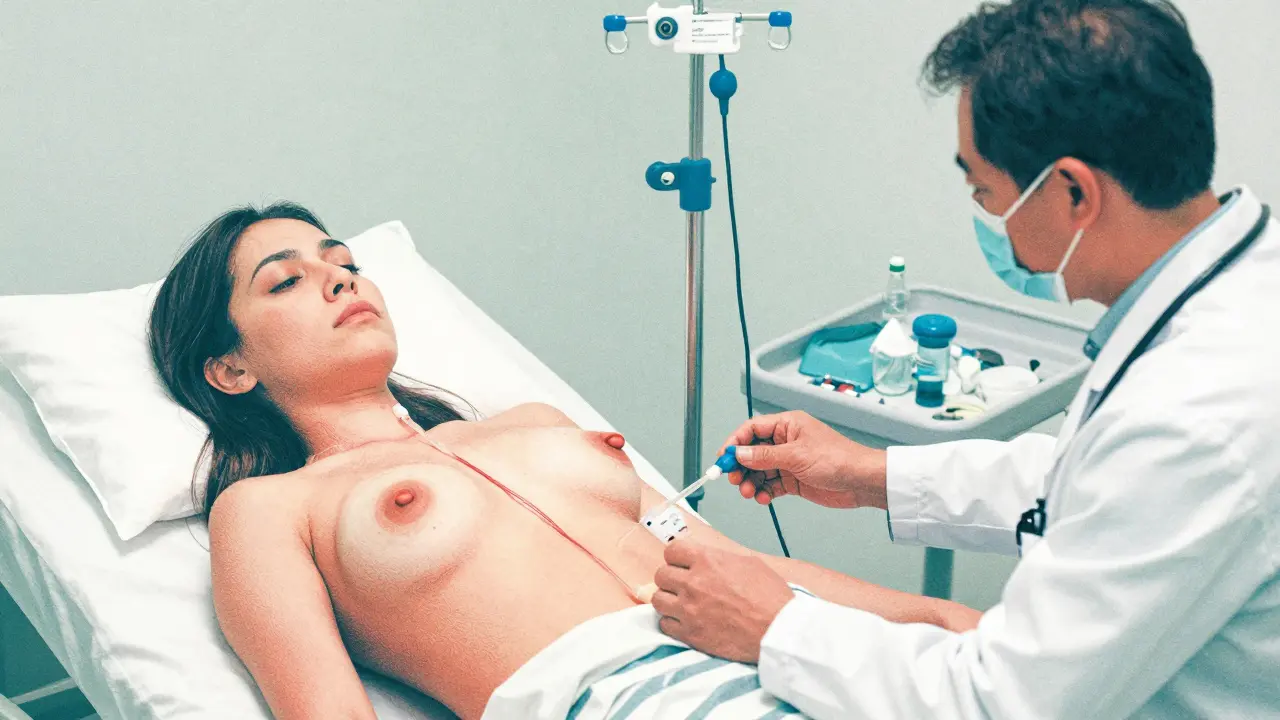
When Doctors Choose Neoadjuvant Therapy
For patients with locally advanced non-small cell lung cancer (NSCLC), neoadjuvant therapy has become a game-changer. The CheckMate 816 trial, published in The New England Journal of Medicine in 2022, showed that combining nivolumab (an immunotherapy drug) with chemotherapy before surgery led to a 24% pathologic complete response (pCR) rate-over ten times higher than chemotherapy alone. This approach also improved median event-free survival to 31.6 months compared to 20.8 months with chemo alone. Similarly, in triple-negative breast cancer (TNBC), neoadjuvant chemotherapy is standard for stage II-III cases, with pCR rates between 30-40% correlating strongly with better long-term survival.
Dr. Mark Awad, Director of Thoracic Oncology at Dana-Farber Cancer Institute, stated in an ASCO 2023 presentation that 'the neoadjuvant-only approach may represent the optimal sequencing strategy for early-stage NSCLC, sparing patients unnecessary toxicity without compromising efficacy.' This view is supported by recent data showing that continuing immunotherapy after surgery may not add significant benefit while increasing side effects.
When Adjuvant Therapy Takes the Lead
Adjuvant therapy shines in situations where immediate surgery is possible and the tumor isn't too large. For early-stage hormone receptor-positive breast cancer, doctors often recommend surgery first followed by hormone therapy and sometimes chemotherapy. This avoids delaying surgery for patients who might not benefit from neoadjuvant therapy. A 2023 survey by the Lung Cancer Alliance found that 62% of NSCLC patients who received neoadjuvant therapy reported anxiety about potential disease progression during the 8-12 week pre-surgical period. For these patients, adjuvant therapy may reduce anxiety by allowing surgery to happen sooner.
However, choosing adjuvant therapy means missing the chance to see how the tumor responds to treatment before surgery. As one breast cancer patient shared on BreastCancer.org: 'I chose adjuvant chemo because I didn't want to wait for surgery, but later learned I might have benefited from knowing how my tumor responded to chemo first.'
Real-World Evidence: What Studies Show
A January 2024 meta-analysis in JAMA Network Open reviewed four major trials (KEYNOTE-671, Neotorch, AEGEAN, and NADIM II) involving 3,215 patients. It found that neoadjuvant-adjuvant anti-PD-1/PD-L1 therapy showed no significant improvement in event-free survival (HR 0.88) or overall survival (HR 0.91) compared to neoadjuvant-only approaches. However, the neoadjuvant-adjuvant strategy had significantly higher severe side effects (29.8% vs. 17.6%).
In breast cancer, a propensity score-matched analysis of 1,033 patients with T1cN0M0-stage TNBC showed comparable overall survival between neoadjuvant and adjuvant therapy groups. But those achieving pathologic complete response (pCR) with neoadjuvant therapy had better outcomes. This highlights why assessing response before surgery matters.

Current Guidelines and Practical Considerations
The National Comprehensive Cancer Network (NCCN) Guidelines version 3.2024 recommend neoadjuvant chemoimmunotherapy for resectable NSCLC with clinical stage IB (≥4 cm)-IIIA disease. This requires multidisciplinary evaluation within 4 weeks of diagnosis. For breast cancer, the Society of Surgical Oncology recommends neoadjuvant therapy for HER2-positive or triple-negative subtypes, or stage II-III hormone receptor-positive cases where downsizing is needed.
Implementation challenges remain. A 2023 study in Annals of Surgical Oncology found only 58% of community hospitals have established neoadjuvant pathways compared to 92% of academic centers. Coordination between surgical oncology, medical oncology, and radiology teams is essential for success.
What's Next? The Future of Treatment Sequencing
The global neoadjuvant therapy market is projected to grow from $18.7 billion in 2023 to $29.3 billion by 2028. Adoption rates are rising: 35% of stage II-III NSCLC patients in the U.S. now receive neoadjuvant therapy, up from 15% in 2020. Regulatory approvals continue to expand, with the FDA and EMA approving neoadjuvant nivolumab for NSCLC in 2022.
Future directions include circulating tumor DNA (ctDNA) monitoring to guide therapy decisions. Dr. Roy Herbst predicted in a 2023 Cancer Discovery editorial that 'within 5 years, biomarker-driven neoadjuvant approaches will become standard for 70% of early-stage NSCLC cases.' The American Cancer Society projects optimized sequencing could improve 5-year survival for early-stage NSCLC from 60-68% to 75-80% by 2030, potentially preventing 15,000-20,000 lung cancer deaths annually in the U.S.
Frequently Asked Questions
What is pathologic complete response (pCR), and why does it matter?
Pathologic complete response (pCR) means no viable cancer cells are found in the tumor after treatment. Achieving pCR is a strong predictor of better long-term survival. In triple-negative breast cancer, patients with pCR have a 70-80% 5-year survival rate compared to 50-60% for those without. For NSCLC, pCR rates with neoadjuvant immunotherapy are significantly higher than chemotherapy alone, correlating with improved outcomes.
Can I choose between neoadjuvant and adjuvant therapy?
Treatment decisions depend on cancer type, stage, and individual factors. Your oncology team will review your specific case, including tumor biology, overall health, and personal preferences. For example, if you have early-stage NSCLC with PD-L1 expression ≥1%, neoadjuvant immunotherapy is often recommended. For hormone receptor-positive breast cancer without high-risk features, adjuvant therapy may be preferred. Always discuss the pros and cons with your doctors.
Are there risks to delaying surgery for neoadjuvant therapy?
Yes, but the risks are generally low. About 10-15% of patients experience treatment-related side effects that delay surgery. In rare cases (5-10% for NSCLC), the cancer might progress during neoadjuvant therapy. However, studies show the benefits of neoadjuvant therapy-like better tumor shrinkage and response assessment-outweigh these risks for most patients with locally advanced cancers.
How does immunotherapy fit into these approaches?
Immunotherapy has revolutionized neoadjuvant treatment for cancers like NSCLC and TNBC. Combining anti-PD-1 drugs (like nivolumab) with chemotherapy before surgery has shown remarkable results. For example, CheckMate 816 demonstrated a 24% pCR rate with neoadjuvant nivolumab plus chemo versus 2.2% with chemo alone. However, continuing immunotherapy after surgery may not improve outcomes and could increase side effects, leading many experts to recommend neoadjuvant-only strategies.
What's the difference in survival rates between the two approaches?
Current evidence shows similar overall survival rates between neoadjuvant and adjuvant therapy for most cancers. However, neoadjuvant therapy offers the advantage of assessing treatment response before surgery. In NSCLC, neoadjuvant immunotherapy improved median event-free survival to 31.6 months versus 20.8 months with adjuvant chemotherapy. For breast cancer, achieving pCR with neoadjuvant therapy strongly correlates with better long-term survival, even if the overall survival rates between the two approaches are comparable.
11 Comments
Bella CullenFebruary 6, 2026 AT 16:18
TL;DR: Neoadjuvant before surgery, adjuvant after. Depends on cancer type.
Sam SalamehFebruary 7, 2026 AT 10:48
The US is leading the way in cancer treatment sequencing. We've got the best research and protocols. Other countries should follow our example.
Cole StreeperFebruary 8, 2026 AT 13:16
Big Pharma is pushing neoadjuvant therapy to make more money. They don't care about patients, just profits. The whole system is rigged.
Diana PheFebruary 10, 2026 AT 07:59
US? What about the data? The FDA is controlled by pharma. They approve anything that makes money. Trust me, I've seen it.
Carl CristaFebruary 10, 2026 AT 20:16
FDA is fake Pharma controls everything No real data Just lies
divya shettyFebruary 10, 2026 AT 21:10
This is unethical. Patients should be informed properly. The current guidelines are insufficient. We need stricter regulations.
Rene KrikhaarFebruary 10, 2026 AT 21:50
I think this is really important because it helps patients understand their options The key is to have a multidisciplinary team to decide the best approach for each case Its all about personalized medicine
one hamzahFebruary 12, 2026 AT 04:43
This is sooo cool! 🌟 Neoadjuvant therapy is the future! 🚀 With ctDNA monitoring, we can tailor treatments perfectly! 💯 #CancerFighters 💪
Elliot AlejoFebruary 13, 2026 AT 23:41
We need more collaboration between oncologists and surgeons to optimize treatment sequencing. Data shows better outcomes when teams work together.
Cullen BausmanFebruary 15, 2026 AT 08:13
US should lead Other countries lack proper protocols This is a matter of national security
Arjun PaulFebruary 17, 2026 AT 05:20
This is all wrong Adjuvant therapy is always better Neoadjuvant is a waste of time Stop misleading patients