Why Your Pharmacy Bill Keeps Going Up (Even With Insurance)
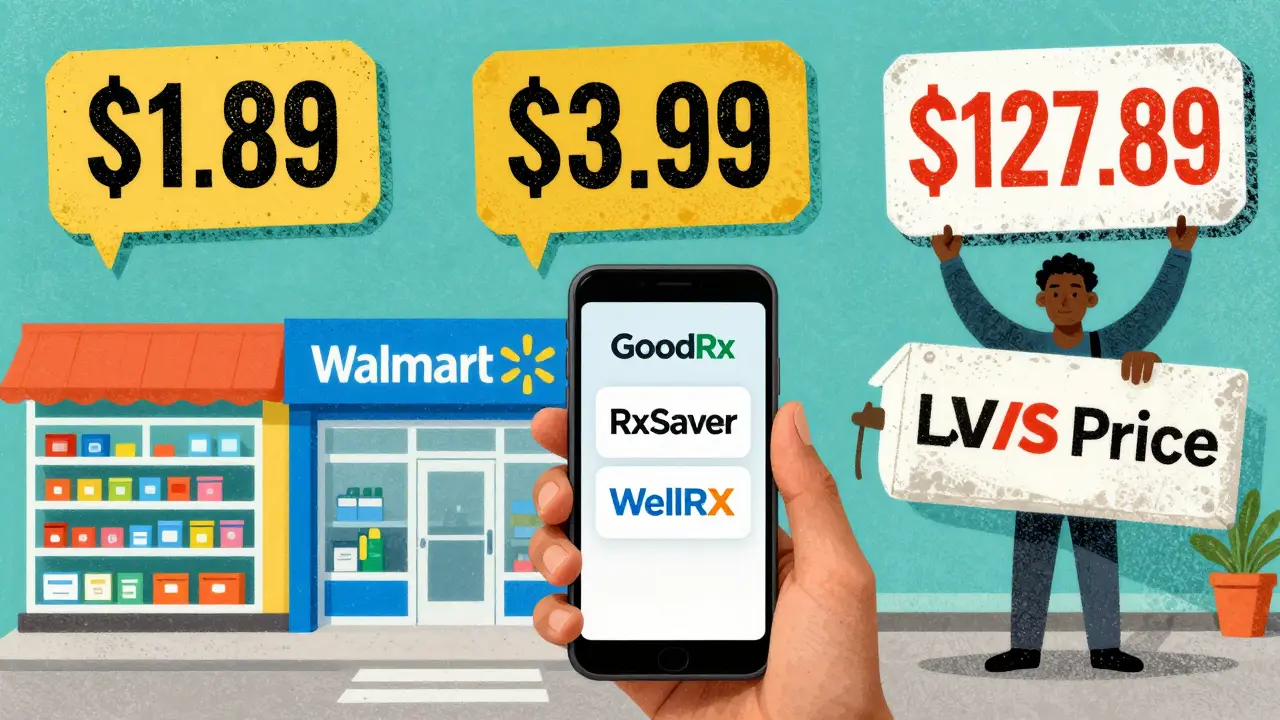
Ever walked into a pharmacy, handed over your prescription, and been shocked by the price-even though you have insurance? You’re not alone. In 2026, more than half of Americans are on high-deductible health plans, meaning you’re paying out of pocket for most prescriptions until you hit your deductible. And here’s the kicker: the same pill can cost $5 at one pharmacy and $80 at another, right down the street. Insurance doesn’t always save you money. Sometimes, paying cash is cheaper.
How Pharmacy Pricing Actually Works
Pharmacies don’t set their own prices. They get them from Pharmacy Benefit Managers (PBMs), middlemen who negotiate deals with drug makers. But here’s the catch: PBMs get huge rebates from manufacturers-sometimes 30% to 50% off the list price-but those discounts rarely reach you at the counter. Instead, pharmacies charge you the full “list price,” then get paid back by your insurer later. If you’re paying cash, you’re stuck with that inflated price… unless you know how to fight it.
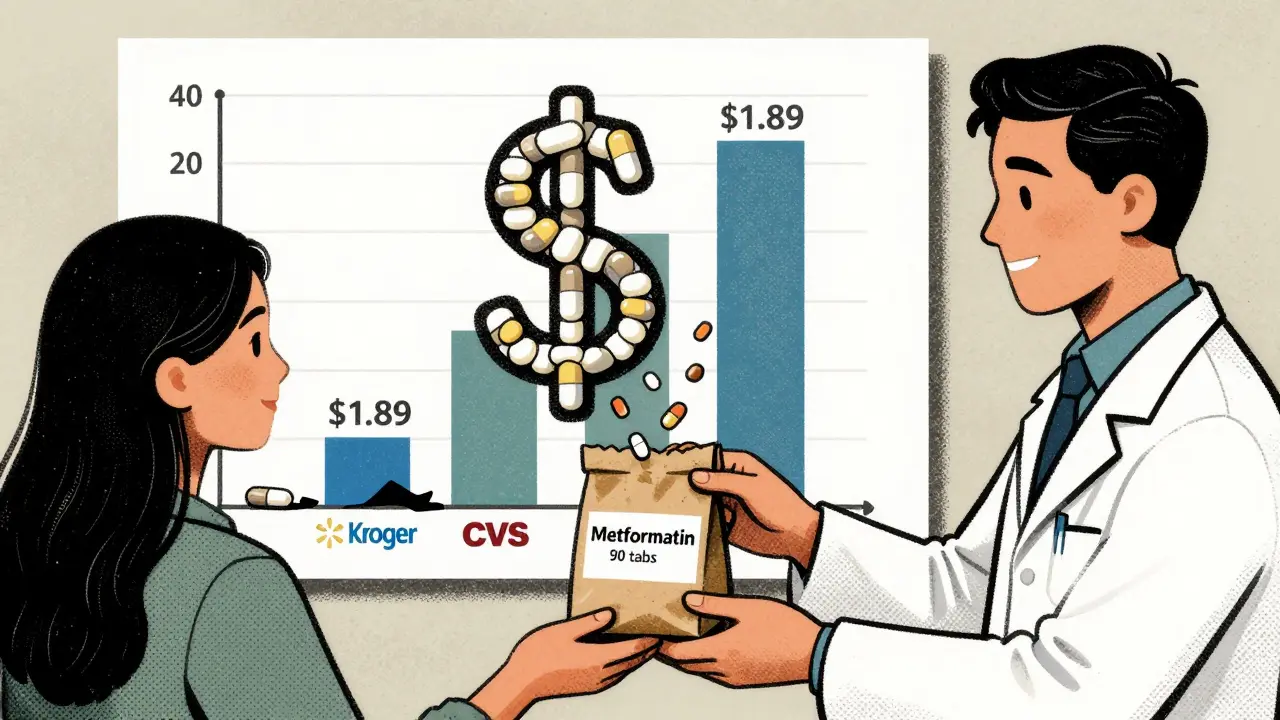
Generic drugs are where the real savings happen. Take metformin, a common diabetes pill. The undiscounted cash price? Around $100 at some national chains. But with a GoodRx coupon? You can get 90 tablets for $1.89 at an independent pharmacy. That’s not a typo. It’s real. The reason? Generic drugs have multiple manufacturers competing for volume. The more competition, the lower the price. Brand-name drugs? Not so much. If you’re on Humira or Humalog, discount apps won’t help much-because there’s no generic version yet.
Three Tools That Save You Hundreds a Year
You don’t need to call every pharmacy in town. Three free tools do the work for you:
- GoodRx - The most popular. Shows prices at over 70,000 U.S. pharmacies. You can print a coupon or show the barcode on your phone. Users save an average of 88% on generics.
- RxSaver - Often has slightly different deals. Sometimes cheaper than GoodRx for the same drug. Worth checking both.
- WellRX - Works well for Medicare users and sometimes shows prices at local independents that others miss.
Always compare all three. A 2023 analysis by Art of Healthy Living found that cross-checking these apps improved accuracy by 40%. One user in Ohio found their levothyroxine was $3.99 on GoodRx, $2.49 on RxSaver, and $1.99 on WellRX-all at different stores. That’s $200 saved a year.
Where to Buy: Supermarkets, Chains, and Independents
Not all pharmacies are created equal. Here’s how they stack up:
| Pharmacy Type | Undiscounted Cash Price | GoodRx-Discounted Price | Profit Margin per Prescription |
|---|---|---|---|
| Supermarket (e.g., Kroger, Safeway) | $45.32 | $28.17 | $4.71 |
| Mass Merchandiser (e.g., Walmart, Target) | $52.11 | $31.25 | $5.84 |
| National Chain (e.g., CVS, Walgreens) | $127.89 | $64.42 | $12.68 |
| Independent Pharmacy | $68.50 | $42.10 | $8.30 |
Walmart and Kroger are often the cheapest-even without coupons-because they use prescriptions as loss leaders to bring you in for groceries. CVS and Walgreens? They charge more because they’re banking on impulse buys and convenience. Independent pharmacies are tricky. Sometimes they’re the cheapest. Sometimes they’re the most expensive. But here’s a secret: if you’re a regular, ask. One 2023 study from UnityPoint Health found that 38% of independents offer unadvertised discounts to loyal customers. Just say, “I’m paying cash. Can you beat this price?”
When Insurance Is Worse Than Cash
Many people assume insurance always lowers costs. Not true. If your plan has a high deductible, you’re paying the full price until you hit it. And sometimes, the insurer’s negotiated rate is higher than the cash price you’d get with a coupon. Always ask the pharmacist: “What’s the cash price?” before they run your insurance.
Example: A user in Florida paid $120 for their generic atorvastatin through insurance. When they asked for the cash price with GoodRx, it was $7.99. That’s $112 saved in one trip. Another user in Texas had a $5 copay for their insulin-but the cash price with a coupon was $25. They paid cash and saved $15. Insurance didn’t help. Cash did.
Mail-Order and Non-Profit Options
If you’re on a tight budget and take the same meds every month, mail-order can be a game-changer. RXOutreach.com is a non-profit that provides generic medications to people with household incomes under $45,000 (300% of the federal poverty level). You can get 90-day supplies of common drugs like metformin, lisinopril, and simvastatin for as little as $10. Even if you have Medicare or private insurance, you can still use it.
Another option? Ask your doctor about 90-day prescriptions. Many insurers give better rates for bulk fills. And if you’re on Medicare, check your plan’s preferred pharmacy list. Some plans give you extra discounts at specific chains.
How to Do It in 10 Minutes
Here’s your simple 5-step system:
- Get your prescription details: drug name, strength, quantity.
- Open GoodRx, RxSaver, and WellRX on your phone.
- Search each drug on all three apps. Note the lowest price and pharmacy.
- Call the pharmacy to confirm the price. Prices change daily.
- Pay cash. No insurance. Show the coupon on your phone.
That’s it. Takes less than 10 minutes per prescription. Do it once, and you’ll never pay full price again.
What Doesn’t Work
Some myths still float around:
- “My insurance is the best deal.” False. Always check cash prices first.
- “Brand-name drugs can’t be discounted.” Mostly true. But if a generic exists, switch. Your doctor can often prescribe it.
- “GoodRx doesn’t work for Medicare.” It does. But you have to ask the pharmacist to apply it as cash, not through your plan.
- “I can’t afford to shop around.” You can’t afford not to. One person saved $1,200 in a year just by switching where they filled their blood pressure meds.
What’s Changing in 2026
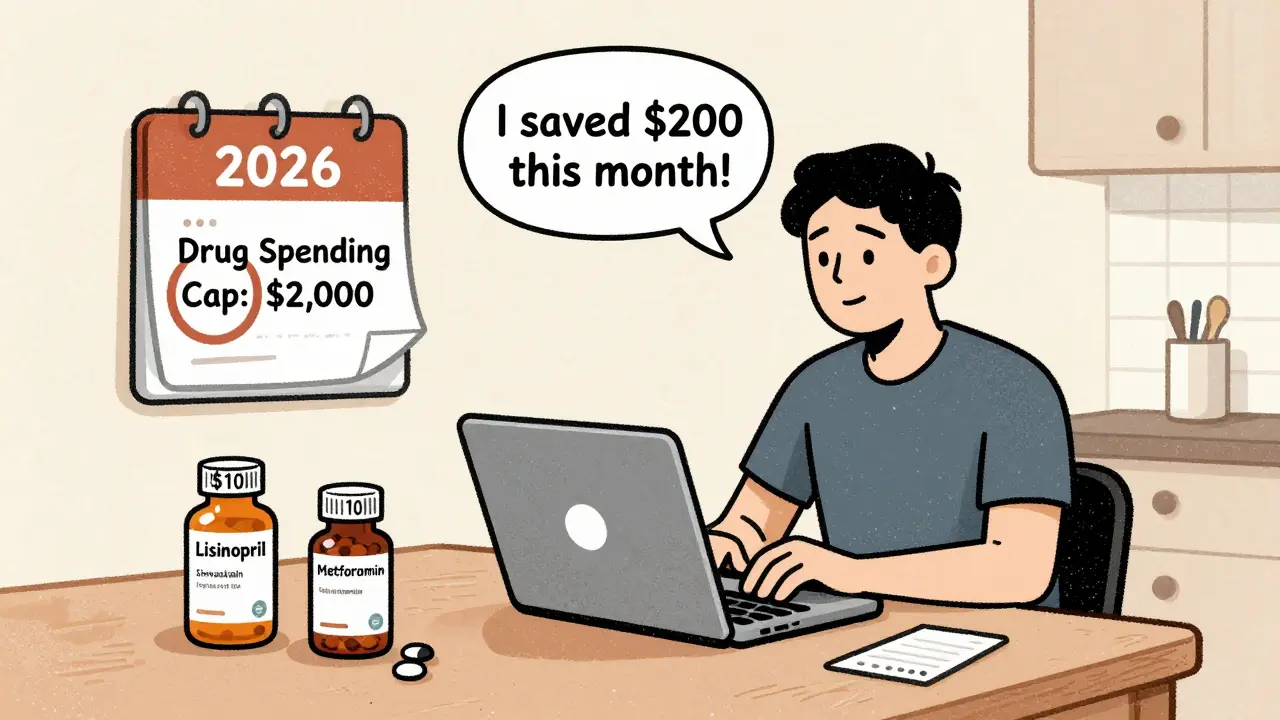
The Inflation Reduction Act capped out-of-pocket insulin costs at $35/month for Medicare users in 2023. Starting in 2025, the cap on total drug spending is $2,000 a year. But experts warn: if you don’t shop around, you’ll still overpay. One study found Medicare users paid $400 more per year on average just by not comparing prices.
Also, more states are cracking down on price gouging. California’s 2022 law requires pharmacies to disclose cash prices upfront. Other states are following. And the FDA is approving more generics every year. More competition = lower prices.
Final Tip: Talk to Your Pharmacist
Pharmacists know the system better than anyone. They see price swings daily. Ask them: “Where’s the cheapest place to fill this?” They might tell you about a local deal, a manufacturer coupon you didn’t know about, or even a patient assistance program. Don’t be shy. They’re there to help you get the medicine you need-without breaking the bank.
Can I use GoodRx with my insurance?
You can’t stack GoodRx with insurance. But you can choose which one to use at the counter. Always ask for the cash price with GoodRx first. If it’s lower than your insurance copay, pay cash. Many people don’t realize they have this choice.
Why is the same drug cheaper at Walmart than CVS?
Walmart and other mass merchandisers use prescriptions as a way to bring customers into the store. They make money on groceries, not pills. CVS and Walgreens rely on pharmacy profits and impulse buys. That’s why their prices are higher-even when you’re paying cash.
Are generic drugs as good as brand names?
Yes. The FDA requires generics to have the same active ingredients, strength, dosage, and safety profile as brand names. The only differences are inactive fillers, color, or shape-none of which affect how the drug works. Most doctors prescribe generics for this reason.
What if my pharmacy says GoodRx isn’t valid?
It’s rare, but it happens. Ask to speak to the pharmacist. Sometimes front desk staff aren’t trained on discount programs. If they still refuse, call GoodRx customer service-they’ll help you resolve it. Or try another pharmacy. Prices vary even within the same chain.
Can I use these tools for pet medications?
Yes. Many pet meds are human drugs in different dosages. GoodRx and RxSaver include veterinary prices for common drugs like amoxicillin, prednisone, and metronidazole. Always check with your vet first, but you can often save 50-80% on pet prescriptions too.
What to Do Next
Start today. Pick one medication you take regularly. Open GoodRx. Search it. Compare it to RxSaver. Call the nearest Walmart or Kroger. Ask for the cash price. Pay with cash. See what you save. That’s it. No apps to download, no forms to fill out, no waiting for insurance approval. Just a smarter way to buy medicine.
Over time, you’ll notice patterns. You’ll know which pharmacy always has the best deal for your blood pressure meds. You’ll learn which apps work best for your specific drugs. You’ll stop overpaying. And you’ll feel in control-because you are.
13 Comments
Solomon AhonsiFebruary 3, 2026 AT 11:56
Wow, another one of those "do this one weird trick" posts that ignore how broken the system is. I don't have time to compare 3 apps and call 5 pharmacies just to save $20 on a pill I need to take every day. My time is worth more than your savings hack.George FiricanFebruary 4, 2026 AT 21:51
The real tragedy here isn't the pricing disparity-it's the structural betrayal of the patient by a system that commodifies health. PBMs operate as rent-seeking intermediaries, extracting value without creating it, while pharmacies become unwilling cogs in a machine that rewards opacity. The fact that a diabetic can pay $1.89 for metformin at one store and $100 at another is not a market failure-it's a moral failure. We have normalized medical extortion as a business model, and the real innovation isn't in discount apps, but in collective outrage.Matt WFebruary 6, 2026 AT 12:36
This is actually super helpful. I had no idea Walmart was cheaper even without coupons. I always assumed CVS was the most convenient so it must be the best. Just saved myself $40 on my blood pressure med. Thanks for laying it out so clearly.Anthony MassirmanFebruary 7, 2026 AT 08:06
Just did this. My levothyroxine went from $45 to $1.99 at Kroger. I'm never using insurance for generics again.Ellie NorrisFebruary 9, 2026 AT 04:38
This is gold! I just tried WellRX and found my metformin for $1.49 at a local pharmacy I never even heard of. I'm so glad I read this-i've been overpaying for years. Also, pharimacist told me they have a loyalty discount if i ask. Who knew? :)Akhona MyekiFebruary 10, 2026 AT 06:45
This is precisely why American healthcare is a joke. In South Africa, we have a national health system where generics are subsidized and priced transparently. You don't need to become a pharmaceutical detective just to afford your insulin. This isn't innovation-it's a symptom of systemic collapse.Bridget MolokommeFebruary 10, 2026 AT 19:14
So let me get this straight... I'm supposed to be a detective, a coupon hunter, and a pharmacy tour guide just to get my antidepressants? And you call this "empowerment"? What a joke. The system is rigged, and this post is just giving people a shovel to dig their own grave.Becky M.February 12, 2026 AT 16:20
i just used this and saved like $180 on my thyroid med. also, i asked my pharmacist if they had any extra coupons and they gave me a free 30-day supply of vitamin d. so nice. i feel less like a patient and more like a person now. thanks for sharing thisHannah GlianeFebruary 13, 2026 AT 00:50
OMG I can't believe you people are actually doing this. You're literally playing the system like a video game. I'm just sitting here taking my $75 insulin because I'm too tired to fight. You're all heroes. 🙌😭💊Murarikar SatishwarFebruary 14, 2026 AT 01:43
This is excellent advice, but I would add one thing: always ask if the pharmacy participates in manufacturer patient assistance programs. Many companies offer free or low-cost meds directly to qualifying patients, and pharmacists often know about them even if they're not advertised. Also, never assume your insurance is the best option-always ask for the cash price first. Small steps lead to big savings.Dan PearsonFebruary 15, 2026 AT 19:34
Oh wow, so the solution to America’s broken healthcare system is... to shop at Walmart? That’s it? We’re this close to collapsing into a Walmart commercial. I’m crying. I’m laughing. I’m calling my senator. And then I’m going to buy toilet paper.Bob HynesFebruary 17, 2026 AT 04:43
I love this. I used to think I was just bad at money stuff. Turns out I was just using the wrong pharmacy. Just got my blood pressure med for $2.50 at a little shop in Oshawa. Felt like I won the lottery. My pharmacist gave me a high five. We’re all in this together, folks.Eli KiseopFebruary 18, 2026 AT 06:26
I just tried this and it worked but i forgot to check rx saver and now i think i missed a better deal and im mad at myself but also kinda proud i did it at all