Imagine grabbing a bottle of pills, popping one in your mouth, and realizing ten minutes later you took the wrong strength. It sounds like a rare accident, but medication errors cause at least 1.5 million preventable adverse drug events annually in the United States alone. That’s not just a statistic; it’s roughly $3.5 billion in excess medical costs and, tragically, thousands of lives lost every year. The culprit isn’t usually malice or gross negligence-it’s often a tiny oversight in checking the name, the strength, or the form of the drug.
You don’t need a medical degree to spot these mistakes, but you do need a system. Whether you’re managing your own prescriptions, caring for an elderly parent, or working in a clinic, verifying what you’re taking is non-negotiable. Here is how to check medication names, strengths, and dosage forms safely so you never have to wonder if that white pill was meant to be taken orally or applied topically.
The Danger of Look-Alike and Sound-Alike Names
Drug names are confusing by design. Manufacturers choose names that sound distinct enough for marketing but can look identical on a handwritten prescription. This is where look-alike/sound-alike (LASA) drugs create chaos. Think about prednisone versus prednisolone. They treat similar conditions, but swapping them can lead to ineffective treatment or unexpected side effects. Or consider hydralazine (for blood pressure) and hydroxyzine (for anxiety). One letter difference, completely different outcomes.
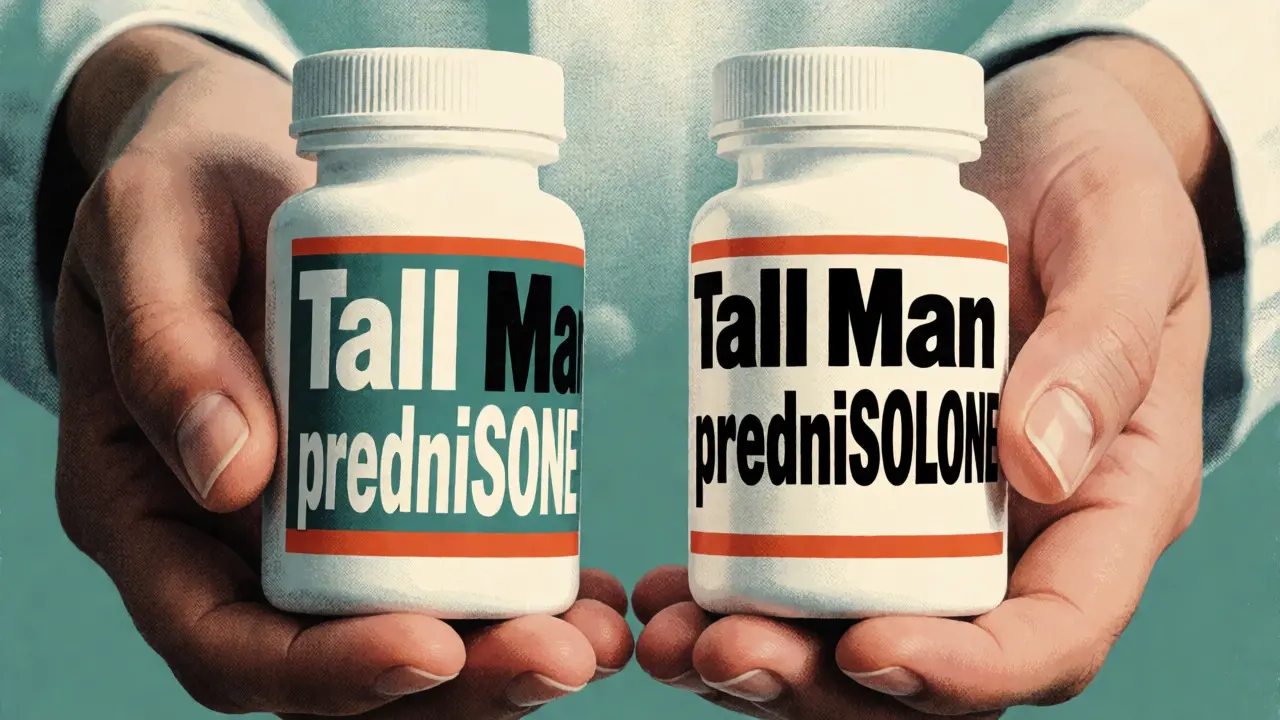
To combat this, the Institute for Safe Medication Practices (ISMP) introduced "Tall Man" lettering. You might see it on labels: predniSONE vs. predniSOLONE. The capitalization highlights the differences. When you pick up a new med, look for these visual cues. If the label doesn’t use Tall Man lettering, ask your pharmacist to write out the full generic name alongside the brand name. Never rely solely on memory or partial names. Always read the entire string of characters before swallowing anything.
Why Strength Verification Is Non-Negotiable
If there is one component people skip, it’s the strength. We assume that because we’ve taken "Lisinopril" before, any Lisinopril will do. Wrong. A 5 mg tablet is vastly different from a 40 mg tablet. Taking the wrong strength can lead to toxicity or sub-therapeutic dosing. According to Dr. Jerry Phillips, former Associate Director of the FDA's Office of Medication Errors, 34% of reported errors involve strength miscalculations.
Here’s the rule: Always verify the number and the unit. Is it 10 mg? 10 mcg? 10 g? The difference between milligrams (mg) and micrograms (mcg) is a factor of 1,000. Confusing these two is a classic error source. Also, watch out for decimal points. A missing leading zero-writing ".5 mg" instead of "0.5 mg"-can lead someone to misread it as "5 mg." Always insist on seeing the leading zero. If a label says "0.5," good. If it says ".5," ask for clarification or a new label.
| Scenario | Risk Level | Solution |
|---|---|---|
| Missing Leading Zero (.5 mg) | High | Always require "0.5 mg" format |
| Trailing Zero (5.0 mg) | Medium | Avoid trailing zeros to prevent misreading as 50 mg |
| Confused Units (mg vs mcg) | Critical | Spell out units clearly; avoid abbreviations like μg |
| Ratio Expressions (1:1000) | High | Convert to mg/mL for clarity (e.g., Epinephrine) |
Dosage Forms: More Than Just "Pills"
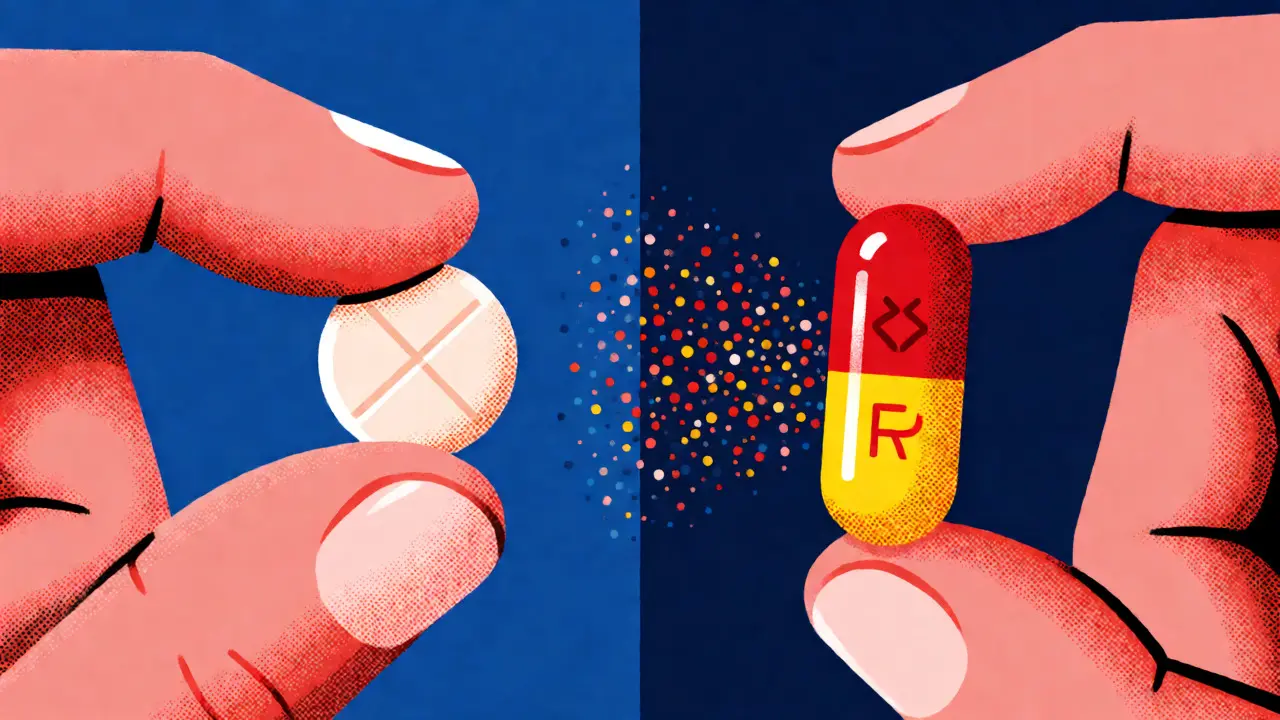
You’d be surprised how many errors stem from ignoring the dosage form. A medication comes in tablets, capsules, liquids, patches, inhalers, and injectables. Each has specific administration rules. Swallowing a tablet meant to be chewed can alter absorption rates. Using a topical cream intended for injection (or vice versa) can be dangerous.
Consider extended-release formulations. These are often marked with "ER," "XR," or "SR." Crushing or splitting these pills destroys their slow-release mechanism, dumping the entire dose into your system at once. This can cause severe side effects. Always check if a pill is scored (has a line down the middle) and whether the manufacturer explicitly states it can be split. If it’s an ER formulation, assume you cannot crush it unless told otherwise.
Liquids present another challenge. Volume measurements matter. Is it 5 mL or 5 cc? While they are technically equal, mixing terms causes confusion. Use the measuring device provided with the medication. Household teaspoons vary wildly in size. A standard teaspoon is 5 mL, but yours might be 7 mL or 3 mL. Always double-check the concentration of the liquid too. Some syrups are 10 mg/5 mL, others are 20 mg/5 mL. Same volume, double the dose.
The Three-Point Verification Protocol
Professional healthcare providers follow a strict three-point verification process. You should adopt this habit too. It takes seconds but saves health.
- When Receiving the Prescription: Check the order for completeness. Does it list the drug name, strength, dosage form, route, and frequency? If anything is missing, call the prescriber. Do not guess.
- When Preparing the Medication: Compare the physical product against the order. Pick up the bottle. Read the label aloud. Match the name, strength, and form. If the bottle says "Amoxicillin 500 mg Capsules" and your order says "Amoxicillin 250 mg Tablets," stop. Something is wrong.
- Before Administration: Confirm patient identity (if applicable) and re-read the label. For self-administration, pause. Ask yourself: "Is this the right drug, for the right reason, at the right time?"
This protocol reduces errors significantly. A study across 45 hospitals showed that structured training on these steps cut error rates by 63%. It’s simple, low-cost, and highly effective.
Navigating Abbreviations and Electronic Systems
Abbreviations are shortcuts that often lead to dead ends. The ISMP maintains a "Do Not Use" list of dangerous abbreviations. For example, "U" for units can look like a "0" or a "4." Writing "10U" could be misread as "100" or "104." Always write out "units." Similarly, "MS" can mean Morphine Sulfate or Magnesium Sulfate. In emergency settings, this ambiguity is deadly.
Electronic Health Records (EHRs) help, but they aren’t perfect. Systems like Epic and Cerner flag potential issues, but "alert fatigue" is real. Clinicians sometimes ignore warnings because they pop up too often. Don’t rely solely on the computer. If the screen shows a warning, investigate it. If the screen shows no warning, still verify manually. Technology aids human judgment; it doesn’t replace it.
Practical Tips for Everyday Safety
You don’t need to be a pharmacist to stay safe. Here are concrete actions you can take today:
- Read the Label Every Time: Even if you’ve had the same refill for years. Pharmacies change manufacturers. The shape, color, and even the inactive ingredients can change. A new look doesn’t always mean a new drug, but it warrants a second look.
- Ask Your Pharmacist: They are your best resource. Ask: "What does this look like? What strength am I getting? Can I split it?" Their expertise is free with most prescriptions.
- Keep a Current Med List: Write down every medication, including supplements. Include the strength and form. Update it after every doctor visit. Bring this list to every appointment.
- Beware of High-Alert Medications: Drugs like insulin, warfarin, heparin, and opioids carry higher risks. Treat them with extra caution. Verify twice.
Remember, medication safety is a shared responsibility. Providers prescribe, pharmacists dispense, and patients administer. By mastering the basics of checking names, strengths, and forms, you close the loop on prevention.
What is the biggest risk with medication strengths?
The biggest risk is confusing units, particularly milligrams (mg) and micrograms (mcg), or misinterpreting decimals due to missing leading zeros (e.g., .5 mg vs 0.5 mg). These small formatting errors can lead to 10-fold or even 1,000-fold dosing errors.
Can I split all my pills?
No. Extended-release (ER/XR/SR) tablets generally should not be split, crushed, or chewed because doing so releases the medication too quickly. Only split pills if they are scored and your doctor or pharmacist confirms it is safe.
Why do drug names look so similar?
Many drugs share similar roots because they belong to the same chemical class or treat similar conditions. This leads to "Look-Alike/Sound-Alike" (LASA) errors. Using "Tall Man" lettering helps distinguish them, but careful reading is essential.
Should I trust electronic alerts from my pharmacy app?
Use them as a guide, not gospel. Alerts can suffer from "alert fatigue," where frequent warnings are ignored. Always perform a manual visual check of the physical label against your prescription instructions.
What should I do if the pill looks different than usual?
Check the label first. Pharmacies may switch generic manufacturers, changing the pill's appearance while keeping the active ingredient the same. If the name and strength match, it’s likely fine, but call your pharmacist to confirm if unsure.