NMS Risk Assessment Tool
Step 1: Current Medications
Select medications currently being taken.
Step 2: Check Symptoms (FEVER)
Click on any symptoms present right now.
Risk Assessment
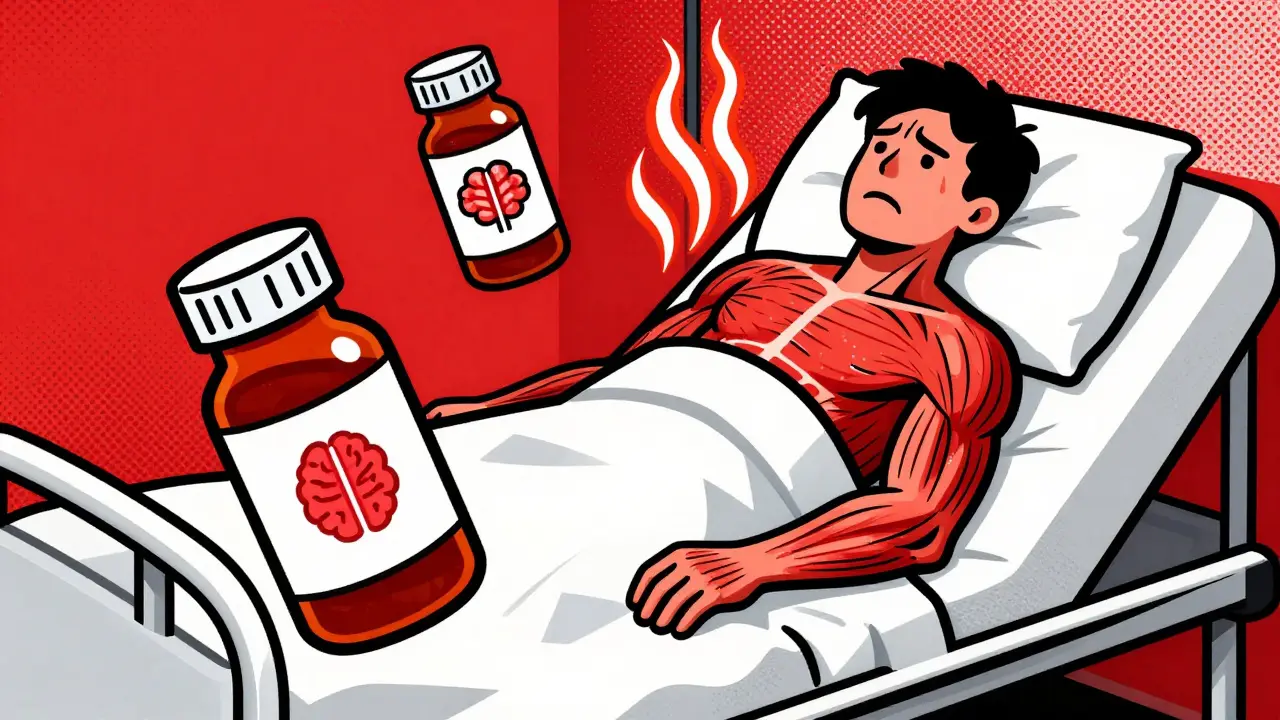
Imagine a patient taking an antipsychotic for schizophrenia suddenly develops a high fever, muscles become rigid as stone, and their mental state deteriorates rapidly. This isn't just a bad reaction; it could be Neuroleptic Malignant Syndrome, a life-threatening condition triggered by the dangerous combination of NMS with certain medications.
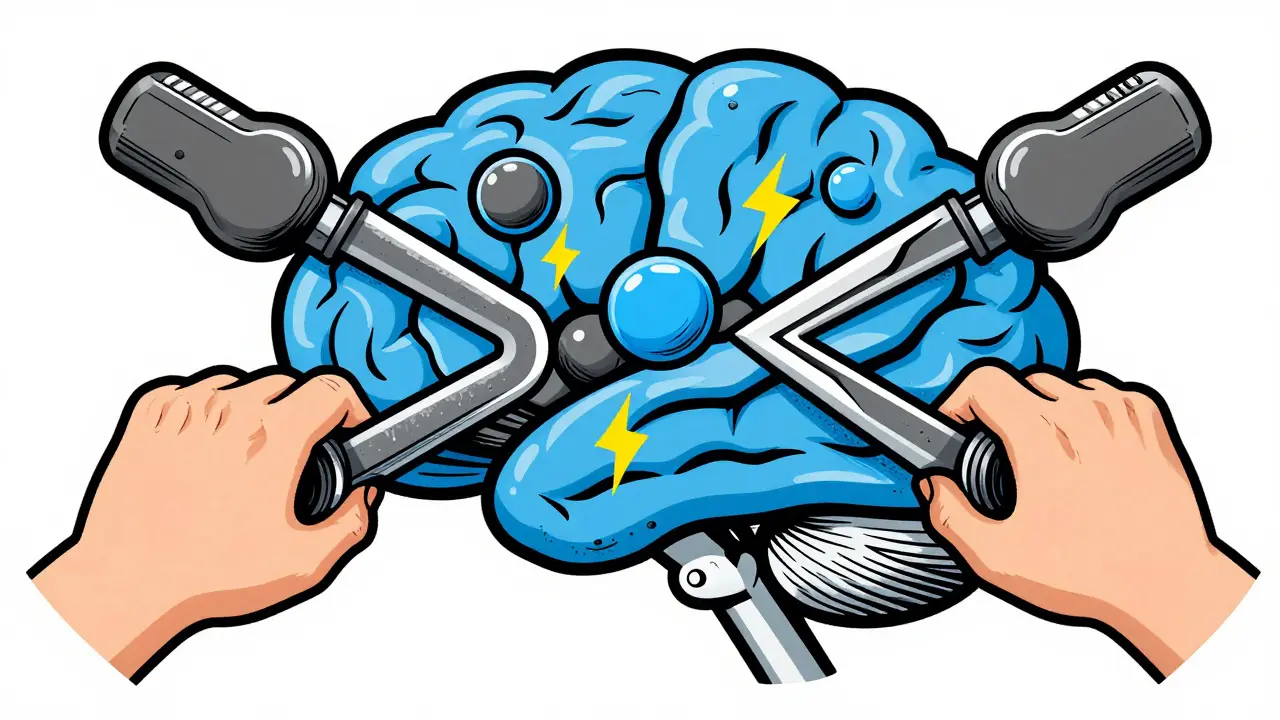
This scenario highlights a critical medical warning: combining Metoclopramide (often known by brand names like Reglan or Gimoti) with antipsychotic drugs is widely considered unsafe. Both classes of medication block dopamine receptors in the brain. When you stack them together, you aren't just adding effects-you are multiplying the risk of severe neurological damage.
Why This Combination Is Dangerous
To understand why this mix is so risky, we need to look at how these drugs work inside your body. Metoclopramide is primarily used to treat nausea, vomiting, and gastroparesis (a condition where the stomach empties too slowly). It does this by blocking dopamine D2 receptors in the chemoreceptor trigger zone of the brain and increasing gut motility.
Antipsychotics, whether typical (like haloperidol) or atypical (like risperidone), also work largely by blocking dopamine D2 receptors. They do this to manage symptoms of psychosis, such as hallucinations and delusions.
When you take both, you create a "double hit" on your dopamine system. Dopamine is essential for controlling movement. Blocking it too aggressively can lead to Extrapyramidal Symptoms (EPS), which include tremors, stiffness, and restlessness. In worst-case scenarios, this excessive blockade triggers Neuroleptic Malignant Syndrome.
The U.S. Food and Drug Administration (FDA) is explicit about this danger. The prescribing information for Reglan states clearly: "Avoid Reglan in patients receiving other drugs associated with NMS, including typical and atypical antipsychotics." This isn't a minor suggestion; it's a regulatory directive based on significant safety concerns.
Understanding Neuroleptic Malignant Syndrome (NMS)
NMS is rare but deadly. It is a medical emergency that requires immediate hospitalization. If you or someone you care for is on these medications, knowing the signs can save a life.
The classic presentation of NMS involves four main symptoms, often remembered by the acronym FEVER:
- Fever: High temperature, often over 101°F (38°C).
- Enzyme elevation: Increased creatine kinase (CK) levels in the blood due to muscle breakdown.
- Vitals unstable: Blood pressure fluctuations, rapid heart rate, and sweating.
- Extrapyramidal symptoms: Severe muscle rigidity (lead-pipe rigidity).
- Real mental status changes: Confusion, agitation, or coma.
If these symptoms appear shortly after starting or increasing the dose of metoclopramide or an antipsychotic, seek emergency care immediately. Delaying treatment can lead to kidney failure, respiratory distress, and death.
The Pharmacokinetic "Double Hit"
The risk isn't just about the mechanism of action (pharmacodynamics); it's also about how the body processes these drugs (pharmacokinetics). Metoclopramide is metabolized by an enzyme called CYP2D6. Many antipsychotics, such as fluoxetine, paroxetine, and some typical antipsychotics, inhibit this same enzyme.
When an antipsychotic blocks CYP2D6, the body cannot break down metoclopramide efficiently. This causes metoclopramide levels in the blood to rise significantly. Higher concentrations mean stronger dopamine blockade, which exponentially increases the risk of EPS and NMS. Additionally, metoclopramide is a substrate for P-glycoprotein (P-gp), a transporter that pumps drugs out of the brain. Drugs that inhibit P-gp can allow more metoclopramide to enter the central nervous system, further amplifying side effects.
| Medication | Mechanism of Action | Risk with Antipsychotics | Recommendation |
|---|---|---|---|
| Metoclopramide (Reglan) | Dopamine D2 Antagonist | High (Additive dopamine blockade) | Avoid if possible |
| Ondansetron (Zofran) | Serotonin 5-HT3 Antagonist | Low (Different pathway) | Preferred alternative |
| Promethazine (Phenergan) | Histamine H1 Antagonist | Moderate (Sedation risk) | Use with caution |
| Prochlorperazine (Compazine) | Dopamine D2 Antagonist | High (Same class as metoclopramide) | Avoid |
Safer Alternatives for Nausea Control
If a patient needs anti-nausea medication while taking antipsychotics, doctors have better options. The goal is to avoid dopamine antagonists entirely.
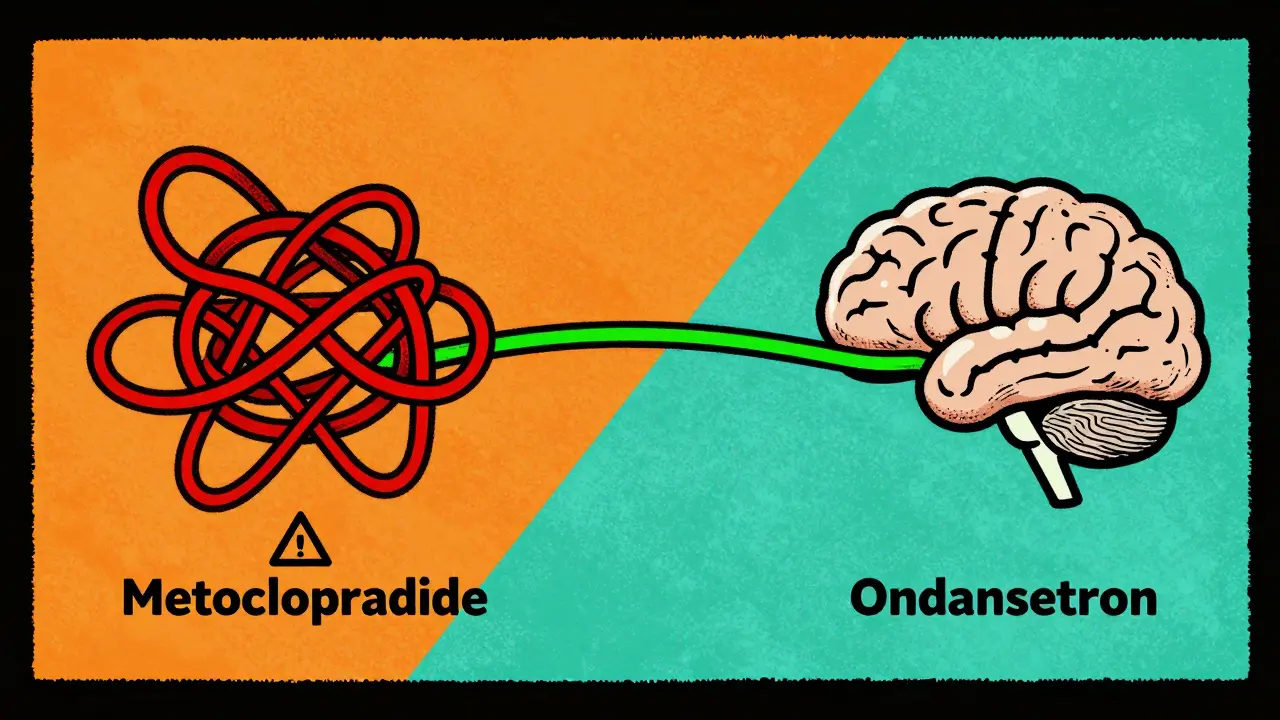
Ondansetron (Zofran) is often the first choice. It works by blocking serotonin receptors (5-HT3) rather than dopamine. Because it uses a different biological pathway, it doesn't add to the dopamine blockade caused by antipsychotics. This makes it much safer for psychiatric patients.
Other alternatives include:
- Prochlorperazine: Wait-this is also a dopamine antagonist! Like metoclopramide, it carries a similar risk profile and should generally be avoided in this context.
- Promethazine: Works on histamine receptors. While it doesn't block dopamine directly, it can cause sedation, which might compound the drowsiness from antipsychotics. Use with caution.
- Aprepitant: A NK1 receptor antagonist, useful for chemotherapy-induced nausea, but less common for general use.
Always consult a pharmacist or doctor before switching medications. They can review your full medication list to check for interactions involving CYP2D6 or P-gp.
Who Is at Highest Risk?
Not everyone who takes these drugs will develop NMS, but certain groups are far more vulnerable. You should be extra cautious if you fall into any of these categories:
- Patients with Parkinson’s Disease: Metoclopramide is contraindicated in Parkinson’s because it worsens motor symptoms. Since Parkinson’s patients often have sensitive dopamine systems, adding antipsychotics is extremely risky.
- Those with Renal Failure: Kidneys help clear metoclopramide. If kidney function is poor, drug levels build up faster.
- Genetic Variations: Some people have genetic deficiencies in CYP2D6 or P-gp activity. These individuals process metoclopramide slower, leading to higher exposure even at standard doses.
- History of Movement Disorders: If you’ve had tardive dyskinesia or other EPS before, your brain may be more susceptible to dopamine-related issues.
- Dehydration or Malnutrition: These conditions lower the threshold for developing NMS.
Clinical Guidelines and Monitoring
The FDA label for metoclopramide includes a Boxed Warning-the strongest type of warning available. It highlights the risk of Tardive Dyskinesia, a potentially irreversible movement disorder. The label advises avoiding treatment for longer than 12 weeks whenever possible.
While this warning specifically targets tardive dyskinesia, the underlying principle applies to all dopamine-blocking risks, including NMS. Here’s what clinicians recommend:
- Review Medication Lists: Before prescribing metoclopramide, ensure the patient isn’t on antipsychotics, mood stabilizers, or other dopamine-affecting drugs.
- Choose Alternatives First: Use ondansetron or non-dopaminergic antiemetics when possible.
- Monitor Closely: If metoclopramide must be used, watch for early signs of EPS: restlessness, tremors, or facial grimacing. Stop the drug immediately if these appear.
- Educate Patients: Tell patients to report fever, muscle stiffness, or confusion right away.
Dr. Horn and Dr. Hansten from the University of Washington School of Pharmacy have noted that metoclopramide’s elimination via CYP2D6 creates a large number of potential drug interactions. This reinforces the need for careful pharmacological management.
What To Do If You Suspect NMS
If you suspect Neuroleptic Malignant Syndrome, time is critical. Do not wait to see if symptoms improve on their own.
- Stop the offending drugs: Discontinue metoclopramide and/or antipsychotics immediately under medical supervision.
- Seek Emergency Care: Go to the nearest ER. NMS requires intensive support, including cooling measures, hydration, and possibly medications like dantrolene or bromocriptine to reverse dopamine blockade.
- Provide Medical History: Bring a list of all medications, including over-the-counter drugs and supplements. Mention any recent changes in dosage.
Recovery from NMS can take days to weeks. Early intervention drastically improves outcomes and reduces the risk of long-term complications like permanent muscle damage or cognitive impairment.
Key Takeaways for Patients and Providers
The interaction between metoclopramide and antipsychotics is one of the most well-documented and serious drug combinations in psychiatry and gastroenterology. The shared mechanism of dopamine D2 receptor antagonism creates a synergistic risk for Extrapyramidal Symptoms and Neuroleptic Malignant Syndrome.
For patients: Never assume a new prescription is safe without checking for interactions with your current meds. Ask your doctor, "Does this interact with my psychiatric medications?" For providers: Default to serotonin-based antiemetics like ondansetron for patients on antipsychotics. Reserve metoclopramide for cases where no other option exists, and monitor closely for neurological side effects.
By understanding the pharmacology behind this interaction, we can prevent tragic outcomes and keep patients safe.
Can I take metoclopramide if I am on an atypical antipsychotic like quetiapine?
Generally, no. While atypical antipsychotics like quetiapine have a lower affinity for dopamine D2 receptors compared to typical antipsychotics, they still block dopamine pathways. The FDA warns against using metoclopramide with any antipsychotic due to the risk of Neuroleptic Malignant Syndrome and extrapyramidal symptoms. Safer alternatives like ondansetron should be used instead.
How quickly does Neuroleptic Malignant Syndrome develop?
NMS typically develops within 1-2 days of starting or increasing the dose of the offending medication, but it can occur up to several weeks later. Symptoms often start subtly with muscle stiffness or mild fever before progressing to severe rigidity and high fever. Immediate medical attention is required if symptoms appear.
Is there a difference in risk between typical and atypical antipsychotics when combined with metoclopramide?
Yes, typical antipsychotics (like haloperidol) generally carry a higher risk of dopamine-related side effects because they bind more tightly to D2 receptors. However, atypical antipsychotics (like risperidone or olanzapine) still pose a significant risk, especially at higher doses. The FDA warning applies to both classes, so caution is necessary regardless of the specific antipsychotic prescribed.
What are the signs of extrapyramidal symptoms (EPS) I should watch for?
Early signs of EPS include restlessness (akathisia), tremors, muscle stiffness, slow movements, and difficulty speaking or swallowing. Facial expressions may become masked or grimacing. If you notice any of these symptoms while taking metoclopramide or an antipsychotic, contact your healthcare provider immediately.
Are there any natural remedies for nausea that are safe with antipsychotics?
Some natural remedies like ginger tea or peppermint may help mild nausea without interacting with antipsychotics. However, always discuss herbal supplements with your doctor, as some can affect liver enzymes involved in drug metabolism. For severe nausea, pharmaceutical alternatives like ondansetron are safer and more effective than relying solely on home remedies.