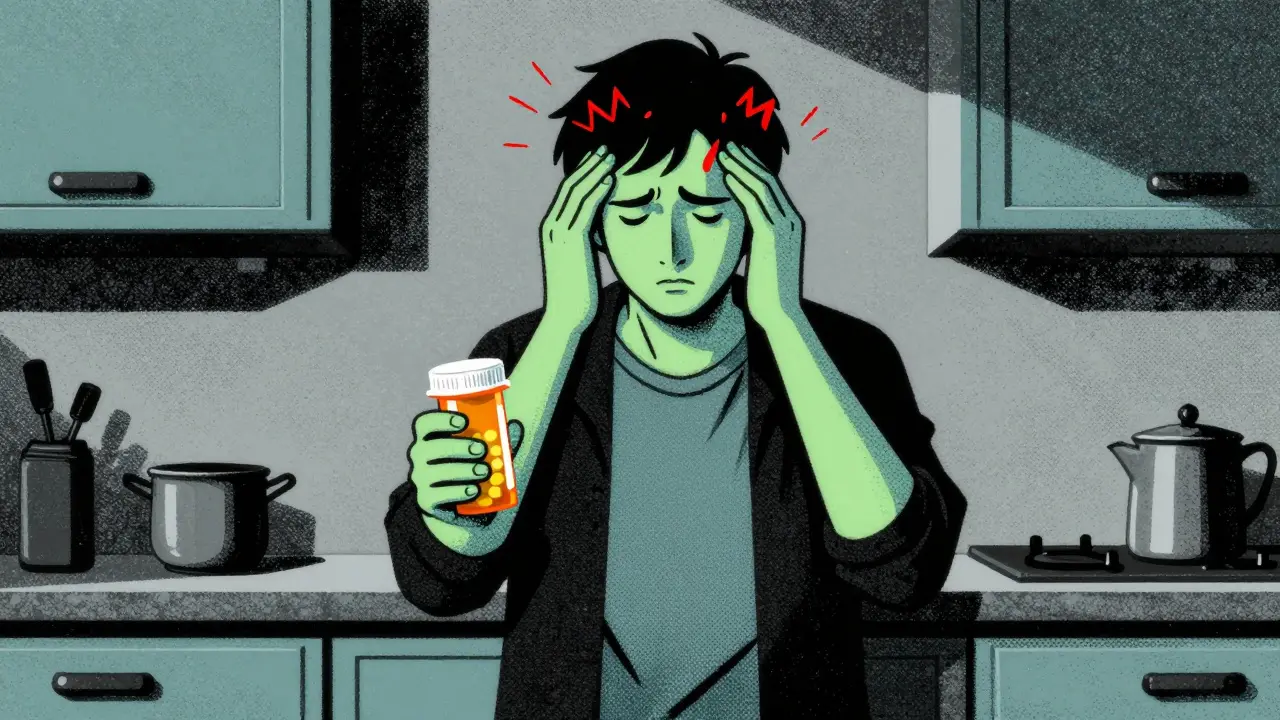
It starts with a headache. Or maybe it’s nausea that hits an hour after your morning dose. You look at the bottle sitting on the counter, feel the weight of the prescription instructions, and then you make a choice: skip today. It happens more often than we admit. Medication adherence is the voluntary cooperation of the patient in taking drugs or medicine as prescribed, including timing, dosage, and frequency. When side effects creep in, that cooperation fractures. And when it does, the consequences ripple far beyond just one missed pill.
The Real Cost of Skipping Pills
We tend to think of nonadherence as a personal failing-a lack of discipline or forgetfulness. But the data tells a different story. According to the World Health Organization’s landmark report by Sabaté, approximately 30% to 50% of patients do not take their medications as recommended. This statistic has barely moved since 2003. In 2026, U.S. Pharmacist reports that adherence to chronic medications remains stubbornly around 50%. ISPOR’s May 2025 report confirms this, stating nonadherence prevalence can be as high as 50% across various conditions.
The human cost is staggering. Medication nonadherence accounts for up to 50% of treatment failures. It contributes to approximately 125,000 preventable deaths annually in the United States alone. Even worse, it drives up to 25% of hospitalizations. These aren’t abstract numbers; they represent people whose health declined because the treatment plan didn’t match their daily reality. The economic burden is equally heavy, with annual adjusted costs per person ranging from $949 to $44,190 (in 2015 US dollars), according to ISPOR. For healthcare systems, improving adherence isn’t just about better outcomes-it’s about survival.
Why Side Effects Break the Chain
If forgetting is one enemy of adherence, side effects are the other. AssistRx.com (2025) notes that even patients who deeply value their treatment plan may resist adherence due to fears about drug interactions or side effects. This fear isn’t always irrational. Frontiers in Pharmacology (2025) explains that while many patients start treatment, side effects become a primary driver of discontinuation over time. Approximately a fifth of patients never even initiate treatment. Of those who do, 30% to 50% fail to implement the treatment as prescribed. Over long follow-up periods, 80% to 100% of patients discontinue entirely.
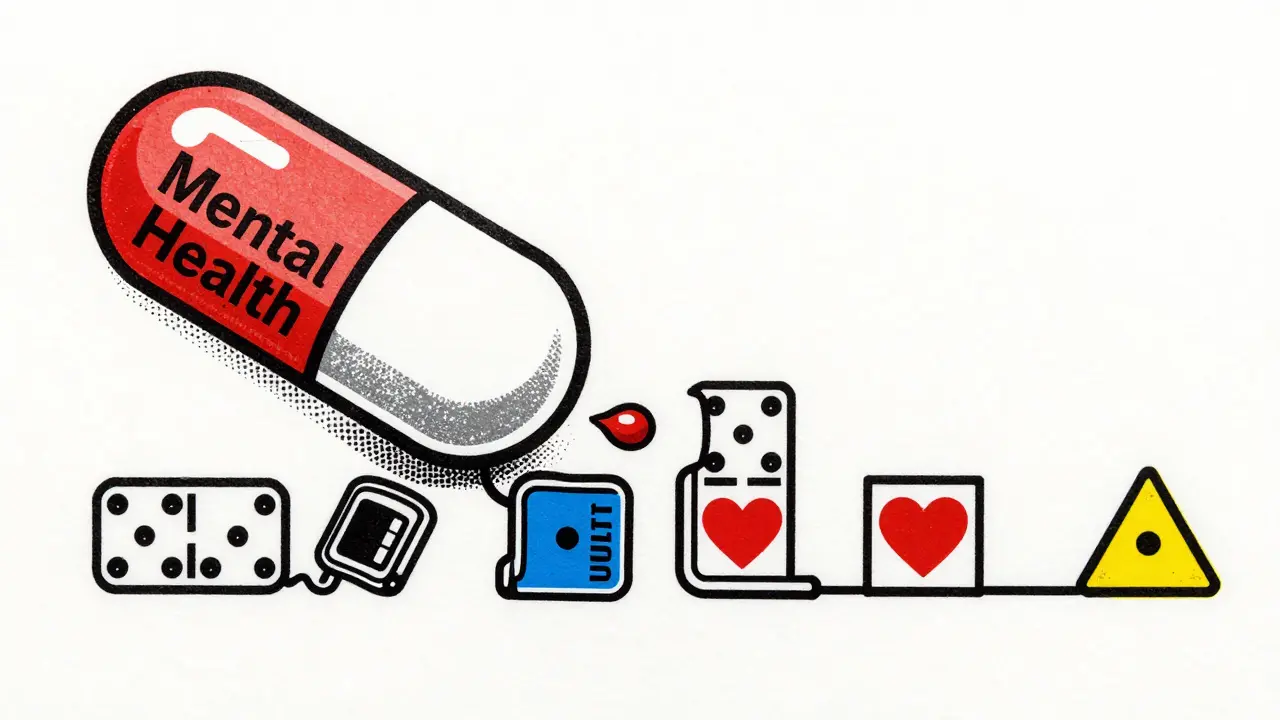
This pattern is especially visible in mental health care. One study cited by AssistRx found that patients with depression were twice as likely to skip treatment compared to those without symptoms. Skipping mental health medications often correlates with decreased adherence across all prescribed therapies. If you stop taking your antidepressant because of insomnia, you’re more likely to skip your blood pressure medication too. The domino effect is real.
Data from the a:care congress 2024 reveals specific prescription filling patterns that highlight these challenges:
- For every 100 prescriptions written, only 50% to 70% are filled.
- Of those, 48% to 66% are picked up.
- Only 25% to 30% are taken as prescribed.
- A mere 15% to 20% are refilled as directed.
The Documentation Gap
Here’s a troubling fact: doctors and nurses often miss what’s happening with adherence. The British Journal of Clinical Pharmacology (2025) reveals that pharmacists were least likely to document nonadherence-only 52.0% did so, compared with 70% of physicians and 85% of nurses. This gap means side effect-related struggles often go unrecorded, untreated, and unresolved. If it’s not documented, it’s not managed. And if it’s not managed, the patient suffers.
This lack of documentation also affects system-level metrics. Medicare Star Ratings tie directly to adherence performance. JMCP (2025) reports that among plans achieving 5 stars on any adherence measure, 85% to 90% achieved at least a 4-star overall rating. Poor adherence drags down entire health plans. Conversely, strong adherence strategies boost reimbursement and quality scores. But you can’t improve what you don’t track.
Pharmacist-Led Interventions That Work
So, what actually helps? Pharmacist-led interventions have proven particularly effective. PharmDLive reports up to a 40% increase in adherence with pharmacist-led programs. Their Medication Risk Management (MRM) program showed up to a 35% increase in adherence rates within 90 days. U.S. Pharmacist (2025) provides detailed efficacy data: face-to-face methods were most successful (83%), followed by hospital discharge interventions (67%), clinic-based interventions (47%), and phone calls (38%).
Crucially, interventions specifically addressing side effect management showed improved outcomes. One study demonstrated significantly higher adherence in collaborative intervention groups compared with usual care (89.3% vs. 73.9%, P = .003). When pharmacists worked directly with patients to manage side effects-adjusting dosages, suggesting timing changes, or recommending complementary remedies-patients stayed on track.
Combined patient and physician incentives also made a difference. A study showed more pronounced LDL-C reductions (33.6 vs. 25.1, P = .002) when addressing adherence barriers including side effects through shared goals. It’s not just about reminding patients to take pills; it’s about solving the problems that make them want to stop.

Strategies for Staying on Track
If you’re struggling with side effects, here are practical steps that align with current best practices:
- Talk to your pharmacist first. They are trained to identify side effect patterns and suggest adjustments before you call your doctor. Many issues can be resolved with simple timing changes or dose splits.
- Keep a symptom journal. Note when side effects occur, their severity, and what you were doing at the time. This data helps professionals distinguish between true drug reactions and coincidental events.
- Ask about generic alternatives. Sometimes brand-name drugs cause different side effects than generics due to inactive ingredients. Switching might help.
- Use technology wisely. Apps that track both medication intake and side effects can provide valuable insights. Some platforms now use AI to predict side effect risks based on your profile.
- Don’t self-adjust doses. Reducing your dose without medical guidance can lead to treatment failure. Always consult a professional first.
The most effective interventions incorporate multiple strategies: implementing pharmacist-led MRM into clinical workflows, using predictive data to flag high-risk patients, offering cost-transparency, aligning incentives around outcomes, and empowering patients through education and simplified regimens. As healthcare shifts toward value-based models, adherence-including side effect management-has become a critical performance metric impacting CMS Star Ratings, HEDIS metrics, and payer contracts.
Looking Ahead: Personalized Solutions
The future of adherence lies in personalization. AssistRx.com (2025) suggests that AI can improve adherence challenges through time-sensitive medication management and personalized side effect mitigation strategies. Imagine a system that predicts which patients are likely to experience specific side effects and proactively offers solutions before they arise. This isn’t science fiction; it’s already emerging in digital health platforms.
Frontiers in Pharmacology warns that the often-quoted estimate of 30% to 50% nonadherence is likely an underestimate when considering all three components of nonadherence (initiation, implementation, persistence) over longer timeframes. Side effects emerge gradually, making early detection crucial. Data-driven, clinically intelligent, and digitally connected tools allow providers to bridge care gaps, reduce regimen complexity, and deliver sustained improvements in adherence.
What percentage of patients do not take their medications as prescribed?
Approximately 30% to 50% of patients do not take their medications as recommended, according to WHO and recent 2025 reports from U.S. Pharmacist and ISPOR. This rate has remained largely unchanged since 2003.
How do side effects impact medication adherence?
Side effects are a primary driver of discontinuation. While many patients start treatment, 30% to 50% fail to implement it as prescribed due to adverse reactions. Over long periods, 80% to 100% may discontinue entirely. Mental health patients are twice as likely to skip treatment due to side effects.
What is the most effective way to improve medication adherence?
Face-to-face pharmacist-led interventions are most successful, with an 83% success rate. Collaborative approaches that address side effect management specifically show significantly higher adherence (89.3% vs. 73.9%) compared to usual care.
Why is documenting nonadherence important?
Documentation ensures side effects are recognized and managed. Currently, only 52% of pharmacists document nonadherence compared to 70% of physicians and 85% of nurses. Proper documentation impacts Medicare Star Ratings and improves patient outcomes through targeted interventions.
Can AI help with medication adherence?
Yes. AI-driven predictive analytics can identify high-risk patients for side effects and offer personalized mitigation strategies. Digital tools that track both medication intake and symptoms enable proactive care, reducing regimen complexity and improving long-term adherence.