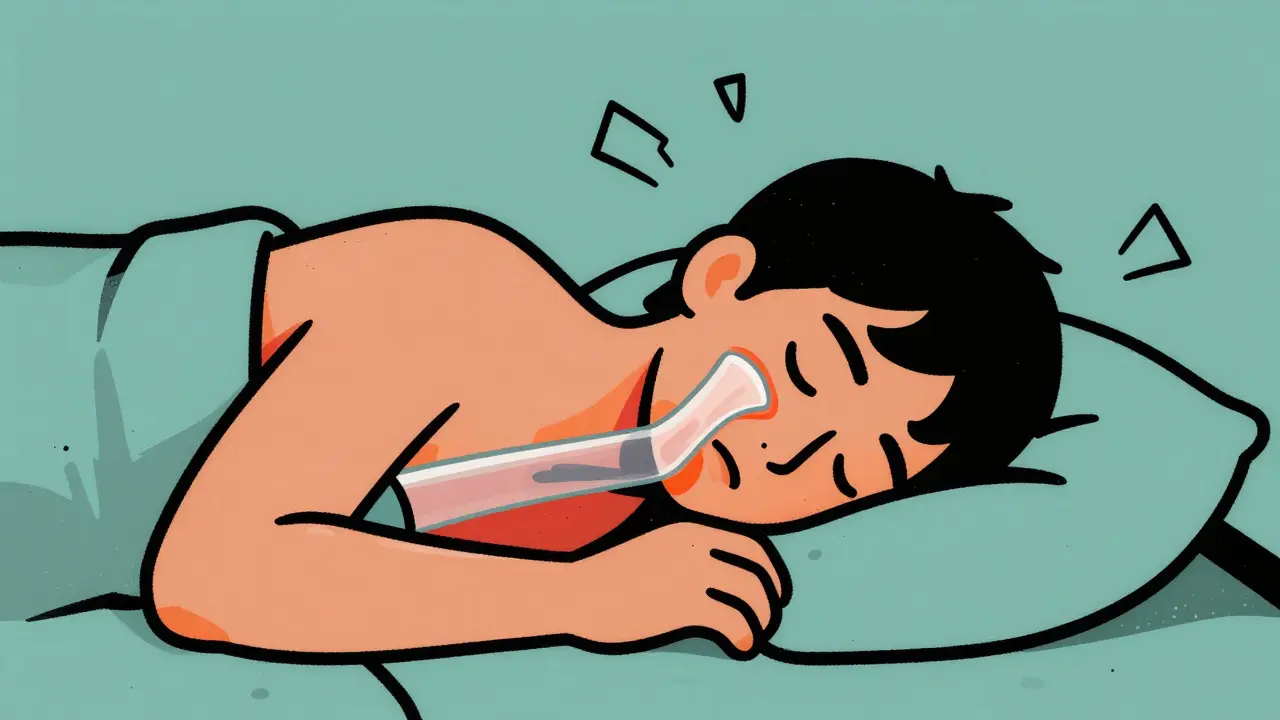
Imagine falling asleep, only to have your breathing stop repeatedly throughout the night. You might not wake up fully, but your brain does-just enough to disrupt your rest and lower your oxygen levels. This is Obstructive Sleep Apnea (OSA), a condition where the upper airway collapses during sleep, causing breathing interruptions that fragment sleep architecture and reduce blood oxygen levels. It’s not just about snoring; it’s a serious health issue affecting roughly 1 billion people worldwide. If you’ve been diagnosed or suspect you have OSA, you’re likely facing a tough choice: stick with the standard Continuous Positive Airway Pressure (CPAP) machine or explore other options.
Getting the right treatment isn’t just about stopping the noise-it’s about protecting your heart, improving your daytime energy, and preventing accidents. In this guide, we’ll break down how CPAP works, why so many people struggle with it, and what real alternatives exist if the mask doesn’t fit your life.
How CPAP Therapy Works
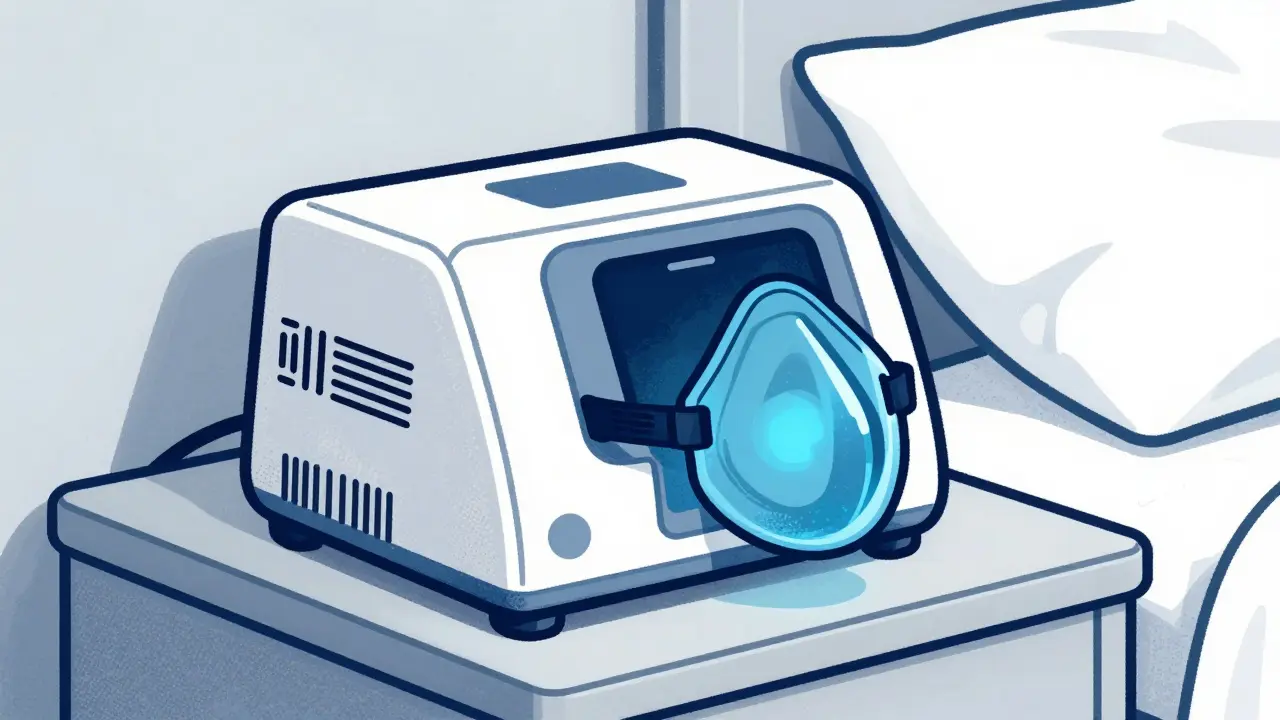
Continuous Positive Airway Pressure (CPAP) therapy was developed by Dr. Colin Sullivan and colleagues at the University of Sydney in 1981. It remains the gold standard for treating moderate to severe OSA. The concept is simple: a machine delivers a constant stream of pressurized air through a mask to keep your airway open while you sleep. Think of it like a pneumatic splint holding your throat open.
Modern devices are far more sophisticated than the bulky boxes of the past. They typically weigh between 1.5 and 3.5 pounds and operate at noise levels of 26-30 decibels-about as quiet as a whisper. There are three main types:
- Standard CPAP: Delivers a fixed pressure setting determined during a sleep study.
- Auto-CPAP (APAP): Automatically adjusts pressure between 4-20 cm H2O based on detected respiratory events, responding dynamically to your breathing patterns.
- Bilevel Positive Airway Pressure (BiPAP): Provides different pressures for inhalation and exhalation, which can be easier for those who find exhaling against high pressure difficult.
The primary goal is to eliminate apneic events. When used consistently for 7+ hours per night, CPAP can reduce the Apnea-Hypopnea Index (AHI)-a measure of severity-from severe levels (around 39 events/hour) to near-normal levels (around 7 events/hour). This improvement translates to better sleep quality, reduced daytime sleepiness, and improved cardiovascular outcomes, such as lowering systolic blood pressure by 5-10 mmHg even in cases of resistant hypertension.
The Adherence Challenge
If CPAP is so effective, why do so many people quit? The answer lies in adherence. While the technology works, tolerating it every night is hard. Studies show that mask discomfort affects 35% of new users, and claustrophobia impacts another 12%. One major hurdle is mouth leakage; data indicates that 61.8% of initial nasal mask users switch to full-face masks within six months because air escapes through their mouths.
Insurance companies, including Medicare, require a minimum usage of 4 hours per night on 70% of nights for continued coverage. Only about 70% of patients meet this threshold. Dr. Indira Gurubhagavatula, a leading sleep expert, calls adherence the "Achilles' heel" of OSA management. Even when patients use the device, the benefits depend heavily on duration. Using CPAP for only 4 hours may leave you with mild OSA symptoms, while using it for just 2 hours offers little protection against moderate to severe events.
User reviews reflect this struggle. On Reddit’s r/CPAP community, common complaints include mask discomfort (68% of negative reviews), machine noise (29%), and travel difficulties (42%). However, success stories abound too. Many users report that switching to nasal pillow masks or adjusting humidity settings turned their experience around, dropping their Epworth Sleepiness Scale scores significantly.
Oral Appliances: A Comfortable Alternative
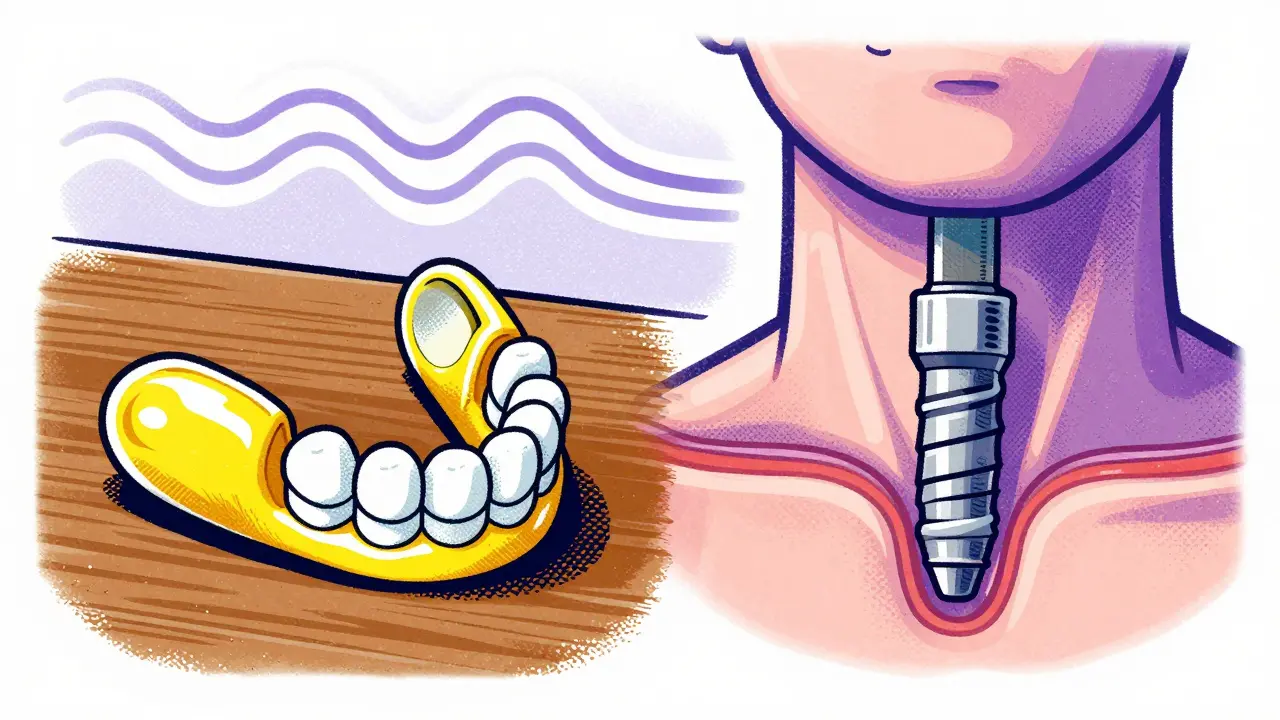
If CPAP feels like wearing a helmet, an oral appliance (also known as a mandibular advancement device) might be your ticket to better sleep. These custom-fitted dental devices work by gently pulling your jaw forward, which keeps the tongue and soft tissues from blocking the airway. They look and feel much like a sports mouthguard or braces retainer.
The biggest advantage of oral appliances is comfort and portability. They’re small, silent, and easy to pack for travel. According to a review by the American Academy of Dental Sleep Medicine (AADSM), oral appliances boast superior adherence rates. Patients used them for 77% of nights after one year, compared to CPAP’s median adherence of 4-5 hours per night. In fact, four out of six crossover trials reported patient preference for oral appliances over CPAP due to greater comfort.
However, they aren’t as powerful as CPAP for severe cases. A retrospective study found that CPAP improved AHI significantly more than oral appliances in patients with severe OSA. Oral appliances are generally recommended for mild to moderate OSA or for severe OSA patients who cannot tolerate CPAP. They also require regular dental check-ups to monitor bite alignment and jaw health.
| Feature | CPAP Therapy | Oral Appliances |
|---|---|---|
| Efficacy (Severe OSA) | High (Gold Standard) | Moderate to Low |
| Adherence Rate | Lower (4-5 hrs/night avg) | Higher (77% of nights) |
| Comfort | Variable (Mask issues common) | High (Discreet & Quiet) |
| Portability | Low (Requires power/machine) | High (Pocket-sized) |
| Side Effects | Dry nose, mask leaks, skin irritation | Jaw pain, teeth shifting, bite changes |
Surgical Options and Hypoglossal Nerve Stimulation
For patients who fail both CPAP and oral appliances, surgical interventions offer a potential cure, though they come with higher risks and costs. Traditional surgery, such as uvulopalatopharyngoplasty (UPPP), involves removing excess tissue from the throat. Success rates vary widely, hovering between 40-60%, making it a less predictable option.
A newer, more advanced option is hypoglossal nerve stimulation (such as Inspire therapy). This implantable device acts like a pacemaker for your tongue. It detects your breathing pattern and sends mild electrical pulses to the hypoglossal nerve, which moves the tongue forward to keep the airway open. Clinical data shows a 79% reduction in AHI for eligible candidates. However, it requires invasive surgery and has significant cost barriers, often costing around $35,000 out-of-pocket if not fully covered by insurance. It’s also not suitable for everyone; candidates usually need a BMI under 32-35 and specific anatomical features.
Personalizing Treatment Based on Physiology
One-size-fits-all medicine is fading fast. Recent research highlights that individual physiological traits play a huge role in treatment success. Dr. Andrey Zinchuk and collaborators from Harvard, Mount Sinai, Stanford, and SUNY Upstate published findings in 2022 showing that CPAP’s neurocognitive benefits depend on your "arousal threshold."
Patients with high arousal thresholds-those who don’t easily wake up from sleep disruptions-experience executive function improvements "like drinking a cup of coffee" when using CPAP. Conversely, those with low arousal thresholds derive minimal cognitive benefit. This insight suggests that future guidelines might direct patients with low thresholds toward alternative therapies rather than forcing CPAP as the first-line treatment. The 2024 American Thoracic Society guidelines are expected to formally recognize arousal threshold as a key factor in selecting the right therapy.
Practical Steps for Starting Therapy
Whether you choose CPAP or an alternative, starting treatment involves a structured process. First, you need a diagnosis via polysomnography or home sleep apnea testing. If prescribed CPAP, a titration study determines your optimal pressure settings, typically between 6-12 cm H2O.
Acclimatization takes time. The American Academy of Sleep Medicine recommends a gradual introduction: start with 1-2 hours during the day, then increase to full-night use over 2-4 weeks. Common challenges include mask leaks (affecting 45% of new users), nasal congestion (30%), and dry mouth (25%). Solutions include heated humidification (effective for 78% of congestion cases) and chin straps for mouth leaks.
Don’t underestimate the value of support. Durable Medical Equipment (DME) providers often offer 24/7 helplines, while sleep clinics provide comprehensive education with multiple follow-up visits. Keep your equipment clean-wash the mask daily and disinfect tubing weekly-to prevent infections and maintain performance.
Future Directions in Sleep Apnea Care
The landscape of OSA treatment is evolving rapidly. Advanced auto-CPAP algorithms now detect subtle respiratory events before full apneas occur, improving comfort and efficacy. Digital therapeutics, like the FDA-cleared Nightware app, use biofeedback to improve CPAP adherence, showing a 22% increase in usage in initial trials.
Looking ahead, personalized pressure algorithms based on 3D airway imaging and closed-loop systems that adjust pressure based on real-time arousal detection are on the horizon. For those who remain non-adherent despite tech advances, positional therapy devices (like NightBalance) and pharmacological treatments targeting upper airway muscle tone are gaining traction. Positional therapy alone can reduce AHI by 51% in patients whose apnea occurs primarily when sleeping on their backs.
Is CPAP the only treatment for obstructive sleep apnea?
No, CPAP is not the only treatment. While it is the gold standard for moderate to severe OSA, alternatives include oral appliances (mandibular advancement devices), surgical options like uvulopalatopharyngoplasty (UPPP), and hypoglossal nerve stimulation implants. Lifestyle changes, such as weight loss and positional therapy, can also help manage mild cases.
How long does it take to get used to a CPAP machine?
Most patients take 2 to 4 weeks to fully acclimate to CPAP therapy. Experts recommend starting with short sessions during the day and gradually increasing usage time. Consistency is key, and addressing issues like mask fit and humidity early on can speed up the adjustment period.
Are oral appliances as effective as CPAP?
Oral appliances are generally less effective than CPAP for severe OSA but are highly effective for mild to moderate cases. Their main advantage is higher adherence rates; patients are more likely to use them consistently because they are more comfortable and portable. For severe OSA, CPAP remains the most reliable way to eliminate breathing events.
What is hypoglossal nerve stimulation?
Hypoglossal nerve stimulation is a surgical treatment involving an implanted device that stimulates the nerve controlling the tongue. It moves the tongue forward during sleep to keep the airway open. It is an option for patients with moderate to severe OSA who cannot tolerate CPAP, offering a 79% reduction in apnea events, but it requires surgery and has strict eligibility criteria.
Does insurance cover alternative treatments for sleep apnea?
Coverage varies by provider and plan. Most insurers cover CPAP machines and supplies if prescribed. Oral appliances are often covered if documented failure of CPAP or medical contraindications exist. Hypoglossal nerve stimulation is increasingly covered by major insurers but may require prior authorization and proof of CPAP intolerance. Always check with your specific insurance provider.