
Immunosuppressant Level Checker
Enter your latest blood test results to see where you stand relative to standard therapeutic targets. This tool helps you understand if your levels are too low (rejection risk) or too high (toxicity risk).
Analysis Result
Clinical Interpretation
Getting a blood test every few weeks can feel like a chore, but for those on immunosuppressive therapy is a medical treatment that lowers the immune system's activity to prevent organ rejection or control autoimmune diseases., it’s the difference between keeping your new kidney working and losing it. Whether you’re managing rheumatoid arthritis with steroids or recovering from a heart transplant, your body is playing a delicate balancing act. Too much drug, and you risk infections; too little, and your immune system might attack the graft or flare up the disease. This guide breaks down exactly which lab tests and imaging scans you need, why they matter, and how to make sense of the numbers.
Why Monitoring Is Non-Negotiable
Immunosuppressants are powerful drugs with a narrow therapeutic window. That means the gap between a helpful dose and a toxic one is small. For example, Tacrolimus is a calcineurin inhibitor used to prevent organ rejection, requiring precise blood level management. If levels drop below 5 ng/mL in the first three months after a kidney transplant, rejection risk spikes. If they climb above 10 ng/mL, your kidneys can take damage from the drug itself. This isn't just about guessing; it’s about data. According to the American Society of Transplantation, proper monitoring reduces acute rejection rates by 37% and improves five-year graft survival by 22% compared to fixed-dose regimens where doctors don’t check blood levels regularly.
The goal is simple: keep the drug in the "sweet spot." But because everyone metabolizes drugs differently-due to genetics, diet, and other medications-what works for your neighbor might not work for you. This is why Therapeutic Drug Monitoring (TDM) is the practice of measuring drug concentrations in the blood to adjust dosages for optimal efficacy and safety. remains the cornerstone of care. It turns guesswork into precision medicine.
Key Blood Tests You Need to Know
Blood work is the primary tool for tracking how your body handles immunosuppressants. Different drugs require different checks, but there’s a core set of tests most patients will undergo regularly.
- Trough Levels: This is the lowest concentration of the drug in your blood, usually measured right before your next dose. For Tacrolimus, target troughs are typically 5-10 ng/mL early on, dropping to 3-7 ng/mL later. Cyclosporine targets are higher, around 100-200 ng/mL.
- Complete Blood Count (CBC): Checks red cells, white cells, and platelets. Drugs like Mycophenolate can lower these counts. Leukopenia (low white cells) happens in 25-30% of patients on Mycophenolate, increasing infection risk.
- Kidney Function (Creatinine/Urea): Since many immunosuppressants are processed by the kidneys and can harm them, tracking serum creatinine is vital. A rise of more than 30% from your baseline signals potential nephrotoxicity.
- Liver Function Tests (LFTs): The liver processes many of these drugs. Abnormal results here can indicate drug toxicity or side effects.
- Metabolic Panel: Includes glucose, electrolytes (like potassium and magnesium), lipids, and uric acid. Steroids can spike blood sugar, while Sirolimus often causes high cholesterol and triglycerides in 60-75% of patients.
How often do you need these? In the first year after a transplant, expect 12 to 18 blood draws. As things stabilize, this might taper off to every one to three months. Fasting lipids are usually checked every six months. While frequent testing sounds burdensome, missing a check-up is far riskier. A 2022 survey found that centers with standardized protocols and quick review times (within 24 hours) saw the best patient outcomes.
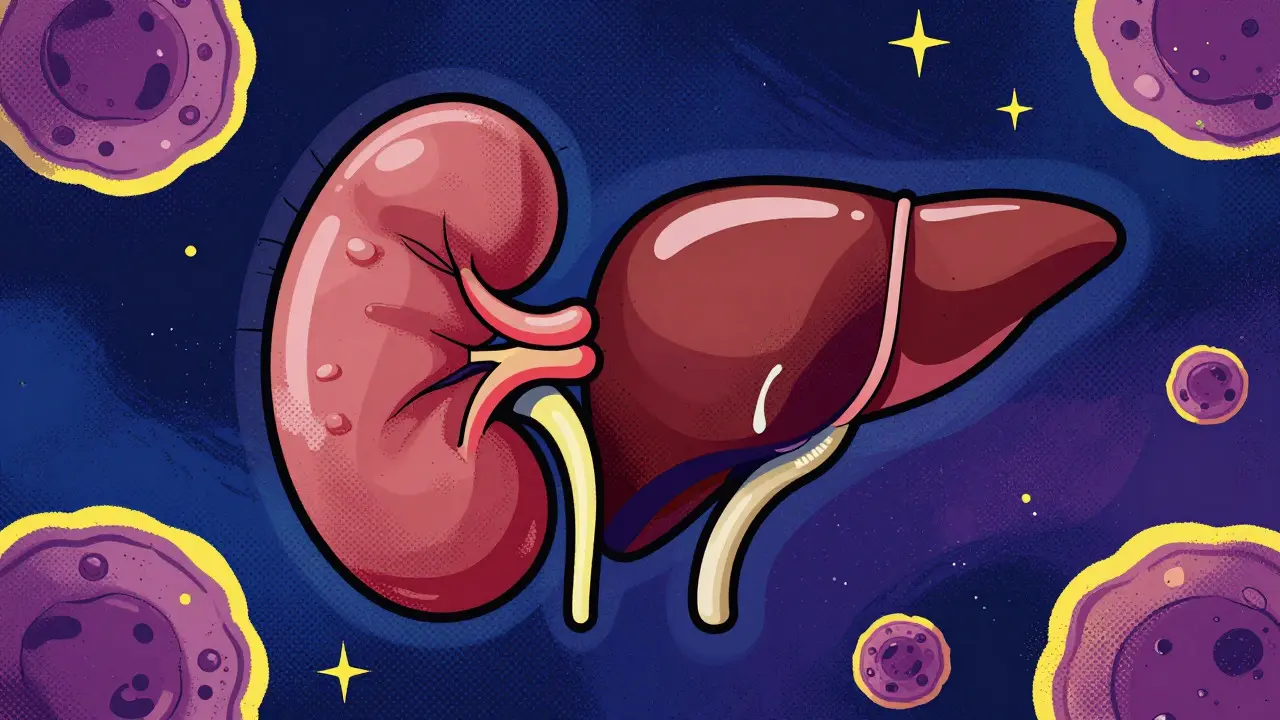
Imaging: Seeing What Blood Tests Miss
Blood tests tell you what’s happening chemically, but imaging shows you the physical impact on your organs. You won’t get an MRI every week, but specific scans are part of your routine surveillance.
| Imaging Type | Purpose | Frequency/Timing |
|---|---|---|
| Renal Ultrasound | Checks kidney size, blood flow, and blockages. Helps distinguish between rejection and drug toxicity. | Annually, or immediately if kidney function changes. |
| Chest X-Ray | Screens for pneumonia or pneumonitis, especially if you have respiratory symptoms. | As needed for symptoms; sensitivity is 70-85% for detecting lung issues. |
| Bone Density Scan (DEXA) | Detects osteoporosis caused by long-term steroid use. | Annually after one year of corticosteroid therapy. |
If you’re on steroids for more than a month, bone health becomes a priority. Osteoporosis is a silent thief-it doesn’t hurt until something breaks. Annual DEXA scans help catch thinning bones early so you can add calcium, vitamin D, or bisphosphonates to your regimen. Similarly, if you start coughing or feeling short of breath, a chest X-ray is the first line of defense against opportunistic infections like Pneumocystis jirovecii pneumonia, which is more common in heavily immunosuppressed patients.

Emerging Trends: Beyond Standard Blood Draws
Medicine is moving toward smarter, less invasive monitoring. One exciting development is the use of Torque Teno Virus (TTV) as an "immunometer." TTV is a harmless virus present in almost all humans. Its viral load correlates directly with how suppressed your immune system is. Low TTV levels suggest your immune system is active (risk of rejection), while very high levels suggest it’s too suppressed (risk of infection). An ideal range for kidney transplant recipients is 2.5-3.5 log10 copies/mL. Preliminary data from the TTVguideIT trial suggests that adjusting drugs based on TTV levels could reduce infections by 28% and rejections by 22%. While not yet standard everywhere, this approach represents a shift from measuring drug amounts to measuring actual immune function.
Artificial intelligence is also entering the picture. Algorithms now exist that can predict acute rejection up to 14 days before symptoms appear by analyzing trends in your Tacrolimus levels, TTV load, and routine labs. This allows doctors to nudge your dosage before a crisis hits, rather than reacting after you’re already sick.
Practical Tips for Patients
Navigating this process can be stressful, but preparation makes it manageable. Here’s how to stay on top of your monitoring:
- Keep a Medication Diary: Note any missed doses, new over-the-counter meds, or dietary changes. Grapefruit juice, for instance, can significantly raise Cyclosporine and Tacrolimus levels. Sharing this info helps your doctor interpret your blood results accurately.
- Ask About Side Effects Early: Don’t wait for your next scheduled visit if you notice tremors, high blood pressure, or persistent diarrhea. These are common signs that your drug levels might be off or that you’re experiencing toxicity.
- Coordinate Your Care: Ensure your pharmacist knows all your prescriptions. Drug interactions are a major cause of monitoring errors. For example, some antibiotics can drastically lower Tacrolimus levels, leading to rejection.
- Understand Your Numbers: Ask your doctor what your specific target range is. Knowing whether you’re at 4 ng/mL or 9 ng/mL matters only in the context of your personal goal. Write these targets down and bring them to every appointment.
Remember, monitoring isn’t punishment; it’s protection. It’s the safety net that keeps your treatment effective without letting the side effects creep up on you. By staying engaged and informed, you become an active partner in your own health, ensuring that your immunosuppressive therapy does exactly what it’s supposed to: protect you.
How often do I need blood tests during immunosuppressive therapy?
In the first year after a transplant, you may need 12 to 18 blood draws. Once stable, this typically reduces to every one to three months for routine panels, with fasting lipids checked every six months. The exact schedule depends on your stability and the specific drugs you are taking.
What is the difference between trough levels and peak levels?
Trough levels are measured just before your next dose, representing the lowest concentration in your blood. Peak levels occur shortly after taking the medication. Most immunosuppressants like Tacrolimus are monitored via trough levels because they correlate better with long-term efficacy and safety, though some protocols like Cyclosporine may also look at two-hour post-dose levels.
Can food affect my immunosuppressant blood levels?
Yes. Certain foods, particularly grapefruit and its juices, contain compounds that inhibit the enzymes responsible for breaking down drugs like Cyclosporine and Tacrolimus. This can lead to dangerously high blood levels. Always maintain a consistent diet and inform your doctor about significant dietary changes.
Why do I need a bone density scan if I am on steroids?
Long-term corticosteroid use accelerates bone loss, leading to osteoporosis and increased fracture risk. A DEXA scan measures bone mineral density. Guidelines recommend annual screening after one year of continuous steroid therapy to allow for early intervention with supplements or medication.
Is Torque Teno Virus (TTV) monitoring available to all patients?
Not yet. TTV monitoring is currently considered an emerging strategy and is primarily used in clinical trials or specialized centers. While promising, standardized assays and validated cut-off values are still being refined. Your doctor will let you know if it is available at your facility.