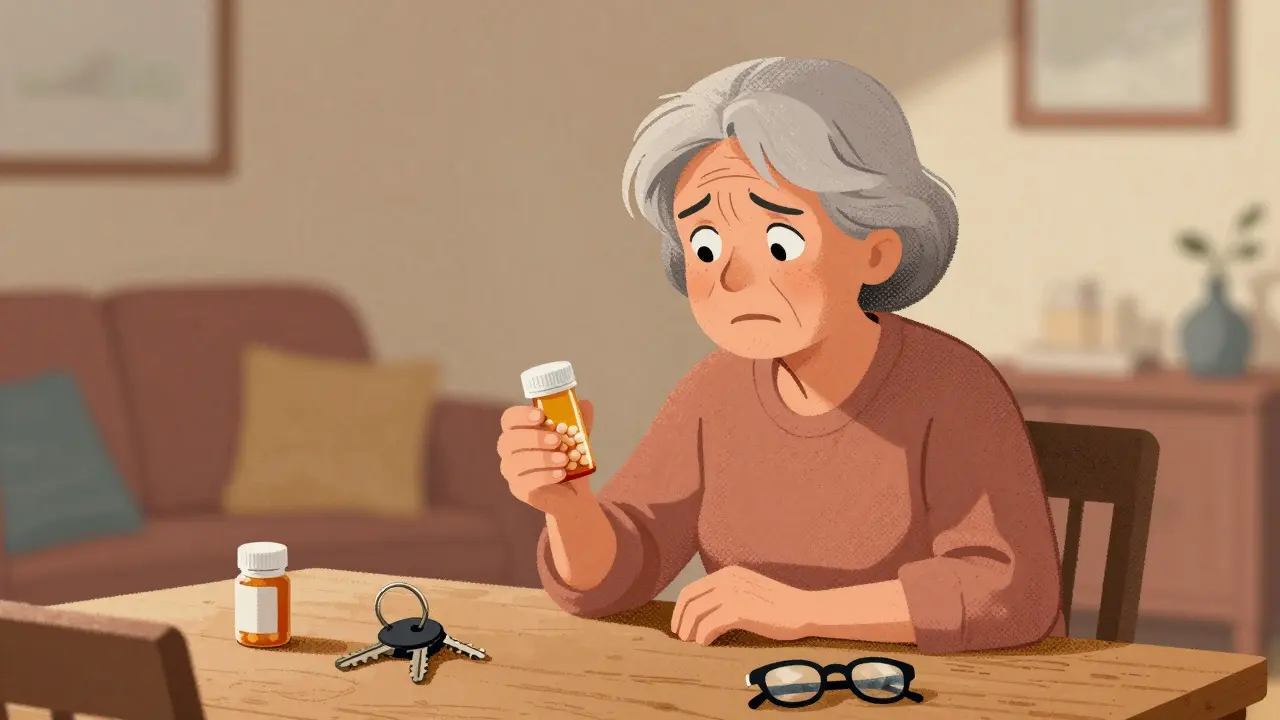
Imagine a woman in her late 60s suddenly struggling to find words, forgetting where she put her keys, and seeming disoriented. Her family assumes it’s early dementia. But what if the real culprit wasn’t a degenerative brain disease, but a common over-the-counter allergy pill or a prescription for urinary incontinence? This scenario is more common than most people realize. Medication side effects that mimic aging are a silent epidemic in geriatric care, often leading to misdiagnosis and unnecessary treatment.
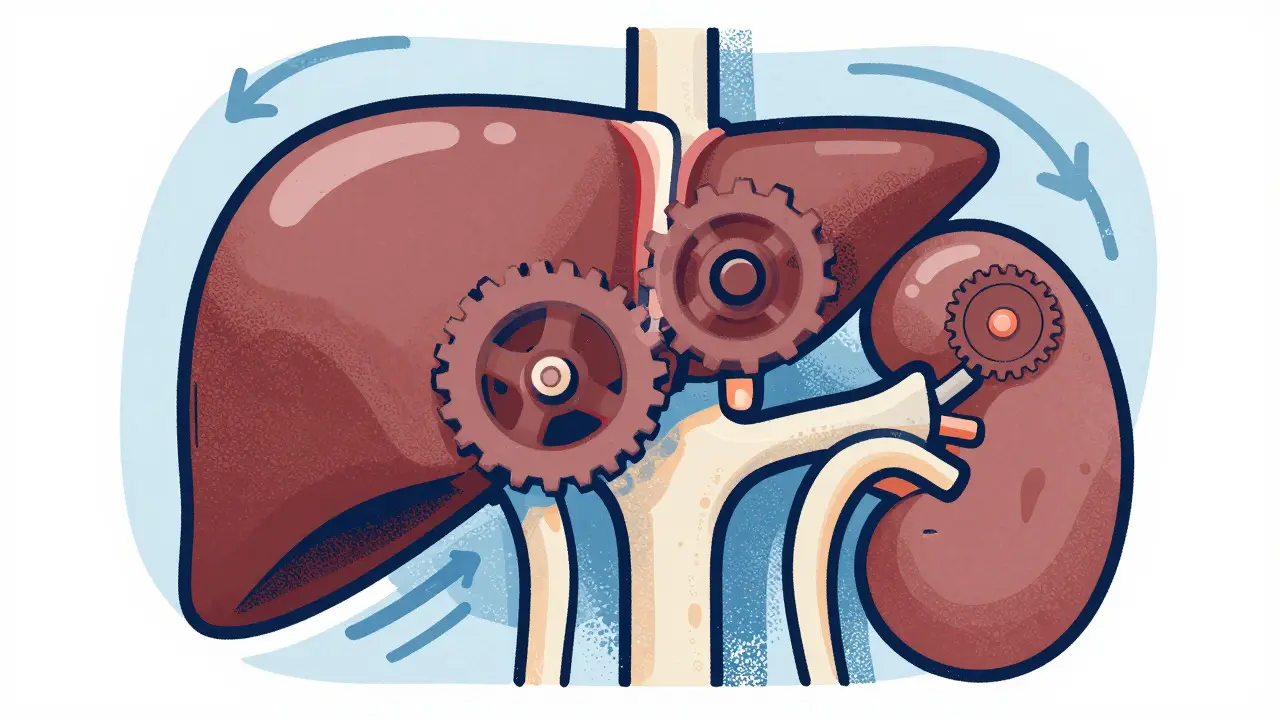
The problem isn’t just that seniors take more pills; it’s that their bodies process those pills differently. As we age, our liver metabolism slows by 30-50%, and kidney clearance drops by up to 60%. This means drugs stay in the system longer and hit the brain harder. For many older adults, symptoms like confusion, memory loss, and dizziness aren’t signs of “getting old”-they’re signals that a medication is causing harm. Recognizing these signs early can reverse symptoms in up to 40% of cases, preventing hospitalizations and preserving independence.
Why Your Body Processes Drugs Differently After 65
To understand why side effects look like aging, you have to understand pharmacokinetics-the study of how the body handles drugs. In younger adults, the liver and kidneys efficiently break down and excrete medications. In seniors, this efficiency declines significantly. Dr. Cara H. Olsen from the Uniformed Services University of the Health Sciences notes that this reduction in metabolic capacity leads to higher drug exposure in the brain.
This is particularly dangerous with anticholinergic medications, which block acetylcholine, a neurotransmitter essential for memory and learning. Because the blood-brain barrier becomes more permeable with age, seniors experience 30-50% greater brain exposure to these compounds compared to younger adults. The result? Symptoms that look exactly like neurodegenerative diseases such as Alzheimer’s or Parkinson’s.
- Liver Metabolism: Reduced by 30-50% in older adults, leading to slower drug breakdown.
- Kidney Clearance: Decreased by 40-60%, causing drugs to accumulate in the bloodstream.
- Blood-Brain Barrier: Increased permeability allows more medication to affect cognitive functions directly.
The Top Culprits: Medications That Fake Dementia
Not all medications carry the same risk. Certain classes are notorious for inducing cognitive fog, physical instability, and mood changes that masquerade as age-related decline. The American Geriatrics Society’s Beers Criteria identifies specific drugs that are generally inappropriate for adults over 65 due to high risk of adverse effects.
| Medication Class | Common Examples | Primary Symptom Mimicking Aging | Risk Level |
|---|---|---|---|
| Anticholinergics | Benadryl (diphenhydramine), Oxybutynin, Tricyclic Antidepressants | Confusion, Memory Loss, Dry Mouth | High |
| Benzodiazepines | Lorazepam (Ativan), Alprazolam (Xanax) | Short-term Memory Impairment, Drowsiness | High |
| Opioids | Morphine, Oxycodone | Sedation, Constipation, Cognitive Slowing | Moderate-High |
| Corticosteroids | Prednisone | Mood Swings, Insomnia, Psychosis | Moderate |
| Antipsychotics | Quetiapine (Seroquel) | Parkinson-like Tremors, Rigidity | High |
Dr. Malaz Boustani, a professor of aging research at Indiana University School of Medicine, documented cases where patients presented with severe dementia-like symptoms that completely resolved after discontinuing anticholinergic drugs. One patient, a woman in her late 60s, was incoherent and had terrible short-term memory. After stopping Benadryl and Seroquel, her cognitive function returned to baseline within weeks. This highlights a critical point: polypharmacy, defined as taking five or more medications, amplifies these risks exponentially. Approximately 55% of seniors take five or more prescriptions, creating a complex web of interactions that obscure the source of symptoms.
Spotting the Difference: Side Effects vs. True Neurodegeneration
If your loved one seems to be “slipping,” how do you know if it’s dementia or a drug reaction? The key lies in the timeline and the pattern. True neurodegenerative diseases like Alzheimer’s progress slowly and steadily over years. Medication-induced cognitive impairment often has a distinct onset tied to recent changes in medication.
Look for these three diagnostic red flags:
- Sudden Onset: Symptoms appearing within 14 days of starting a new medication or increasing a dose.
- Fluctuation: Severity of confusion or drowsiness varying throughout the day, often peaking when blood levels of the drug are highest.
- Reversibility: Symptoms improving when the medication is paused or adjusted, even temporarily.
Physical symptoms also provide clues. While dementia primarily affects cognition, medication side effects often present with concurrent physical issues. Watch for new-onset dizziness (which increases fall risk by 200%), unexplained weight loss of more than 5 pounds in 30 days, or persistent dry mouth and constipation. These physical markers are less common in pure neurodegenerative conditions but are hallmarks of anticholinergic burden.
The Role of the Beers Criteria and ACB Scale
You don’t need to be a doctor to assess risk. Two tools can help you evaluate whether a medication list is safe for an older adult. The first is the Beers Criteria, updated by the American Geriatrics Society in 2019. This list identifies 30 specific medications that are generally inappropriate for adults 65+ because the potential harms outweigh the benefits. If you see drugs like diphenhydramine or promethazine on a senior’s list, flag them immediately.
The second tool is the Anticholinergic Cognitive Burden (ACB) scale, developed by Dr. Boustani’s team. It assigns a score to each medication based on its impact on cholinergic pathways. A score of 3 or higher correlates with a 49% increased risk of developing dementia over three years. You can calculate this score using online calculators provided by pharmacies or healthcare providers. If the total score is high, it’s time for a conversation about deprescribing-safely tapering off unnecessary medications.
Practical Steps for Caregivers and Families
Recognizing the issue is only half the battle. Acting on it requires a systematic approach. Here is a practical checklist to follow when you suspect medication side effects are mimicking aging:
- Create a Complete Medication List: Include prescriptions, over-the-counter drugs, supplements, and herbal remedies. Many seniors forget to mention OTC pain relievers or sleep aids, which are frequent culprits.
- Track Symptoms Chronologically: Keep a simple log noting when symptoms started and any recent changes in medication. Note the time of day symptoms are worst.
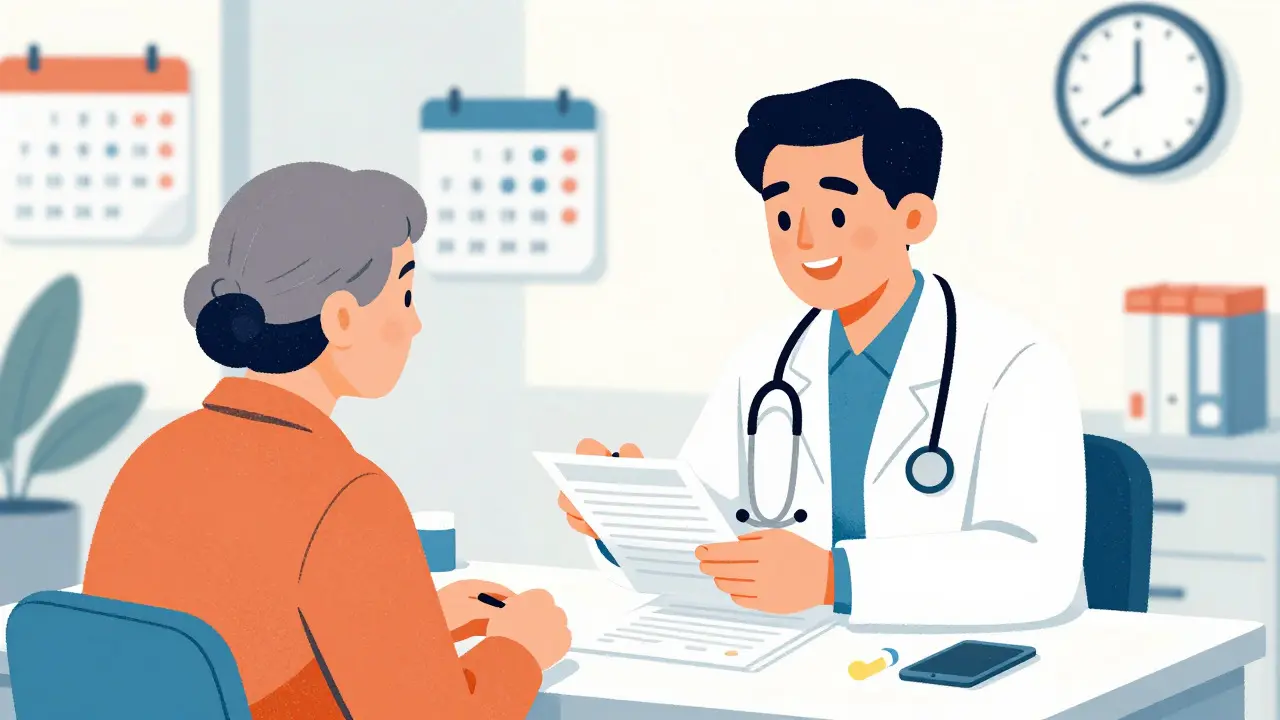
- Schedule a Medication Review: Ask your primary care provider or pharmacist for a comprehensive review. Mention specifically that you want to check for “anticholinergic burden” and “cognitive side effects.”
- Ask About Deprescribing: Instead of adding a new drug for a new symptom, ask if an existing drug can be reduced or stopped. Tapering should happen over 4-12 weeks to avoid withdrawal effects.
- Monitor for Improvement: After adjustments, wait 2-4 weeks to see if symptoms resolve. If they do, you’ve likely identified the cause.
Don’t hesitate to seek a second opinion from a geriatrician if the primary care provider dismisses concerns. Geriatricians specialize in complex medication management and are trained to distinguish between aging and adverse drug reactions. Studies show that interdisciplinary teams including pharmacists and caregivers reduce hospitalizations by 22% and falls by 17% through proactive medication reviews.
Future Directions: Technology and Personalized Medicine
The landscape of senior medication safety is evolving. The FDA’s 2024 action plan mandates enhanced geriatric warnings for 17 high-risk medication classes, aiming to make prescribers more aware of these risks. Additionally, electronic health record systems are increasingly integrating STOPP/START criteria to alert doctors to potentially inappropriate prescribing in real-time.
Personalized medicine is also on the horizon. Pharmacogenomic testing can identify gene variants, such as CYP2D6 and CYP2C19, that affect how individuals metabolize drugs. Up to 40% of seniors have variants that make them more susceptible to adverse reactions. While not yet standard practice, this technology could soon allow doctors to prescribe medications based on genetic profiles rather than trial and error. Meanwhile, AI-driven medication review systems are being piloted to predict cognitive side effect risks with 85% accuracy, offering a promising tool for early intervention.
Frequently Asked Questions
Can Benadryl really cause dementia?
While long-term use of strong anticholinergics like Benadryl is associated with a 49% increased risk of dementia in some studies, it is more accurate to say it causes reversible cognitive impairment that mimics dementia. Stopping the medication often resolves the symptoms, though long-term exposure may contribute to actual neurodegeneration.
What is the safest alternative to Benadryl for seniors?
Second-generation antihistamines like cetirizine (Zyrtec) or loratadine (Claritin) are generally safer for seniors because they have lower anticholinergic activity and cross the blood-brain barrier less readily. Always consult a pharmacist before switching medications.
How long does it take for medication side effects to go away?
For most medications, symptoms begin to improve within 1-2 weeks of discontinuation. However, for drugs with long half-lives or those that have been used chronically, it may take 4-12 weeks for full cognitive recovery. Patience and monitoring are key during this period.
Should I stop my parent’s medication without asking the doctor?
Generally, no. Abruptly stopping certain medications like benzodiazepines or antidepressants can cause dangerous withdrawal symptoms. Always coordinate with a healthcare provider to create a safe tapering schedule, especially for drugs taken for more than a few weeks.
What is polypharmacy and why is it risky?
Polypharmacy refers to the use of five or more medications. It is risky because it increases the likelihood of drug-drug interactions, makes it difficult to identify which drug is causing side effects, and often leads to redundant treatments. Regular medication reviews are essential to minimize this risk.