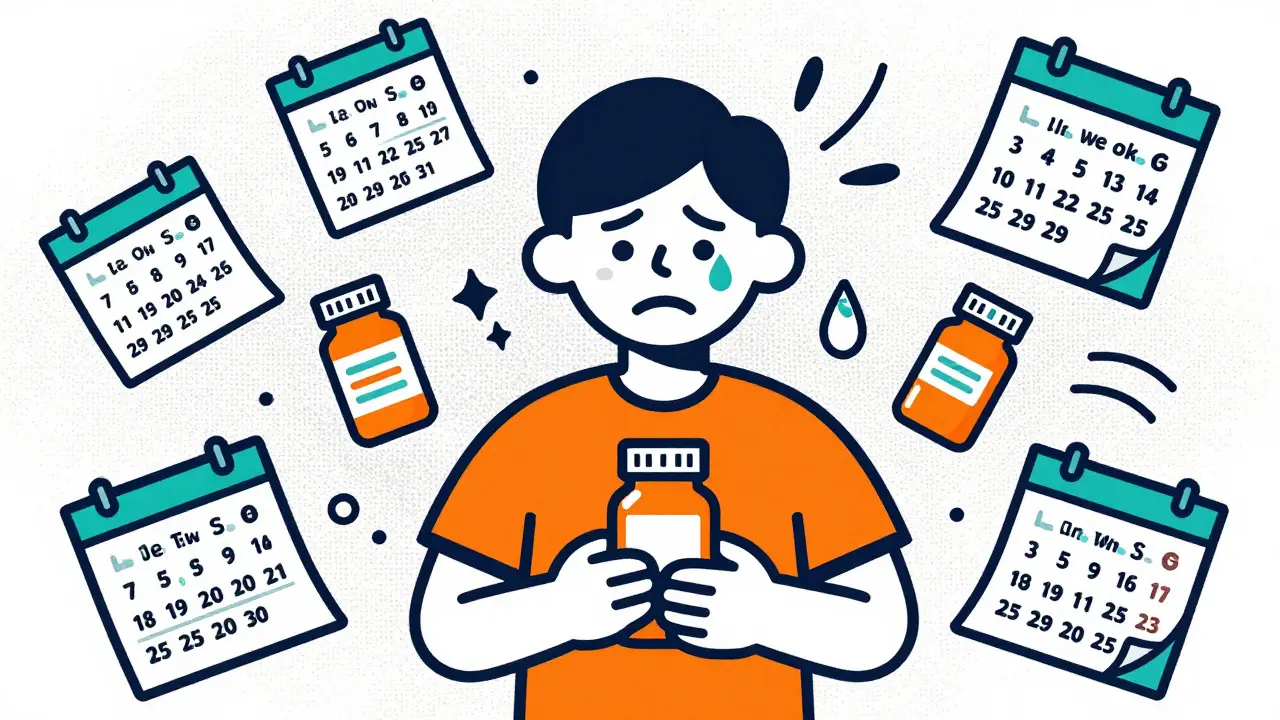
You know that feeling when you’re juggling five different prescriptions, each with its own weird refill cycle? One pill is due on the 12th, another on the 24th, and a third needs picking up every three weeks. It’s a logistical nightmare that leads to missed doses, wasted trips to the pharmacy, and higher blood pressure from stress alone. This isn’t just an inconvenience; it’s a major reason why nearly half of patients with chronic conditions stop taking their meds correctly. The good news is there’s a simple fix called medication synchronization, or "med sync," that aligns all your refills to one single date each month.
Think of med sync as hitting the reset button on your prescription schedule. Instead of chasing down multiple pickups throughout the month, you choose one day-say, the 15th-and pick up everything at once. It sounds basic, but the impact is huge. Studies show this small change can boost medication adherence by 3 to 5 percentage points, which translates to fewer hospital visits and better control over conditions like diabetes and hypertension. Here is exactly how it works, who benefits most, and how to get started without running into insurance roadblocks.
What Is Medication Synchronization?
Medication synchronization is a pharmacy service that consolidates multiple prescription refill dates into a single monthly pickup day. Also known as refill sync or med sync, this practice emerged in the early 2010s as pharmacists looked for practical ways to combat non-adherence. Before med sync, if you took four medications, you might have visited the pharmacy four times a month. With synchronization, those visits drop to one.
The concept relies on a simple mathematical adjustment. Your pharmacist looks at your current supply of each drug and calculates how many extra days’ worth of pills are needed to push the next refill date forward to your chosen sync day. For example, if your blood pressure medication runs out on the 10th, but you want to sync on the 15th, the pharmacist gives you five extra pills during your initial enrollment. After that first adjustment, all your meds line up perfectly on the 15th of every month.
This isn’t just about convenience. According to data from Health Affairs (2017), synchronized patients had a mean Proportion of Days Covered (PDC) of 0.87 compared to 0.84 for those managing refills traditionally. That 3-point gap might seem small, but in healthcare terms, it represents thousands of missed doses across a large patient population. By simplifying the routine, med sync removes the cognitive load of tracking multiple deadlines.
Why Adherence Matters More Than You Think
We often think of taking medicine as a binary choice: you take it or you don’t. But for chronic conditions, consistency is everything. The World Health Organization estimates that 50% of patients with chronic diseases fail to adhere to their treatment plans. Why does this happen? Usually, it’s not because people don’t care about their health. It’s because life gets complicated. Work schedules shift, kids need attention, and remembering to check if a specific antibiotic has enough stock left is mentally exhausting.
When adherence drops, clinical outcomes suffer. A study published in the American Journal of Managed Care (2017) found that synchronized refill schedules significantly improved adherence among Medicare Advantage patients. Those who synced their meds were less likely to experience gaps in coverage, especially for critical maintenance drugs like statins and antihypertensives. Gaps in these medications can lead to spikes in cholesterol or blood pressure, increasing the risk of heart attacks and strokes.
Beyond personal health, poor adherence costs the system billions. The same Health Affairs report estimated that a 1 percentage point improvement in adherence for cardiovascular medications could save Medicare $206 million annually. Med sync addresses the root cause of forgetfulness by creating a predictable, repeatable habit loop. You go in, you grab your bag, you leave. No guessing games.
Who Should Consider Med Sync?
Not everyone needs medication synchronization. If you take one occasional antibiotic for an infection, syncing won’t help much. Med sync shines for patients managing complex regimens. Specifically, you are a strong candidate if:
- You take three or more maintenance medications for chronic conditions like diabetes, high blood pressure, or high cholesterol.
- You frequently run out of medication before your next scheduled refill.
- You struggle to remember different refill dates for different drugs.
- You prefer picking up all your prescriptions at one location rather than splitting them between mail-order and retail pharmacies.
Research indicates that med sync is particularly effective for patients who fill their prescriptions exclusively at retail pharmacies. The American Journal of Managed Care study noted that adherence improvements were larger (PDC difference of 0.08-0.11) for retail-only users compared to those using mail-order services. Mail-order pharmacies often handle long-term supplies automatically, so the manual coordination benefit of med sync is less pronounced there.
However, med sync has limitations. It doesn’t work well for acute medications (like painkillers after surgery) or drugs with highly variable dosing schedules. If your doctor adjusts your insulin dose weekly, syncing might create more confusion than clarity. In those cases, traditional refill management remains the better option.
How to Get Started: Step-by-Step Guide
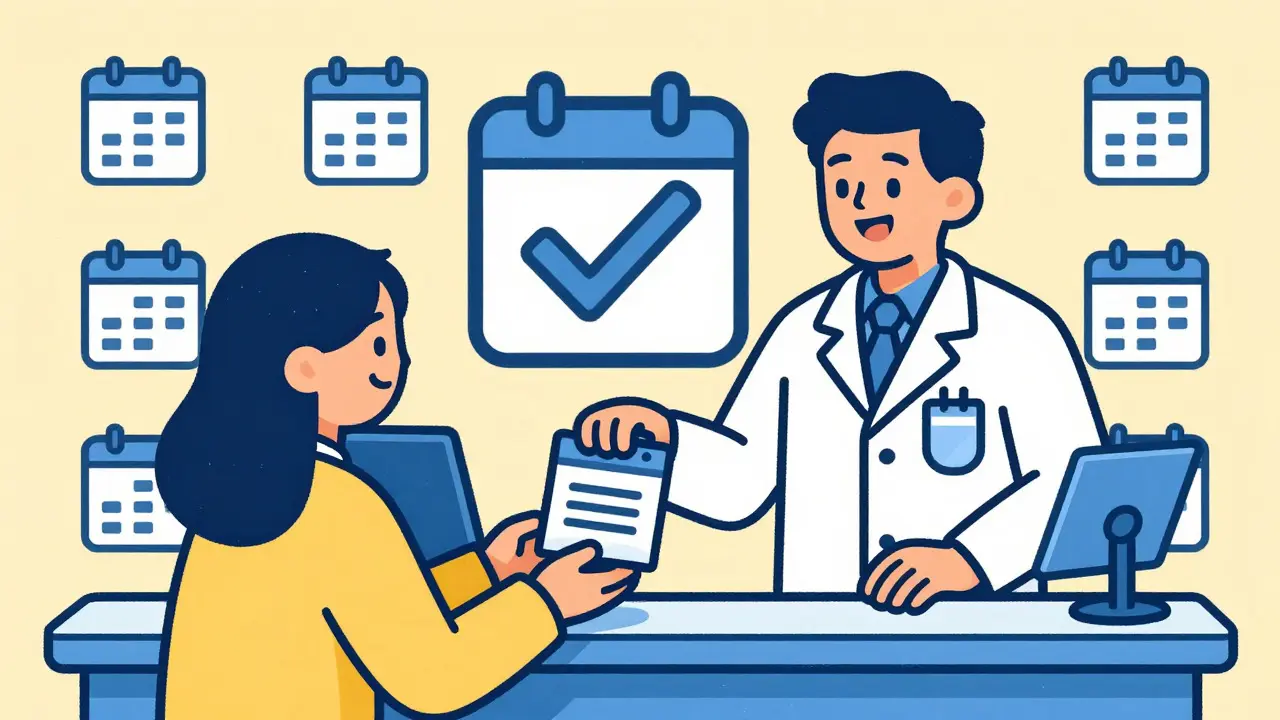
Enrolling in a med sync program is straightforward, but it requires a bit of upfront effort. Here is what the process typically looks like at most community pharmacies:
- Initial Consultation: Ask your pharmacist if they offer medication synchronization. Most major chains like CVS and Walgreens, as well as many independent pharmacies, have formal programs. Schedule a brief meeting to review your current medications.
- Schedule Creation: Choose your preferred pickup day. Many patients pick a day close to their payday or a day when they regularly visit other errands. The pharmacist will calculate the necessary adjustments to align all refills to this date.
- Initial Adjustment: During your first sync visit, you may receive slightly more medication than usual for some prescriptions. This is normal. The pharmacist is bridging the gap between your old refill dates and your new sync date. Keep track of these quantities carefully.
- Monthly Routine: On your designated day each month, pick up all your medications. The pharmacist should proactively manage any changes, such as new prescriptions or dosage adjustments, ensuring they fit into your sync schedule.
The initial enrollment takes about 20-30 minutes per patient, according to the ASHP Medication Synchronization Resource Guide (2019). After that, monthly maintenance only requires 5-10 minutes of pharmacist time. Be prepared to answer questions about your lifestyle and preferences to ensure the sync day works for you.
Navigating Insurance and Cost Challenges
One of the biggest hurdles in med sync is insurance coverage. Many health plans restrict early refills, limiting you to a 30-day supply unless you provide a valid reason. When your pharmacist tries to give you those extra few days’ worth of pills to bridge the gap to your sync date, the insurance system might reject the claim.
Here is how to handle common issues:
- Early Refill Denials: Pharmacists often use specific codes or notes to justify early partial refills for synchronization purposes. If your plan denies it, ask your pharmacist to appeal or contact your insurance provider directly. Some plans have waived restrictions for med sync participants.
- Partial Fill Fees: Occasionally, insurers charge extra fees for partial fills. Check with your pharmacy manager to see if they absorb this cost as part of the sync service.
- Mail-Order Conflicts: If some of your meds are sent via mail order, syncing becomes harder. Consider transferring all eligible maintenance medications to your local pharmacy to maximize the benefits of synchronization.
A 2018 NCPA survey found that 47% of pharmacists reported challenges with insurance plan restrictions on early refills. Persistence pays off here. Building a relationship with your pharmacist helps them advocate for you with insurance companies.
Med Sync vs. Traditional Pharmacy Services
| Feature | Traditional Refills | Medication Synchronization | Medication Therapy Management (MTM) |
|---|---|---|---|
| Pickup Frequency | Multiple times per month | Once per month | Varies (often quarterly reviews) |
| Adherence Impact | Baseline | +3-5% PDC improvement | High (comprehensive review) |
| Complexity Handling | Low | Medium (aligns timing) | High (reviews interactions/dosing) |
| Insurance Hurdles | Standard | Higher (early refill issues) | Moderate |
| Best For | Simple regimens | Chronic condition maintenance | Complex polypharmacy |
While med sync improves timing, it is not a replacement for comprehensive Medication Therapy Management (MTM). MTM involves deep dives into drug interactions, side effects, and overall health goals. Med sync focuses purely on logistics. Ideally, you combine both: use med sync to keep your schedule simple, and engage in MTM sessions to optimize your regimen.
Tips for Long-Term Success
Getting enrolled is only half the battle. Staying consistent requires a few proactive steps:
- Set Calendar Reminders: Put your sync day in your phone calendar with alerts one week and one day prior. This ensures you don’t miss the window if travel or illness intervenes.
- Communicate Changes Immediately: If your doctor adds a new medication, tell your pharmacist right away. They can integrate it into your sync schedule rather than letting it become a separate, confusing refill.
- Use Technology: Many pharmacies now offer apps that send text reminders for your sync day. CVS Health, for instance, integrated med sync with its digital platform in 2022 to automate these notifications.
- Review Annually: Once a year, sit down with your pharmacist to review your entire list. Are there meds you no longer need? Can any be simplified? Annual reviews prevent unnecessary complexity creep.
Patient satisfaction with med sync is generally high. A 2016 Walgreens survey found that 87% of customers were "very satisfied" with the service. Real-world feedback echoes this. Patients report feeling less stressed and more in control of their health. As one user on Reddit shared, syncing their five diabetes medications to the 15th of each month helped them avoid missing a single dose in 18 months.
The Future of Prescription Management
Medication synchronization is evolving beyond simple date alignment. We are seeing integration with broader healthcare ecosystems. Kroger Health piloted a model in 2022 combining sync pickups with virtual pharmacist consultations. This allows patients to address side effects or questions during their monthly visit, turning a transactional pickup into a meaningful health interaction.
Value-based care contracts are also driving adoption. Since payers tie reimbursement to adherence outcomes, pharmacies have a financial incentive to promote med sync. The American Pharmacists Association predicts a 35% annual growth rate in med sync adoption through 2025. By 2025, ASHP expects 75% of U.S. pharmacies to offer formal synchronization programs.
For patients, this means med sync will likely become the default standard of care for chronic disease management. Embracing it now puts you ahead of the curve, giving you better health outcomes and a simpler life.
Does medication synchronization cost extra?
In most cases, no. Medication synchronization is a service provided by the pharmacy, not an additional product. However, you still pay your regular copays for the medications themselves. Some pharmacies may charge a small fee for the initial consultation or setup, but many waive this as part of customer retention efforts. Always ask your pharmacist about any potential administrative fees before enrolling.
Can I switch my sync date later?
Yes, you can change your sync date, but it requires another adjustment period. If you move your date from the 15th to the 1st, your pharmacist will need to adjust your supplies again to bridge the gap. This might involve another round of early or partial refills. It’s best to choose a date that fits your long-term lifestyle to avoid frequent disruptions.
Is med sync available for mail-order prescriptions?
Generally, no. Medication synchronization is primarily a retail pharmacy service. Mail-order pharmacies operate on automated 90-day cycles that are difficult to manually adjust for individual sync dates. To maximize the benefits of med sync, consider transferring all eligible maintenance medications from mail-order to your local community pharmacy.
What happens if I miss my sync day?
If you miss your sync day, your medications remain available for pickup for a set period (usually 7-14 days depending on the pharmacy). If you miss the window, your pharmacist may need to reorder supplies, causing a delay. To stay on track, try to pick up within a few days of your date. Consistency is key to maintaining the sync rhythm.
Does med sync improve clinical outcomes?
Indirectly, yes. While med sync directly measures adherence (taking meds as prescribed), improved adherence leads to better clinical outcomes. Studies link synchronized refills to better blood pressure control, lower HbA1c levels in diabetics, and reduced hospitalization rates. By ensuring you consistently take your maintenance medications, you reduce the risk of complications associated with chronic diseases.
12 Comments
Christina ThygesenJuly 29, 2026 AT 21:29
i feel this so hard because my mom has like six different pills and she always forgets which one is for when it is such a mess in the house every morning trying to get her sorted out
Marc HJuly 30, 2026 AT 12:48
Oh, brilliant. Another bureaucratic solution to a problem created by bureaucratic insurance companies. I suppose if I just align my existential dread with my blood pressure meds on the 15th, everything will be fine. Truly revolutionary stuff here folks.
Chris McQuaidJuly 31, 2026 AT 09:28
The issue isn't really the pharmacy logistics though. It's that most people treat their health like an afterthought until they are dying. Syncing dates is a band-aid on a bullet wound of apathy. You need discipline not a calendar reminder. Most of these studies ignore the fact that adherence drops because people don't trust the system or the drugs themselves. It is a psychological barrier more than a logistical one. The math works but the human element fails.
sam howardAugust 2, 2026 AT 00:50
insurance hates this they will deny the early refill claim instantly unless you fight them tooth and nail i have tried three times and lost twice so dont bother unless you want a headache
Samuel HershbergerAugust 2, 2026 AT 14:31
I actually had great success with this at my local independent pharmacy. The key is building a relationship with the pharmacist who handles your account. They can often override the insurance flags if they explain it as a therapeutic synchronization rather than an early refill. It took some patience but now I pick up everything on the first Saturday of the month. It saves me hours of driving around town during work weeks. Highly recommend asking for the manager if the front line staff says no.
Alli CrumleyAugust 3, 2026 AT 06:13
You see what happens when we simplify complex systems? We create dependency on the very institutions that profit from our confusion. The jargon of 'Proportion of Days Covered' is just corporate speak for compliance metrics designed to keep you in the loop. It is fascinating how they frame laziness as a systemic failure. But sure, let us pretend that picking up four bottles instead of one changes the fundamental nature of our pharmacological servitude. 🙄
Mathew StuckeyAugust 5, 2026 AT 05:10
This changed my life honestly 😊 I was missing doses all the time because I would run out of my statin before my insulin refill date. Now I just go once a month and it is so much less stressful. My doctor even noticed my numbers were better last checkup!
Minal AditiAugust 6, 2026 AT 17:37
Ah yes, the illusion of control. You think that by synchronizing your chemical dependencies you are mastering your fate. But really you are just making it easier for the machine to harvest your data and your money. The 'convenience' is a trap. Once you sync you are locked into a rhythm that serves the corporation not the soul. And yet here you are celebrating it like children with new toys. How quaint.
John DiversAugust 8, 2026 AT 16:11
The logic holds up well provided the insurance variables remain constant. It is a pragmatic approach to resource management.
Ambria St louisAugust 9, 2026 AT 00:29
I have been thinking about this deeply; the intersection of convenience and clinical efficacy is where true healthcare innovation lies. When we remove the friction from adherence, we allow patients to focus on healing rather than administration. It is not just about pills; it is about dignity. No one should feel ashamed of forgetting a dose due to a chaotic schedule. This model restores agency to the patient, which is profoundly important for mental and physical well-being. We must advocate for policies that support this integration across all payers.
Diane NashAugust 10, 2026 AT 18:41
One must consider the philosophical implications of standardized care schedules. While efficiency is laudable, does the homogenization of medical routines erode individual autonomy? Perhaps there is merit in the ritual of varied pickups, forcing one to engage with their health on multiple fronts throughout the month. However, the empirical data suggests otherwise. Therefore, we must accept the utilitarian benefit despite the loss of temporal diversity in our pharmaceutical interactions. It is a small price to pay for statistical improvement.
Anna SalamonAugust 12, 2026 AT 02:59
We often overlook how cultural attitudes toward authority affect medication adherence. In many communities, questioning a prescription or managing complex schedules feels like challenging the expert. Simplifying the process through synchronization respects the patient's time and reduces the cognitive burden associated with navigating a foreign medical system. It creates a bridge between professional care and daily life. This is especially vital for immigrant populations who may face language barriers or unfamiliarity with local pharmacy practices. Making the system simpler makes it more inclusive.