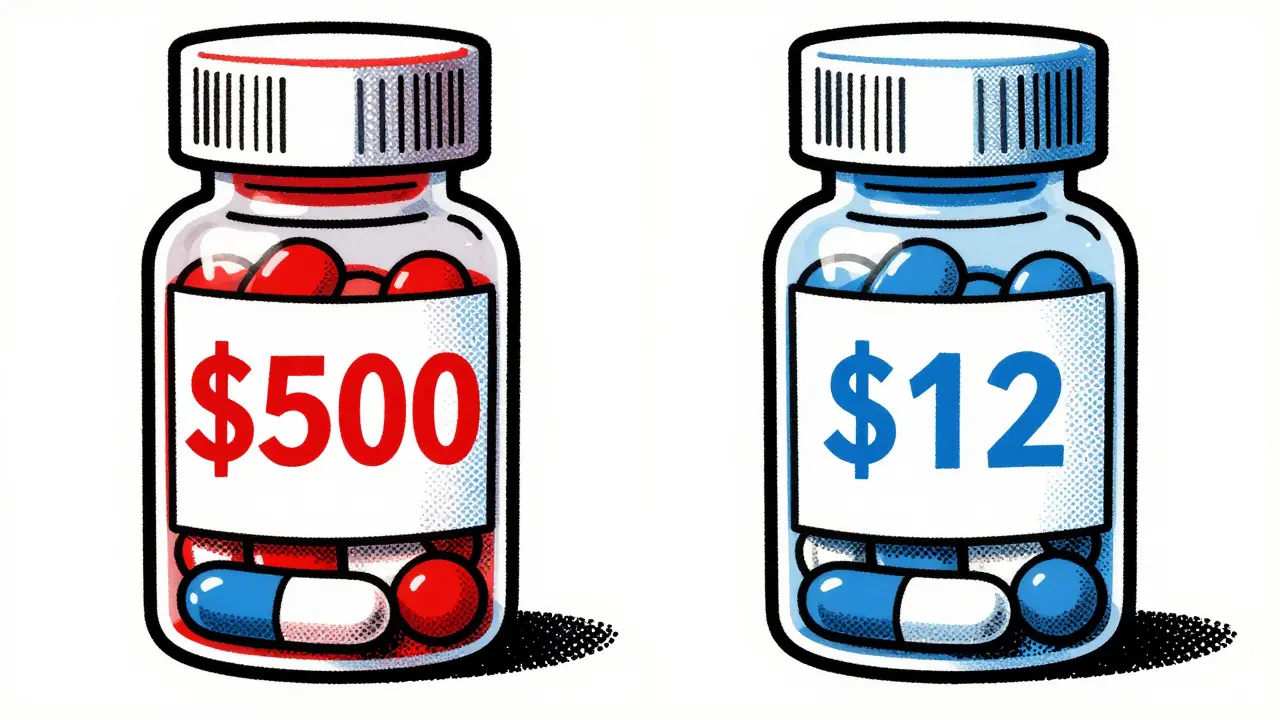
Imagine being handed two identical-looking bottles of medicine. One costs $500 a month. The other costs $12. They contain the exact same active ingredient, work in your body in the same way, and meet the same strict safety standards. Most people would grab the cheaper one without hesitation. Yet, despite this obvious value, millions of Americans still hesitate to switch from brand-name drugs to their generic counterparts. Why does this hesitation persist when the data is so clear?
The short answer is perception versus reality. For decades, marketing has convinced us that "original" means "better." But in the world of pharmaceuticals, that logic doesn't hold up. In fact, sticking with brand names when generics are available isn't just an emotional choice-it's a financial drain on households and the healthcare system alike. As we look at the landscape in 2026, the gap between what we pay for brands and what we pay for generics hasn't closed; it has widened in ways that actually benefit the consumer, provided you know where to look.
The Legal Foundation: How Generics Became Affordable
To understand why generic drugs are so cheap, you have to look back to September 24, 1984. That’s when President Ronald Reagan signed the Hatch-Waxman Act, formally known as the Drug Price Competition and Patent Term Restoration Act. This legislation changed everything. Before this law, if a company wanted to make a copy of an existing drug, they had to run their own expensive clinical trials to prove it was safe and effective. This made copying drugs prohibitively expensive, keeping competition low and prices high.
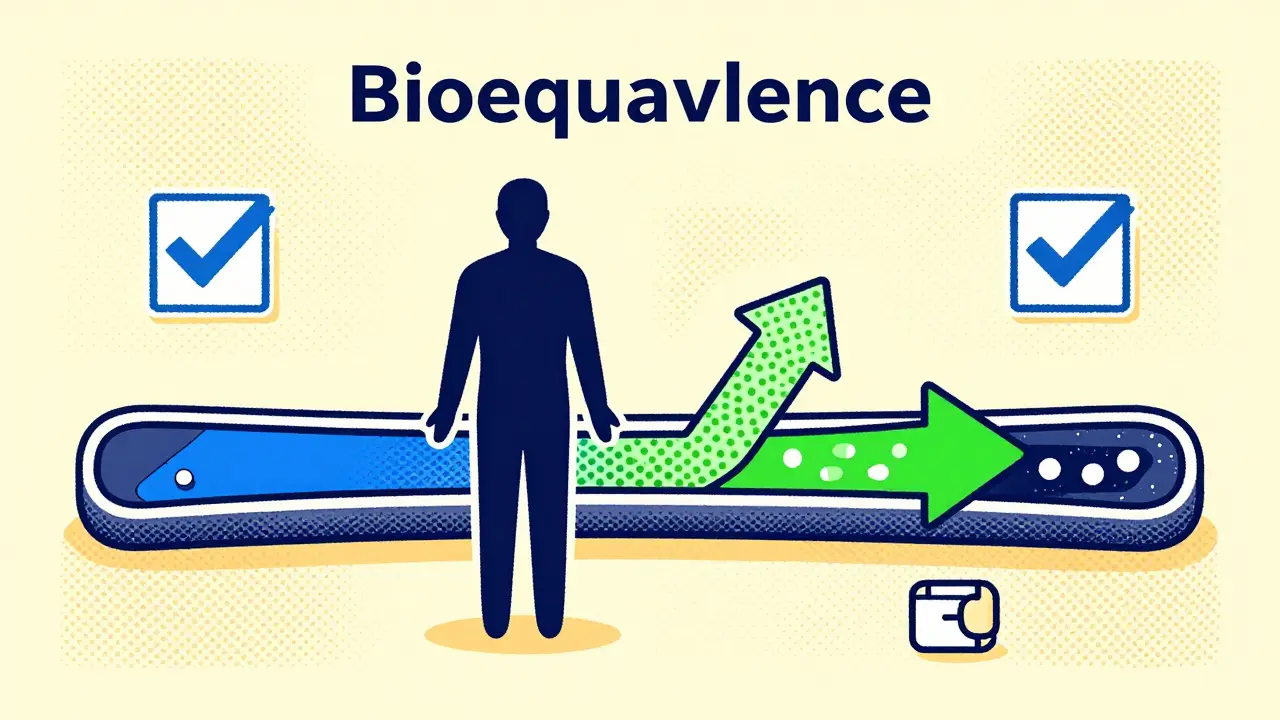
The Hatch-Waxman Act created a shortcut called the Abbreviated New Drug Application (ANDA). This pathway allows generic manufacturers to skip the costly clinical trials. Instead, they only need to prove Bioequivalence, which is the demonstration that a generic drug delivers the same amount of active ingredient into the bloodstream within the same timeframe as the brand-name drug. The FDA requires these pharmacokinetic parameters to fall within 80-125% of the brand-name product’s performance. This tight window ensures therapeutic equivalence while slashing development costs by billions of dollars.
This legal shift didn't just help companies save money; it forced prices down for everyone. By removing the barrier to entry, the act invited competition. Today, that competition is fierce, and the savings are real.
The Numbers Don't Lie: A Stark Financial Contrast
If you want to see the true impact of generics, look at the spending data from 2024. According to the Association for Accessible Medicines (AAM) 2025 Generic and Biosimilar Medicines Savings Report, generic and biosimilar medicines made up 90 percent of all prescriptions filled in the United States. That is nine out of every ten pills taken by Americans. However, those 90 percent of prescriptions accounted for only 12 percent of total prescription spending.
| Category | Prescriptions Filled | Total Spending | Avg. Cost Per Script* |
|---|---|---|---|
| Generic Drugs | 3.9 Billion | $98 Billion | ~$25 |
| Brand-Name Drugs | 435 Million | $700 Billion | ~$1,609 |
*Estimated average based on reported totals.
Let that sink in. Americans spent $700 billion on just 435 million brand-name scripts, compared to $98 billion for nearly four billion generic scripts. The FDA estimates that generics cost 79-85% less than their brand-name equivalents. A January 2025 survey by Tebra, covering over 1,000 Americans, confirmed this, finding that generics cost approximately 79% less. When you break it down per pill, the difference can be hundreds of dollars a month for chronic conditions like hypertension or cholesterol management.
Does Cheaper Mean Less Effective? Addressing the Trust Gap
Here is where things get tricky. The math is undeniable, but human psychology is stubborn. Tebra’s 2025 survey revealed a complex paradox: while 84% of Americans believe generic medications are "just as effective as their brand-name counterparts," 62% still trust brand-name medications more. This results in 63% of people choosing generics primarily due to cost pressures, with 60% explicitly stating they would prefer to buy brand-name drugs if not for the price tag.
Why do we trust the expensive option more? It’s largely due to branding. You recognize the logo, the packaging, and the advertising campaign. With generics, you often get a plain white bottle with a pharmacy label. But remember, the FDA requires generics to meet identical quality, strength, purity, and stability standards as brand-name drugs. The inactive ingredients-like fillers or dyes-might differ slightly, but the active ingredient that cures your ailment is chemically identical.
Leading health organizations, including the American Medical Association and the FDA, support the use of generics whenever appropriate. UCSF Magazine summarized the clinical perspective in 2025: "Generic drugs provide the same active ingredient as the brand for a lower cost, and they should be used whenever appropriate." There is no medical evidence suggesting that generics are less effective for the vast majority of patients.
How Competition Drives Prices Down
Price isn't static; it’s driven by competition. The Assistant Secretary for Planning and Evaluation (ASPE) at the Department of Health and Human Services conducted a comprehensive analysis showing that generic drug prices drop predictably as more competitors enter the market.
- One Competitor: Prices typically fall to about 90% of pre-generic levels.
- Three to Four Competitors: Prices drop significantly to 60-70% of pre-generic levels.
- Five or More Competitors: Prices typically fall below 50% of pre-generic levels.
The most dramatic reductions happen in the first three years after the first generic enters the market. For example, in markets with three competitors, prices decline by about 20% after three years of competition. In earlier periods (2007-2015), the price ratio approached 20% of pre-generic entry prices, indicating an 80% reduction. This competitive dynamic is why pharmaceutical manufacturers sometimes reduce brand drug prices preemptively when they see generic competition coming.
The Brand Name Response: Strategic Price Cuts
It’s not just generics getting cheaper. Brand-name manufacturers are fighting back. Contradicting common perceptions that drug prices always rise, DrugChannels’ January 2025 analysis revealed that inflation-adjusted U.S. brand-name drug prices fell for the seventh consecutive year. Manufacturers are implementing significant price reductions on brands facing generic competition.
Take Bayer’s Nexavar, for instance. After the first generic version launched in 2022, Bayer reduced the WAC list price by 50% for 2025. Merck decreased Januvia & Janumet prices by 42.4%, potentially anticipating the 79% Medicare-negotiated price cut mandated by the Inflation Reduction Act that takes effect in January 2026. These aren't isolated incidents. They represent a strategic shift where companies are "walking the price down" to maintain market share and rebate value rather than holding onto inflated list prices.
The U.S. Advantage: An International Perspective
Many people assume the U.S. pays the highest drug prices in the world. While that was true for brand-name drugs historically, the picture is more nuanced today. A 2025 study from the University of Chicago’s ECCHC Economics department found that U.S. public-sector prescription net prices are actually 18% lower on average than those in peer countries like Canada, Germany, the UK, France, and Japan.
How is this possible? Researchers attribute this to three key factors:
- The strong negotiating power of U.S. public programs.
- The large volume of generic drugs consumed.
- The extremely low price of generic drugs.
Professor Tomas J. Philipson noted that international comparisons often focus only on brand-name drugs, which represent just 7% of prescription sales volume in the U.S. Because generics drive 90% of the volume at such low costs, they pull the average down, creating an "efficient" pricing pattern that balances affordability with incentives for innovation.
What This Means for Your Wallet in 2026
As we move through 2026, several trends will impact your out-of-pocket costs. First, the Medicare Part D redesign caps annual out-of-pocket costs at $2,000. This cap changes how patients weigh the decision between brand and generic. If you’re nearing that cap, a cheaper generic might keep you under the limit longer, or conversely, if you’ve already hit the cap, the cost difference matters less. However, for the majority of the year, generics remain the smart financial choice.
Second, watch for "net pricing" trends. DrugChannels reported that through the first three quarters of 2024, nominal net prices for brand-name drugs increased by only 0.1%. This small increase suggests that manufacturer discounts and rebates are offsetting list price hikes. Meanwhile, IQVIA Institute projects that medicine spending will grow between 3-6% after discounts and rebates over the next five years. Growth is happening, but it’s slow, thanks largely to the pressure generics put on the market.
Finally, don’t ignore the "gross-to-net" gap. The difference between what the pharmacy charges (list price) and what the manufacturer effectively receives (net price) is narrowing. This means transparency is increasing. When you see a low price for a generic, it’s likely a genuine discount, not just a marketing trick hidden behind complex rebate structures.
Practical Steps to Maximize Savings
Knowing that generics are cheaper is step one. Making sure you get them is step two. Here is how to ensure you are paying the lowest possible price:
- Ask for Substitution: Always tell your doctor you are open to generic alternatives. In many states, pharmacists are legally required to substitute generics unless the doctor writes "Dispense as Written" on the prescription.
- Check Formulary Tiers: Insurance plans usually place generics in Tier 1 (lowest copay) and brand names in Tier 2 or 3 (higher copay). Check your plan’s formulary before filling a script.
- Use Discount Cards: For those without insurance, apps like GoodRx or SingleCare can negotiate prices directly with pharmacies, often bringing generic costs down to single digits.
- Review Annual Medications: Sit down once a year with your pharmacist. Ask if any brand-name drugs you’re taking now have generic equivalents available. Patents expire regularly, and new generics launch frequently.
The transition from brand to generic is rarely seamless emotionally, but it is clinically sound and financially wise. The Hatch-Waxman Act gave us the tools, the FDA ensures the safety, and the market provides the savings. All that’s left is for you to take advantage of it.
Are generic drugs really just as effective as brand-name drugs?
Yes. The FDA requires generic drugs to demonstrate bioequivalence, meaning they must deliver the same amount of active ingredient into the bloodstream within the same timeframe as the brand-name drug. Pharmacokinetic parameters must fall within 80-125% of the brand-name product's performance. Clinical studies and long-term data show no significant difference in effectiveness or safety for the vast majority of patients.
Why are generic drugs so much cheaper than brand-name drugs?
Generic manufacturers do not have to repeat the costly clinical trials required for brand-name drugs. Thanks to the Hatch-Waxman Act, they only need to prove bioequivalence via an Abbreviated New Drug Application (ANDA). This saves billions in research and development costs, allowing them to sell the drug at a fraction of the price while still making a profit.
Can my pharmacist automatically switch my prescription to a generic?
In most U.S. states, yes. Pharmacists are generally allowed to substitute a generic for a brand-name drug unless the prescribing physician explicitly writes "Dispense as Written" or "Brand Medically Necessary" on the prescription. Always check with your doctor if you have concerns, but substitution is standard practice.
Do brand-name drug prices ever go down?
Yes. As of 2025, inflation-adjusted U.S. brand-name drug prices have fallen for seven consecutive years. Manufacturers often reduce list prices preemptively when generic competition approaches to maintain market share and rebate value. For example, Bayer reduced Nexavar's price by 50% in 2025 following generic entry.
Is the U.S. paying less for drugs than other countries?
Is the U.S. paying less for drugs than other countries?
For public-sector prescriptions, yes. A 2025 University of Chicago study found that U.S. public-sector prescription net prices are 18% lower on average than in peer nations like Canada, Germany, and the UK. This is largely due to the high volume and low cost of generic drugs, which make up 90% of prescriptions in the U.S.
15 Comments
amit kumarMay 16, 2026 AT 00:14
Wow this is such a huge relief to read honestly 😅 I always felt like I was getting ripped off at the pharmacy every single time. The stats about 90% of prescriptions being generic but only costing 12% of the spending are just mind-blowing 🤯 It really shows how much we are paying for the logo instead of the medicine. I am going to start asking my doctor for generics immediately because why not save money right? 💸
Emma OlliffMay 17, 2026 AT 17:51
You people are absolutely ridiculous for believing that cheap equals good in pharmaceuticals. The fact that you trust a white bottle with no branding over a product that has undergone rigorous testing and marketing scrutiny is a sign of societal decay. Quality requires investment, and if you cannot afford the brand name, perhaps you should stop expecting miracles from your healthcare. It is insulting to suggest that bioequivalence means identical results when individual metabolisms vary so wildly. Stop trying to save pennies and risk your health.
Anthony RedMay 18, 2026 AT 03:19
I totally get where Emma is coming from regarding the trust issue but man the numbers don't lie. I switched to generic statins three years ago and honestly I feel just fine. My cholesterol levels have been stable as a rock. I think the hesitation comes from old habits and maybe some fear of the unknown. But once you see the savings it is hard to go back. Plus my pharmacist was super chill about explaining the difference between active and inactive ingredients. Just keep an open mind folks.
Justina IngramMay 19, 2026 AT 01:34
lol @Emma Olliff ur so pretentious haha :P like yeah sure pay $500 for a label lol i dont care if the pill is pink or white as long as it works. i took my generic birth control for years and never had issues. the rich can keep their fancy bottles im keeping my cash. also the Hatch-Waxman act part was interesting didnt know that existed before. thanks for sharing this info its actually helpful unlike some peoples rants :)
Kris WongMay 20, 2026 AT 08:50
The FDA is a front for big pharma and they know it. Bioequivalence is a joke because they test on small groups and ignore long term side effects. The reason prices dropped is not because of competition it is because they are dumping bad batches. You think they want you healthy? No they want you dependent. The 80-125% range is basically saying the drug could be half as effective or twice as strong and still pass. Wake up sheeple 🐑💊
victoria catharinaaMay 20, 2026 AT 14:16
I agree with Kris that there are shady practices but I also agree with Anthony that generics work. I am a nurse and I see patients struggle with costs every day. It is heartbreaking to watch someone skip doses because they cannot afford the brand. We need to push for more transparency. The article mentioned the Medicare cap which is great but what about those without insurance? We need systemic change not just individual choices. Let us help each other find resources.
Danny SMay 21, 2026 AT 07:31
This entire narrative is constructed by lobbyists to make you feel better about being exploited. The Hatch-Waxman Act was a gift to generic manufacturers who then collude to fix prices later. Look at the recent lawsuits against generic companies. They are not competing they are coordinating. The price drops are temporary until they corner the market again. Do not trust the government data it is all manipulated to keep you compliant. Stay alert. :-|
Tanya KLIMCHUK KlimchukMay 22, 2026 AT 20:14
Listen up everyone because I am going to say this loud and clear: generics are safe and effective and anyone telling you otherwise is either misinformed or selling something. I have worked in pharmacology for twenty years and I have seen zero evidence that generics are inferior for the vast majority of conditions. The inactive ingredients might differ but they do not affect the therapeutic outcome. If you are skeptical talk to a real expert not a conspiracy theorist on Reddit. Get your facts straight.
Diana WiecheckaMay 23, 2026 AT 04:15
I was curious about the international comparison part. Is it true that US public sector prices are lower than Europe? That seems counterintuitive given how expensive healthcare is here overall. Maybe it is because we use so many generics? I would love to see more studies on this. Also emojis are fun but let us focus on the data please 😊
Glen SpeckMay 24, 2026 AT 00:59
the philosophy behind value is interesting here we often equate cost with worth but in medicine the worth is health not the price tag. if the outcome is the same the cheaper option is morally superior because it allows resources to be allocated elsewhere. this applies to society as well we should seek efficiency not status symbols. the hatch waxman act was a necessary correction to market failure.
Lori WildrickMay 25, 2026 AT 04:57
I am slowly starting to understand the importance of checking formulary tiers. I used to just let the pharmacy charge whatever they wanted. Now I realize I have a voice in this process. It feels empowering to ask questions and take control of my health expenses. Thank you for writing this guide it gave me the confidence to call my doctor today. Small steps lead to big changes.
Dana EllingtonMay 27, 2026 AT 03:04
OMG thank goodness for this post!! I was so confused about why my meds were so expensive. I thought I was just unlucky but turns out I was just being dumb about not asking for generics 😭. I am going to print this out and tape it to my fridge so I remember to check GoodRx next time. Life changing info literally! Who knew saving money could be this easy??
Sam MackellarMay 29, 2026 AT 03:02
It is important to maintain respect for all perspectives while acknowledging the scientific consensus. The data presented here is robust and supported by multiple independent sources. While individual anecdotes may vary the aggregate evidence strongly favors generic substitution. We should encourage dialogue rather than hostility. Perhaps we can create a community resource list for verified discount programs.
Javier ArauzMay 29, 2026 AT 10:08
America leads the world in innovation and this system proves it. Other countries envy our ability to produce drugs quickly and efficiently. The fact that we have such a robust generic market is a testament to American capitalism working correctly. Do not listen to the whiners who want to regulate everything into oblivion. Keep buying American made medicines and support our local pharmacies.
Kathryn ByrdMay 30, 2026 AT 01:36
The cultural shift towards accepting generics is significant. In many parts of the world generics are the norm not the exception. Here we still carry this stigma of brand loyalty. It is interesting to observe how marketing influences medical decisions. I prefer to stick to the facts and avoid emotional reactions. The article provides a solid foundation for rational decision making.