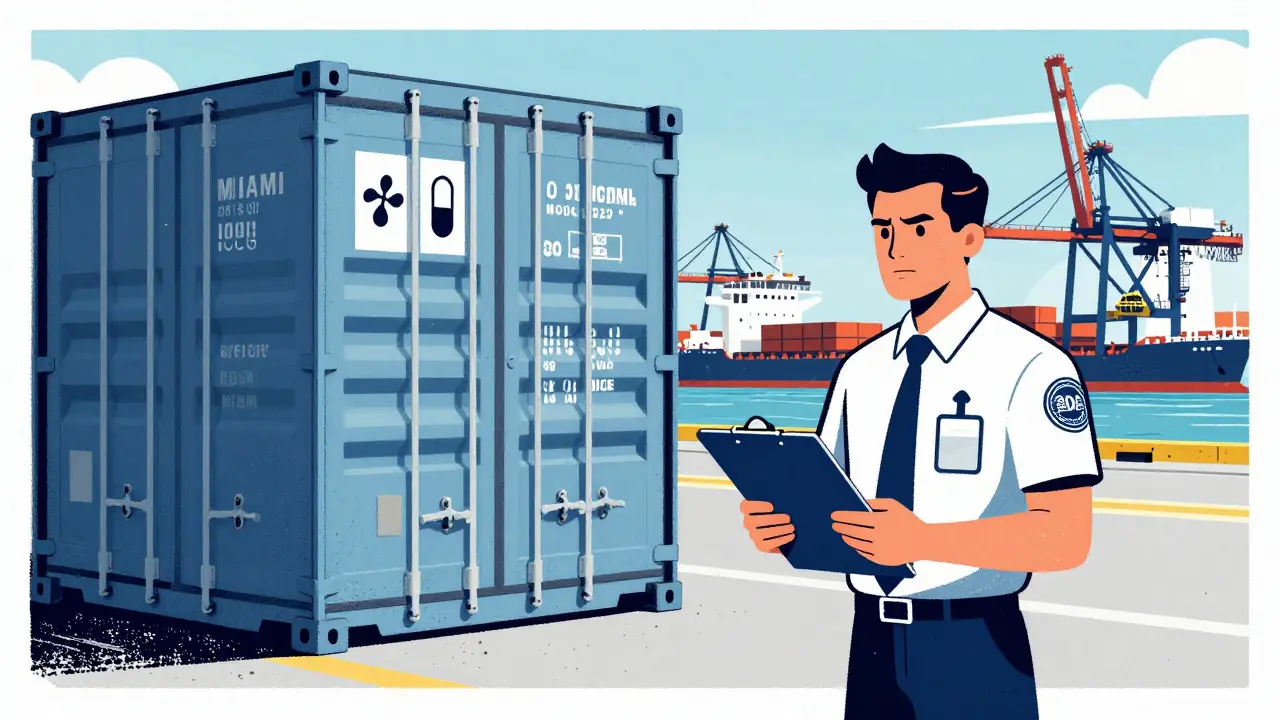
Imagine a shipment of life-saving medication sitting on a dock in Miami. Before it can reach a pharmacy shelf or a hospital ward, it has to pass through one of the most complex regulatory filters in the world. The U.S. Food and Drug Administration (FDA) doesn't just wave these shipments through. They scrutinize them. This isn't about bureaucracy for the sake of red tape; it's about ensuring that every pill, vial, and ingredient entering the United States meets the same strict safety standards as drugs made right here at home.
If you are involved in the pharmaceutical supply chain, whether you are a manufacturer, a customs broker, or a procurement officer, understanding how the FDA monitors imports is critical. A single mistake in documentation or a flagged risk factor can mean your product gets detained, refused, or worse, recalled. With the agency processing over 1.2 million import entries annually, knowing the rules of the game can save you months of delays and thousands of dollars in lost revenue.
The Five Phases of FDA Entry Review
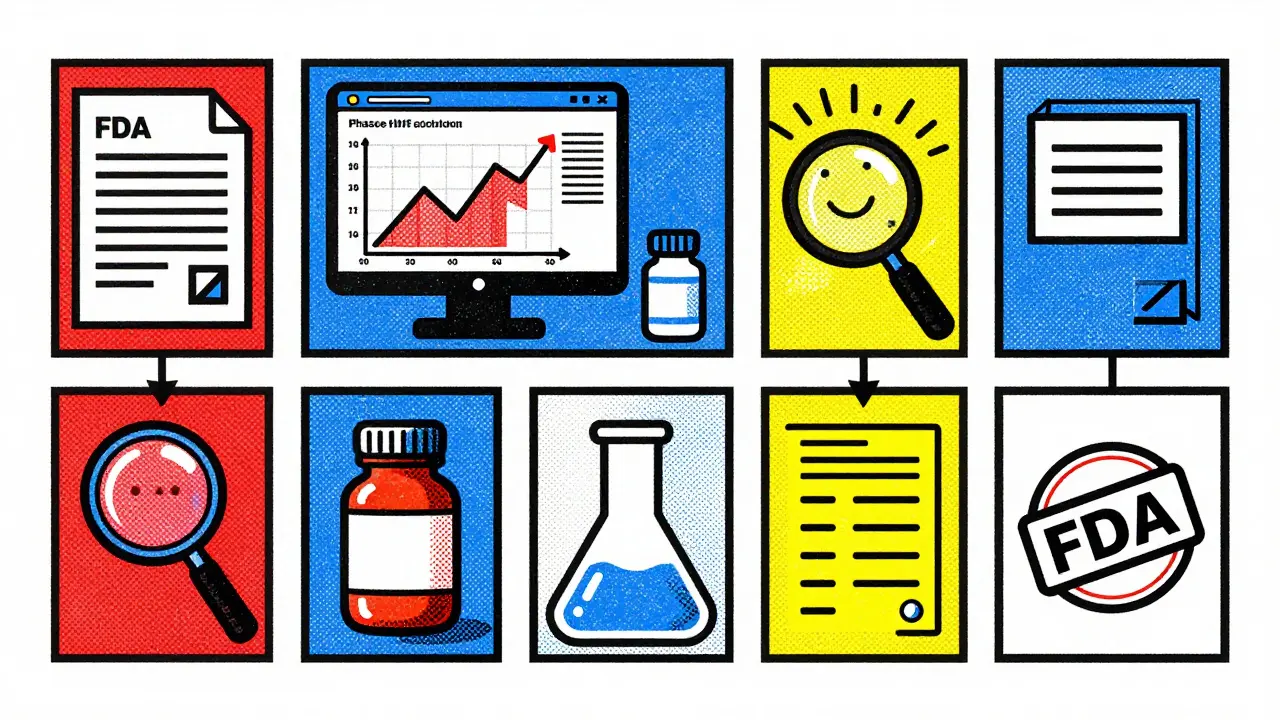
The FDA’s inspection process isn't a random check. It follows a structured five-phase pathway designed to balance speed with safety. Understanding these phases helps you predict where bottlenecks might occur.
- Entry Submission: You submit your entry data electronically via the FDA’s Prior Notice System Interface (PNSI). This is your first handshake with the system. Accuracy here is non-negotiable.
- Entry Review: This is where the magic-and the anxiety-happens. An automated risk-based analytics tool screens about 98% of entries electronically. If your entry looks clean, it moves forward. If it triggers a flag, it gets held.
- Examination and Sampling: For flagged items, FDA investigators may conduct physical inspections. They look at labels, check storage conditions, and often take samples for lab testing.
- Compliance Review: Lab results come back. Investigators compare your product against current Good Manufacturing Practices (cGMPs), registration records, and labeling laws.
- Final Admissibility Decision: The FDA decides whether to release the shipment, detain it, or refuse entry entirely.
Most people think the FDA physically inspects every box. They don’t. In fact, they only perform physical examinations on about 1.2% of the 100 million+ drug shipments entering the country annually. The rest rely on that initial electronic review. This means your digital paperwork is just as important as the physical product.
Risk-Based Targeting: Why Some Shipments Get Stopped
You might wonder why your shipment was held while another went through smoothly. It comes down to risk scoring. The FDA uses sophisticated algorithms to prioritize which entries need human eyes on them. According to recent data, entries are flagged for several specific reasons:
- High-Risk Products: About 15.7% of reviewed entries are flagged because the product type itself carries higher inherent risks.
- Detention Without Physical Examination (DWPE): Roughly 12.1% of entries fall into this category. This happens when a manufacturer or facility has a history of violations. The FDA detains the goods without even looking at them because past performance suggests future failure.
- Incomplete Information: Surprisingly, 8.3% of flags are due to simple errors-missing data, wrong codes, or typos in the entry submission.
- Targeted Examinations: Another 6.2% are specifically targeted based on intelligence, such as alerts about counterfeit trends or contamination outbreaks.
If your shipment hits any of these categories, it stays intact at the port until the FDA makes a final call. This is where the Harmonized Real-Time Alert System kicks in. If a tainted product is found at one port, all 330+ U.S. ports get notified within 45 minutes. Your shipment could be stopped in Los Angeles because a similar issue popped up in New York.
The Game Changer: Eliminating De Minis Exemptions
For years, there was a loophole known as the "de minimis" exemption. Shipments valued under $800 could bypass many FDA checks. This was intended for small personal packages, but bad actors exploited it to smuggle dangerous narcotics, illicit pill presses, and substandard drugs.
In 2023, U.S. Customs and Border Protection (CBP) closed this gap. Now, ALL FDA-regulated products, regardless of value, are subject to review. This was a massive shift. While it improved security, it also increased costs and delays for legitimate players. Academic researchers reported their sample import costs jumping by $285 to $420 per shipment, with timelines stretching by 3 to 5 business days. If you are importing small quantities for research or clinical trials, expect stricter scrutiny and higher administrative overhead.
Speed Lane: The Secure Supply Chain Pilot Program (SSCPP)
Is there a way to skip the line? Yes, if you qualify for the Secure Supply Chain Pilot Program (SSCPP). Launched in 2019, this program is essentially a VIP lane for trusted manufacturers.
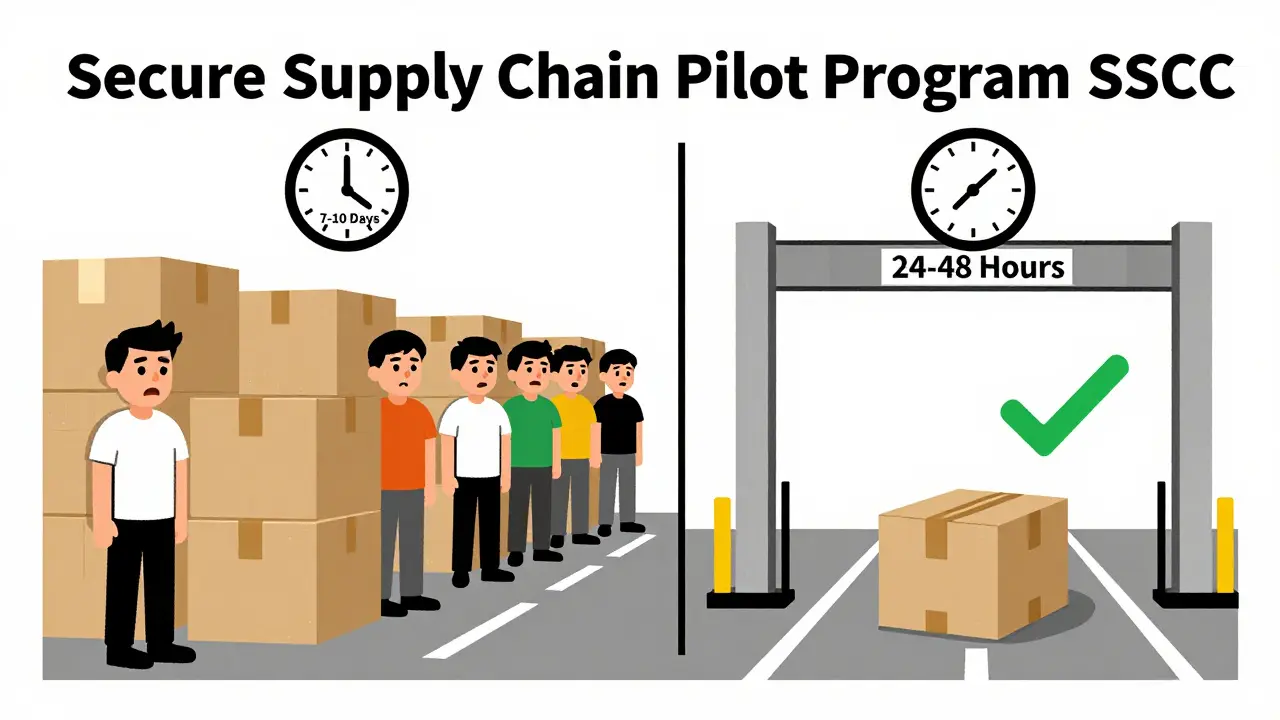
Here is how it works: If your company passes rigorous internal controls reviews and maintains a perfect compliance record for three consecutive years, you can join the SSCPP. As of late 2023, 27 manufacturers were participating, with plans to expand to 50. Participants can designate up to five products for expedited clearance.
The benefits are real. Standard clearance times hover around 7 to 10 business days. SSCPP members see clearance in 24 to 48 hours. One major pharma director noted this reduced their shipment variability from plus-or-minus five days to just eight hours. However, the barrier to entry is high. Smaller companies often struggle to meet the stringent criteria, leaving them stuck in the standard queue.
| Feature | Standard Import Process | Secure Supply Chain Pilot Program (SSCPP) |
|---|---|---|
| Average Clearance Time | 7-10 Business Days | 24-48 Hours |
| Inspection Frequency | Risk-Based (Higher Chance of Physical Exam) | Minimal Inspection at Port |
| Eligibility Requirement | None (All Importers) | Perfect Compliance Record for 3 Years |
| Product Limit | All Products | Up to 5 Designated Products per Manufacturer |
| Cost Impact | Standard Broker Fees | Higher Initial Audit Costs, Lower Long-Term Logistics Costs |
Common Reasons for Detention and Refusal
When the FDA does inspect a shipment, what are they looking for? And more importantly, why do shipments fail? In fiscal year 2022, 14.3% of physically examined drug shipments were detained. Of those, nearly 68% were ultimately refused entry. Here are the top culprits:
- Labeling Discrepancies: This accounts for 19% of problems. If your label doesn’t match the approved application exactly, it’s a violation. Even minor font changes or missing lot numbers can trigger a hold.
- Registration Issues: 21% of issues stem from incomplete registration verification. Your facility must be registered with the FDA, and your drug must be listed. If the database says otherwise, your shipment stops.
- Incorrect Product Coding: Believe it or not, 28% of delays are caused by incorrect product coding in the entry documents. Using the wrong HTS code or FDA product code confuses the automated systems, leading to manual reviews.
- cGMP Violations: If lab tests show impurities, potency issues, or contamination, the product fails current Good Manufacturing Practices. This is the most serious outcome, often leading to Import Alerts that block all future shipments from that facility.
One notable case involved valsartan contamination in 2022. Substandard active pharmaceutical ingredients (APIs) entered through non-targeted shipments, highlighting the limits of resource-constrained inspections. This incident underscores why consistent quality control at the source is vital-the FDA is a net, not a filter for everything.
Navigating the System: Practical Tips for Importers
So, how do you keep your shipments moving? First, master your documentation. Errors in commercial invoices, bills of lading, or Affirmations of Compliance cause an average delay of 4.7 business days. Double-check everything. Second, build relationships. Experienced importers suggest establishing direct lines of communication with FDA entry reviewers at your primary ports. Survey data shows this can reduce processing times by 22-35%.
Also, consider the role of customs brokers. While 58% of brokers report increased client complaints about unpredictable times, 42% note improved transparency since the FDA’s electronic entry system launched in 2021. Choose a broker who specializes in pharmaceuticals. They know the codes, the common pitfalls, and how to navigate DWPE situations. Finally, stay updated on policy changes. The elimination of de minimis exemptions and the expansion of SSCPP are just the latest shifts. The FDA is actively integrating AI-driven risk tools and blockchain verification pilots. Being proactive rather than reactive is the best strategy for maintaining a smooth supply chain.
How long does it take for the FDA to clear imported drugs?
For standard shipments, clearance typically takes 7 to 10 business days. However, if you participate in the Secure Supply Chain Pilot Program (SSCPP), clearance can happen in 24 to 48 hours. Delays due to documentation errors or physical inspections can extend this timeline significantly.
What is the de minimis exemption change for FDA imports?
Previously, shipments valued under $800 were exempt from many FDA inspections. As of 2023, this exemption has been eliminated for all FDA-regulated products. Every shipment, regardless of value, is now subject to review to prevent smuggling of illicit goods.
Why was my drug shipment detained by the FDA?
Shipments are commonly detained due to labeling discrepancies, incomplete registration information, incorrect product coding, or because the manufacturing facility is on a Detention Without Physical Examination (DWPE) list. High-risk product types also trigger automatic holds.
Can I appeal an FDA import refusal?
Yes, but it is a complex process. You must address the specific violation cited (e.g., fix labeling, provide new lab data). Once corrected, you can request re-entry. However, repeated refusals can lead to Import Alerts, which automatically detain all future shipments from that entity.
How does the FDA choose which shipments to inspect physically?
The FDA uses a risk-based analytics tool to screen 98% of entries electronically. Physical inspections are reserved for high-risk products, facilities with poor compliance histories (DWPE), entries with incomplete data, or those targeted by specific intelligence alerts. Only about 1.2% of total shipments undergo physical examination.
14 Comments
Nicholas BowlingJune 6, 2026 AT 23:10
its all just red tape to keep us poor people sick so the big pharma can charge more for the generic stuff they already have sitting in warehouses nobody cares about safety its a scam
Aishwarya ThankachanJune 7, 2026 AT 14:58
OMG this is literally terrifying 😱 I had no idea that my little vitamin order from India could get stuck because of some algorithm 🤖 The de minimis loophole being closed is such a game changer for e-commerce logistics!! 💊📦 Has anyone here actually dealt with a DWPE situation? I feel like my supply chain knowledge is lacking but I need to know if I should switch brokers ASAP!! 📉📈
Mike CrumpJune 8, 2026 AT 18:57
Hey there! It's fascinating how the FDA balances speed and safety, isn't it? I've been working in pharma logistics for a bit, and seeing the shift from physical inspections to risk-based analytics has been a wild ride. The SSCPP program sounds like a dream for those who can qualify, but I worry about smaller players getting left behind. What do you think about the expansion plans to 50 manufacturers? Do you see this becoming more accessible soon?
Jay ForemanJune 10, 2026 AT 05:45
You really think the FDA is doing this for your safety? Please. They are protecting their own jobs and making sure the big corporations stay in line. If you can't afford the audit costs for SSCPP then you're screwed. It's a rigged system designed to crush small businesses while letting the giants walk through the front door. Typical government overreach.
Mike CrumpJune 10, 2026 AT 16:37
I hear your frustration, Jay. It definitely feels unfair when the barrier to entry is so high. But consider the alternative-without these checks, we'd likely see more contamination issues like the valsartan scandal. Maybe there's room for a tiered support system for smaller companies? What would make the process feel more equitable to you?
Adelaide MotataJune 11, 2026 AT 16:38
oh please dont act like you understand anything about regulatory compliance its not rocket science but most people here clearly havent read the actual CFR guidelines i bet you cant even tell me what cGMP stands for without googling it first typical reddit ignorance
Alexandre DesbiensJune 13, 2026 AT 07:39
The article provides a comprehensive overview of the five-phase pathway. It is crucial to note that the elimination of the de minimis exemption has significantly altered the landscape for low-value shipments. The Harmonized Real-Time Alert System is particularly effective in mitigating risks across multiple ports simultaneously. One must ensure that their documentation is flawless to avoid unnecessary delays.
Cathy NJune 15, 2026 AT 04:39
i appreciate the detailed breakdown of the phases it helps to know exactly where things might go wrong especially with the labeling discrepancies being such a common issue thanks for sharing this info
Jennifer LegoreJune 16, 2026 AT 23:57
It is truly inspiring to see how technology is enhancing our ability to protect public health! :) The Secure Supply Chain Pilot Program offers a wonderful opportunity for dedicated manufacturers to streamline their operations. Let us continue to support these initiatives that prioritize both efficiency and safety! ^_^
Rachel HarrypersadJune 17, 2026 AT 20:49
the whole concept of trust is flawed why should we trust the FDA or the algorithms they use its all based on past data which is inherently biased towards large corporations small players will always lose out in this capitalist nightmare
Mark HoganJune 19, 2026 AT 14:15
hey guys i work in customs brokerage and yeah the de minimis change was a huge headache for everyone initially but now we are getting used to it just make sure your HTS codes are right or you will get flagged every time sorry for the bad spelling im typing fast
Hassan BukhariJune 19, 2026 AT 16:08
Only amateurs worry about typos in entry submissions. If you cannot manage basic data integrity you have no business importing pharmaceuticals into the United States. The SSCPP is for the elite who understand quality control. Everyone else deserves to wait in line.
Jerry MathewsJune 20, 2026 AT 14:51
Hey Mark, thanks for the tip! It's great to hear from someone on the ground. I'm trying to help my local clinic navigate these new rules. Do you have any advice for non-profits importing small batches of research samples?
Aswin Narayan JJune 21, 2026 AT 21:11
This entire system is broken and needs to be dismantled immediately. The FDA is a bottleneck that stifles innovation and keeps drug prices artificially high. We should allow free trade in medicines without this bureaucratic nonsense. Stop enabling the government's control over healthcare!