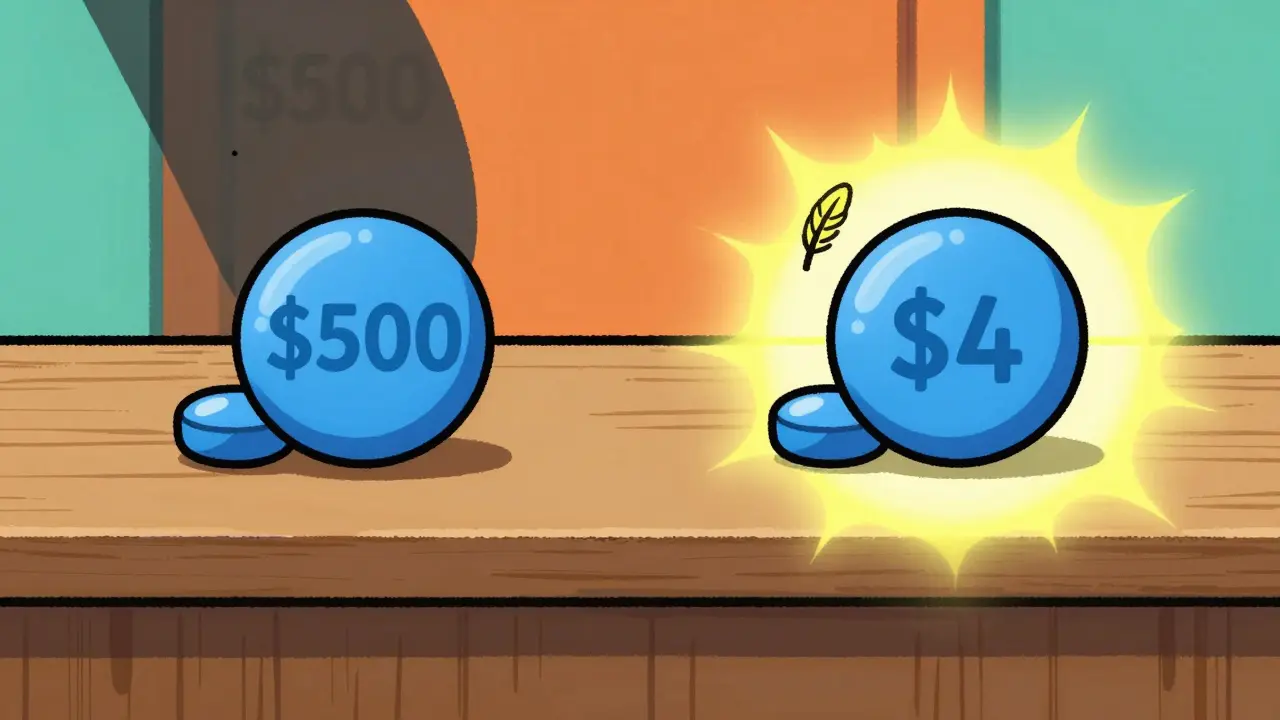
Imagine you have two pills on your counter. One costs $500 a month. The other costs $4. They look identical. They contain the same active ingredient. They do the exact same thing in your body. Why would anyone ever pay more? It’s a simple question, but the answer is messy, complicated, and worth millions to healthcare systems worldwide.
This isn’t just about saving money at the pharmacy counter. It’s about cost-effectiveness analysis (CEA), the rigorous economic tool that helps doctors, insurers, and governments decide which treatments actually deliver value for every dollar spent. When we talk about generics, CEA reveals a hidden layer of waste-and massive opportunities for savings-that most people never see.
The Hidden Math Behind Generic Savings
We often hear that generics are cheaper than brand-name drugs. That’s true, but it’s only half the story. The real value lies in how much *cheaper* they can be, depending on competition. According to data from the FDA, when the first generic competitor enters the market, prices drop by an average of 39% compared to the brand name. But here is where it gets interesting: if six or more generic competitors enter the market, prices can fall more than 95% below the original brand price.
Let’s put that in perspective. If a drug used to cost $100, one generic might bring it down to $61. Six generics could bring it down to less than $5. This dramatic shift is driven by the Hatch-Waxman Act of 1984, which created a streamlined approval process for generics. However, not all generics are created equal in terms of price. A 2022 study published in JAMA Network Open found shocking disparities even within the generic category itself. Researchers looked at the top 1,000 generic drugs and found that some "high-cost" generics were 15.6 times more expensive than their therapeutic alternatives-drugs that work just as well but cost a fraction of the price.
In one specific case, switching patients from high-cost generics to lower-cost alternatives reduced spending from $7.5 million to just $873,711. That is nearly 90% savings without changing the clinical outcome. For a hospital system or an insurance plan, this isn't just a line item; it's the difference between solvency and deficit.
How We Measure Value: The ICER Explained
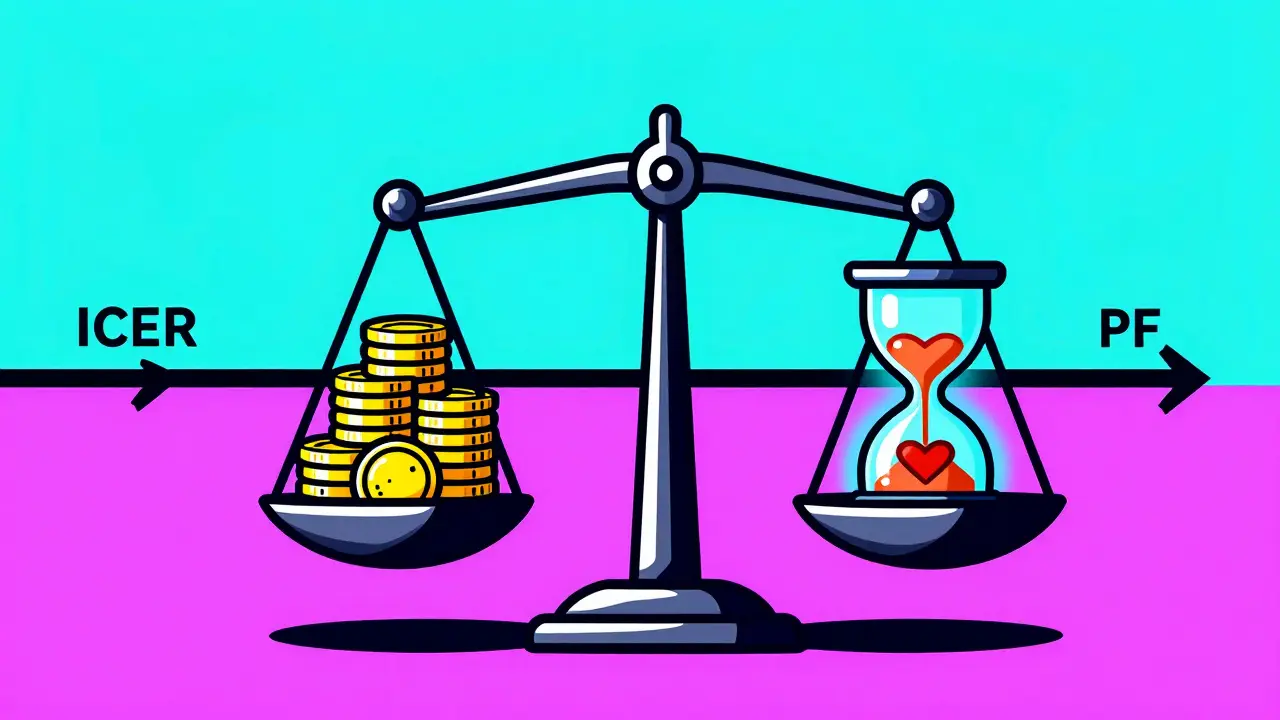
So, how do experts quantify this value? They use something called the Incremental Cost-Effectiveness Ratio, or ICER. Think of ICER as a fuel efficiency rating for medicines. Instead of miles per gallon, it measures cost per Quality-Adjusted Life Year (QALY). A QALY combines both the length of life and the quality of that life into a single number. If Drug A adds one year of perfect health for $10,000, its ICER is $10,000 per QALY. If Drug B adds the same year of health but costs $50,000, its ICER is $50,000 per QALY. Most healthcare systems have a threshold-a maximum amount they are willing to pay for one additional year of healthy life. In the UK, for example, the National Institute for Health and Care Excellence (NICE) often uses a threshold between £20,000 and £30,000 per QALY.
When applying this to generics, the math usually looks incredibly favorable. Since generics provide the same clinical benefit as brands but at a fraction of the cost, their ICERs are typically very low, making them "cost-effective" by almost any standard. However, calculating these numbers requires precise data. Analysts often use pricing metrics like the Average Wholesale Price (AWP) or Federal Supply Schedule (FSS) rates. For instance, the VA Health Economics Resource Center notes that generic drug costs are often estimated at 27% of AWP, while brand names might be adjusted up to 152% of Veterans Affairs pricing. These adjustments matter because a small error in input data can skew the entire analysis, leading to poor decisions about which drugs should be covered.

The Patent Cliff Problem
Here is where things get tricky for analysts. Many cost-effectiveness studies fail because they ignore the future. Specifically, they ignore what happens when patents expire. Dr. John Garrison, a prominent voice in health economics, warns that conventional CEAs often create "pricing anomalies" by failing to account for patent expiration. If you analyze a new branded drug today without considering that a generic version will hit the market in three years, you might overestimate its long-term value. Conversely, if you analyze a treatment option without realizing a cheaper generic alternative is coming soon, you might reject a therapy that would eventually become highly cost-effective.
Data from ISPOR conference proceedings in 2021 highlighted a startling statistic: 94% of published cost-effectiveness analyses failed to incorporate assumptions about future generic prices for intervention drugs. This means nearly all these studies are looking at a snapshot in time rather than the full movie. As Dr. Hoyle noted in 2011, robust analyses must incorporate expected generic price reductions following patent expiration. Without this foresight, healthcare systems risk locking into expensive contracts for drugs that will soon lose their monopoly protection, leaving taxpayers and insurers holding the bag.
Why Some Generics Still Cost Too Much
If generics are so cheap, why do some still carry hefty price tags? The answer often lies in the middlemen, specifically Pharmacy Benefit Managers (PBMs). PBMs negotiate prices between drug manufacturers and insurance plans. Sometimes, they engage in "spread pricing," where they charge the insurer more than they pay the pharmacy, keeping the difference as profit. This distortion can keep higher-priced generics on formularies even when cheaper alternatives exist.
Furthermore, not all substitutions are straightforward. The JAMA study mentioned earlier broke down price differences by substitution type. When a generic was substituted by a different drug in the same therapeutic class, prices were 20.6 times higher than the alternative. When substituted by the same drug in a different dosage form, prices were 20.2 times higher. The smallest gap-only 1.4 times higher-occurred between identical drugs from different manufacturers. This suggests that complexity drives up cost. Simple pill swaps are easy savings; complex therapeutic switches require more clinical oversight, which adds administrative friction and cost.
| Market Scenario | Average Price Reduction vs. Brand | Key Driver |
|---|---|---|
| First Generic Entry | 39% | Initial competition breaks monopoly |
| Two Generic Competitors | 54% | Increased supply options |
| Four Generic Competitors | 79% | Market saturation begins |
| Six+ Generic Competitors | >95% | Commoditization of product |
Bias and Funding in Health Economics
Who pays for the study matters. It’s a uncomfortable truth in health economics: studies funded by drug industry tend to report more favorable results than those funded by independent bodies. A review in Health Affairs (2000) confirmed this bias, noting that industry-funded cost-utility analyses are significantly more likely to conclude that their sponsor’s drug is cost-effective. This doesn’t mean the data is always fake, but it does mean the assumptions-like discount rates, comparator choices, and time horizons-are often optimized to favor the sponsor.
For decision-makers, this highlights the need for transparency. Organizations like the Institute for Clinical and Economic Review (ICER) in the US provide detailed, public methodological reports, allowing peers to scrutinize their models. In contrast, many commercial payer organizations keep their approaches proprietary. This lack of visibility makes it harder for the broader medical community to trust or replicate the findings, slowing down the adoption of truly cost-effective generic strategies.
Implementing Better Value Systems
So, what needs to change? First, we need better forecasting. The NIH framework proposed in 2023 emphasizes designing processes that assess multiple treatment options dynamically. This means recognizing that "competitor technologies may enter the market after initial health technology assessments." Second, we need to address the PBM spread pricing issue to ensure that savings actually reach the patient and the system, rather than getting stuck in the middle. Third, clinicians and pharmacists need empowerment to switch patients to lower-cost therapeutic alternatives safely. The JAMA authors described this as an "easy-to-implement savings opportunity," yet it remains underutilized due to inertia and lack of awareness.
Finally, education is key. Properly conducting CEA for generics requires expertise in health economics, patent law, and pharmaceutical market dynamics. It’s not a skill most general practitioners possess. Bridging this gap requires training programs that help healthcare providers understand not just the clinical efficacy of a drug, but its economic trajectory over time. As over 300 small-molecule drugs lost patent protection between 2020 and 2025, the ability to model these shifts accurately has never been more critical.
What is the main purpose of cost-effectiveness analysis for generic drugs?
The primary purpose is to determine whether substituting branded drugs with generics, or choosing among different generic alternatives, provides the optimal health outcome for the cost incurred. It helps healthcare systems allocate limited resources efficiently by comparing the additional cost per unit of health benefit gained.
Why do some generic drugs cost significantly more than others?
Price variations among generics can stem from several factors, including the number of competitors in the market, formulation complexity (such as different dosage forms), and market distortions caused by Pharmacy Benefit Managers (PBMs) through practices like spread pricing. Additionally, some "high-cost" generics may lack direct therapeutic alternatives in specific formulations, allowing them to maintain higher prices despite being generic.
How does patent expiration affect cost-effectiveness calculations?
Patent expiration leads to significant price drops as generic competitors enter the market. If a cost-effectiveness analysis fails to account for this future price reduction, it may overestimate the long-term cost of a branded drug or underestimate the value of a therapy that will soon have a cheap generic alternative. Accurate modeling requires forecasting these "patent cliffs" to avoid biased conclusions.
What is an ICER and why is it important?
ICER stands for Incremental Cost-Effectiveness Ratio. It measures the additional cost required to gain one additional unit of health outcome, typically a Quality-Adjusted Life Year (QALY). It is crucial because it provides a standardized metric for comparing vastly different treatments, helping policymakers decide which interventions offer the best value for money relative to established thresholds.
Can switching to generic drugs compromise patient care?
Generally, no. Generic drugs are required by regulatory bodies like the FDA to demonstrate bioequivalence to their brand-name counterparts, meaning they deliver the same active ingredient in the same amount and rate. Studies show that therapeutic substitution with equivalent generics can reduce costs by up to 90% without compromising clinical outcomes, provided the switch is managed correctly by healthcare professionals.