Night Shift Medication Safety Calculator
Input Your Schedule & Plan
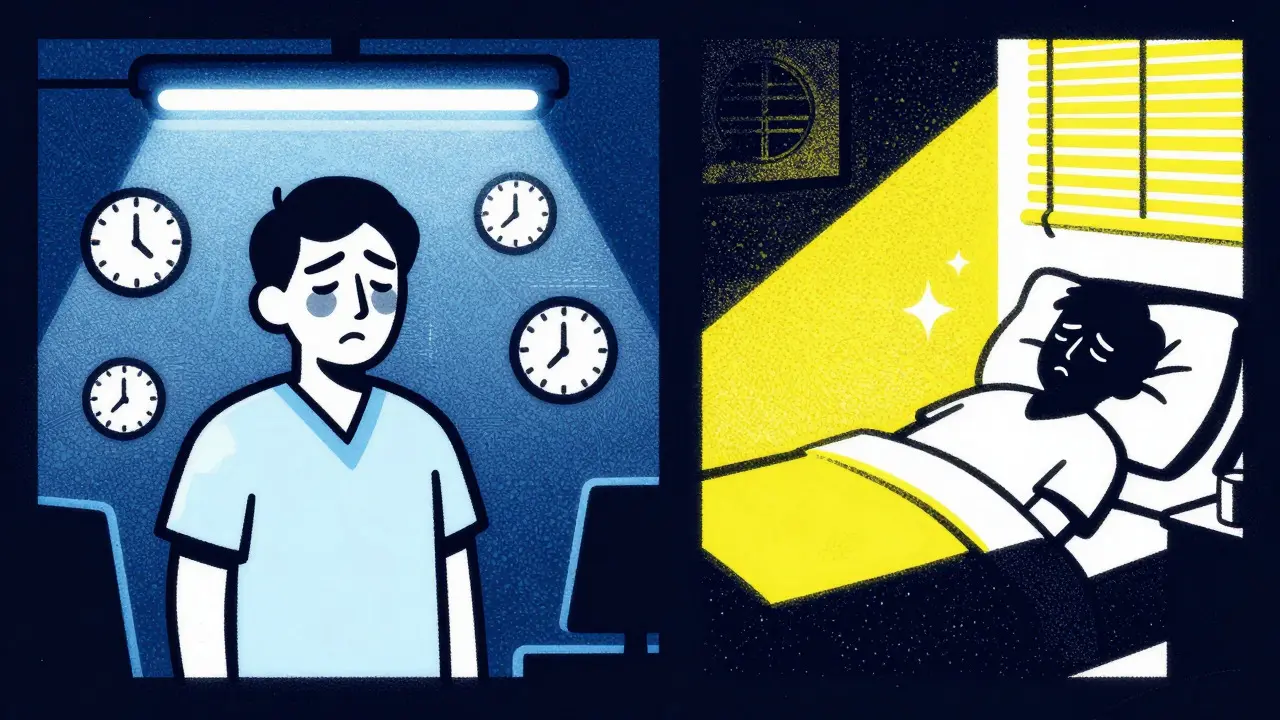
Imagine it is 3 AM. You are on your third hour of a night shift, eyes heavy, mind foggy. You take a pill to stay awake, or perhaps you took one earlier to help you sleep during the day. It sounds like a simple fix, but for millions of night-shift workers globally, this routine carries hidden risks. The combination of circadian misalignment and pharmacological intervention creates a complex safety landscape that many overlook.
Sleeping when the sun is up and working when it is down fights against your body’s natural biological clock. When you add sedating or wake-promoting medications into the mix, the stakes get higher. This isn’t just about feeling tired; it is about preventing accidents, avoiding dependency, and maintaining long-term health. Understanding how these drugs interact with your shifted schedule is the first step toward safer nights and better days.
Understanding Shift Work Disorder and Its Impact
Before discussing medication, we need to understand the condition itself. Shift Work Disorder (SWD) is a recognized circadian rhythm sleep-wake disorder. It occurs when your internal biological clock fails to synchronize with external environmental changes caused by non-traditional work schedules. According to the International Classification of Sleep Disorders (ICSD-3), this misalignment leads to insomnia, excessive sleepiness, or both.
The prevalence of SWD varies widely, ranging from 2.3% to 84.0% depending on the industry and measurement methods. However, night shift workers consistently report the highest rates because their schedules completely invert typical sleep-wake patterns. In the United States alone, approximately 10 million people work non-day shifts, with healthcare, transportation, and manufacturing sectors seeing the most cases. The consequence? Fatigued workers are 70% more likely to be involved in workplace accidents than fully rested counterparts, according to the National Safety Council.
This statistic highlights why alertness planning is not optional-it is a critical safety requirement. Your body produces melatonin at night to signal sleep, but you are trying to stay awake. Conversely, during the day, your body wants to be active, but you are trying to sleep. Medications attempt to bridge this gap, but they do not fix the underlying biological conflict.
Sedating Medications: Timing Is Everything
If you struggle to sleep during the day, you might consider prescription sleep aids. These include eszopiclone (Lunesta), zolpidem (Ambien), and zaleplon (Sonata). While effective for initiating sleep, they come with strict timing requirements mandated by the FDA.
- Eszopiclone and Zolpidem: Require 7-8 hours of uninterrupted sleep time after administration. If you take these pills and only get 5 hours of sleep due to an alarm or noise, you risk severe residual drowsiness.
- Zaleplon and Intermezzo: Have shorter half-lives and require at least 4 hours of sleep time. These may be better options if your sleep window is unpredictable.
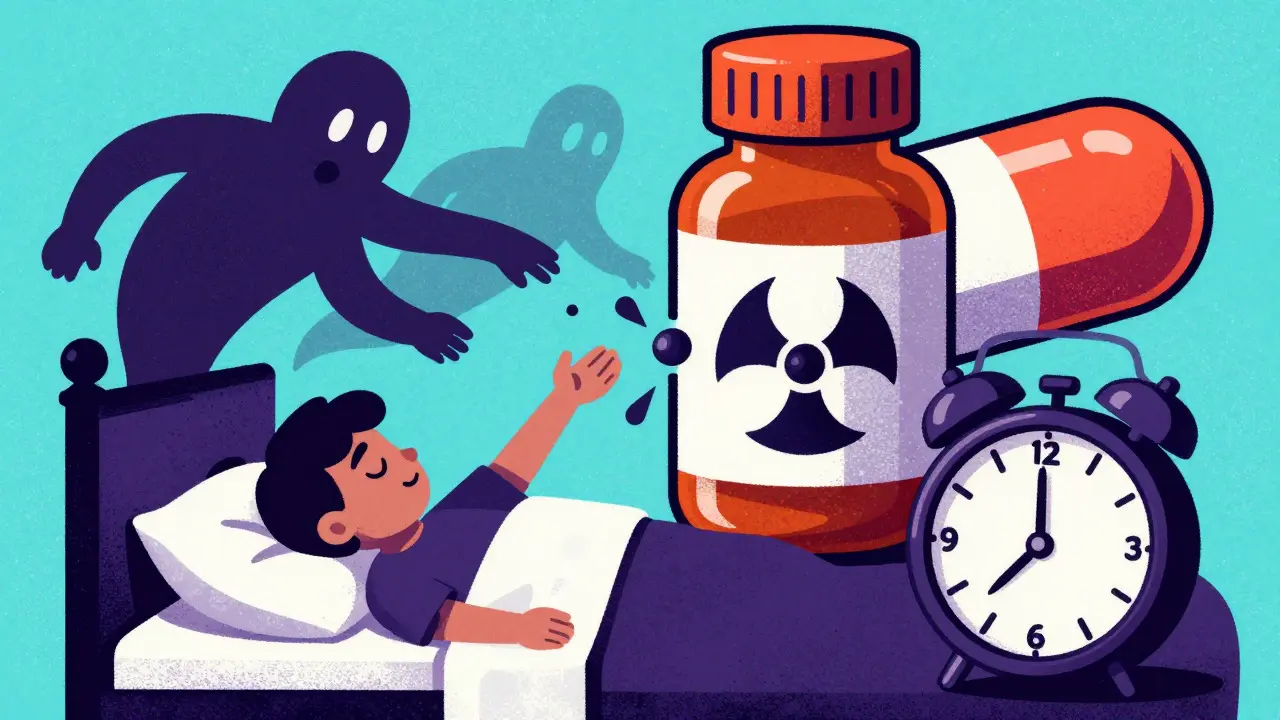
In April 2023, the FDA issued a Boxed Warning for these medications regarding serious injuries caused by sleepwalking. Reports included incidents of sleep-driving and sleep-eating between 2019 and 2022. Dr. Janet Wright from the FDA’s Center for Drug Evaluation and Research noted that these complex sleep behaviors resulted in 'serious injuries and even death.' This warning underscores a crucial point: these drugs can impair judgment and motor skills long after you think you are awake.
For night-shift workers, this means planning your sleep environment meticulously. Blackout curtains, white noise machines, and a cool room temperature are essential. But equally important is ensuring you have enough time to sleep before your next shift begins. Taking a sedative without guaranteeing 7-8 hours of rest is a dangerous gamble.
Wake-Promoting Agents: Staying Alert Safely
On the flip side, staying awake during the night requires different tools. Modafinil (Provigil) and armodafinil (Nuvigil) are FDA-approved wakefulness-promoting agents often prescribed for shift work disorder. Unlike caffeine, which provides a short burst followed by a crash, these medications promote sustained alertness.
To achieve peak plasma concentrations during working hours, you should take modafinil approximately one hour before your shift begins. Modafinil has a half-life of 12-15 hours, while armodafinil lasts about 15 hours. A 2020 meta-analysis published in the Journal of Clinical Sleep Medicine found that modafinil improves alertness by 34% on psychomotor vigilance tests compared to placebo. However, it does not fully restore performance to daytime levels.
These agents are particularly valuable in high-consequence environments like emergency medicine and transportation. The National Transportation Safety Board reported a 28% reduction in fatigue-related incidents among truck drivers using modafinil under medical supervision. Yet, there are limitations. No pharmacological intervention can completely restore altered circadian cycles to baseline levels. They address symptoms, not the root cause of circadian misalignment.
| Medication Type | Examples | Required Sleep/Work Time | Key Risks |
|---|---|---|---|
| Sedative-Hypnotics | Zolpidem, Eszopiclone | 7-8 hours uninterrupted sleep | Sleepwalking, residual drowsiness, dependency |
| Short-Acting Sedatives | Zaleplon, Intermezzo | At least 4 hours sleep | Less effective for deep sleep, rebound insomnia |
| Wake-Promoting Agents | Modafinil, Armodafinil | Take 1 hour before shift | Headache, nausea, does not replace sleep |
| Melatonin Supplements | Over-the-counter Melatonin | Take 3-4 hours before desired sleep | Dizziness, grogginess, variable efficacy |

The Role of Melatonin and Non-Pharmacological Strategies
Melatonin is a popular over-the-counter option for adjusting circadian rhythms. It signals to your brain that it is time to sleep. For night-shift workers, the timing is counterintuitive. You should take melatonin supplements 3-4 hours before your desired sleep onset, not right before bed. Doses typically range from 0.5mg to 5mg, depending on individual response.
However, evidence on its effectiveness is mixed. A 2022 Cochrane Review found low-quality evidence for melatonin’s effectiveness in improving daytime sleep after night shifts. Dr. Nathaniel Watson from the American Academy of Sleep Medicine cautions that while melatonin can help you fall asleep, it does not necessarily lead to better alertness during the work shift. It is a tool for sleep initiation, not a substitute for good sleep hygiene.
Non-pharmacological strategies remain the foundation of safety planning. Strategic light exposure is powerful. Bright light during your shift helps suppress melatonin and boost alertness, while wearing blue-light-blocking glasses on your commute home signals your body to prepare for sleep. The American Academy of Sleep Medicine emphasizes that pharmacological interventions should be secondary to behavioral adjustments like scheduled sleep and light management.
Safety Planning and Dependency Risks
One of the biggest dangers of relying on medication is dependency. Benzodiazepines, often used off-label for anxiety or sleep, show habit-forming potential in 25-30% of users after just 4-6 weeks of continuous use. UCLA Health warns that sleeping pills should not be seen as a long-term solution, with physicians rarely prescribing them for more than three to four weeks.
Residual drowsiness is another major concern. A 2023 American Medical Association survey found that 32% of night-shift healthcare workers reported residual drowsiness affecting subsequent shifts. If you drive home after taking a sedative, the risk is even higher. Data from the National Highway Traffic Safety Administration shows that drivers using prescription sleep medications are 4.5 times more likely to be involved in crashes within 2 hours of administration.
To mitigate these risks, create a personal safety plan:
- Consult Your Doctor: Inform your physician of your exact work schedule. Discuss your goals-sleep initiation vs. maintenance-and ask about half-lives.
- Strict Timing Protocols: Never take a sedative unless you can guarantee the required sleep duration. Set multiple alarms and ask family members to check on you if possible.
- Avoid Alcohol: Combining prescription insomnia medicines with alcohol increases the risk of serious adverse events, including respiratory depression.
- Monitor Side Effects: Keep a journal of your sleep quality, alertness levels, and any unusual behaviors like sleepwalking. Share this with your doctor.
- Prioritize Light Management: Use bright lights at work and dark glasses on the way home to support your circadian rhythm naturally.
Remember, medication is a temporary aid, not a cure. As Dr. Charles Czeisler of Harvard Medical School noted, pharmacological interventions alone cannot overcome the fundamental biology of circadian misalignment. The most comprehensive approach combines strategic medication use with behavioral interventions, such as those outlined in the National Heart, Lung, and Blood Institute’s guides on healthy sleep habits.
Can I take melatonin and modafinil together?
Yes, but timing is critical. Take melatonin 3-4 hours before you want to sleep (usually after your shift ends) to signal sleep onset. Take modafinil one hour before your shift starts to promote alertness. Do not take them simultaneously. Always consult your doctor to ensure this combination is safe for your specific health profile.
How long does Ambien stay in your system for night-shift workers?
Zolpidem (Ambien) has a half-life of about 2.5 hours, but its effects can linger. The FDA requires 7-8 hours of uninterrupted sleep after taking immediate-release Ambien to avoid residual drowsiness. If you only sleep for 5 hours, you may still experience impairment when you wake up for your next shift or commute.
Is it safe to drive home after taking a sleeping pill?
It is risky. Drivers using prescription sleep medications are 4.5 times more likely to be involved in crashes within 2 hours of administration. Residual drowsiness can persist for up to 8 hours for some agents. If possible, arrange for a ride, use public transport, or wait until you are fully alert before driving. Never combine sleep meds with alcohol.
What are the signs of dependency on sleep medications?
Signs include needing higher doses to achieve the same effect, experiencing withdrawal symptoms like anxiety or rebound insomnia when stopping, and inability to sleep without medication. Benzodiazepines and z-drugs like Ambien carry a 25-30% dependency risk after 4-6 weeks of continuous use. If you notice these signs, consult your doctor immediately.
Does modafinil replace the need for sleep?
No. Modafinil promotes wakefulness but does not eliminate the physiological need for sleep. Long-term sleep deprivation can lead to serious health issues regardless of medication use. Modafinil is intended to help you function during necessary wake periods, not to allow you to skip sleep entirely. Prioritize getting adequate rest during the day.