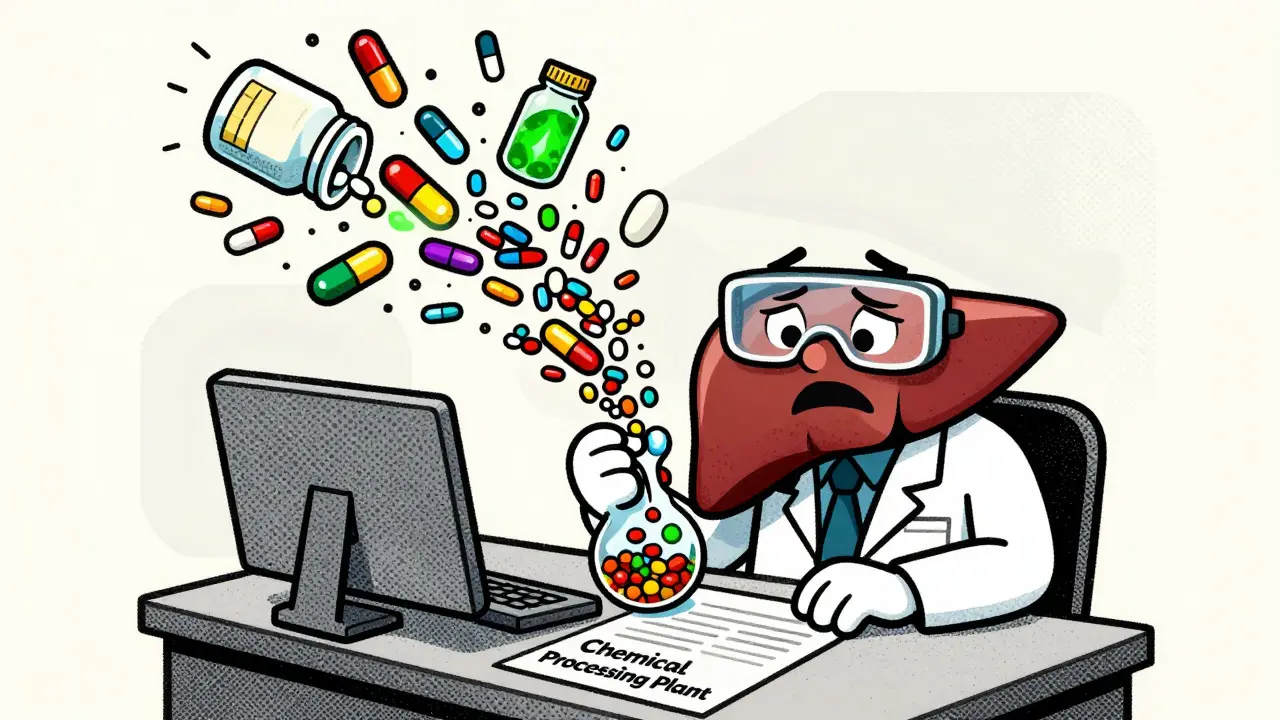
Your liver works tirelessly to filter toxins from your blood, but sometimes the very medicines meant to heal you can hurt it. This condition is called Drug-Induced Liver Injury, also known as DILI or drug-induced hepatotoxicity. It is a serious complication where medications, herbal supplements, or other substances cause liver damage that isn't explained by any other disease. While most drugs are safe for the majority of people, DILI remains a leading cause of acute liver failure in the United States, accounting for roughly 5% to 20% of all such cases according to data from the Acute Liver Failure Study Group.
You might be wondering if this happens to everyone who takes prescription drugs. The short answer is no. In fact, predicting who will develop liver injury is notoriously difficult. For some drugs, the risk is dose-dependent and predictable. For others, it is an unpredictable, idiosyncratic reaction that can happen to anyone, at any time, regardless of how much they take. Understanding the difference between these types, knowing which medications carry the highest risk, and learning how to monitor your liver health can save your life.
Understanding How Drugs Hurt the Liver
To understand why certain medications cause damage, you need to look at how the liver processes them. The liver is the body's primary chemical processing plant. When you swallow a pill, it travels to the liver, where enzymes break it down so your body can use it or excrete it. Sometimes, this breakdown process creates toxic byproducts.
Dr. Paul B. Watkins, a professor of medicine at the University of North Carolina School of Medicine, explains that "the liver's role in drug metabolism creates unique vulnerabilities where metabolic byproducts can accumulate and cause damage." There are two main ways this happens:
- Intrinsic (Predictable) Toxicity: This type follows a clear dose-response relationship. If you take enough of the drug, you will likely get sick. A classic example is acetaminophen (known as paracetamol outside the US). Taking more than 4 grams in a day can overwhelm the liver's ability to neutralize its toxic metabolite, NAPQI, leading to cell death.
- Idiosyncratic (Unpredictable) Toxicity: This accounts for about 75% of DILI cases. It has no clear link to dose and often appears 1 to 12 weeks after starting a medication. It may involve an immune system reaction or a rare genetic quirk in how your liver enzymes work. You cannot predict who will get this based on standard tests.
The unpredictability of idiosyncratic reactions makes them particularly dangerous. As the British Liver Trust notes, "it is usually impossible to predict who will develop drug induced liver injury, and which medicines will cause it." This means vigilance is key, even when you feel fine.
High-Risk Medications You Should Know About
Not all medications pose the same threat. Some classes of drugs are statistically more likely to cause liver injury than others. Knowing these helps you have informed conversations with your doctor or pharmacist.
| Medication Class | Common Examples | Risk Profile & Notes |
|---|---|---|
| Acetaminophen | Tylenol, Panadol | Cause of ~45.8% of acute liver failure cases in the US. Toxicity occurs at doses >4g/day in adults. Max dose is 3g/day for elderly or those with existing liver issues. |
| Antibiotics | Amoxicillin-clavulanate, Isoniazid | Amoxicillin-clavulanate causes 11-17% of idiosyncratic DILI cases. Isoniazid carries a 1% risk of significant injury, rising to 2-3% in patients over 35. |
| Antiepileptic Drugs | Valproic acid, Carbamazepine | Valproic acid causes injury in 0.5-1.0 per 10,000 courses but has a high fatality rate (10-20%) in severe cases, especially in children under 2. |
| Herbal & Dietary Supplements | Green tea extract, Kava, Anabolic steroids | Now represent ~20% of DILI cases in the US. Risk is higher in men (60% of supplement-related cases). Often overlooked because patients don't report them to doctors. |
| Statins | Atorvastatin, Simvastatin | Cause mild enzyme elevations in 0.5-2% of users, but severe liver injury is extremely rare (0.001-0.002%). Routine monitoring is not cost-effective. |
One surprising culprit is herbal and dietary supplements. Many people assume "natural" means "safe," but the liver still has to process these compounds. Data from the Drug-Induced Liver Injury Network (DILIN) shows a sharp rise in supplement-related liver injuries, jumping from 7% of cases in 2004-2009 to 20% in 2013-2019. Products containing green tea extract, kava, and anabolic steroids are particularly implicated.
Recognizing the Symptoms of Liver Stress
The tricky part about DILI is that early stages are often silent. Your liver can lose up to 70% of its function before you notice obvious symptoms. However, as injury progresses, specific signs appear. You should watch for:
- Fatigue and weakness: Feeling unusually tired despite getting enough sleep.
- Jaundice: Yellowing of the skin and the whites of the eyes. This is a late sign indicating significant bilirubin buildup.
- Dark urine: Urine that looks like tea or cola due to excess bilirubin being excreted by the kidneys.
- Abdominal pain: Specifically in the upper right quadrant, where the liver sits.
- Itching (Pruritus): Severe, unexplained itching without a rash, often caused by bile salts accumulating in the skin.
- Nausea and loss of appetite: General gastrointestinal distress that doesn't resolve.
Patient stories highlight the diagnostic delay many face. One patient shared on the American Liver Foundation community forum: "My ALT shot up to 1,200 (normal <40) after 2 months of TB treatment. It took 6 months for my liver to fully recover." Another user on Reddit noted it took four doctors and three months to connect their symptoms to a cholesterol medication. If you experience these symptoms while on new medication, do not wait. Seek medical attention immediately.
Monitoring Protocols: What Tests Matter?
If you are starting a high-risk medication, your doctor will likely order baseline liver function tests (LFTs). These tests measure enzymes and proteins that indicate how well your liver is working. The key markers include:
- Alanine Aminotransferase (ALT): An enzyme found primarily in the liver. Elevated levels suggest direct damage to liver cells (hepatocellular injury).
- Aspartate Aminotransferase (AST): Similar to ALT but also found in muscles and heart. Used alongside ALT to assess liver health.
- Alkaline Phosphatase (ALP): An enzyme involved in bile flow. High levels suggest cholestatic injury, where bile ducts are blocked or inflamed.
- Total Bilirubin: A waste product from broken-down red blood cells. High levels cause jaundice.
Doctors use specific criteria to diagnose DILI. According to the Council for International Organizations of Medical Sciences (CIOMS) and the Roussel Uclaf Causality Assessment Method (RUCAM), DILI is suspected if ALT rises to more than 3 times the upper limit of normal (ULN) or ALP rises to more than 2 times ULN.
A critical concept in assessing severity is Hy's Law. First described by Hyman Zimmerman in 1978, this rule states that if a patient has both elevated ALT or AST (>3x ULN) AND elevated total bilirubin (>2x ULN) without evidence of other causes like viral hepatitis, there is a 10% to 50% risk of progressing to acute liver failure. This combination is a major red flag requiring immediate hospitalization.
Who Is Most at Risk?
While anyone can develop DILI, certain factors increase your vulnerability. Epidemiological studies from France and Iceland show that women account for about 63% of DILI cases, and the median age of patients is 55 years old. Other risk factors include:
- Pre-existing liver disease: Conditions like fatty liver disease or hepatitis make the liver less resilient.
- Genetics: Recent research by the International Drug-Induced Liver Injury Consortium (iDILIC) has identified genetic markers. For example, the HLA-B*57:01 gene variant increases the risk of flucloxacillin-induced liver injury by over 80 times.
- Polypharmacy: Taking multiple medications simultaneously increases the chance of interactions that stress the liver.
- Age: Older adults often have reduced liver mass and slower metabolism, making them more susceptible to toxicity.
If you fall into these categories, be extra diligent about reporting any new symptoms to your healthcare provider.
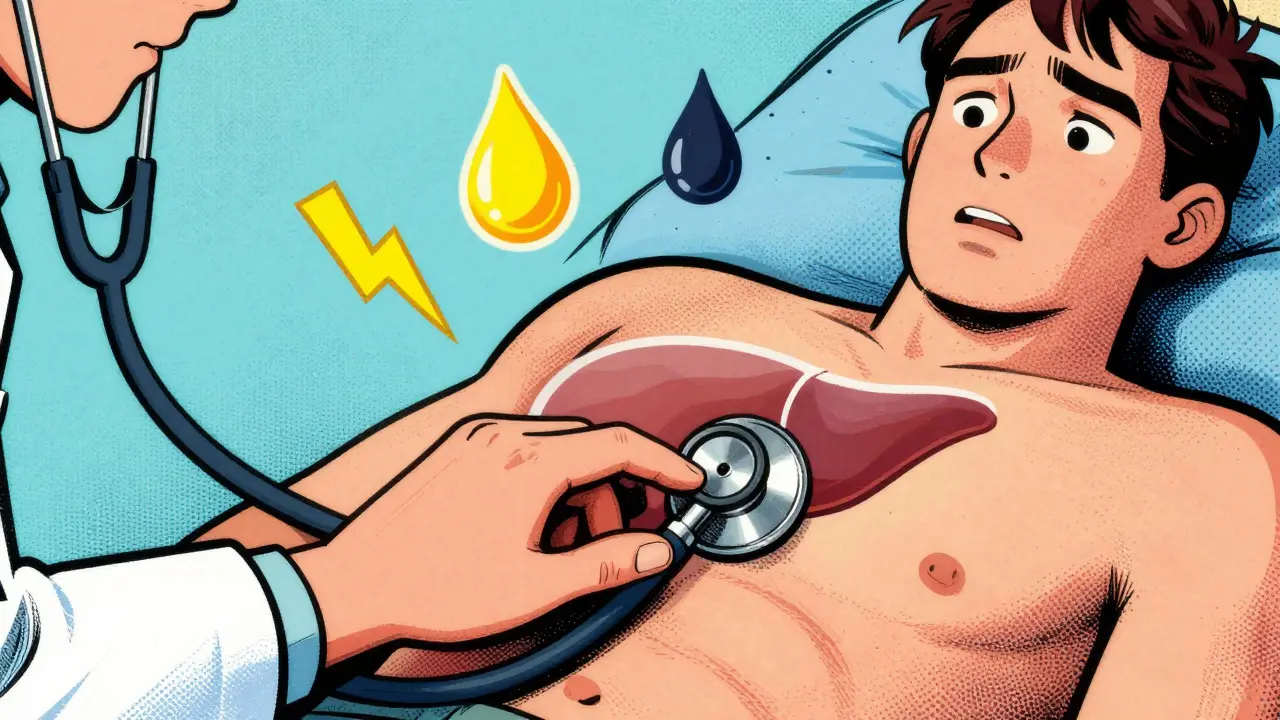
What Happens Next? Treatment and Recovery
The cornerstone of treating DILI is stopping the offending drug immediately. Dr. Jayant A. Talwalkar from Mayo Clinic emphasizes that "DILI is a diagnosis of exclusion," meaning doctors must rule out other causes like viruses or autoimmune diseases first. Once the drug is stopped, the liver has a remarkable ability to regenerate.
According to Merck Manuals, approximately 90% of patients show improvement in liver enzymes within 1 to 2 weeks of discontinuing the medication. Full recovery typically takes 3 to 6 months for moderate cases. However, about 12% of cases result in permanent liver damage, and in severe instances, a liver transplant may be necessary. DILI accounts for roughly 13% of all liver transplants in the US.
For acetaminophen overdose, time is critical. The antidote, N-acetylcysteine (NAC), provides 100% protection against liver damage if administered within 8 hours of ingestion. Efficacy drops significantly if treatment is delayed beyond 16 hours. This is why calling poison control or going to the ER immediately after an overdose is vital.
Prevention Tips for Patients
You play a huge role in preventing DILI. Here are practical steps you can take:
- Disclose everything: Tell your doctor and pharmacist about every medication you take, including over-the-counter drugs, vitamins, and herbal supplements. Many people forget to mention green tea extract or protein powders, which can contain hepatotoxic ingredients.
- Follow dosage instructions strictly: Never exceed the recommended dose of acetaminophen. Check labels on cold and flu medicines, as they often contain acetaminophen, leading to accidental double-dosing.
- Limit alcohol: Alcohol stresses the liver. Combining alcohol with medications like acetaminophen or statins increases the risk of injury.
- Know your family history: If relatives have had adverse drug reactions, inform your doctor. Genetic predispositions can run in families.
- Ask about monitoring: If you are starting a high-risk drug like isoniazid or antiepileptics, ask your doctor what the monitoring schedule should be. For isoniazid, the CDC recommends monthly liver tests for the first three months.
Pharmacists are your best allies here. Studies published in the Journal of the American Pharmacists Association show that medication therapy management services can reduce DILI incidence by 23% in patients taking multiple drugs. Don't hesitate to ask your pharmacist to review your medication list for potential liver risks.
Future Directions in DILI Research
Science is making strides in predicting and preventing DILI. Researchers at the University of North Carolina developed a "DILI-similarity score" that analyzes a drug's chemical structure to predict its liver injury potential with 82% accuracy. Additionally, new biomarkers like microRNA-122 and full-length keratin-18 are being validated; these markers rise in the blood 12 to 24 hours earlier than traditional ALT tests, allowing for earlier detection.
The FDA updated its guidance in February 2022 to emphasize mitochondrial toxicity assessment in preclinical drug development. This aims to catch potential liver toxins before drugs ever reach the market. Furthermore, electronic health record (EHR) alerts for high-risk drug combinations are being implemented, which preliminary data suggests could prevent 15-20% of severe DILI cases through early intervention.
Staying informed and proactive is your best defense. Your liver is resilient, but it needs your help to stay healthy amidst the complex world of modern medicine.
How long does it take for the liver to heal after drug-induced injury?
Recovery time varies depending on the severity of the injury. For most cases of moderate DILI, liver enzymes begin to improve within 1 to 2 weeks after stopping the offending medication. Complete recovery typically takes 3 to 6 months. However, in severe cases or if treatment is delayed, permanent liver damage can occur in about 12% of patients, potentially leading to cirrhosis or the need for a transplant.
Can herbal supplements really cause liver damage?
Yes, absolutely. Herbal and dietary supplements now account for approximately 20% of all drug-induced liver injury cases in the United States. Because supplements are not regulated as strictly as pharmaceutical drugs, quality and ingredient consistency can vary. Specific ingredients like green tea extract, kava, and anabolic steroids have been strongly linked to hepatotoxicity. Always disclose supplement use to your doctor.
What are the early warning signs of DILI?
Early signs can be subtle and non-specific. They include unusual fatigue, nausea, loss of appetite, and mild abdominal discomfort in the upper right side. As the condition worsens, more distinct symptoms appear, such as yellowing of the skin and eyes (jaundice), dark urine, pale stools, and severe itching (pruritus). If you experience these symptoms after starting a new medication, seek medical attention promptly.
Is it safe to take statins if I have liver concerns?
Generally, yes. Statins cause mild, asymptomatic elevations in liver enzymes in only 0.5% to 2% of users. Clinically significant liver injury from statins is extremely rare, occurring in only 0.001% to 0.002% of cases. Current guidelines from the American College of Gastroenterology suggest that routine liver monitoring for statin users is not cost-effective, but patients should still be educated on recognizing symptoms of liver distress.
What is Hy's Law and why is it important?
Hy's Law is a clinical predictor used to assess the risk of severe liver failure. It states that if a patient has elevated liver enzymes (ALT or AST greater than 3 times the upper limit of normal) combined with elevated bilirubin (greater than 2 times the upper limit of normal), and no other cause is found, there is a 10% to 50% chance of developing acute liver failure. This combination is a medical emergency requiring immediate hospitalization.