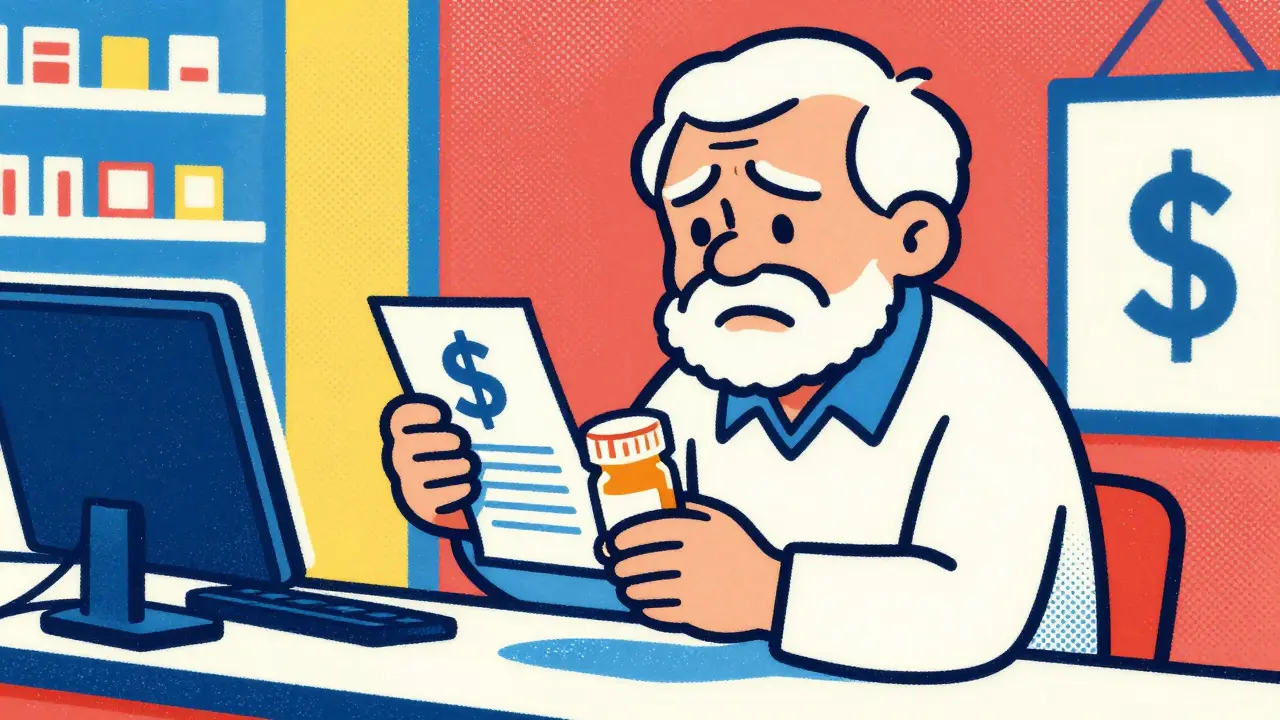
Generic medications are supposed to be the budget-friendly option. They cost a fraction of brand-name drugs-often 80% to 85% less. But even at those lower prices, filling prescriptions can still drain your wallet. If you take multiple daily meds, that $5 or $10 copay adds up fast. The good news? You don’t have to pay full price. There are specific ways to get financial help for generics, but they work differently than the big copay cards you see advertised for brand-name drugs.
In 2026, the landscape has shifted significantly thanks to new federal laws and evolving pharmacy programs. Whether you’re on Medicare, private insurance, or paying out of pocket, there are concrete steps you can take to lower your costs right now. Let’s look at where the money is hiding and how to grab it.
The Big Change: What 2026 Means for Your Wallet
If you are on Medicare, this is the most important year in decades for drug costs. Thanks to the Inflation Reduction Act, which fully implemented its key provisions in 2025, the rules have changed drastically.
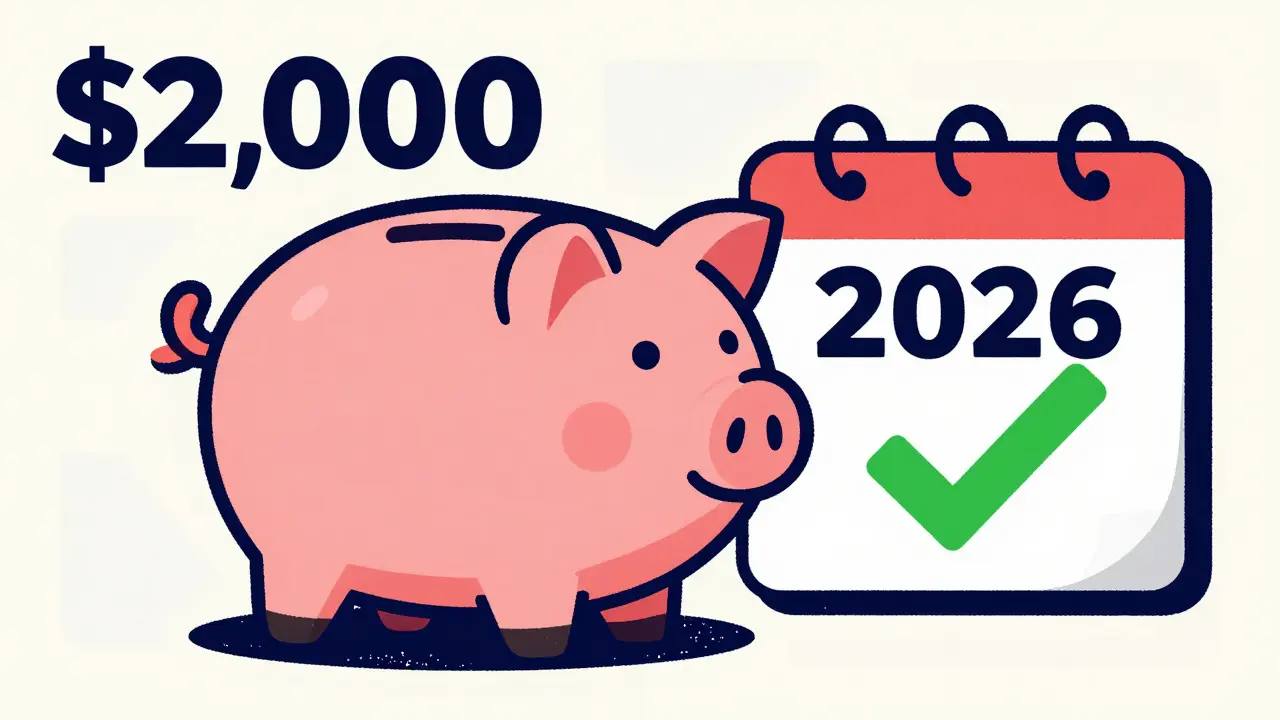
Before 2025, if you hit the "donut hole" (coverage gap), you could watch your out-of-pocket spending climb toward a cap of over $8,000. Now, there is a hard $2,000 annual out-of-pocket cap for Medicare Part D beneficiaries. Once you spend $2,000 in a calendar year, you pay nothing more for covered drugs, including generics. For many people taking only generic meds, reaching this cap takes longer because the individual pill costs are low, but once you do hit it, you get catastrophic coverage for the rest of the year.
Additionally, if you qualify for Medicare Extra Help (officially called the Low-Income Subsidy), your costs are even lower. In 2026, the cost-sharing for generics under Extra Help is capped at just $4.90 per prescription. There are also no deductibles for Extra Help recipients. This program is automatic if you receive Medicaid, Supplemental Security Income (SSI), or certain Medicare Savings Programs. If you aren't sure if you qualify, you should check immediately-it’s free to apply.
Why Generic Copay Cards Are Rare (And What to Use Instead)
You might be used to seeing pharmaceutical companies offer "copay cards" that bring a $300 brand-name drug down to $10. Why don’t generic manufacturers do the same?
It comes down to margins. Brand-name drugs have high profit margins, allowing companies to subsidize patient costs as a marketing strategy. Generic manufacturers operate on razor-thin profits. As industry leaders have noted, offering direct copay assistance would often make it impossible for them to keep the base price of the drug low for everyone else. So, you won’t find a "Pfizer Generic Copay Card" in your mailbox.
Instead of manufacturer cards, you need to look at three other pillars of assistance:
- Government Subsidies: Programs like Extra Help and Medicaid waivers.
- Pharmacy Discount Networks: Independent services that negotiate bulk rates.
- Nonprofit Foundations: Charities that fill the gaps for specific conditions.
How to Use Pharmacy Discount Programs Correctly
This is the most underused tool for generic drug savings. Services like SingleCare, GoodRx, and RxSaver act as middlemen. They negotiate discounted cash prices with pharmacies and pass some of those savings to you via a coupon code or app scan.
Here is the critical rule: You cannot combine these discounts with your insurance copay. You must choose one or the other. Most people assume their insurance copay is always cheaper, but that isn’t true. If your insurance requires a $15 copay for a generic statin, but SingleCare lists it for $4 cash, you should use the discount card.
Major retail chains also have their own lists. Walmart’s "$4/$10 generics list" covers about 150 common medications. Kroger has a similar $15 monthly program. These require no application-you just walk in, show ID, and buy. However, be aware that these cash prices usually do not count toward your insurance deductible or out-of-pocket maximum. If you are trying to reach the $2,000 Medicare cap, stick to using your insurance card so every dollar counts.
| Option | Best For | Typical Cost | Counts Toward OOP Max? |
|---|---|---|---|
| Medicare Extra Help | Low-income seniors/disabled | $4.90/generic | Yes |
| Standard Insurance Copay | Most commercially insured/Medicare | $5 - $15 | Yes |
| Pharmacy Discount (e.g., SingleCare) | Uninsured or high-deductible plans | $4 - $10 (cash) | No |
| Retail Chain Lists (Walmart/Kroger) | Common chronic conditions | $4 - $15/month | No |
Navigating the "Assistance Gap" for Near-Poor Earners
There is a frustrating group of patients who earn too much for Medicaid but too little to afford market-rate care without help. This is often called the "assistance cliff." If you make slightly above the federal poverty level, you might not qualify for Extra Help, and you don’t have a manufacturer copay card for your generics.
For these individuals, nonprofit organizations become vital. Groups like the PAN Foundation and NeedyMeds offer disease-specific assistance. While PAN focuses heavily on specialty drugs, they do cover some conditions treated primarily with generics. NeedyMeds maintains a database of thousands of assistance programs. In 2023, they processed hundreds of thousands of applications, with a 78% approval rate for those below 250% of the federal poverty level.
Your local State Health Insurance Assistance Program (SHIP) is another free resource. SHIP counselors can help you navigate complex eligibility rules for state-based subsidies that might not be visible on national websites. Don’t hesitate to call them-they exist specifically to help you understand your rights and options.

Practical Steps to Lower Your Costs Today
Don’t wait until your bank account is empty. Take these steps now:
- Check your formulary tier. Call your insurance plan and ask which tier your generic drugs are on. Tier 1 is cheapest. If your doctor prescribed a brand name when a generic exists, ask for a switch. Therapeutic interchange programs allow pharmacists to automatically substitute generics unless medically inappropriate, saving you money instantly.
- Compare cash vs. copay. Before picking up your next script, check an app like GoodRx. If the cash price is lower than your copay and you aren’t worried about hitting your out-of-pocket max, use the discount. If you are close to your $2,000 cap, use insurance.
- Apply for Extra Help if eligible. Visit Medicare.gov or call 1-800-MEDICARE. If you have limited income, this single step can drop your generic cost from $15 to $4.90.
- Ask about 90-day supplies. Many mail-order plans offer 90-day refills for a lower per-pill cost. It requires upfront cash flow, but it reduces administrative fees and shipping costs over time.
Frequently Asked Questions
Can I use a GoodRx coupon with my Medicare insurance?
No, you generally cannot combine them. Using a GoodRx coupon means you are paying the cash price, which does not count toward your Medicare deductible or out-of-pocket maximum. If you want your payments to count toward the $2,000 cap, you must use your insurance card.
Why don't generic drug companies offer copay cards?
Generic manufacturers operate on very thin profit margins. Unlike brand-name companies, they don't have the surplus revenue to fund copay assistance programs. Offering such subsidies would likely force them to raise the base price of the drug for everyone, defeating the purpose of generics being affordable.
What is the $2,000 out-of-pocket cap for Medicare?
Implemented in 2025 under the Inflation Reduction Act, this cap limits what Medicare Part D beneficiaries pay annually for covered drugs. Once your total spending (including deductibles and coinsurance) reaches $2,000 in a calendar year, you enter catastrophic coverage and pay $0 for the rest of the year.
How much does Medicare Extra Help cost for generics in 2026?
If you qualify for Extra Help (Low-Income Subsidy), your copay for generic medications is capped at $4.90 per prescription. You also do not have to pay a deductible. Eligibility is based on your income and resources.
Are there any nonprofits that help with generic drug costs?
Yes. Organizations like the PAN Foundation and NeedyMeds provide assistance programs. While many focus on expensive specialty drugs, some programs cover conditions treated with generics. Additionally, local health departments and community action agencies may offer emergency funds for medication costs.
Does Walmart's $4 generic list count toward my insurance deductible?
No. When you use a retail chain's discount program like Walmart's $4/$10 list, you are paying a cash price directly to the pharmacy. This transaction bypasses your insurance company entirely, so it does not contribute to your deductible or out-of-pocket maximum.
15 Comments
Callie SkipperJune 11, 2026 AT 05:34
goodrx saved me like $40 last month on just my blood pressure meds and i didnt even think about it before
Brandon BrodskyJune 12, 2026 AT 09:51
Oh, look at you all, clutching your pearls over a few dollars while the pharmaceutical industrial complex laughs all the way to the bank. You think checking an app is going to solve systemic exploitation? It’s adorable, really. The system is designed to keep you poor and compliant, and here we are debating coupon codes like it’s a game of Monopoly.
The reality is that generic manufacturers operate on razor-thin margins because they are squeezed by PBM rebates and insurance formularies, not because they are benevolent angels saving your wallet. But sure, go ahead and scan your QR code and feel virtuous. Meanwhile, the real issue-price gouging by middlemen-is completely ignored in this superficial guide. You’re treating symptoms with a band-aid while the patient bleeds out.
Hailey DunstonJune 14, 2026 AT 09:43
One must appreciate the nuance of the situation, darling. It is quite pretentious to assume that everyone simply lacks the intellectual capacity to navigate these programs. I have been utilizing NeedyMeds for years, and frankly, the approval rates cited here are somewhat optimistic for those who do not possess the proper documentation or social capital to advocate for themselves effectively. :/
Furthermore, the notion that Walmart’s list is a panacea is laughable if one resides in a rural area without access to such establishments. We must consider the geographical disparities inherent in this advice. It is not merely about ‘checking an app’; it is about understanding the socio-economic matrix that dictates healthcare accessibility. Do try to keep up.
Emily BarnhillJune 16, 2026 AT 04:23
I need to call out the negativity here. This information is literally life-saving for people who are struggling. Stop being so cynical. If someone can save $10 on their insulin or heart medication, that is money they can use for food or rent. We should be supporting each other, not tearing down practical advice because it doesn’t fix the entire healthcare system overnight.
Let’s focus on what works right now. If you know of a better resource, share it constructively. Otherwise, please step back and let others benefit from this thread. Empathy costs nothing, but ignorance has a price tag.
Ganesh HonikolJune 16, 2026 AT 04:37
It is truly fascinating how the landscape of pharmaceutical assistance has evolved, particularly with the implementation of the Inflation Reduction Act provisions which have finally begun to show tangible benefits for Medicare beneficiaries. As someone who has spent considerable time researching health policy frameworks across different jurisdictions, I can attest that the $2,000 out-of-pocket cap is a monumental shift, albeit one that requires careful navigation to ensure that every dollar spent counts towards that maximum.
Many individuals remain unaware that using discount cards like GoodRx or SingleCare, while seemingly economical in the short term, effectively bypasses the insurance mechanism entirely, thereby stalling progress toward catastrophic coverage. This is a critical distinction that cannot be overstated. Furthermore, the role of nonprofit organizations such as the PAN Foundation and NeedyMeds becomes increasingly vital for those falling into the ‘assistance gap,’ where income levels preclude eligibility for traditional subsidies yet market prices remain prohibitive. It is imperative that we educate ourselves on these nuances to maximize our financial health outcomes.
AnneKatherine StiekesJune 16, 2026 AT 10:15
i guess its better than nothing i just wish things were simpler for everyone involved
Daniella RenzonJune 18, 2026 AT 01:50
Hey guys, just wanted to say this is super helpful info! I live in South Africa so our system is totally different, but seeing how organized this is makes me appreciate having resources like this. Hope everyone finds what they need :)
Miranda RiverJune 19, 2026 AT 21:55
uh yeah another day another copay card scam basically im tired of reading this bs its like they expect us to work full time jobs AND be pharmacy consultants lol whatever
Glenn DavisJune 21, 2026 AT 15:57
Medicare is failing. Government incompetence. Prices too high. System broken. Fix it or leave it alone. Americans deserve better care without bureaucratic hurdles. Private sector could handle this more efficiently if regulations allowed. Current setup punishes hard workers.
Erin LivengoodJune 22, 2026 AT 04:24
There is a profound irony in the fact that generics, intended as the democratic equalizer in healthcare, still require such arduous scavenger hunts for affordability. It feels like we are living in a paradox where the solution to high costs is hidden behind layers of administrative complexity. One might argue that the true cost of these medications isn't just monetary, but temporal-the hours spent calling insurers, comparing apps, and navigating eligibility cliffs.
Yet, there is beauty in the community sharing these tips. It transforms a cold economic transaction into a collective act of resistance against profiteering. Let us view these discount codes not as crumbs, but as tools of empowerment. Every dollar saved is a small victory in the larger narrative of bodily autonomy and financial sovereignty.
rebecca torresJune 24, 2026 AT 03:50
people really need to stop complaining and just check goodrx its free why wouldnt you use it
Cecilia McGuinnessJune 25, 2026 AT 02:40
omg this is so helpful!! i was paying full price for my thyroid meds and had no idea i could get them cheaper at walmart. thanks for sharing this info everyone 🙌
Talilla BaileyJune 26, 2026 AT 18:46
It is imperative that we approach this subject with the utmost seriousness and diligence. The information provided herein is of critical importance to the fiscal well-being of all citizens. I urge you to take immediate action in verifying your formulary tiers and exploring the aforementioned discount networks. Negligence in this regard is unacceptable. We must hold ourselves accountable for our healthcare expenditures. Proceed with caution and thoroughness in all your inquiries regarding prescription costs. Your health and financial stability depend on your proactive engagement with these resources.
Cici arya AryaJune 27, 2026 AT 17:07
Why does nobody talk about how stressful this is?? I spend half my paycheck on meds and then I have to figure out if I should use my insurance or cash? Its exhausting. And don't get me started on the customer service reps who hang up on you. I need someone to just hold my hand through this process because I'm drowning in anxiety every single time I go to the pharmacy. Why is it so hard to just get help??
Christina S.June 28, 2026 AT 07:24
You're absolutely right to feel overwhelmed, but remember that you have options. Taking it one step at a time can make a huge difference. Start by checking just one app today. Small victories add up. You've got this!