Imagine this: you have a prescription for a medication that manages your condition perfectly. You go to the pharmacy, but the shelf is empty. The pharmacist says it’s on backorder for months. This isn’t just an inconvenience; it can be dangerous. In the U.S., there are between 300 and 400 drug shortages every year. When standard medications vanish from shelves, compounding pharmacies serve as specialized facilities that create customized medications tailored to individual patient needs by combining or altering ingredients when commercial drugs are unavailable. They step in to fill the gap, but understanding how they work-and their limits-is crucial for your safety.
What Exactly Is a Compounding Pharmacy?
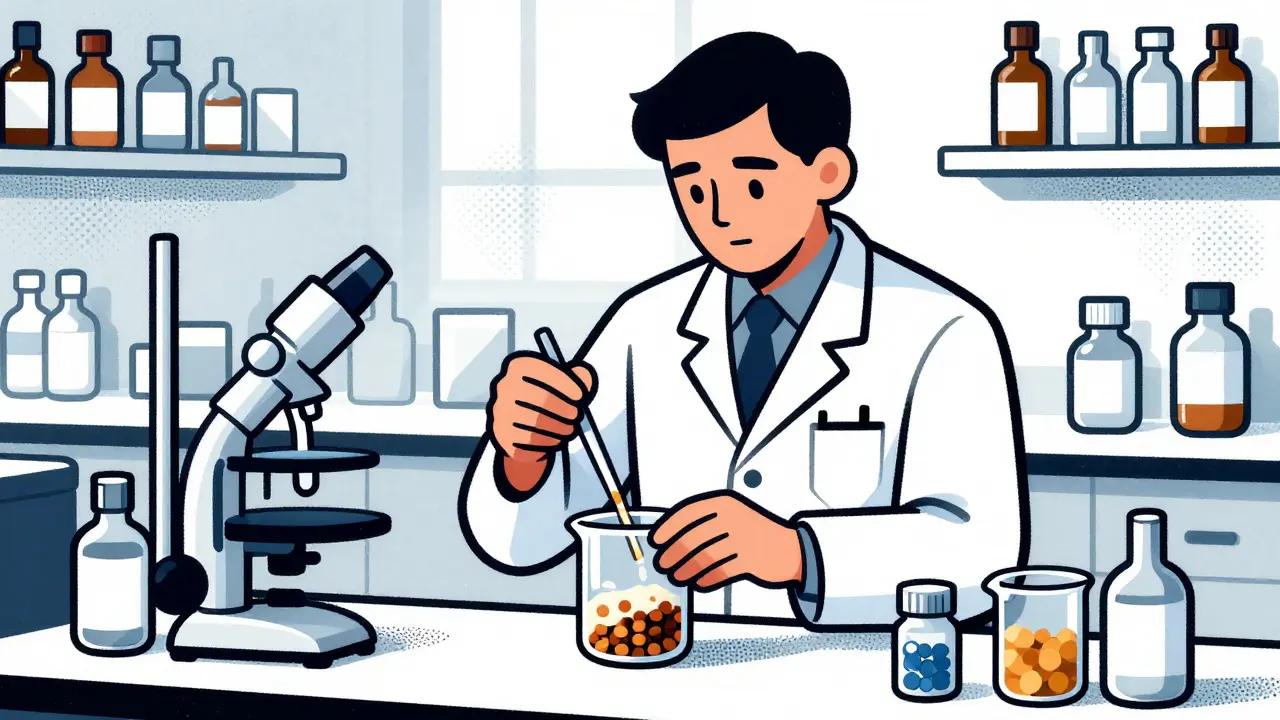
A compounding pharmacy is not just a regular store with extra services. It is a specialized laboratory where pharmacists mix raw pharmaceutical ingredients to create a specific medication for a specific patient. Unlike mass-produced drugs made by large manufacturers, these medications are built from scratch based on a doctor’s prescription. There are roughly 7,500 pharmacies in the United States that specialize in this practice, out of 56,000 community pharmacies total. About 32,000 offer some level of compounding, but only a fraction do it as their primary business model.
The core purpose here is precision. If a factory makes pills in strengths of 10mg, 20mg, and 40mg, but your body needs exactly 15mg to avoid side effects, a compounding pharmacy can make that 15mg dose. They also remove problematic additives. If you are allergic to gluten, lactose, dyes, or certain preservatives found in brand-name drugs, these pharmacies can formulate a version without those triggers. This affects about 15-20% of the population who have sensitivities to common inactive ingredients.
When Should You Use a Compounding Pharmacy?
It is important to know that compounding is meant to be a solution for specific problems, not a replacement for all medicine. The Food and Drug Administration (FDA) states clearly that compounding should happen when an FDA-approved drug is not medically appropriate for you. Here are the most common scenarios where these pharmacies provide essential care:
- Drug Shortages: When a critical medication like insulin, antibiotics, or pain relievers is unavailable commercially, compounding pharmacies can often synthesize the active ingredient if supply allows.
- Allergies and Sensitivities: If you react to the dye in a blue pill or the filler in a tablet, a compounding pharmacist can create a dye-free, gluten-free, or lactose-free version.
- Pediatric Needs: Children often cannot swallow large pills. About 40% of kids struggle with this. Compounding pharmacies turn bitter powders into flavored liquids, gummies, or chewable tablets with tastes like bubblegum or strawberry, which boosts adherence rates significantly.
- Geriatric Care: Roughly 30% of elderly patients have difficulty swallowing. These pharmacies can convert pills into transdermal gels, creams, or troches (lozenges that dissolve in the mouth).
- Custom Dosage Strengths: For conditions requiring micro-adjustments, such as hormone therapy or psychiatric care, getting the exact milligram or microgram dose is vital for efficacy.
How Compounding Differs From Mass Production
You might wonder why we don’t just make everything this way. The answer lies in scale and regulation. Mass-produced drugs undergo rigorous clinical trials to prove safety and efficacy for the general population before the FDA approves them. Compounded medications do not go through this pre-market approval process because they are made for individual patients after a prescription is written.
This distinction creates both flexibility and risk. A traditional retail pharmacy dispenses what is already made. A compounding pharmacy acts as a manufacturer and dispenser combined. They follow strict guidelines known as USP <795> for non-sterile compounding and USP <797> for sterile compounding. These standards dictate cleanliness, equipment use, and testing protocols. However, because each batch is small and custom, the quality control relies heavily on the skill and integrity of the specific pharmacy staff rather than automated factory checks.
| Feature | Traditional Retail Drug | Compounded Medication |
|---|---|---|
| Approval Process | FDA pre-market approval required | No pre-market FDA approval; regulated post-manufacture |
| Dosage Forms | Standard pills, capsules, injections | Liquids, creams, gels, troches, transdermal patches |
| Customization | None (fixed strengths) | High (exact strength, allergen-free) |
| Availability | Immediate (if in stock) | 24-72 hours preparation time |
| Insurance Coverage | Usually covered | Often out-of-pocket (variable coverage) |
Safety First: Accreditation and Regulation
Not all compounding pharmacies are created equal. After a tragic outbreak of fungal meningitis in 2012 linked to a contaminated steroid compound, regulations tightened significantly. The Drug Quality and Security Act of 2013 established two main categories: Section 503A pharmacies (traditional community compounds) and Section 503B outsourcing facilities (larger-scale operations). To ensure you are getting safe medication, look for accreditation from the Pharmacy Compounding Accreditation Board (PCAB). Currently, only about 1,200 of the 7,500 specialized compounding pharmacies hold this accreditation. PCAB requires enhanced stability testing, strict environmental controls, and regular inspections.
Dr. Steven P. Harris, a board-certified pharmacotherapy specialist, notes that compounded meds are "essential" for those needing custom doses or avoiding allergens. However, Dr. Robert Smith, Chief Medical Officer at the National Community Pharmacists Association, warns that about 15% of compounded prescriptions could have used commercially available products, creating unnecessary risk. Always ask your pharmacist if a standard drug is truly unavailable before opting for compounding.
Cost and Insurance Considerations
One of the biggest hurdles for patients is cost. Because compounding is labor-intensive and uses smaller batches, it is rarely cheap. Approximately 45% of patients report paying out-of-pocket for compounded medications, compared to just 15% for standard prescriptions. Insurance companies often view compounding as a last resort. Some plans cover it if no alternative exists, while others exclude it entirely. Before starting treatment, call your insurance provider and ask specifically about "compounded medication coverage." Be prepared for potential co-pays that are higher than usual, and discuss payment plans with the pharmacy if needed.
What Compounding Cannot Do
It is vital to understand the limits of this service. Compounding pharmacies cannot replicate complex biologics, such as insulin analogs or monoclonal antibodies, which require sophisticated manufacturing processes. They also cannot simply copy a brand-name drug to sell it cheaper-that is illegal and considered counterfeiting. Compounding must be done in response to a valid prescription for an identified patient. If a pharmacy is marketing a "miracle cure" compounded cream online without a prescription, avoid it. These operations often operate outside regulatory oversight and pose significant health risks.
Steps to Get a Compounded Medication
If your doctor determines you need a compounded drug, follow these steps to ensure a smooth process:
- Verify Necessity: Confirm with your doctor that no FDA-approved alternative exists or works for you.
- Choose an Accredited Pharmacy: Ask your doctor for recommendations or check the PCAB website for accredited facilities near you.
- Submit Detailed Prescription: Your doctor must provide specific instructions, including the desired strength, dosage form, flavor (for kids), and any excluded allergens.
- Allow Preparation Time: Expect a wait of 24 to 72 hours. Sterile compounds may take longer due to validation testing.
- Review the Label: Check the expiration date. Compounded drugs often have shorter shelf lives than commercial ones, sometimes just days or weeks, depending on stability testing.
The Future of Personalized Medicine
The demand for compounding is growing. The U.S. market was valued at $11.2 billion in 2022 and is projected to reach $15.8 billion by 2027. This growth is driven by persistent drug shortages and a shift toward personalized medicine. Technology is also helping; digital formulation tools have reduced compounding errors by 37%, and improved stability testing extends shelf life by up to 40%. As genetic testing becomes more common, more doctors will prescribe medications tailored to a patient’s unique biology, further cementing the role of compounding pharmacies in modern healthcare.
Are compounded medications safe?
Yes, when prepared by licensed, accredited pharmacies following USP standards. However, they lack the pre-market clinical trial data of FDA-approved drugs. Always verify the pharmacy's PCAB accreditation and consult your doctor to ensure compounding is necessary.
Does insurance cover compounded drugs?
Coverage varies widely. Many plans exclude compounding or require prior authorization proving no commercial alternative exists. Approximately 45% of patients pay out-of-pocket. Contact your insurer directly to check your specific plan benefits.
How long does it take to get a compounded medication?
Typically 24 to 72 hours. Simple non-sterile compounds may be ready sooner, while sterile preparations or complex formulations require additional testing and validation steps, potentially extending the wait time.
Can compounding pharmacies make any drug?
No. They cannot manufacture complex biologics like insulin or monoclonal antibodies. They also cannot legally replicate brand-name drugs for profit without a prescription. Compounding is limited to modifying existing drugs for specific patient needs.
What is the difference between 503A and 503B pharmacies?
Section 503A pharmacies are traditional community compounds that make drugs for individual patients based on prescriptions. Section 503B outsourcing facilities are larger operations that can produce larger batches and distribute to hospitals and clinics without individual prescriptions, subject to stricter FDA oversight.
Why are there so many drug shortages?
Shortages occur due to various factors including raw material supply chain issues, manufacturing plant closures, increased demand, and regulatory delays. The FDA reports 300-400 shortages annually, making compounding a critical backup resource.
Is compounding legal?
Yes, compounding is legal and regulated under federal law, specifically the Drug Quality and Security Act of 2013. It is recognized as an essential part of pharmacy practice when FDA-approved drugs are unavailable or inappropriate for a patient.
How do I find a reputable compounding pharmacy?
Look for pharmacies accredited by the Pharmacy Compounding Accreditation Board (PCAB). You can search their directory online. Additionally, ask your prescribing physician for recommendations, as they often have trusted relationships with local compounding specialists.